The Deepest Lakes in Canada
Canada has an estimated two million lakes, more than any other country, and a handful of them drop well past 1,000 feet (some beyond 2,000), putting them among the deepest lakes on Earth. Carved by glaciers, faulting, and ancient ice sheets, these deep basins shape water temperature, circulation, fish habitat, and the recreation and fishing economies that depend on them.
This list ranks Canada’s five deepest lakes by maximum depth (the vertical distance from the surface to the deepest point of the lakebed). It spans everything from an Arctic giant that drops 2,015 feet to a rare fjord-lake in British Columbia, plus a Great Lake whose vast surface hides a surprisingly deep trench.
1. Great Slave Lake - 2,015 ft

Roughly as large as the country of Belgium and almost half a mile deep, the Great Slave Lake absolutely dwarfs anything else in Canada in both depth and scale. It’s so massive, in fact, that it is an economic center of the Northwest Territories, supporting vast local fishing industries and attracting nearly half of the region’s population to towns and cities along its shoreline. This includes the provincial capital of Yellowknife. Even more fascinating than that, though, is its ecology.
The Great Slave Lake is located so far north that it freezes over for eight months of the year, a rarity for a lake of this scale and depth. Its isolated position in the Canadian Arctic has kept the impacts of pollution and introduced species very low, so it’s seen as a very healthy ecosystem. Its deepest points are found in the eastern part of the lake at Christie Bay and MacLeod Bay, but the majority of the lake is much shallower; the bowl-shaped western portion of the lake has a maximum depth of 616 feet, less than a third of the lake’s depth at its deepest point.
2. Quesnel Lake - 1,677 ft

There aren’t many places in the world where you can find fjords, or deep valleys with steep sides that are filled with water after they were carved out by glaciers. And most of us don’t think of them as lakes at all. But Canada’s second-deepest lake is, in fact, a fjord, and not only that, but the deepest fjord in the world! Located in central British Columbia in Canada’s far west, the lakebed at Lake Quesnel dips as low as 1,677 feet at its deepest, making it the deepest lake of its kind anywhere.
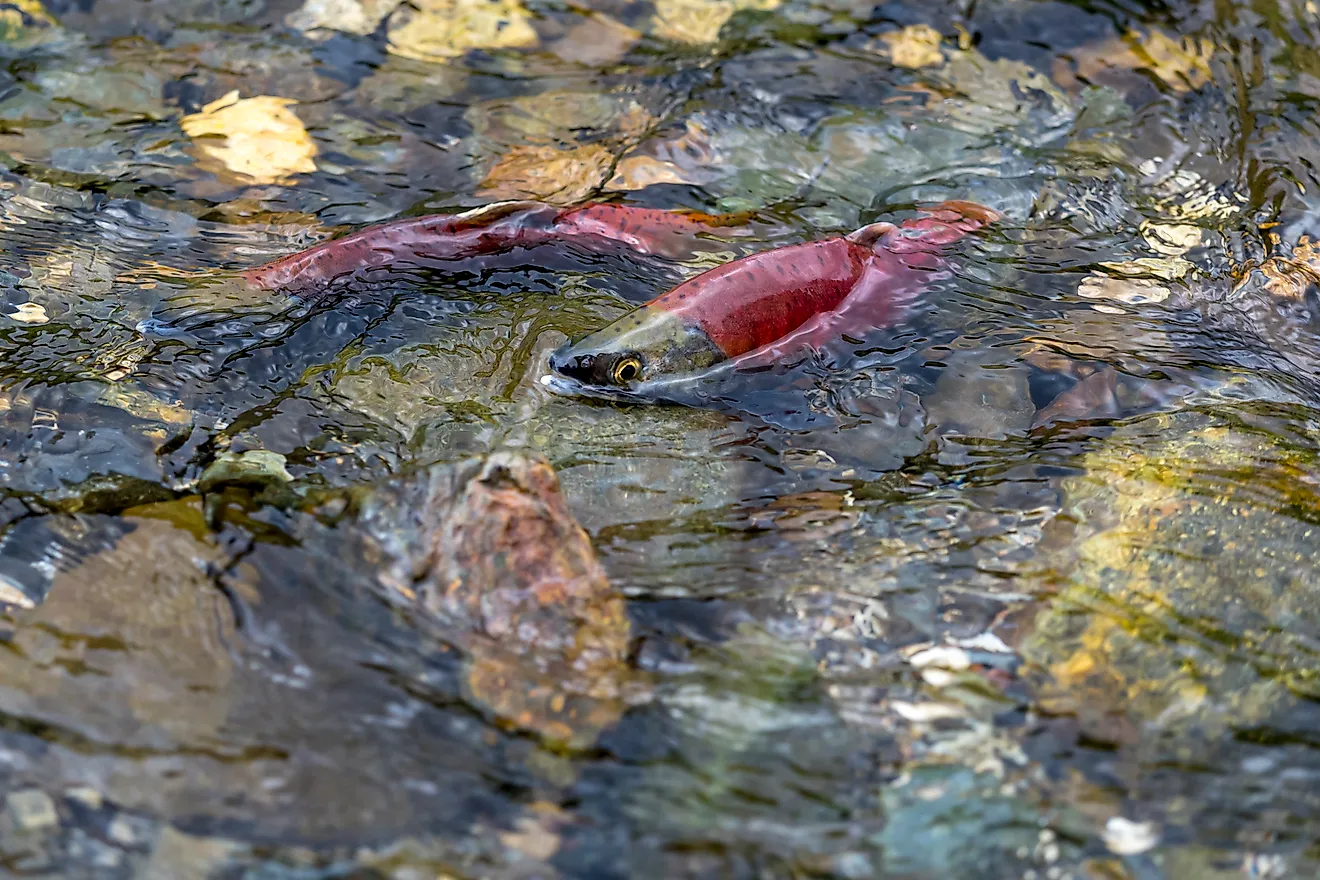
Thanks to its depth and isolation, Quesnel Lake is also a prime fish habitat and is widely known as an excellent fishing spot. As such, it attracts tourists looking to fish, paddle, or swim, and is especially notable for the quality of its trout and sockeye stocks. And there’s plenty of space for those visitors to spread out: the lake’s average depth is 515 meters, and it boasts 360 square miles of shoreline.
3. Adams Lake - 1,499 ft

Although Adams Lake in southern British Columbia is the third-deepest lake in Canada with a maximum depth of 1,499 feet, what is truly most remarkable about it is its average depth: at 981 feet, Adams Lake is one of the deepest in the world if measured by its mean depth instead of its maximum depth.
Adams Lake is an important spawning ground for salmon in the region and separates the Adams River into its upper and lower sections. In the past, its shores were the site of extensive lumber operations, and later a sawmill; now it is used to transport lumber logged further afield by barge. It is also the only lake on this list to offer public ferry service, speaking to its relatively less isolated position.
4. Great Bear Lake - 1,463 ft

Canada’s fourth-deepest lake is located deep in the Canadian Arctic of the Northwest Territory. The 200-mile-long Great Bear Lake takes its name from the local wildlife as observed by the early fur traders who named it, and although it isn’t the deepest, it’s the largest lake located entirely in Canada. At its deepest point, it is 1,463 feet deep.
Due to its remote location, the shores of Great Bear Lake are sparsely populated, but that has kept it healthy and abundant in wildlife. Speckled trout are a particularly notable resident. It’s also a vitally important location in the traditional worldview of the region’s primary indigenous culture, the Délı̨nę, who have long emphasized the necessity of preserving the lake’s healthy ecosystem in accordance with its centrality to a key Délı̨nę prophecy.
5. Lake Superior - 1,333 ft

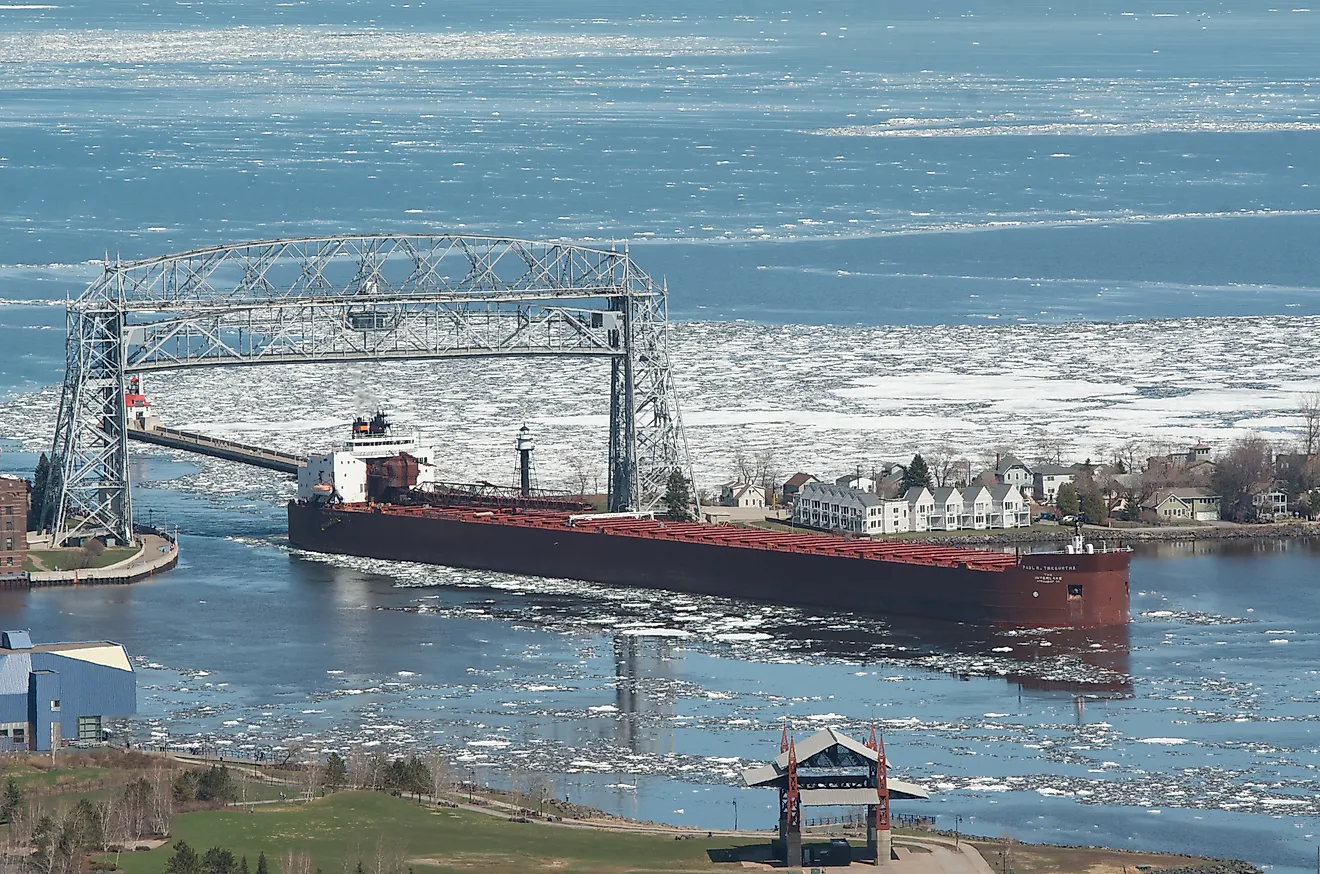
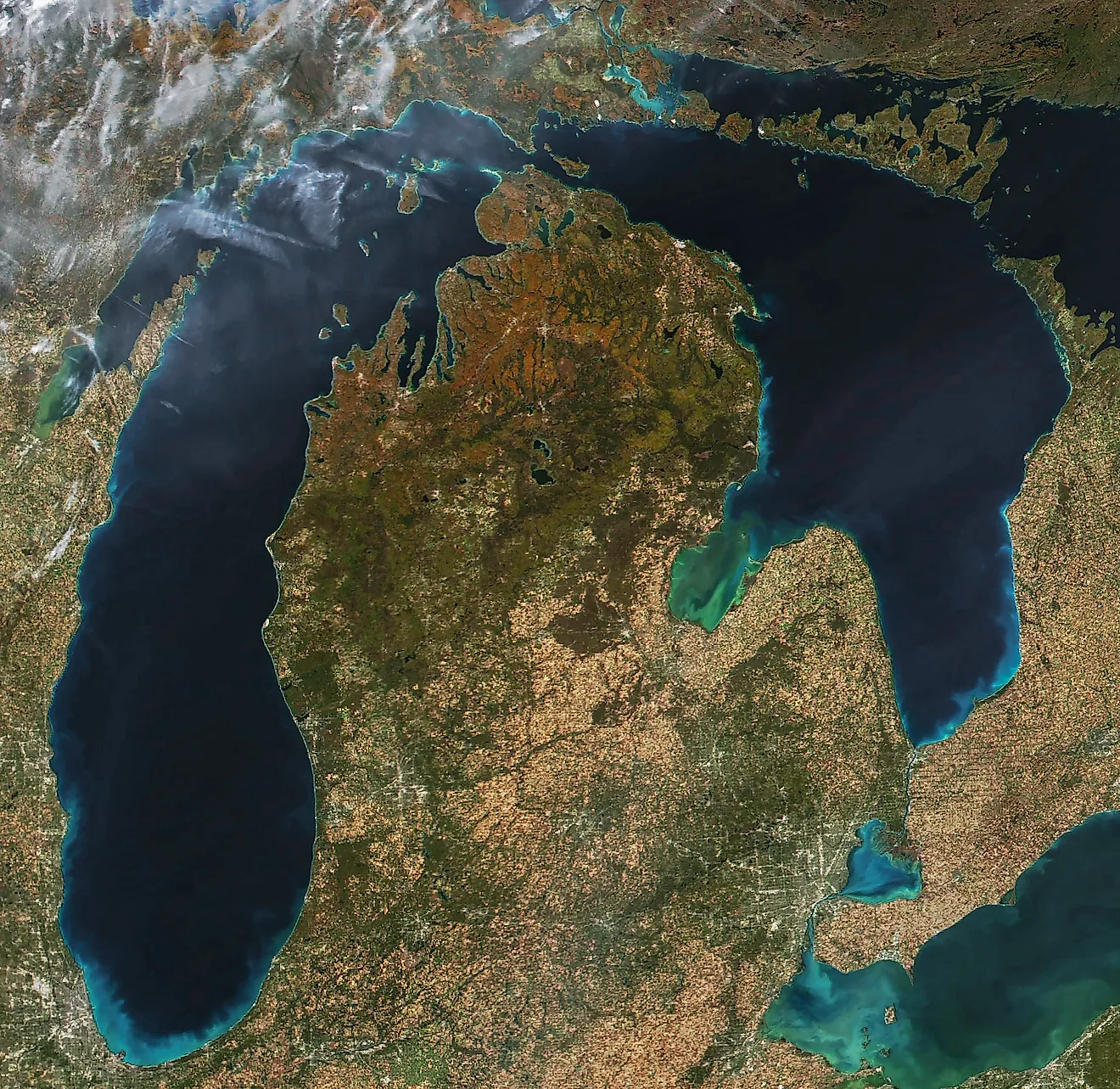
Although Lake Superior is not entirely located in Canada (parts fall within remote northern stretches of the U.S. states of Michigan, Minnesota, and Wisconsin), the largest of North America’s five Great Lakes is also Canada’s fifth-deepest lake. Considering that it spans an approximate distance of 350 miles from east to west and boasts the largest freshwater surface area of any lake on earth, that isn’t surprising! Its average depth is about 500 feet, but it plunges to a maximum depth of 1,332.
Lake Superior is far more than just deep, though. It also holds by far the largest volume of water of the Great Lakes, so much so that it could fill the others and still have enough water left to fill Lake Erie three times over. But because of its extremely remote location and brutally cold climate, its shores are sparsely settled, and its economic contributions to the region mostly come from tourism and recreation.
With more lakes than any other country, it’s no surprise that Canada is home to some of the world’s largest, deepest, and most fascinating lakes. These five are only a few of the incredibly deep lakes to be found in Canada, all among the deepest in the world and geographically and ecologically unique. There’s no better place on earth for the traveler or student of nature fascinated by these incredible bodies of water.