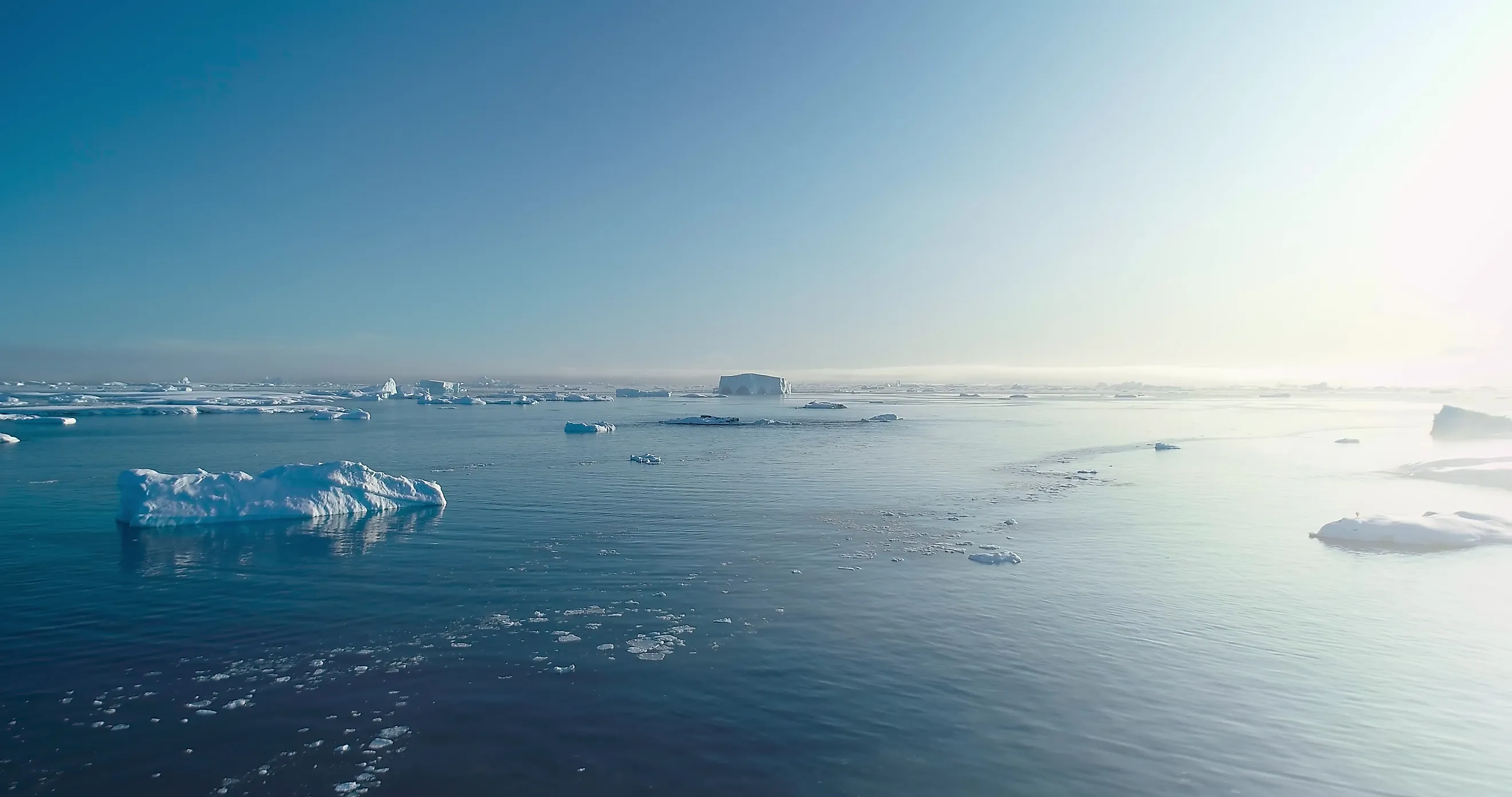
What Would Happen If All The Ice In The Ocean Melted
Global sea levels would rise by 230 feet. New York City, Venice, and other coastal cities would experience extreme flooding, displacing millions of people. Entire low-lying countries like Bangladesh and the Netherlands would disappear completely. The large influx of freshwater would disrupt the pattern of ocean currents. Global warming would be accelerated with no white surfaces to reflect heat back to space. Planet Earth would even slow its rotation.
These are not premises for a disaster movie, but rather probable outcomes that could occur if glacier and ice sheet melt continue to raise sea levels.
The polar regions are sparsely inhabited. People rarely come into contact with icebergs or ice sheets. Most people have only seen photographs of them. Yet every single person on the planet is affected by snow and ice at the North and South Pole.
Melting Ice Sheets

Ice sheets contain vast amounts of frozen water. There are only two ice sheets on Earth, the Antarctic Ice Sheet and the Greenland Ice Sheet. The Antarctic Ice Sheet encompasses an area greater than the United States and Mexico combined, while the Greenland Ice Sheet covers nearly 80 percent of Greenland's landmass, making it the largest ice mass in the Northern Hemisphere.
Both ice sheets experienced substantial shrinkage since the beginning of the 21st century, with the rate of ice loss increasing over each passing decade. Between 2002 and 2023, Antarctica and Greenland cumulatively lost enough ice to raise sea levels by roughly 1.2 millimeters per year. Although the Antarctic Ice Sheet has experienced growth in some areas due to unusually heavy snowfall, it is ultimately surpassed by overall ice loss.
Disappearing Cities and Countries
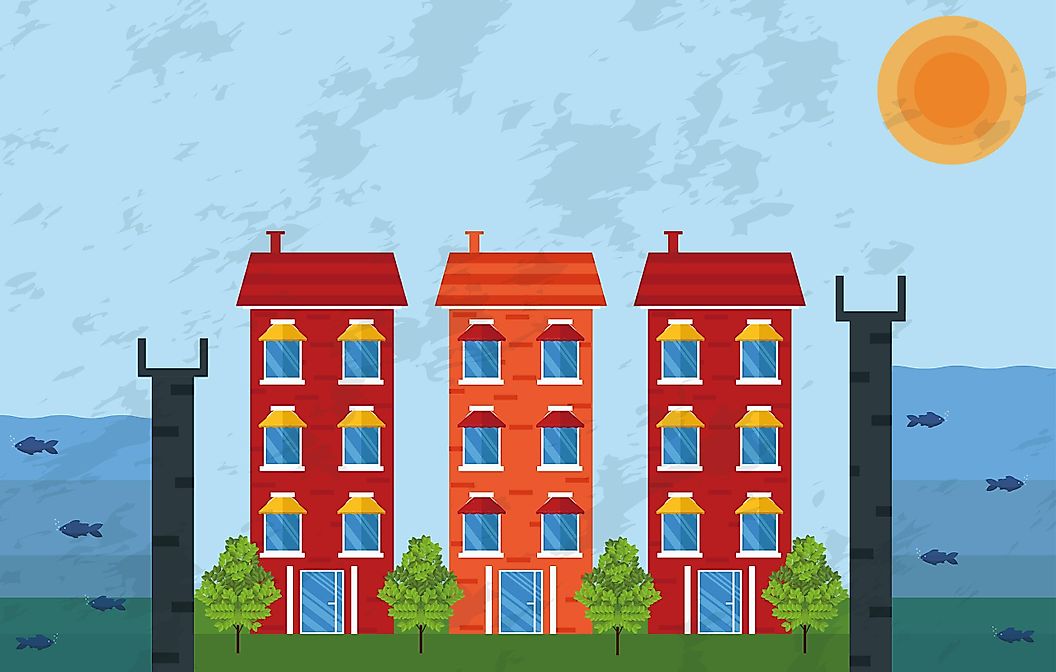
Copenhagen, Venice, Lisbon, and London are all European coastal cities that would disappear under rising sea levels. Across the Atlantic Ocean, the majority of the Eastern Coast of the United States would be decimated, including Washington, D.C., New York City, and Boston. Florida would cease to exist. The entire Gulf Coast would be completely reshaped. In California, the higher hills of San Francisco, like Twin Peaks and Telegraph Hill, would become a group of coastal islands. The total area of the United States would shrink considerably, with only inland cities at higher elevations, like Denver, surviving.
Every single continent would be reshaped. The Amazon River Basin in South America would become an Atlantic inlet. In Europe, Venice and the Netherlands would be completely submerged. Bangladesh, along with much of India's coastline, would disappear in Asia. Australia would gain a large inland sea and lose much of its coastline where four out of five Australians currently live. Africa would lose the least amount of territory, with Egypt being submerged under the Mediterranean Sea. Billions of people, about 40 percent of the global population, would be displaced by these rising water levels and have to seek higher ground.
Disrupted Ocean Currents
In the North Atlantic, water which is heated near the Equator travels northward along the surface of the ocean. The water cools and becomes denser when it reaches these colder and higher latitudes. It sinks to the bottom of the ocean where it flows south and is replaced with warmer water. This pattern of moving currents is the Atlantic Meridional Overturning Circulation (AMOC), sometimes referred to as the ocean's global conveyor belt.
Melting ice changes this pattern.
The Greenland Ice Sheet would release enormous quantities of freshwater into the North Atlantic. Since freshwater is not as dense as saltwater, it would not be able to sink and flow through the oceans. A large influx of freshwater would therefore disrupt the AMOC and have consequences far beyond the ocean. The ocean currents that usually carry warmth from the tropics would no longer do so, resulting in colder average temperatures and regional cooling across North America and Western Europe.
Accelerated Global Warming

Under normal conditions, the white surface of the ice caps naturally reflects up to 90 percent of solar energy back to space to keep the planet cool. This is known as the Albedo effect. But with global warming causing more snow and ice to melt each summer, it subsequently exposes darker land and ocean, which absorb more incoming solar radiation and then release the heat into the atmosphere.
Melting ice causes more warming, which melts more ice.
Soils in the polar region that have frozen for as long as 40,000 years are beginning to thaw and release carbon trapped in the soils into the atmosphere. This carbon is released into the atmosphere as carbon dioxide and methane, gases which both cause more warming.
Planetary Changes

Melting ice in the ocean even slows down Earth's rotation. When Antarctica and Greenland lose ice in the form of water, and it enters the ocean, it flows towards the Equator. These shifts in Earth's weight distribution alter the planet's axis location. In the last 120 years, Earth's axis has shifted by around 30 feet, which affects its rotation.
Polar ice can therefore lengthen days on Earth. Since 2000, days on Earth have been getting longer by approximately 1.33 milliseconds per 100 years. This has been a faster rate than at any point in history.
Will Earth Ever be Underwater?
While it is unlikely that the entire Antarctic Ice Sheet could melt entirely in the near future, the entire Greenland Ice Sheet could disappear by the year 3000 if the world maintains its current levels of greenhouse gas emissions. For most of the 20th century, the ice sheets had very little influence on sea level. However, the stability of the ice sheets has changed considerably in the 21st century, causing sea levels across the planet to rise faster since 1900, which is more than any preceding century in the last 3,000 years. The good news is that the rate of rising sea levels is still heavily influenced by human response to climate change.