The Whales You Can See Off The US Coast
US shorelines run along the Atlantic, Pacific, and Gulf coasts, and their range of climates and ocean conditions makes the sea life astonishing. The National Oceanic and Atmospheric Administration lists dozens of whale species in American waters, including the massive humpback whale, gray whale, and blue whale. Each US coastline, including Alaska and Hawaiʻi, supports many species of both baleen and toothed whales. There are 31 whale species identified in US waters, with the highest numbers along the Pacific Coast up to Alaska. The cold and nutrient-rich waters of the North Pacific drive that diversity, while the Atlantic is known for humpback, fin, and North Atlantic right whales. The Gulf of Mexico is the only known habitat for the endangered Rice's whale.
Atlantic Coast

Some of the best locations for seeing whales, with highly organized whale watching infrastructure, include Stellwagen Bank National Marine Sanctuary, an 842-square-mile federal marine protected area located at Massachusetts Bay between Cape Cod and Cape Ann and managed by the NOAA. Here you can see humpback whales, which are also highly visible at Bar Harbor and Virginia Beach. Further south along the Atlantic seaboard, Jacksonville and Amelia Island in Florida offer sites of North Atlantic right whales close to shore during the calving season between December and March. Winter migration is also an important period where several species can be spotted, particularly in the Mid-Atlantic. Virginia Beach again remains one of the best spots to see the migrations, with peak viewing in December through April. The best months are January and February, making whale watching season fall conveniently outside the busiest tourist months in the later spring and summer. Views of migrating whales are rarer, but still visible from shore at Myrtle Beach in South Carolina. The winter migration heading south along the Florida coasts affords some sightings, albeit with less predictability than in the North Atlantic. During the summer, humpback whales are visible for whale watching in the Northeast coastal waters, and by winter, they will be mostly found in the Southeast and further down in Florida.

The highly-endangered North Atlantic right whale migrates from New England, which is its warm weather feeding grounds, down to Georgia and Florida for calving in the winter. Odds of catching glimpses of the North Atlantic right whale remain highest in New England. Fin whales are found quite regularly in the deep waters of the New York Bight, necessitating traveling by boat to the offshore waters. More rare, but with occasional single individual appearances, the minke whale is also found along the Northeast coastal areas. Further offshore in the most northern reaches of the Atlantic coast, there are rare sightings of the sei whale. Blue whales live in all oceans throughout the world apart from the Arctic Ocean. They can be found in coastal waters as well as deep pelagic offshore waters, and their range is impressive and can be found in polar, temperate, and tropical regions. They feed in the summer in polar waters and migrate to subtropical and tropical waters for breeding. Numbering at only 25,000, they are most abundant in the Pacific and Southern Oceans. On very rare occasions, they can be spotted in the North Atlantic. Toothed whales are less common along the US Atlantic Coast, with sperm whales living in deep offshore waters. Pilot whales are frequently spotted in the North Atlantic coastal waters, and although they are far more difficult to spot, there are regular recorded encounters with orcas on the Atlantic Coast. Although it is extremely rare, beluga whales have been known to travel as far south as New England.
Gulf Coast

The Gulf Coast is not usually ideal for whale watching from shore. The whales that inhabit the Gulf of Mexico tend to live far offshore in the deeper waters. Sightings on Florida's southern Atlantic coast are more common. Nevertheless, rare sightings have been recorded near Naples, Florida, Destin, Florida, and Gulf Shores, Alabama. Near Naples and Marco Island, humpback whales have occasionally been spotted near shore close to piers. Right whales are extremely rare in the area, but there have been documented sightings. Along the Florida Panhandle, deep-water whales such as sperm whales and false killer whales will on occasion approach the shore, near places such as Okaloosa Island Pier.

On the Alabama Gulf Coast, at Gulf Shores and Mobile Bay, right whales have, on rare instances, been seen appearing close to the shore. Most notably, the endangered Rice's whale lives in the deep waters of the Gulf of Mexico year-round. They prefer to stay in the deep waters rather than traveling closer to shore, making viewing without a boat impossible. Also far from shore, sperm whales and Bryde's whales can be seen during migration. Other deep-water whales off the Gulf Coast include Cuvier's beaked whales, Blainville's beaked whales, Gervais' beaked whales, pygmy sperm whales, pilot whales, and on very rare occasions, orcas.
Pacific and Alaska Coasts

Whale watching is a big part of the tourist industry in the lower Pacific States. Peak times of year are in the winter and spring. Key hotspots include the San Juan Islands in Washington, Monterey Bay in California, and Depoe Bay, Oregon. Off Washington, and especially at the Lime Kiln Point State Park, orcas are resident, while migratory orcas from elsewhere are very common. Depoe Bay is known as the whale-watching capital of Oregon, and the Whale Watching Center is the primary hub for observing migrating gray whales, with ocean-view windows, as well as education programs. At Monterey Bay, whale watching opportunities exist year-round, with regular sightings of gray whales, humpback whales, and especially blue whales, which feed off the coast of California in the summer and fall.

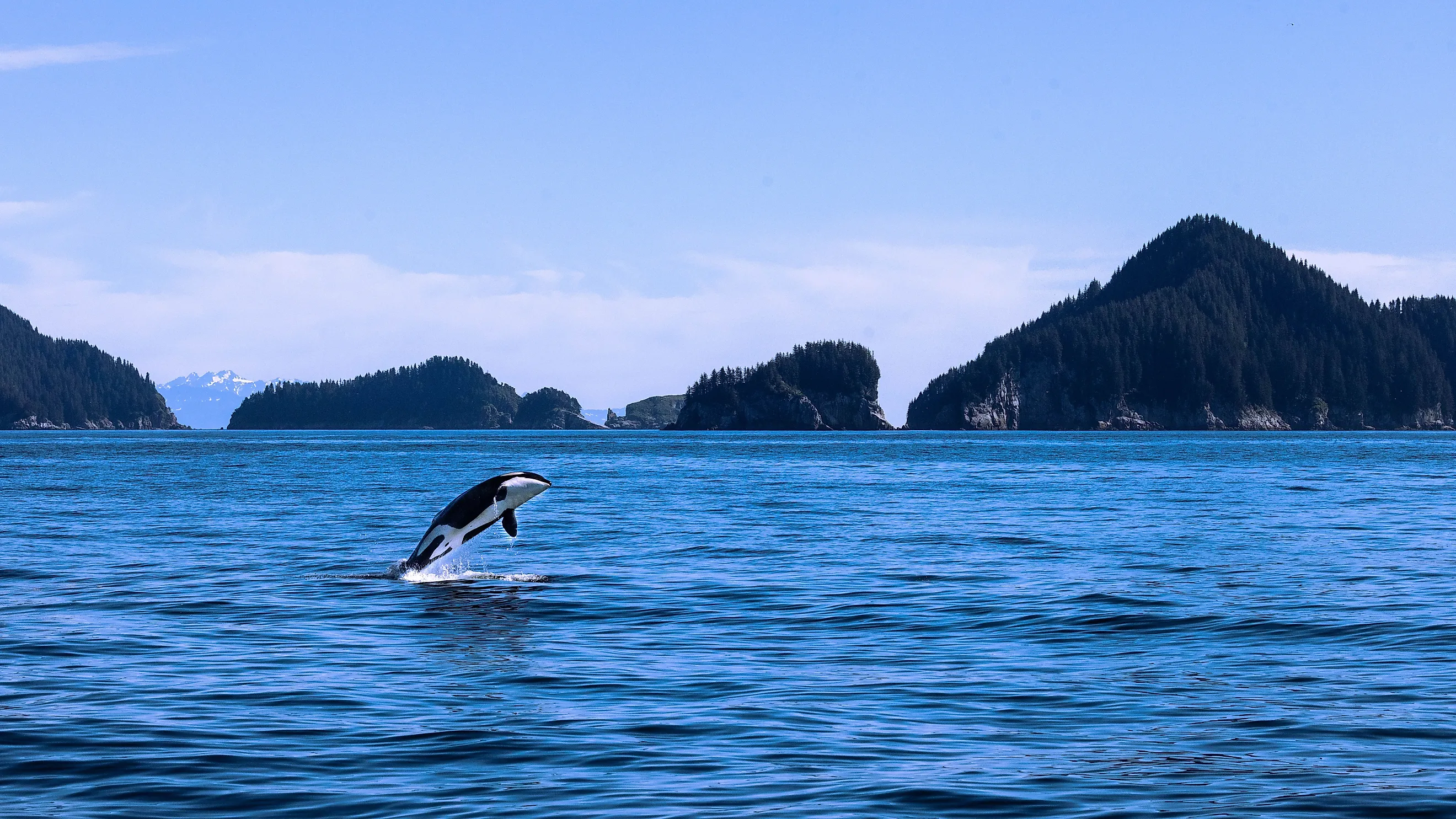
Gray whales can be found between Alaska and Mexico, while humpback whales are active off California, Oregon, Washington, and Alaska. Further offshore, but viewable from boats, beaked whales and pilot whales are present in the deeper waters of the Pacific basin. Along the Alaskan coastline, the best viewing locations are at Juneau and Stephens Passage. Between May and September, humpback whales and orcas can regularly be seen. At the Kenai Fjords National Park near Seward, tours of glaciers and marine wildlife are available, allowing for close-up viewing of several whale species. At Glacier Bay National Park, high concentrations of humpback whales are feeding during the summer months. Orcas are highly visible in Alaska's coastal waters, and beluga whales are seen on occasion in the southern waters off Alaska.
Hawaiʻi Coastline

Humpback whales are one of the most prevalent whale species in the waters around the Hawaiian islands. During the winter migration season, between December and April, humpbacks are highly visible from the coasts of Maui, Oʻahu, and the Island of Hawaiʻi. The ʻAuʻau Channel, the shallow waters between Maui, Lānaʻi, and Molokaʻi, is one of the best spots for whale watching. Papawai Point, at the scenic overlook on the Pali Highway on Maui, makes for some of the best whale spotting right from the shore. At South Maui at the Kīhei and Wailea coastal parks, mothers and calves can be regularly seen from shore. On the Makapuʻu Point Lighthouse Trail on O'ahu, the coastal hiking trail is a popular location for spotting breaches, while the Hālona Blowhole near Koko Head offers winter sightings.

On the Big Island, also known as Hawaiʻi Island, on the Kohala Coast, the protected waters within the Hawaiian Islands Humpback Whale National Marine Sanctuary offer both refuge for the whales and sighting opportunities for visitors. Puʻukoholā Heiau in the Hawaiian language means "Temple on the Hill of the Whale," and the Puʻukoholā Heiau National Historic Site is a historical elevation point near Kawaihae Harbor, ideal for humpback whale spotting. Along with humpback whales, short-finned pilot whales and sperm whales are also common in Hawaiian coastal waters. As well, in the coastal waters around Hawaiʻi, false killer whales, Cuvier's beaked whales, Blainville's beaked whales, and Bryde's whales can be found.
Whale Watching Away From the Crowds
With interest in whales and whale watching, prime locations can become crowded and over-touristed. Often, this attention can lead to disruptions to whale populations, migration patterns, and feeding grounds, particularly with increases in boat activity. There remain some areas with less tourist impact, including some of the more isolated coastlines in Alaska, and such places as Port Townsend, Washington on the Olympic Peninsula, which tends to be quieter than nearby hotspots, especially for catching sight of orcas, while Lubec, Maine, on the state's easternmost tip, is a quiet, less touristed spot compared to Bar Harbor. Cape May in New Jersey tends to be limited to localized tourism, while the Cape May Whale Watch & Research Center offers an educational approach to whale watching, with opportunities to observe spring and autumn migrations, without the crowds common in New England.