The National Parks Where You Can See Whales From Shore
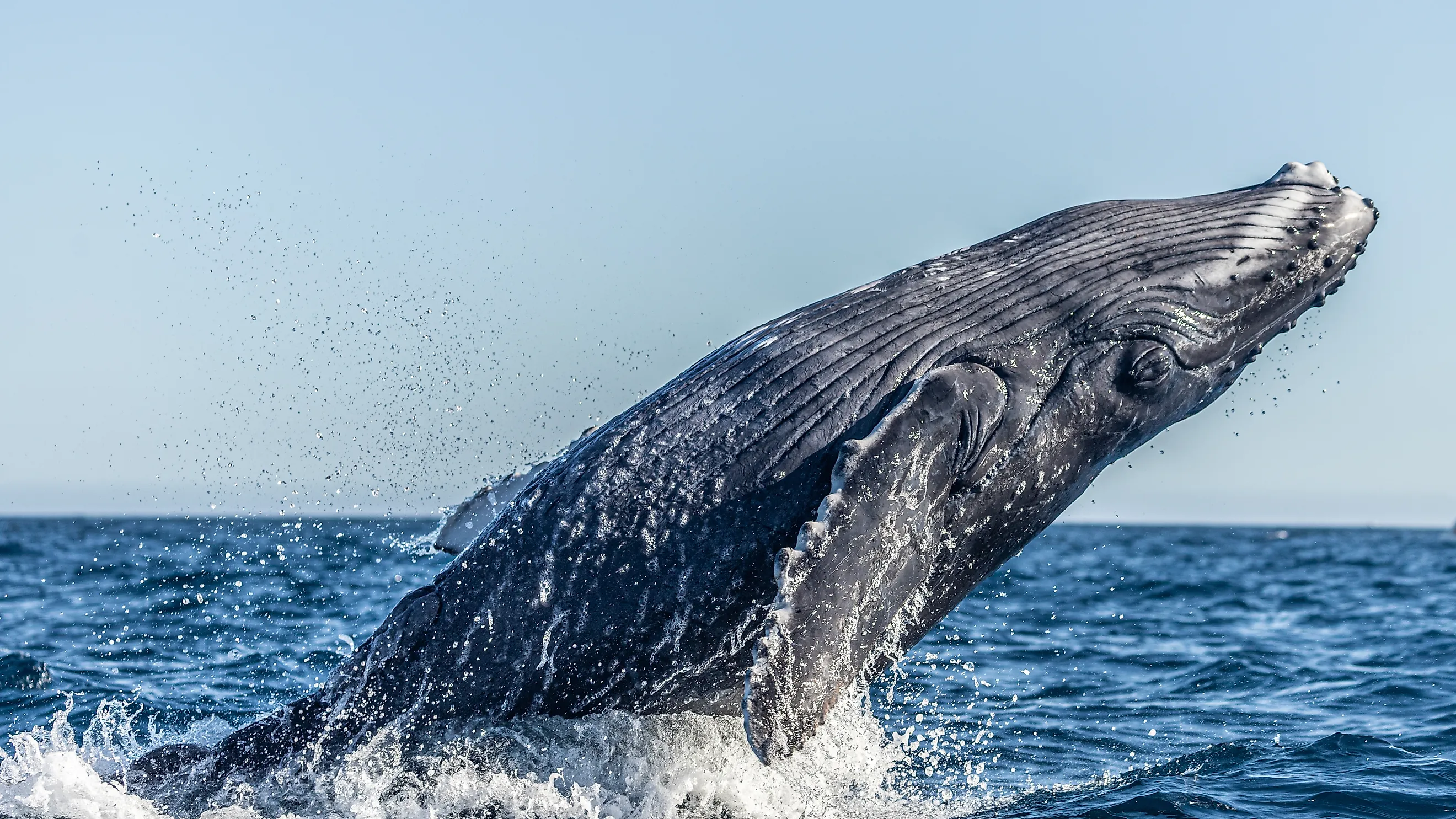
Along the Pacific Ocean coast, national parks provide great views of migrating whales. The whales travel with their calves and stop to feed along the way from their shores. Visitors grab a pair of binoculars and stand on the coastal shores to see the tails of gray whales and humpback whales. These whales pass through the waters near national parks in California, Alaska, Washington and Hawaii on their journey. To witness these marine mammals breach and feed, these national parks are the places to observe marine mammals from the shoreline.
Glacier Bay National Park

Humpback whale sightings enchant visitors standing on shore at Glacier Bay National Park in southeast Alaska. Usually, sightseers will be able to see the whales stopping in the fjord (a narrow sea inlet) during the summer to feed on schools of herring and capelin fish, although they feed all throughout the spring, summer and fall seasons. It is also possible, although less common, to see the resident population of killer whales, also known as orcas, as they feed on fish.
Glacier Bay also operates as a sanctuary for humpback whales, boasting some of the strongest protections for the mammal. There's a very good chance that visitors and researchers will be able to view humpback whales from the shoreline during their visit, since the National Park Service notes that the number of humpback whales seen in the waters of the bay continues to increase year over year, reversing a trend of declining population numbers due to whaling.
Olympic National Park

Gray whales glide through the Pacific Ocean just beyond the shores of Olympic National Park in Washington. From April to May, and again later in the year from October through November, visitors will see the creatures from the rugged Olympic Coast as they travel their migration route. Some of the best-known spots to catch a glimpse of them are Kalaloch, Shi Shi, and Rialto beaches.
Although the number of gray whales was low enough that they were once placed under the protection of the Endangered Species Act, their populations have since rebounded. Other marine life is present, but visitors are encouraged to identify whales through their spouts and barnacled backs.
Redwood National Park

Gray whales are also found year-round off the coast of Redwood National Park in California. A prime location for visitors to spot the local population of whales is Klamath River Overlook, where the whales' spouts can be seen in the Pacific Ocean using a pair of binoculars. In the spring and fall, migrating whales are also visible.
Channel Islands National Park

A variety of whales swim by the shores of Channel Islands National Park in southern California. Typically, gray whales can be seen by visitors who visit the park's shoreline from mid-December to mid-March. However, during the summer months there is a greater chance of seeing other whale species like humpback whales and blue whales, the largest mammals to live on Earth. Park rangers describe the early morning as a visitor's best opportunity to see whales from the shore. Parkgoers can also view whales from the visitor tour's telescopes.
Hawaiʻi Volcanoes National Park

On more rare occasions, humpback whales are visible from the shores of Hawaiʻi Volcanoes National Park as they make their way to breeding grounds near Maui. The whales typically reach Hawaii from the North Pacific in November. The National Park Service notes that while it is not a common sight to see the mammals lingering by the coastline closest to the park for long, it is possible to see them from the shore as they arrive at the islands during the winter mating season.
Parks are prime spots for observation
The shores of these national parks that border the waters of the Pacific Ocean are valuable places for researchers to study the behaviors of undisturbed marine life. Thanks to the conservation efforts of these parks, scientists have been able to gain a better understanding of whales that dwell in the North Pacific as their population numbers have increased from being critically endangered. For visitors, that means the opportunity to enjoy seeing these creatures swimming through the water for years to come.