The Largest Shark Ever Caught In American Waters
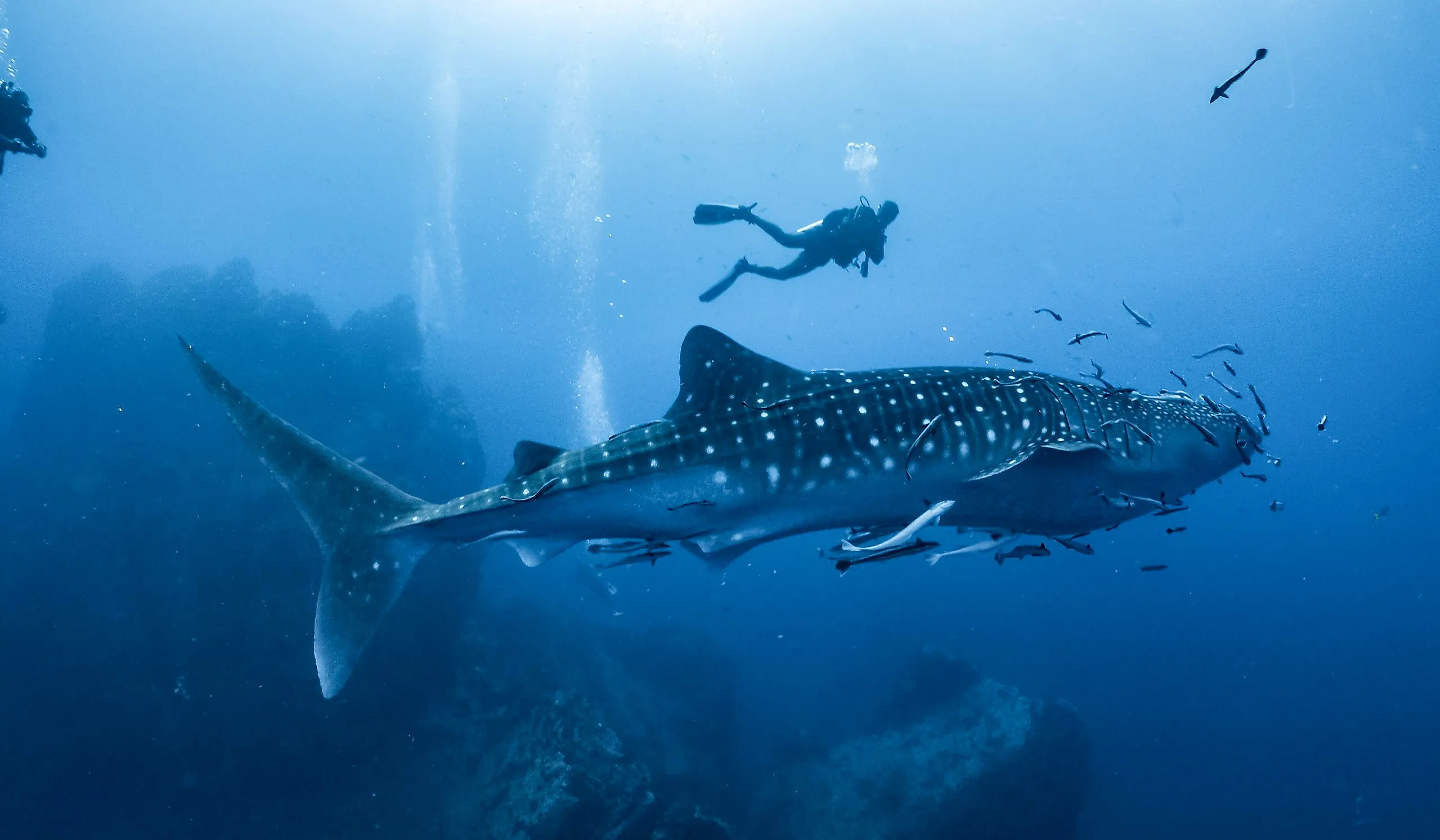
The biggest shark ever caught in American waters was taken near Knights Key in the Florida Keys. In early June 1912, charter captain Charles Thompson and his fishing party harpooned a whale shark there that the Key West Art & Historical Society lists at 38 feet long, with an 18-foot girth and an estimated weight of 26,594 pounds. That estimate is more than seven times the weight of the biggest white shark ever put on a US dock scale, a New York fish that never made the record book. Thompson brought his whale shark in with harpoons and rifles, and the International Game Fish Association, which keeps the world's fishing records, counts only fish taken on rod and reel, so its angling records come from other stretches of the coast. The heaviest shark officially recorded on rod and reel in US waters came off the end of a fishing pier in South Carolina. Where the record sits on the map depends on what counts as caught.
A 38-Foot Whale Shark At Knights Key

Knights Key sits at the foot of the Seven Mile Bridge in the Middle Keys, and between 1908 and early 1912 its dock was the southern end of the line for Henry Flagler's Overseas Railroad. The tracks reached Key West that January, a few months before Thompson's party found the whale shark in the water near the key. Accounts of the fight vary in their numbers, but they agree the party killed the shark with harpoons and rifle fire, using more than 100 bullets over about a day and a half. Thompson then towed it north to Miami.
In 1913, ichthyologist E. W. Gudger described the catch in the journal Science as the second capture of a whale shark in Florida waters. Thompson had the fish mounted by a taxidermist recommended by the Smithsonian Institution and took it around the country on a railroad flatcar, and later up the Mississippi River by boat. Its trail ends in Minneapolis around 1920.
The Montauk White Shark That Missed The Record Book

In early August 1986, a white shark brought into Montauk Marine Basin, in the charter port of Montauk at the eastern tip of Long Island, pushed the dock scale to its 3,500-pound limit while still inside a 73-pound cargo net. Subtracting the net gave the 3,427 pounds quoted ever since, 763 pounds more than the standing white shark record, a 2,664-pound fish caught by Alf Dean in South Australia in 1959.
The shark came in aboard Cricket II, which had left Montauk Harbor on August 4 under captain Frank Mundus, who is often said to be the inspiration for Quint in Jaws. Accounts place the catch near a dead whale that had drawn white sharks, somewhere between 20 and 30 miles offshore. Angler Donnie Braddick fought the 17-foot shark from the fighting chair on 150-pound-test line.
The IGFA never listed Braddick's shark as a record. IGFA rules require one angler to fight a fish without help, and accounts say Mundus sat in the fighting chair before Braddick took over. The line was also heavier than the IGFA's top class of 130 pounds, and IGFA rules disqualify fish caught with mammal parts used as chum, which counted the dead whale against the catch. Mundus had already harpooned a heavier white shark in 1964, estimated at 4,500 pounds, but nobody ever weighed it.
The Tiger Shark Off The End Of Cherry Grove Pier

Cherry Grove Pier runs 985 feet into the Atlantic Ocean from North Myrtle Beach, South Carolina. The wooden pier there today was rebuilt after Hurricane Hugo in 1989 and repaired again after Hurricane Ian broke off a section in 2022. An earlier version of the pier is where stonemason Walter Maxwell set the heaviest rod-and-reel shark record in US waters. On June 13, 1964, Maxwell hooked a tiger shark from the end of the pier and fought it on 130-pound Dacron line for more than four hours, and the shark weighed 1,780 pounds and measured 13 feet, 10.5 inches.
Horry County, which includes North Myrtle Beach, passed an ordinance in 2011 against taking sharks that may endanger the public from its piers, beaches, and shores. Maxwell's tiger shark still shares the all-tackle world record. In March 2004, a tiger shark caught off Ulladulla, Australia, weighed in less than six pounds heavier, and because IGFA rules require a new record for a fish of 25 pounds or more to beat the old one by at least half of one percent, the two sharks hold the title together.
A World-Record Hammerhead In Boca Grande Pass

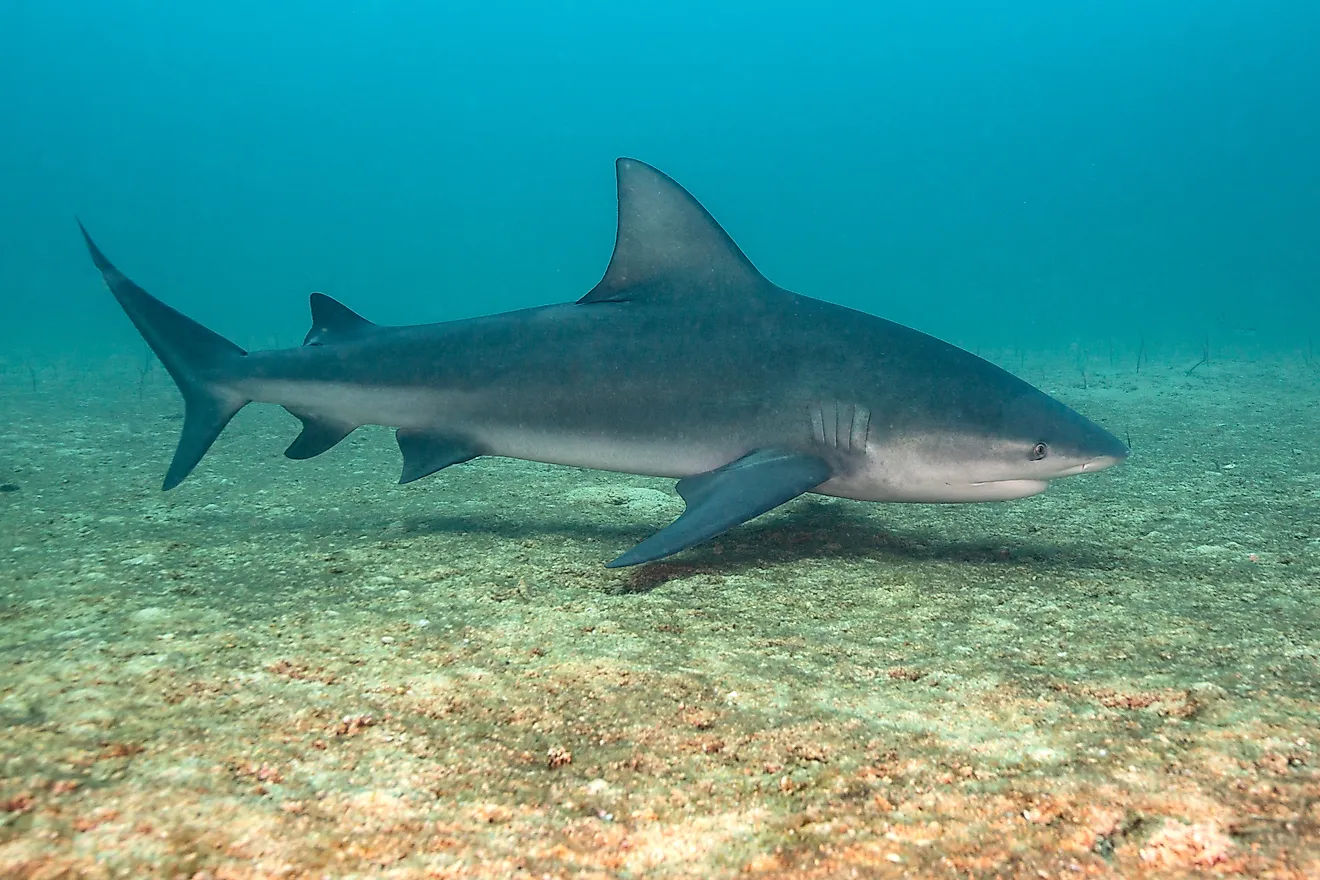
The great hammerhead record came out of Boca Grande Pass, a channel just off the southern tip of Gasparilla Island on Florida's Gulf Coast that reaches depths of 80 feet and is best known for tarpon fishing. On May 23, 2006, during the tarpon run, Port Charlotte fishing captain Bucky Dennis hooked a great hammerhead there on a live stingray. At 1,280 pounds and 14 feet, 3 inches long, it became the IGFA all-tackle record for the species. Dennis donated it to Mote Marine Laboratory in Sarasota, where researchers found the female was carrying 55 pups.
Dennis landed another hammerhead in the same pass in 2009, a 1,060-pound fish. Late in 2011, Florida approved a rule banning anglers from keeping or landing hammerhead and tiger sharks in state waters, so a hammerhead hooked in Boca Grande Pass today goes back into the water.
Mary Lee, Caught And Let Go Off Cape Cod

OCEARCH, a research group that tags large sharks, lifted a female white shark out of the water off Cape Cod, Massachusetts, in September 2012 and recorded her at 16 feet and 3,456 pounds. The crew fitted her with a satellite tag and named her Mary Lee before releasing her. On paper, she outweighed the Montauk shark by 29 pounds. Her tag sent a signal whenever her dorsal fin broke the surface, and the tracks showed her moving up and down the East Coast between Florida and Massachusetts, with a trip out to Bermuda in 2013. The last signal came on June 17, 2017, off Beach Haven, New Jersey, after she had logged 39,975 miles.
Federal Rules Keep The Biggest Sharks Off The Scale

White sharks and whale sharks have been off-limits in federal Atlantic shark fisheries, which include the Gulf of Mexico, since 1997. That year NOAA Fisheries added both to its list of prohibited species, along with basking, sand tiger, and bigeye sand tiger sharks. The 1997 rule left anglers one option for white sharks, fishing for them with rod and reel without keeping them. Prohibited sharks must be released with minimal injury and without being removed from the water, so a white shark hooked off Montauk today goes back into the ocean without ever touching a scale.
For most of the 20th century, proving a shark's size meant killing it and getting it onto a scale or a flatcar. The same held on the Pacific Coast, where harpooners hunted basking sharks in Monterey Bay between 1924 and 1952 and the largest credited catch was 8,600 pounds, about a third of the estimate for Thompson's whale shark. Mary Lee's 16 feet and 3,456 pounds were recorded on a research vessel off Cape Cod, and she kept swimming for nearly five years afterward. Under federal rules for the Atlantic and the Gulf, and Florida's own limits on hammerheads and tiger sharks, the next shark that challenges these sizes is likely to be measured beside a boat and set free. That leaves the 38-foot whale shark from Knights Key, harpooned in 1912, with a title that no catch in Atlantic or Gulf waters can legally take, because keeping a whale shark there has been illegal since 1997.