America's First Planned City
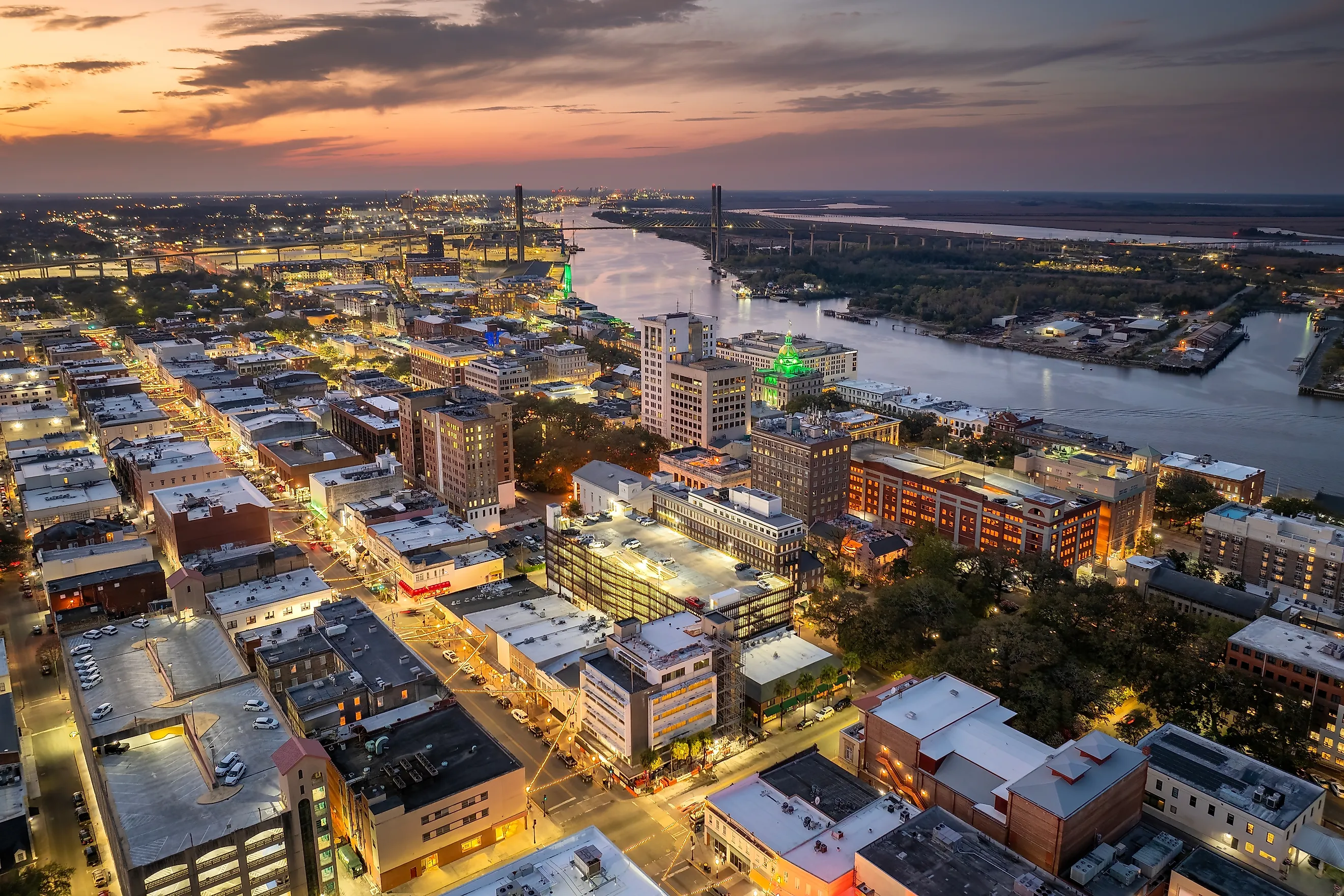
Savannah, Georgia, a city with a recorded history beginning in 1733, is considered by most historians to be America's first planned city. It was laid out by General James Oglethorpe. He also named the 13th colony 'Georgia' after King George II of England. The original layout included grids where wide streets met parks and squares. Of the city's original 24 squares, 22 still exist in 2026.
How Did Savannah Earn Its Title?

For Savannah to earn the distinction of 'first planned city', one must consider the criteria. For this article, 'first planned' is defined as the earliest colonial American settlement laid out according to repeating grids that contain residential homes and public squares. Savannah's layout was determined before its construction. Under a different definition, such as the earliest continuously occupied grid, St. Augustine, Florida, would be designated the oldest.
The Fascinating History of Savannah, Georgia

Savannah was once home to Methodists, Baptists, Jews, Lutherans, Presbyterians, and Anglicans who faced persecution. Savannah was also a refuge for the oldest congregation that now practices Reform Judaism in the country. Besides protecting religious groups, Savannah also protected itself against invasion. The city put up walls against the Spanish and later built forts to defend itself during the Revolutionary and Civil Wars.
James Edward Oglethorpe, along with 114 colonists, left England in November 1732, sailing on the Anne. The first group of settlers arrived at what would become Savannah on February 12, 1733. At the time, the site was called Yamacraw Bluff, and it sat on the Savannah River around fifteen miles away from the Atlantic. Oglethorpe introduced himself to Chief Tomochichi, the leader of the Yamacraw Indians, as well as Mary Musgrove, an Indian trader. Once he established relationships with them, he began working on a plan to lay out the city of Savannah. Oglethorpe and his co-planner, William Bull, decided on a London-based town model with wards built around squares. The squares would be centrally located with trust lots on both the east and west sides. These lots would provide space to construct buildings and churches. The tything lots to the north and south were left open for settlers to build their homes.
The idea behind establishing Savannah and a new colony was to provide a home for English debtors who worked together with a business and mercantile class. There was no slavery in Savannah or Georgia until 1750, no Catholics until 1748, and no lawyers until 1755. After being settled, the religious groups started arriving, as mentioned above. The Evangelical Lutherans from Salzburg settled their own town on the Savannah River known as Ebenezer. Other settlers, including Scottish Highlanders, German Moravians, as well as Welsh, Irish, and Dutch settlers, arrived in 1736. After Reverend George Whitefield arrived in 1738, he founded Bethesda in 1740, which became colonial America's very first orphanage. Savannah is also linked to Georgia's Declaration of Independence signers, namely George Walton, Button Gwinnett, and Lyman Hall.
The Effect of War

The newly established city of Savannah could not escape the effects of war. The city was captured by British forces in 1778, and James Wright became the state's colonial governor. A group of Americans and Frenchmen tried to get Savannah out of the hands of the British in 1779, which resulted in one of the fiercest battles of the American Revolution. When the Revolution was over, Savannah became the first capital of Georgia but lost that title to Augusta in 1786.
Antebellum Savannah

After the ban on slavery was lifted, Savannah entered its antebellum period. The city grew around the concept of slavery and agriculture, mostly cotton and rice. Savannah became a primary port for cotton shipping and by 1820 was one of the largest cities in America. But when disaster struck, the city could not withstand it, and at least half of it was left ruined. Fires ravaged Savannah in 1796 and 1820. A hurricane hit in 1854, destroying the rice and cotton plantations and damaging the port. 1820 and 1854 also saw terrible yellow fever epidemics kill hundreds and then thousands. Mass graves were dug in what is now Colonial Park Cemetery to keep the bodies off the streets. The violence of the slave trade and pirate brawls at the historic 1754 Pirates' House added to this dark period of Savannah's history. Today, the city retains a slightly spooky atmosphere thanks to this history, which fuels a huge ghost-hunting industry.
Savannah In the Twentieth Century

In the 1920s, Savannah once again suffered damage to its cotton industry due to a boll weevil infestation. The city had no choice but to pivot to other industries and, as such, became a prominent leader in the paper and pulp industry. It also went big on food processing, opening a massive operation at Union Bag. Savannah's port played a big role in WWII, being one of the most active Atlantic shipyards when it came to constructing Liberty Ship transports. After the war, the Georgia Ports Authority purchased land on the Savannah waterfront to expand port operations.
As Savannah grew, Hunter Army Airfield was built, and then the city entered its civil rights movement period. As a result, the city was one of the first in the Deep South to allow the hiring of Black police officers. The expansion continued, and by the 1930s, Savannah had developed most of what can still be seen here today. Around 150,000 people call Savannah home in 2026. It is still one of the busiest container shipping ports and seaports in America, and it is still a leader in paper pulp processing. At the same time, its main industry is tourism, with the city's economy heavily reliant on those who come to visit and stay for a couple of days at a time.
Visiting Savannah Today

America's first planned city is a major tourist draw in modern times. It is one of the most beautiful cities in the country, extremely pedestrian-friendly, and offers some of the best Southern dining in the Deep South. That said, those who want to have some spooky adventures after enjoying all that Southern hospitality might find themselves looking over their shoulders more than once on a guided ghost tour. These tours happen in convertible-style hearses, taking visitors around what some call 'the most haunted city in the U.S.' Those who want to stay at the infamous 17Hundred90 Inn even have to sign a waiver in case the ghost known as 'Anna' spooks them while they are sleeping.
Besides the food and the ghosts, there are lots of other things to see and experience. The city's Historic District is filled with 22 park squares and 18th- and 19th-century homes. The Victorian District features well-preserved Victorian homes that date back to the 1800s along Whitaker and Bull Streets. There is also a grand fountain to see at Forsyth Park. Visitors can dine at The Pirates' House, visit the botanical gardens and walk the garden trails, and check out the fascinating exhibits at the Savannah History Museum.
Which Other Cities Vie For the Title?
While Savannah holds the title of America's first planned city, when it comes to the first planned colonial grid, other cities can lay claim to the word 'first' as well. For instance, if talking about the oldest European-planned city in the U.S., the honors are bestowed upon St. Augustine in Florida. This city was founded by the Spanish in 1565, nearly 170 years before Savannah. The city was organized around a central plaza with a grid system mandated by the Spanish Crown's Laws of the Indies.
New Haven, Connecticut, is also an example of an earlier colonial grid. It was laid out according to a 'Nine Square' plan in 1638. The plan was not as expansive or scalable as Savannah's ward system, but it was a completely predetermined geometric plan. Looking at the absolute earliest planned city in North America, one can also look past the colonists. Around 1050 CE, a Native American culture built Cahokia in what is known as Illinois today. This intentional metropolis was laid out with astronomical alignments and focused on a grand plaza as well as towering earthen mounds.
An Enduring Ward Design
These other cities have valid claims, but Savannah is still considered the ultimate model for early American urban planning. Oglethorpe's ward design showed that building a framework on a suitable landscape could help bring the community together. It could also help improve the health and well-being of said community through lovely green spaces. Plus, the scalability of the ward design helped Savannah accommodate ongoing growth without losing the character of the city.
A Masterpiece of Urban Planning
When considering Savannah's claim to fame now, it is clear that the designation is not only about being first. While it is considered the first planned city, Savannah was also very much built to last. Oglethorpe's planning created a highly livable environment that draws people to this day. The preservation of that 1733 blueprint allows Savannah to stand out as a masterclass in urban design today, and as a timeless tourist destination.