The National Parks With The Most Timber Rattlesnakes
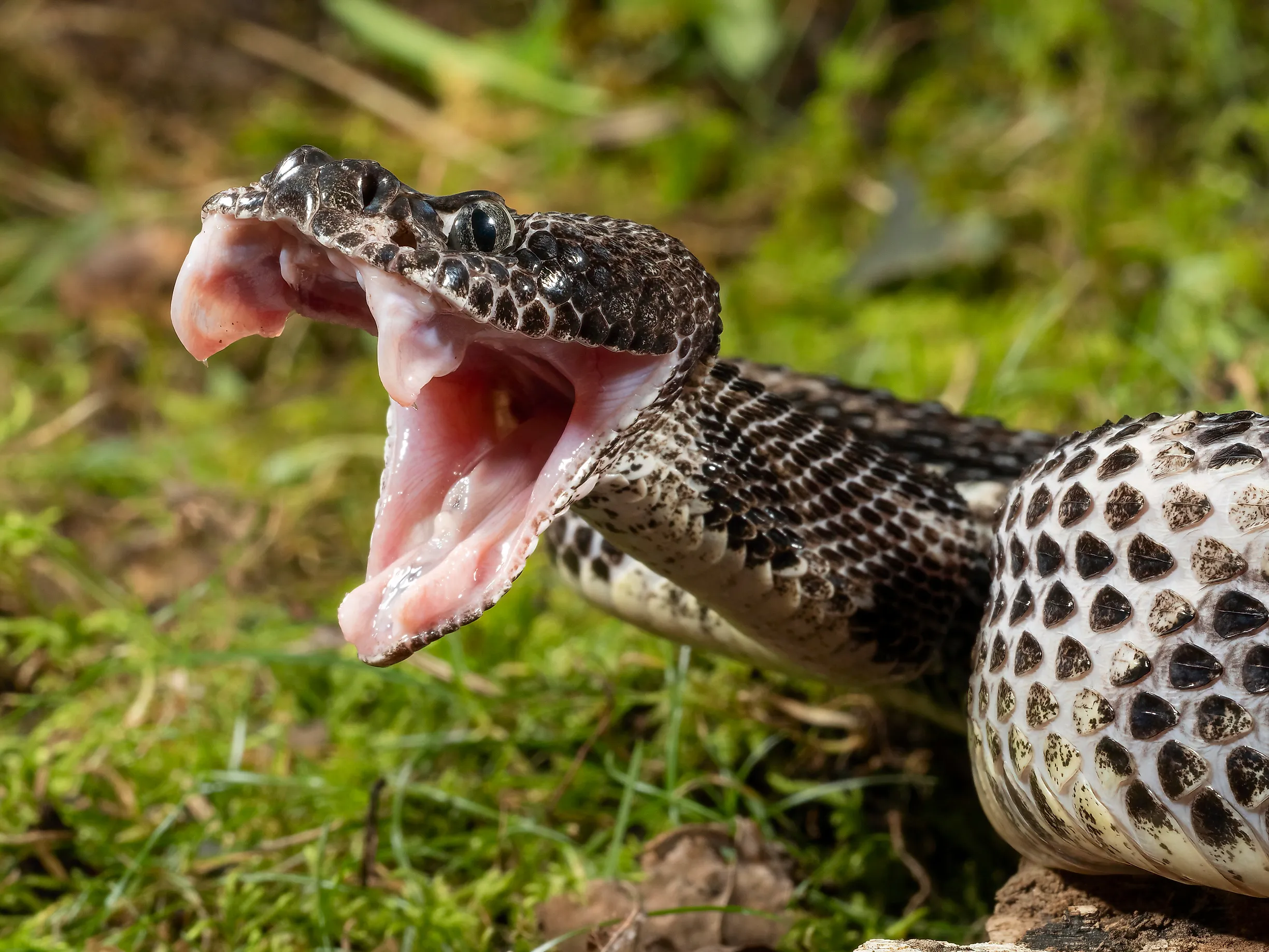
Only six of the 63 national parks have timber rattlesnakes in the National Park Service’s own species records. The snake is venomous but rarely aggressive. The parks below protect it quietly, keeping the location of its communal winter dens off their public information. These six are where the timber rattlesnake still holds ground inside the national park system, each with its own reason the snake is hard to find and harder to pin down.
Shenandoah National Park, Virginia

Shenandoah's rattlesnakes come with an unusually long paper trail, largely because of one man. William "Marty" Martin worked as a ranger in the park in the 1970s and went on to study timber rattlesnakes for 44 years, logging more than 17,000 observations. In 2017 he reported that Shenandoah's populations had stayed relatively stable while declines elsewhere followed residential development. In 1975 he counted 37 timber rattlesnakes, alive and dead, along the southern section of Skyline Drive in Virginia. He singled out the stretch between roughly miles 76 and 96 as the habitat where the timber rattlesnake seemed most common, a section of ridge covered in dry, acidic chestnut-oak woods and numerous scree and talus slopes.
The park's current reptile checklist rates the snake common and found park-wide, one of only two venomous species there, along with the copperhead. What stands out is how tightly the snakes gather in winter. Joe Villari, who manages the Bull Run Mountains Natural Area Preserve in northern Virginia and did fieldwork with Martin, told the Charleston Gazette-Mail that visitors to the Bull Run dens might see a handful of snakes outside them, while in Shenandoah they could see dozens. The park follows the Blue Ridge, the eastern front of the Appalachian Mountains, and its rock supplies the ledges those dens depend on.
Great Smoky Mountains National Park, Tennessee And North Carolina

Great Smoky Mountains also rates the timber rattlesnake common, and its NPSpecies file holds 80 observation records, the most of any park on this list. The same file notes that the snake is collectible and marks its dens as especially confidential.
It is one of 23 snake species in the park, which straddles Tennessee and North Carolina, and one of just two venomous ones, along with the northern copperhead. The Park Service describes the odds of meeting either, let alone being bitten, as extremely low. The rattlesnake does range higher than many visitors assume. Smokies Life, the park's nonprofit partner, reports it throughout the park to at least 5,800 feet and notes that individuals can be very dark or entirely black. Reptile and amphibian surveys in the park have found many of these slow-moving snakes dead along roads. Walt Peterson, a park volunteer and certified master herpetologist, put the human side plainly to Smokies Life: most of the risk comes from people placing hands or feet near rocks, logs, and buildings without looking first.
New River Gorge National Park And Preserve, West Virginia

West Virginia made the timber rattlesnake its state reptile in 2008, after an eighth-grade class at Romney Middle School proposed it, and the legislature's resolution pointed out that no other state had claimed the species. New River Gorge, redesignated from a national river in December 2020, became the state's first national park. The park has documented nearly 40 reptile species, and its snake guidance names the copperhead and timber rattlesnake as the only venomous ones. Both are protected inside the park, and harming either is illegal. State law separately makes it unlawful to take or possess a rattlesnake anywhere in West Virginia.
The gorge puts people and snakes in the same space. Its sandstone walls draw rock climbers, and Park Service climbing tips carried in a 2018 Associated Press story advise learning both venomous species and watching where you reach, since snakes may hide in crevices in the rock faces. NPSpecies, drawing on a 2010 assessment by Marshall University herpetologist Thomas Pauley, rates the timber rattlesnake uncommon in the park. The Park Service's advice is the same here as everywhere else: the snakes are not normally aggressive, and keeping away gives them a chance to leave.
Mammoth Cave National Park, Kentucky

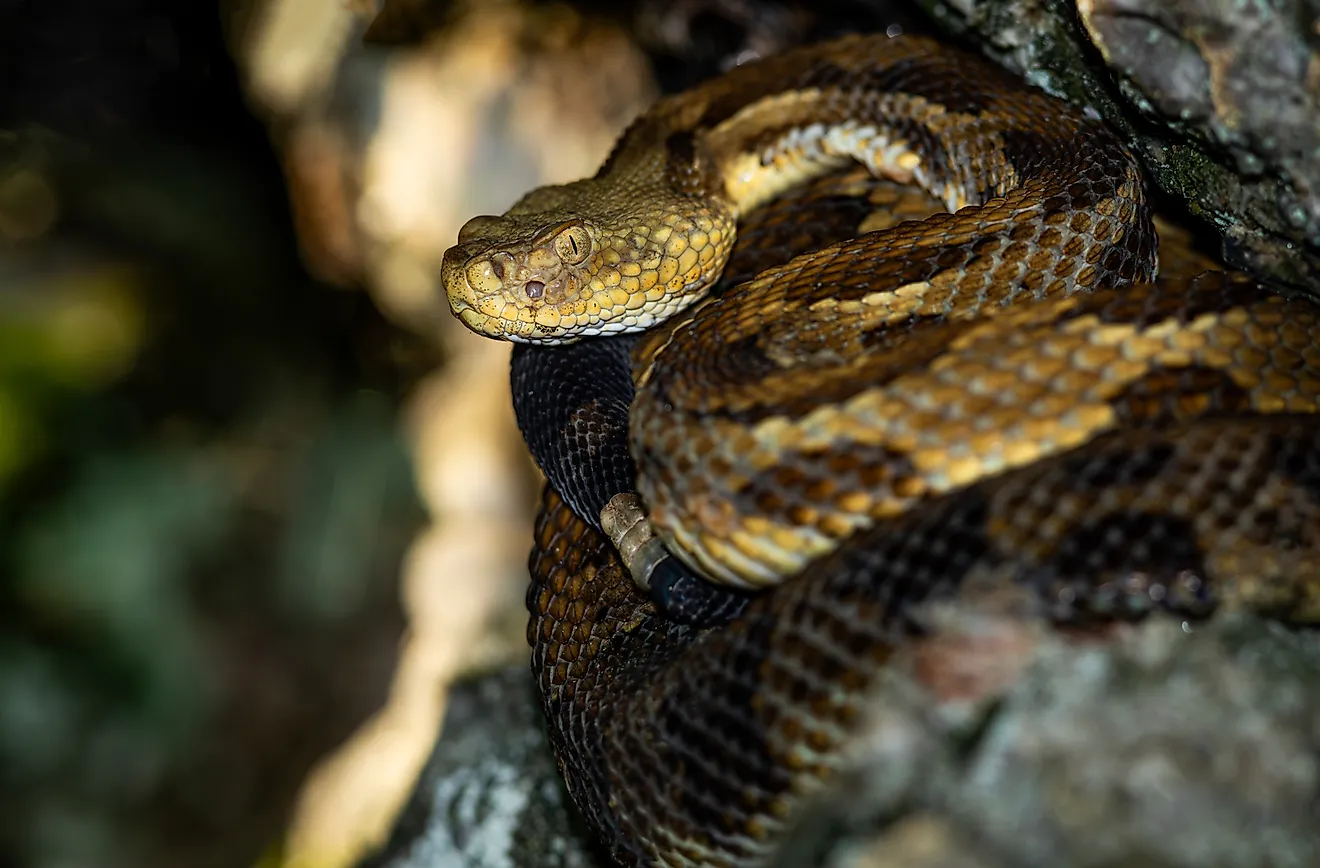
Almost everyone visiting Mammoth Cave heads underground, but the timber rattlesnake belongs to the forest above the world's longest known cave. The Park Service notes that both of the park's venomous snakes, the eastern copperhead and the timber rattlesnake, prefer to stay out of sight of predators and people alike, and that the rattlesnake can be identified by the rattle at the end of its tail. NPSpecies lists the species as present and uncommon, with 22 observation records, and the park's file for it cites a source dating to 1936.
Information about the park has one notable glitch. A backcountry campsite listing on Recreation.gov, the federal booking site, names the eastern diamondback as one of the park's two venomous snakes. The Kentucky Department of Fish and Wildlife Resources lists only four venomous species in the state: the copperhead, cottonmouth, timber rattlesnake, and pigmy rattlesnake. The eastern diamondback is not among them. The rattlesnake a backcountry camper at Mammoth Cave might actually meet is the timber rattlesnake.
Congaree National Park, South Carolina

Congaree is the odd one out on this list: a floodplain forest along the Congaree River that floods regularly and lacks the rocky ledges timber rattlesnakes use in the mountains. Here the species goes by another name. Its NPSpecies record lists the synonym Crotalus horridus atricaudatus, the older name for the canebrake rattlesnake, the coastal plain form. According to the Defense Department's reptile conservation program, subspecies of the timber rattlesnake are no longer recognized, though two geographic variants remain, one on the coastal plain and one in the mountains and Piedmont.
The name comes from the habitat. A canebrake is a dense growth of switch cane, and a stop on the park's self-guided boardwalk tour explains that such thickets were once so widespread in South Carolina that the word marked vast areas on historical maps. Without rock to den in, these snakes need other winter shelter, and the same Defense Department fact sheet lists holes around the roots of living and dead trees among the species' hibernation sites. The park's record confirms the snake is present, based on a 2004 reptile and amphibian inventory, but leaves its abundance unknown. In 2024, the park warned visitors that it holds 21 snake species, three of them venomous, including the timber rattlesnake, and advised staying at least six feet from any snake.
Hot Springs National Park, Arkansas

Hot Springs is the hardest case on the list. The park's safety page names the timber rattlesnake among the venomous snakes that can live there, yet its NPSpecies record rates the species only probably present. That record rests on a single 2003 reference and lists no observations at all. The park did host a 2016 National Parks BioBlitz focused on reptiles and fungi, but the species record still shows no confirmed sighting.
Habitat does not seem to be the obstacle. The park sits in the Zig-Zag Mountains, part of the Ouachita Mountains, and the Park Service describes it as surrounded by the Ouachita National Forest and the city of Hot Springs. The park calls itself a critical sanctuary for wildlife, with more than 70 types of reptiles and amphibians. In Arkansas, that makes Hot Springs National Park a natural fit for timber rattlesnakes, but until someone documents one, it sits at the bottom of this list on paper, not necessarily on the ground.
Why The Dens Stay Off The Map

The thin numbers across all six parks have a biological reason behind them. Timber rattlesnakes replace themselves slowly. In New York, the state's environmental agency reports that females take five to 11 years to mature and give birth only every three to five years, to an average of nine young. Connecticut's wildlife division puts the average lifespan at 16 to 22 years, which means a female may reproduce only three to five times. Missouri's conservation department notes that wild timber rattlesnakes have been documented living to 41, and it estimates one wild female was at least 51.
That slow pace makes every adult hard to replace, and the habit of gathering at the same winter dens year after year makes the snakes easy to collect. Park records reflect both facts. Several NPSpecies files flag the species as an exploitation concern, the record for Big South Fork National River and Recreation Area calls the snakes very vulnerable at their dens and birthing sites, and the Smokies keep their den locations confidential. The parks that know their rattlesnakes best are often the least willing to say exactly where they are, and for a species that can take most of a decade to produce one breeding female, that silence is part of the protection.