The State Parks Where Rattlesnakes Den In Winter
By the end of October, the timber rattlesnakes of Pennsylvania's Pocono Mountains have vanished. They have not gone far. Over the past few weeks, they have traveled back to rocky dens their ancestors used for generations. Deep in the cracks and crevices below the frost line, they will stay still and cool until spring. According to the Pennsylvania Fish and Boat Commission, the state has mapped more than 600 historic rattlesnake dens, and losing a single den usually means losing all the snakes that depend on it. A handful of state parks in the Northeast protect some of these winter refuges, giving one of the region's rarest and most misunderstood reptiles a safe place to wait out the cold.
Hickory Run State Park, Pennsylvania

Hickory Run State Park, in the Poconos, covers nearly 16,000 acres of forest, streams, and rock, and it sits in the heart of one of the largest remaining timber rattlesnake populations in the eastern United States. Its most famous feature, the Boulder Field, is a flat, sprawling expanse of jagged stones broken loose by freezing and thawing near the edge of Ice Age glaciers, and the park's rocky slopes and talus offer the deep, protected crevices rattlesnakes need for winter. The Boulder Field alone covers about 16 acres, and it was named a National Natural Landmark in 1967. Rock piles like these hold warmth and stay above the water table, which makes them safer winter shelters than open ground.

In September, the snakes begin moving back toward their dens, and by late October, most are underground. Pregnant females tend to spend the whole summer close to the den, while males and other females can roam a mile or more away before making the return trip in fall. Females may give birth only once every few years, so a population that loses adults takes a long time to recover. Timber rattlesnakes are also patient ambush hunters, coiling beside logs and rodent trails for hours to wait for mice and chipmunks, which makes them easy to overlook even when they are close to a trail.
Leonard Harrison State Park, Pennsylvania

On the rim of Pine Creek Gorge, often called the Grand Canyon of Pennsylvania, Leonard Harrison State Park looks out over steep walls of sandstone and shale nearly 800 feet deep. The gorge runs for roughly 47 miles, carved by meltwater as glaciers retreated at the end of the last Ice Age. North-central Pennsylvania is classic timber rattlesnake country, and the gorge's sunny, south-facing ledges and broken rock give the snakes both basking spots and winter shelter.

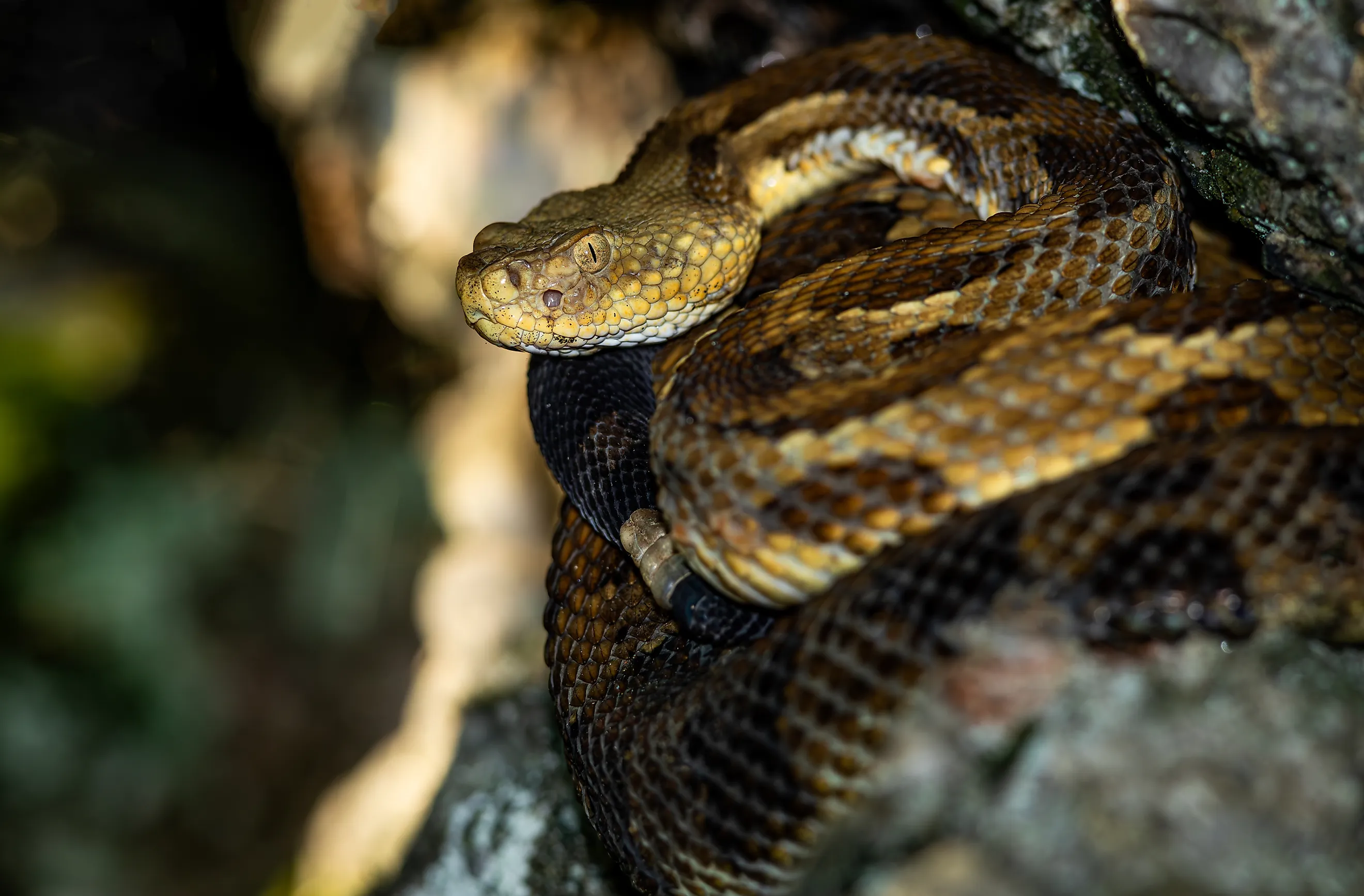
In spring, rattlesnakes emerging from their dens often linger on warm ledges near the entrance before dispersing into the surrounding forest, so hikers on steep trails like the Turkey Path should watch their step on rocky ledges in spring and fall. Den locations are generally not publicized, because losing a single den can wipe out the snakes that depend on it. Most encounters end peacefully. Timber rattlesnakes are generally calm, often staying motionless or rattling a warning long before they would strike, and bites are rare among hikers who keep their distance.
Blue Hills Reservation, Massachusetts

Just south of Boston, the 7,000-acre Blue Hills Reservation is one of the last places in Massachusetts where timber rattlesnakes survive. The reservation holds more than 125 miles of trails and rises to Great Blue Hill, home to a weather observatory that has kept records since the 1880s. After more than a century of decline, the species clings to only a handful of scattered pockets in the state, and it is listed as endangered.

In the Blue Hills, the snakes return each fall to dens that have been used for at least a century, hidden in the rocky ridges above trails crowded with hikers, runners, and dog walkers. Most visitors never see them. The best chance is at the Blue Hills Trailside Museum, where a pair of rattlesnakes rescued after injuries in the wild is on display, a safe way to see one of the state's rarest animals up close. Because so few rattlesnakes remain in the state, every den matters. Wildlife officials ask visitors to stay on marked trails and report any rattlesnake sightings rather than approaching the snakes.
Leaving The Dens In Peace
Winter dens are the single most important places in a rattlesnake's life, and they are also the most vulnerable. Pennsylvania's wildlife agency notes that rattlesnakes cannot be successfully moved to new dens, so protecting existing ones is the only way to keep populations alive. For visitors, that means staying on marked trails, never turning over rocks near ledges, and giving any snake plenty of room, especially in spring and fall, when rattlesnakes gather near their dens. Left alone, these snakes will slip back underground each winter, just as they have for generations.