The American Mountains With The Most Timber Rattlesnakes
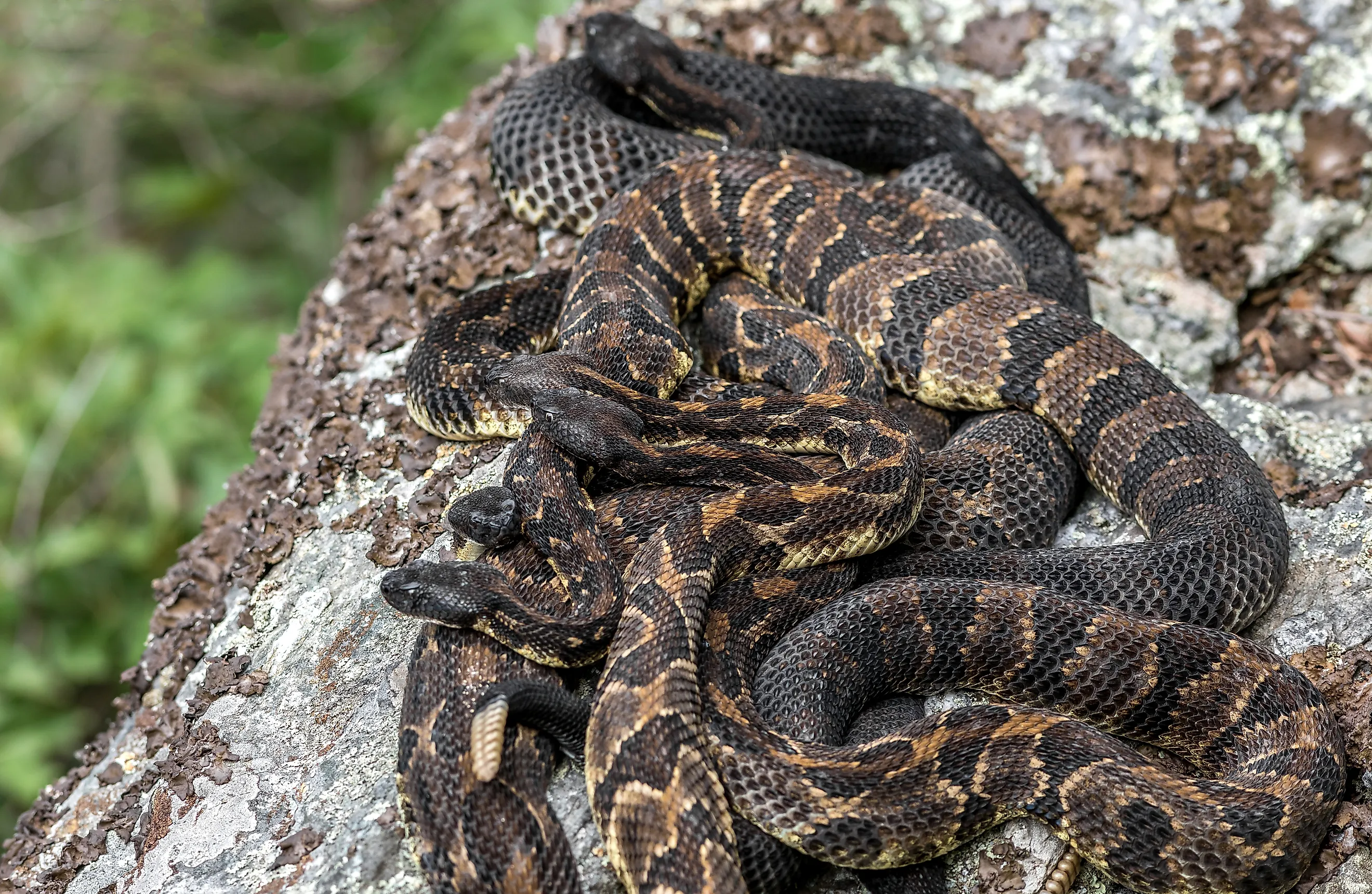
Timber rattlesnakes (Crotalus horridus) once occupied a wider range across eastern North America, but habitat loss and deliberate killing have reduced their populations in many areas. They remain established in rocky, forested mountains across the northeastern United States, where protected winter dens and suitable summer habitat support their survival. Although they are strongly associated with upland terrain in this region, they also inhabit lower-elevation forests elsewhere in their range. These five mountains in New York, Connecticut, and Pennsylvania provide documented habitat for timber rattlesnakes, making them important sites for conserving one of America's largest venomous snakes.
Split Rock Mountain, New York

Split Rock Mountain rises above the western shore of Lake Champlain in the eastern Adirondacks of New York. The surrounding Split Rock Mountain Wild Forest protects a rugged landscape of wooded slopes, rocky cliffs, and undeveloped shoreline. The 2.8-mile North Rim Trail crosses the mountain's summit area and offers views of Lake Champlain. The forest is also known for its relatively undisturbed habitats, which support a variety of wildlife along the lake's western shore.

Split Rock Mountain supports one of the northernmost known timber rattlesnake populations on the East Coast. Its slopes provide places for the snakes to bask, while sheltered crevices offer protection during the colder months. Timber rattlesnakes may appear in yellow, brown, or nearly black color forms, allowing them to blend into their surroundings. Despite being New York's largest venomous snake, the species generally avoids people and often remains motionless when approached. Sightings are possible on bare rocks during warmer weather, although encounters are uncommon.
Mount Tremper, New York

Mount Tremper rises 2,740 feet (835 meters) in the Catskill Mountains of southeastern New York. The mountain is part of the Phoenicia area of Catskill Park and is accessible by a forested hiking trail leading to the Mount Tremper Fire Tower. The 47-foot (14-meter) tower offers elevated views across the neighboring mountains. Bluestone quarrying once took place on the mountain's southern slopes, leaving exposed rock and disturbed terrain still visible in the landscape.

The mountain's outcrops and forested slopes provide suitable habitat for timber rattlesnakes. Like other northeastern populations, these snakes depend on sheltered winter dens where they can survive freezing temperatures. During warmer months, they disperse into nearby habitat to hunt small mammals. Females may use sunlit rocks during pregnancy, when maintaining appropriate body temperatures is especially important. Hikers may encounter rattlesnakes along trails or near rocky outcroppings, particularly during warm weather. The species is protected in New York, and disturbing snakes or their dens can threaten local populations.
Overlook Mountain, New York

Overlook Mountain rises approximately 3,140 feet (957 meters) above the Woodstock area of the Catskills. Its main summit route follows a broad former carriage road for about 2.4 miles (3.9 kilometers) one way. Near the summit are the remains of the historic Overlook Mountain House and a fire tower overlooking the Hudson Valley and nearby Catskill peaks. Hikers can also continue toward Echo Lake, although combining these destinations makes for a considerably longer outing of more than 9 miles (14.5 kilometers) round-trip.

Overlook Mountain is a well-known habitat for timber rattlesnakes in the Catskills. The mountain provides rocky basking areas and forested terrain that snakes use during their active season. In spring, rattlesnakes emerge from winter dens as temperatures increase, often remaining near exposed rocks before dispersing farther into the forest. They generally return to their wintering areas during autumn. Although the wide summit road gives hikers room to avoid wildlife, rattlesnakes may occasionally be encountered along its edges or on sun-heated surfaces. Their presence does not guarantee sightings, and hikers should observe any snakes from a safe distance.
Kongscut Mountain, Connecticut

Kongscut Mountain rises approximately 804 feet (245 meters) within Meshomasic State Forest in central Connecticut. The forest extends across parts of several towns east of the Connecticut River and contains extensive woodland, rocky ridges, and steep ledges. Established in 1903, Meshomasic is Connecticut's oldest state forest. Its network of forest roads and trails provides access to a landscape that remains a vital refuge for native wildlife despite its proximity to developed communities.

Meshomasic State Forest supports Connecticut's largest known population of timber rattlesnakes, making the Kongscut Mountain area highly significant for the species. The snakes use slopes and ledges for winter shelter, while surrounding deciduous forests provide summer habitat and opportunities to hunt rodents. Individuals may move considerable distances from their wintering sites during the warmer months, occasionally appearing near roads or residential properties. Timber rattlesnakes are endangered in Connecticut, and their slow reproduction makes populations particularly vulnerable to deliberate killing and habitat disturbance. Protecting both their denning areas and adjacent forests is essential to their continued survival.
Hawk Mountain, Pennsylvania

Hawk Mountain rises along Pennsylvania's Kittatinny Ridge, part of the Appalachian Mountain system. Reaching about 1,521 feet (464 meters), the mountain is best known for Hawk Mountain Sanctuary, a protected area established in 1934 to conserve migrating birds of prey. Its hiking trails lead through forested slopes and across open rock formations, including prominent lookout points overlooking the surrounding valleys. The Skyline Trail is among the sanctuary's most challenging routes, requiring hikers to scramble over uneven rocks near East Rocks.

Timber rattlesnakes inhabit Hawk Mountain's rocky ridges and forested habitats, using sun-exposed outcrops for basking and sheltered crevices for winter hibernation. The sanctuary protects habitat valuable to the species, including areas used by pregnant females. During summer, adult males may travel through the wider terrain in search of mates, while females often remain closer to suitable basking sites. Snakes may occasionally be encountered near rugged trails and overlooks, especially during warm conditions. Hikers should watch where they place their hands and feet when scrambling and leave any rattlesnakes undisturbed.
Mountainous Territory of the Timber Rattlesnake
These locations demonstrate the importance of protected mountain habitat to northeastern timber rattlesnakes. Their survival depends on secure winter dens, access to surrounding forests, and undisturbed areas where females can reproduce. Although encounters are possible along hiking trails, timber rattlesnakes generally avoid confrontation. Visitors can help protect these populations by remaining on established routes, watching where they step, and giving any snakes they encounter plenty of space.