The Most Crowded National Parks And When To Avoid Them
Just 12 of America's 63 national parks accounted for about 60% of all National Park recreation visits during calendar year 2025, according to the National Park Service. Great Smoky Mountains National Park alone recorded roughly 11.5 million visits, which is more than any other National Park in the country. All 63 parks recorded nearly 93.9 million in that year, and the number is tripled if you include the other sites and monuments the NPS manages. This level of popularity has very real consequences, however. Well-used trailheads fill before breakfast, shuttle lines stretch well beyond the morning rush, and parking lots can reach capacity long before midday during peak season. Come at the wrong time of year, and even America's biggest landscapes can feel surprisingly crowded. Stop by a few weeks earlier or later, and the experience can be dramatically different.
Using the latest National Park Service visitation data for 2025 and available data for 2026, along with each park's seasonal patterns, these are the most crowded official national parks and when you're most likely to experience them with smaller crowds.
Great Smoky Mountains National Park, Tennessee & North Carolina
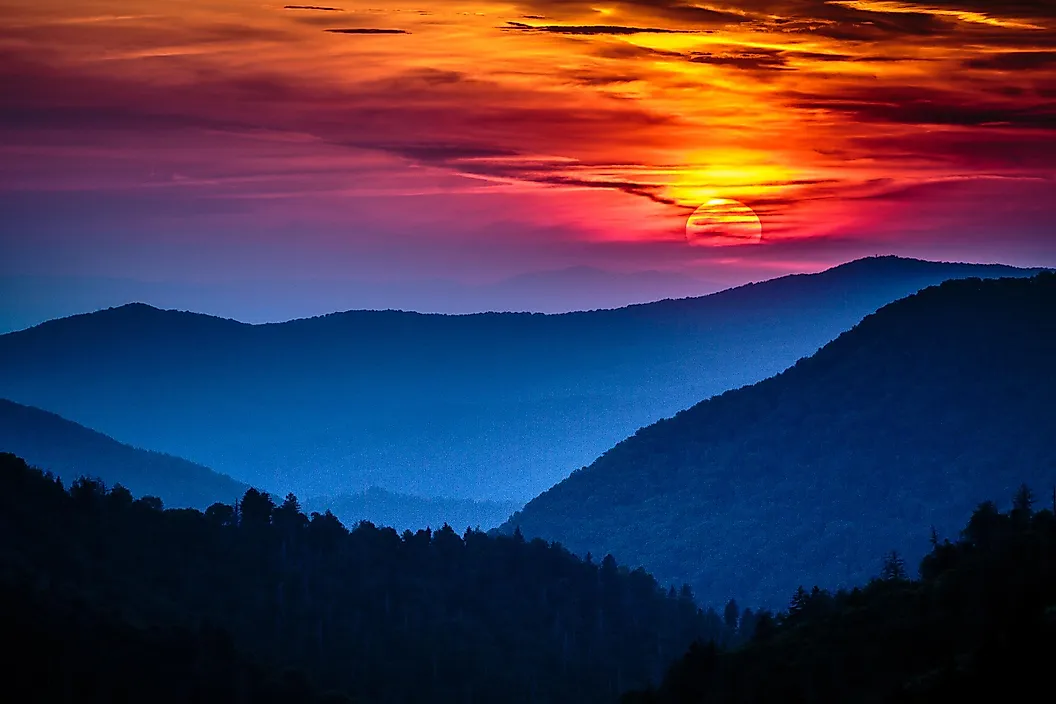
Great Smoky Mountains National Park welcomed roughly 11.5 million recreation visits during 2025, which is more than twice as many as the country's second-most-visited national park. Unlike many Western parks, much of that traffic arrives by car rather than shuttle, creating long backups at popular destinations like Cades Cove, Newfound Gap Road, and Kuwohi (formerly Clingmans Dome). Visitors also flock to the park's 848 miles of hiking trails, more than 2,900 miles of streams, and some of the best wildlife viewing in the eastern United States, including a few of the national park system's most dangerous animals. This includes black bears and the reintroduced elk around Cataloochee Valley and Oconaluftee.
October's fall colors and the summer months are consistently the busiest periods. For noticeably lighter crowds, plan a visit between mid-January and late February, when visitation drops sharply, while keeping in mind that snow, ice, and temporary road closures can affect higher elevations.
Zion National Park, Utah

Despite covering just over 146,000 acres, Zion National Park recorded roughly 5 million visits during calendar year 2025, according to the NPS. This makes it the nation's second-most visited national park. Much of that demand centers on a relatively small section of Zion Canyon, where people arrive to hike Angels Landing, wade through the Virgin River in The Narrows, or ride the park's shuttle beneath the soaring sandstone walls of the Great White Throne.
Between late spring and early fall, especially from May through October, shuttle queues, trailheads, and parking areas regularly reach their busiest levels as school vacations and warm weather overlap. Visitors looking for more breathing room should aim for late January through February, when visitation is substantially lower, cooler temperatures make many hikes more comfortable, and the canyon's famous red cliffs are often dusted with snow. Always check current trail conditions before visiting, as flash floods can close The Narrows and other canyon routes with little notice.
Yellowstone National Park, Wyoming, Montana & Idaho

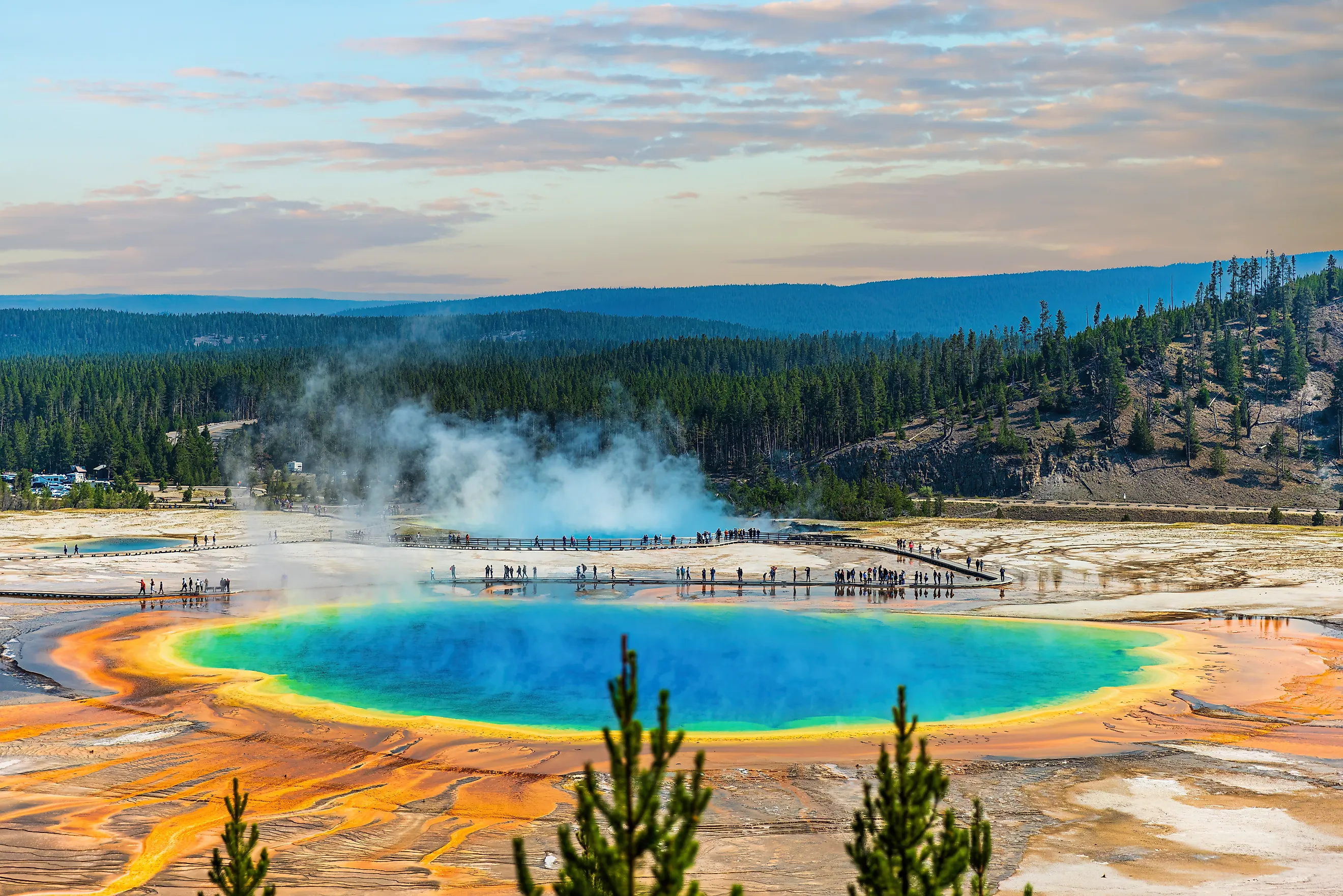
Yellowstone National Park sees the most bison-related human injuries in the national park system, and yet it still is one of the most visited in the U.S. Nearly 4.8 million in annual attendance during 2025 made Yellowstone National Park the third-most visited national park in the United States. Even more impressive is how concentrated those visitors become. Most follow the park's Grand Loop Road to famous geothermal landmarks like the Old Faithful geyser, Grand Prismatic Spring, and the Grand Canyon of the Yellowstone, creating bottlenecks at parking lots and boardwalks throughout the day.
Wildlife traffic jams are equally common, as roadside sightings of bison, elk, wolves, or bears can bring traffic to a complete stop within minutes. June through September are consistently the busiest months, with July typically recording the largest number of park guests. In 2021, that month saw over 1 million visits. While that number has gone down in recent years, July remains the busiest month. Preliminary NPS data for 2026 suggest the trend will continue.
For a quieter experience, visit in April before the summer rush begins or in late October, after most seasonal crowds have disappeared. It's also before many park roads close for winter in the least touristy months of the year, November and December.
Grand Canyon National Park, Arizona

Summer vacation season, particularly June through August, produces the Arizona park's heaviest visitation, while spring and fall remain busy thanks to milder temperatures. Visitors to the Grand Canyon National Park willing to trade warmer weather for quieter viewpoints should consider January or February, when visitation falls dramatically. The NPS preliminary data for 2026 show both months received fewer than 200,000 recreational visitors each. But those who visit during the colder months should check official trail and weather updates prior to venturing off into the park.
The Grand Canyon's size often creates the illusion that crowds simply disappear into the landscape. But in reality, many of the Grand Canyon National Park's roughly 4.4 million guests in 2025 concentrated along just a few miles of the South Rim. Here overlooks such as Mather Point, Yavapai Point, and Grand Canyon Village sit within easy reach of parking, shuttle stops, and visitor services. The Bright Angel Trail and South Kaibab Trail also draw thousands of hikers each day during the busiest months.
Yosemite National Park, California

Towering granite cliffs have been drawing visitors to Yosemite National Park for generations. According to NPS's 2026 data (which is subject to change), each month of the year has seen an uptick in annual attendance compared to 2025, which saw roughly 4.3 million in total.
June through August brought the park's heaviest visitation in 2025, with July recording the highest monthly total. Much like Grand Canyon National Park, January and February tend to be the best time to visit to beat the crowd, although some higher-elevation roads, including Tioga Road and Glacier Point Road, are typically closed by snow during winter. The park is even emptier in December. However, if you still want to enjoy the nicer weather but avoid the crowds, both May and September are strong options.
Like many national parks, Yosemite sees the most activity centered around a few spots. This includes the Yosemite Valley, where landmarks including El Capitan, Half Dome, and Yosemite Falls sit within a relatively compact area.
Rocky Mountain National Park, Colorado

Few national parks pack as much scenery into a single road as Trail Ridge Road, which climbs above 12,000 feet and crosses the Continental Divide before descending toward Grand Lake. Add in the Bear Lake Corridor, Alberta Falls, and dozens of alpine lakes, and it's easy to understand why Rocky Mountain National Park recorded roughly 4.2 million recreation visits during calendar year 2025, ranking sixth nationally.
Understandably, the summer dominates visitation statistics, with July and August consistently drawing the largest crowds as Trail Ridge Road reaches its full season and wildflower hikes peak. Guests hoping for quieter trails should look toward late September after summer vacations end or January through February if they don't mind snow-covered landscapes and seasonal road closures. As of 2026, Rocky Mountain National Park continues to use a timed-entry reservation system during portions of its busiest season to help manage congestion, so checking current reservation requirements before traveling is essential.
Acadia National Park, Maine
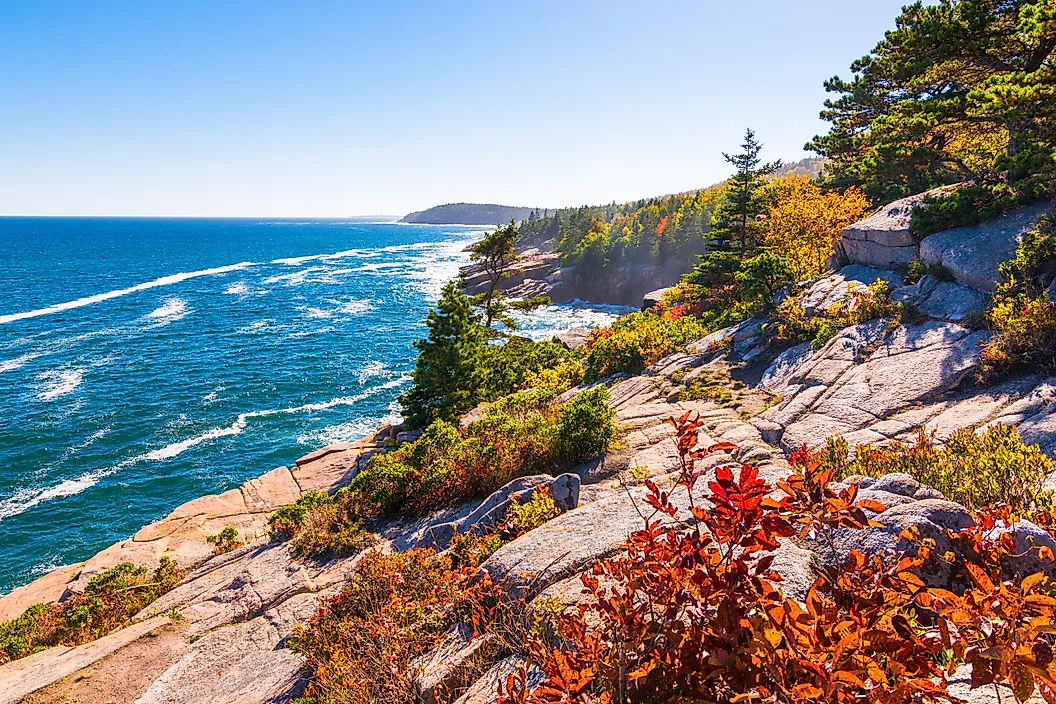
If your schedule allows, late April through early May or late October usually offers a far quieter experience in Acadia National Park compared to the active summer months. Although some visitor services operate seasonally, weather can change quickly along the Maine coast.
For part of the year, hundreds of visitors gather atop Cadillac Mountain, one of the first places in the United States to see the morning sun, while others head for the Park Loop Road, Jordan Pond, and the park's 45 miles of historic carriage roads built by John D. Rockefeller Jr. Those signature attractions helped New England's only national park record roughly 4.1 million visits during calendar year 2025, the seventh-highest total of any national park. Most visitation arrives between June and October, with July and August producing the busiest conditions.
Grand Teton National Park, Wyoming

Grand Teton has one advantage that places like Yellowstone don't, and that's that many visitors never stray far from their vehicles. The jagged Teton Range rises almost directly from the valley floor, meaning iconic viewpoints such as Oxbow Bend, Mormon Row, Schwabacher Landing, and Jenny Lake are all easily accessible from the park's main roads. That convenience helped push Grand Teton to roughly 3.8 million recreation visits during 2025. That number is expected to be eclipsed in 2026. Preliminary National Park Service figures show Grand Teton welcomed more than 2.07 million people between January and July 2026, making it the second-busiest start to a year on record for the park, even though July 2026 visitation dipped about 2% from July 2025.
June through September attract the largest crowds, particularly after nearby Yellowstone's roads are fully open for summer. Visitors hoping to photograph the mountains without bumper-to-bumper traffic should aim for May or even late September into early October, when fall colors begin appearing, wildlife becomes more active during the elk rut, and visitation eases before winter road closures arrive.
Olympic National Park, Washington

Olympic National Park protects nearly a million acres, yet its biggest attractions are scattered hours apart. You can spend the morning among the moss-draped trees of the Hoh Rain Forest, watch waves crash beneath the sea stacks at Rialto Beach that afternoon, and still have another two-hour drive before reaching the alpine meadows of Hurricane Ridge. It's one reason Olympic recorded roughly 3.5 million guests during 2025, ranking ninth among America's national parks.
Rather than creating one giant traffic jam, Olympic frequently creates several. The entrance road into the Hoh regularly backs up during summer, while Hurricane Ridge parking often reaches capacity before midday on busy weekends.
The crowds haven't disappeared in 2026 either. Preliminary NPS figures show visitation through the first half of 2026 tracking close to 2025's pace, while the park continues encouraging visitors to arrive before 10 a.m. or later in the afternoon to avoid the longest waits at Hurricane Ridge during the busy months of June, July, and August. Visitors who can travel during the off-season or shoulder seasons are far more likely to experience the park's rainforest trails and mountain viewpoints without the peak-season congestion.
Glacier National Park, Montana

Every year, Glacier National Park's busiest attraction has to be dug out before anyone can drive it. Snowplows spend weeks carving Going-to-the-Sun Road through walls of snow that can tower overhead. When the route finally opens in early summer across Logan Pass, the floodgates open with it. During calendar year 2025, Glacier recorded roughly 3.1 million people exploring the park.
Nearly everyone wants the same handful of experiences during the relatively short window where this park is fully accessible. This includes driving the full 50-mile Going-to-the-Sun Road, hiking to Hidden Lake Overlook, and photographing mountain goats and bighorn sheep near Logan Pass.
Preliminary NPS data suggest 2026 is following a similarly busy trajectory as 2025. Ironically, Glacier's biggest bottleneck isn't a trail. Instead, it's waiting for one of America's greatest mountain roads to become accessible each summer. Rather than waiting until July or August, many experienced travelers target September, when Going-to-the-Sun Road often remains open, fall colors begin appearing across the valleys, and visitation starts to ease before autumn snow eventually closes the high country.
Cuyahoga Valley National Park, Ohio

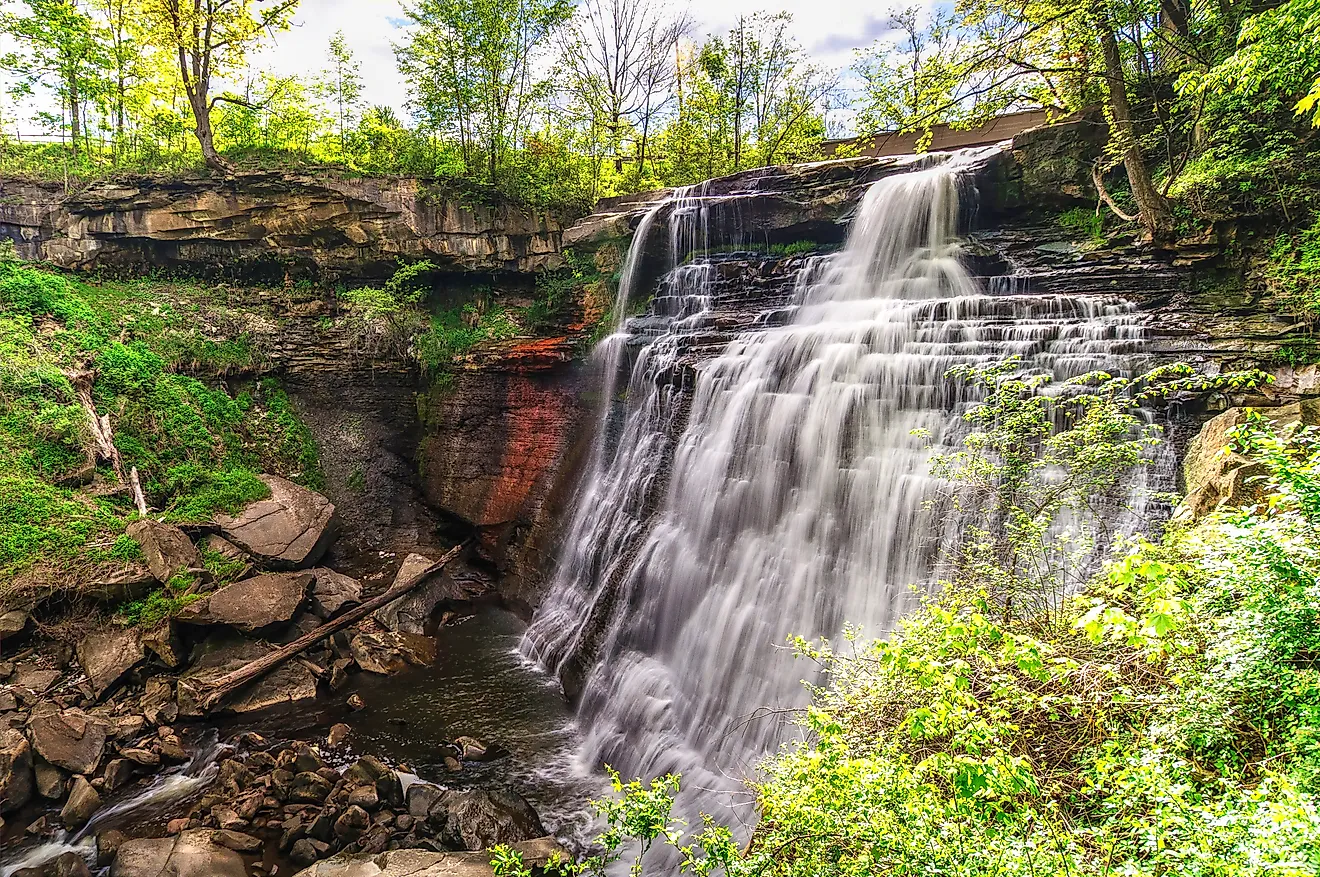
Most of America's busiest national parks are famous for towering mountains, geothermal wonders, or enormous canyons. Cuyahoga Valley became one of them for almost the opposite reason. Wedged between Cleveland and Akron, it's the national park people can visit before work, after school, or on a spontaneous weekend afternoon. That accessibility helped the park record roughly 3 million recreation visits during 2025. Visitors come for landmarks like the 65-foot Brandywine Falls, the Ohio & Erie Canal Towpath Trail, and the Cuyahoga Valley Scenic Railroad, but unlike Yellowstone or Glacier, there isn't one or two main places where everyone gathers. Instead, traffic spreads across dozens of trailheads and historic sites throughout the valley.
October is consistently one of the busiest months, as fall foliage transforms the park, while January and February are typically the quietest. Those willing to bundle up are often rewarded with frozen waterfalls, snow-covered towpaths, and a level of solitude that's almost impossible to find during autumn weekends.
Joshua Tree National Park, California

Joshua Tree is one of the few national parks where winter, not summer, is the busiest season. While much of the country is digging out from snow, hikers, climbers, campers, and photographers descend on the Mojave and Colorado deserts to take advantage of cool temperatures and clear skies. The strategy has worked almost too well. Joshua Tree National Park recorded 2.93 million visitors during 2025. If you want to experience the park without spending part of your day in traffic, June through September are generally the quietest months. However, daytime temperatures frequently exceed 100°F, making sunrise, sunset, and nighttime stargazing the safest and most rewarding times to explore.
The biggest crowds gather around Hidden Valley, Skull Rock, Keys View, and the park's world-renowned rock-climbing areas, while long entrance lines regularly develop between October and May, especially during March, spring break, and holiday weekends.
When You Go Matters As Much As Where
Crowds aren't spread evenly across America's national parks, and they aren't spread evenly across the calendar either. Millions of visitors converge on places like Zion Canyon, Yosemite Valley, Glacier's Logan Pass, and the South Rim of Grand Canyon National Park every year, often during just a few peak months. Shift your trip by a few weeks, or in some cases even a few hours, and you'll often find the very same landscapes feeling quieter, easier to explore, and far more memorable.