Why Snakes Don’t Freeze To Death Underground
There is a depth below which soil does not freeze, and it is not approximate. It is mapped, published by state, and written into building codes. Below the frost line the ground temperature varies but is always above 32 degrees Fahrenheit, which is why water mains are buried beneath it and why snakes survive winters that would kill them on the surface in hours. A patent for an artificial snake hibernaculum describes the survivable band formally as the life zone, lying between the frost line and the water table.
The Frost Line Is A Real Measured Depth

The concept that keeps snakes alive is one builders handle constantly and almost nobody else considers.
The frost line is the depth to which groundwater in soil can be expected to freeze. It depends on climate, soil heat-transfer properties and nearby heat sources, and it gets deeper closer to the poles. Across the United States it ranges from essentially zero to about six feet.
Foundations are built below it. Water and sewage pipes are buried below it. A snake that gets below it has solved the same problem for the same reason.
It Varies Enormously By State

How deep a snake needs to get depends entirely on where it lives, and the numbers are codified.
Minnesota's residential code specifies 42 or 60 inches by county. Wisconsin runs 48 to 72. Massachusetts is 48, Michigan and Connecticut 42, and Alaska between 60 and 120 depending on the city.
At the other end, North Carolina sets a 12-inch minimum, South Carolina around 8, Alabama around 6 and Florida sets none at all. A Florida cottonmouth has essentially no digging to do.
One State Can Span Thirty Inches

Illinois shows the gradient inside a single state, and it maps neatly onto snake behavior.
In northern Illinois the frost line sits at about 48 inches. Near Cairo at the southern tip it is around 20. That is a 30-inch difference within one state's borders.
Which is why southern Illinois holds the famous limestone bluff dens of the Shawnee Hills while snakes further north need deeper, scarcer refuges. The geology did not change. The frost did.
Deep Ground Is Warmer Than You Think

Getting below the frost line does not just avoid freezing. It reaches genuinely mild conditions.
Well below the frost line, soil temperature is relatively stable at around 55 to 56 degrees Fahrenheit year-round, which is the principle geothermal heat pumps run on. It sits above winter air temperature and below summer air temperature in most of the country.
A snake in a deep crevice is not merely surviving at just above freezing. Depending how deep the system goes, it may be sitting in conditions a human would call cool rather than cold.
The Water Table Sets The Floor

Deeper is not simply better, which is what makes the survivable band so narrow. The hibernaculum patent defines the life zone as the space between the frost line and the groundwater level. Above the frost line the animal freezes. At or below the water table it drowns, because a snake trapped in a flooded hibernaculum cannot reach air.
In some places that band is several feet thick. In others it barely exists, which is one reason suitable dens are so rare.
Snow Is Doing More Work Than It Looks

The layer sitting on top of the ground changes the depth of the one that matters.
Snow cover insulates the ground, reducing how deep frost penetrates. A winter with early, persistent snow produces a shallower frost line than a cold winter with bare ground.
That is why an estimated 60,000 red-sided garter snakes died in a single Manitoba freeze attributed to unusually light snow cover. They were in their dens. The insulation failed above them.
They Have A Small Chemical Backup

Depth is the main defense, and there is a physiological one underneath it for brief failures.
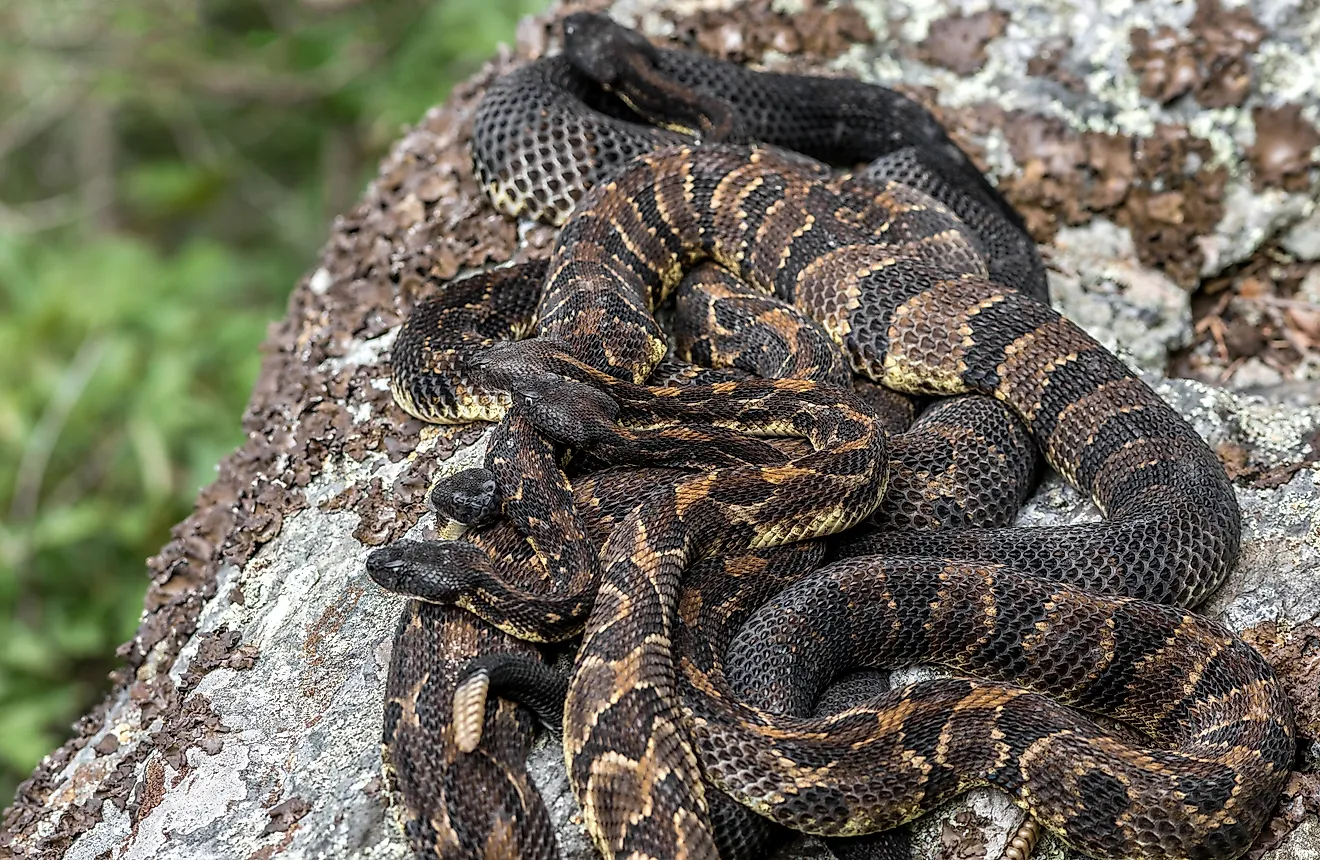
Body fluids can remain liquid below their normal freezing point, a state called supercooling. Red-sided garter snakes collected near communal dens in autumn supercooled to minus 5.5 degrees Celsius before ice formed.
The protection weakens through the season, falling to around minus 1 degree by midwinter. It covers a cold snap, not a cold winter, which is why the hole matters more than the chemistry.
Buildings Cheat The System Entirely
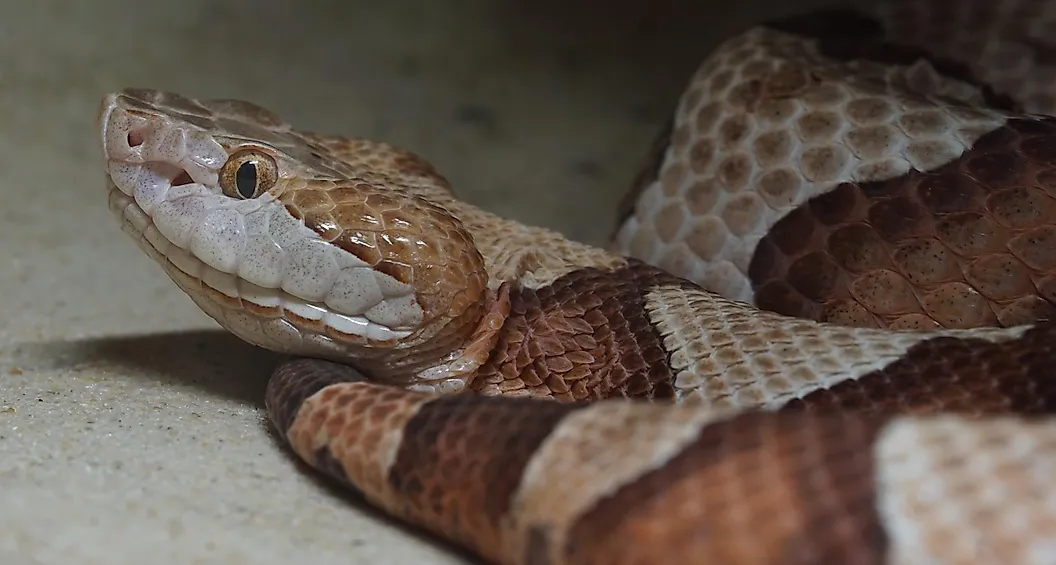
The reason snakes end up under houses follows directly from everything above.
A heated building leaks warmth into the ground beneath it, which is listed among the heat sources that affect local frost depth. Under an occupied house the frost line effectively rises or disappears.
So a crawl space offers conditions a snake would otherwise have to dig four feet for, with the added benefit of humidity that prevents dehydration. It is a shortcut to the life zone.
Why The Dens Are Always Rock

Snakes cannot dig, which is the constraint that makes all of this hard for them.
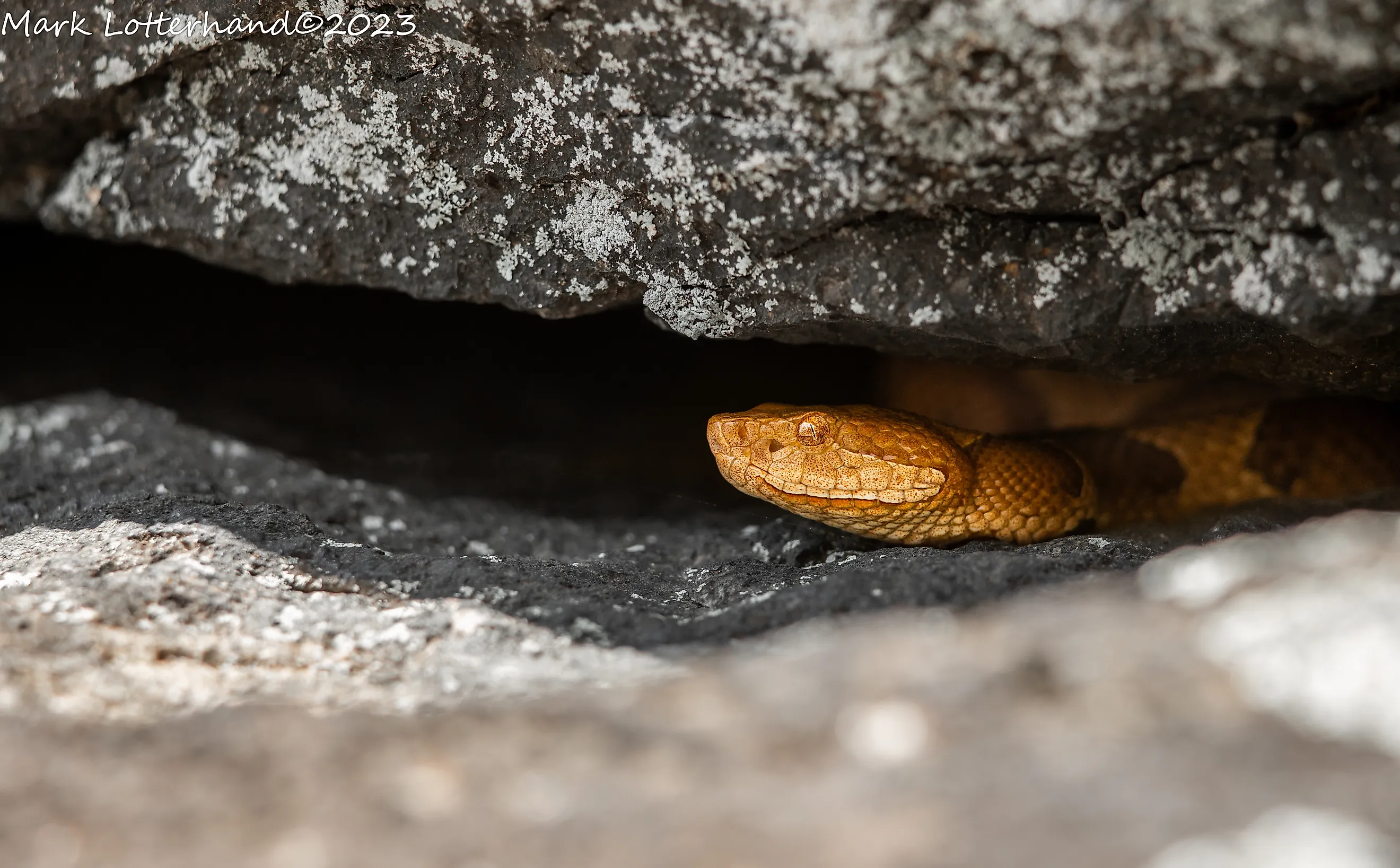
Without the ability to excavate, a snake needs a pre-existing passage that reaches below the frost line: a rock fissure, a talus slope over bedrock, a crayfish burrow, a rotting root system or a mammal tunnel.
That is why the dens are always in rock in the north, and why a south-facing outcrop with deep fissures supports entire populations while the woodland around it supports none in winter.
The Short Answer

Snakes do not freeze underground because below the frost line the soil temperature never drops below 32 degrees, and that depth is a known quantity: six inches in Alabama, four feet in Michigan, up to ten in parts of Alaska. Deeper still and the ground holds a steady 55 degrees all year.
The survivable band runs from the frost line down to the water table, freezing above it and drowning below. Snakes cannot dig, so they depend on finding a rock fissure or a burrow that already reaches into it, and on enough snow staying on top to keep the frost from following them down.