How Long It Takes A Clear-Cut Forest To Grow Back
A clear-cut forest grows back in stages, not on a single schedule. Grasses, shrubs, and young trees start filling the open ground during the first year, and fresh greenery usually covers the site within two to three years. Substantial young tree growth takes 10 to 30 years, as saplings shoot up into a dense young woodland. Some features of a mature forest need many more decades, and some take longer than a century.
The pace depends on the soil, climate, tree types, and plants already growing nearby, so no single timeline fits every forest. Research on boreal forests shows the split clearly, with some plant communities returning within decades and others taking more than 100 years. Large trees, standing dead wood, and decayed fallen wood come back last, so an older woodland often still lacks features of the forest that stood there before.
How Clearcutting Works

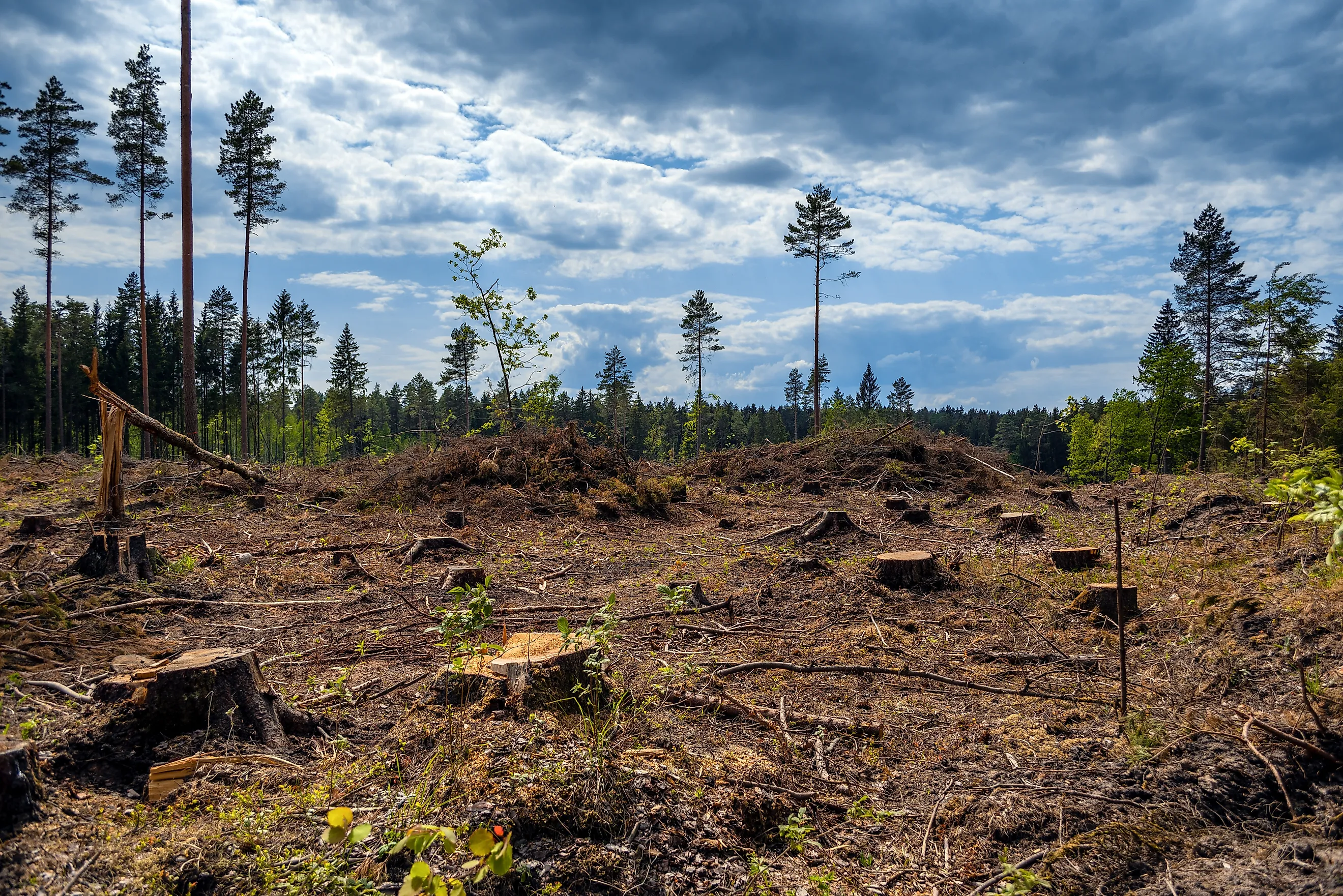
Clearcutting is a logging method that removes nearly all trees in a selected area during one harvest. This leaves much of the land open to sunlight, giving new vegetation room to grow. The result is an open area where a new generation of trees begins to take shape.
The harvested area does not always become completely bare. Loggers sometimes leave groups of trees, narrow strips, or small patches standing. Seeds arrive from nearby trees, get sown directly across the ground, or come from planted seedlings. Young trees already growing beneath the taller ones can provide the next generation of woodland growth as well.
The First Five Years

Immediately after clearcutting, the area looks open and bare compared with the woodland that stood there before. New growth often appears during the same year as the harvest, with herbs, shrubs, and young trees beginning to cover open ground. This early greenery usually takes two to three years to spread across the site.
As years pass, young trees grow taller and begin filling more of the open space. A study of an 11-year-old hardwood stand on Sharkey clay soil in Mississippi tracked the average height of its tallest trees across five regrowth periods. Their average height rose from 8 feet during the first period to 11 feet during the second, 13 feet during the third, 18 feet during the fourth, and 19 feet by the fifth year. Mean annual height growth was fastest in the first year, at 5.8 feet, then ranged from 2.1 to 3.5 feet per year over the following four years. These measurements describe the tallest trees, not every tree in the stand, and reflect conditions at this particular Mississippi site.
A Young Woodland By 10 Years

By around 10 years, a clear-cut area has often developed into a young woodland filled with taller trees and thick vegetation. A study examined a 46-acre hardwood stand at Bent Creek Experimental Forest in the Southern Appalachian region, a stand clearcut in 1963. Ten years later, the tallest trees on each study plot averaged 28 feet.
Researchers counted 379 free-to-grow stems per acre. Those are young trees with room to grow, not shaded out by the plants around them. Of that total, 202 stems per acre belonged to timber trees, including yellow-poplar, oak, and sweet birch. Yellow-poplar was becoming a major part of the young woodland, with an average of 84 free-to-grow stems per acre. Black locust ranked tallest, followed by yellow-poplar, red maple, and sweet birch.
Tree growth was not uniform throughout the area. Grapevines affected some yellow-poplar trees, and black locust and red maple formed dense patches that slowed yellow-poplar growth, with red maple sprouts taking up large spaces. Despite those variations, researchers considered the outlook for a fully stocked stand good. There were enough young timber trees and other stems to fill the area.
Changes Between 20 And 30 Years

By around 20 years after clearcutting, woody growth had become a major part of the landscape. A Southern Appalachian study found that leaf biomass and leaf area index, a measure of leaf surface relative to ground area, had returned to nearly their pre-harvest levels, depending on the forest community. A later study of the Coweeta research site found that phosphorus accumulation had reached 57% to 83% of pre-harvest levels, and magnesium accumulation had reached 35% to 50%, depending on the community.
The makeup of the woodland began to shift as well. Fast-growing trees such as yellow-poplar and black locust gained ground after the harvest, and oak and hickory became less common. Within the dry mixed-oak community, mountain laurel (Kalmia latifolia) had nearly reached its earlier biomass level after two decades. Great rhododendron (Rhododendron maximum) had reached 4.6 times its pre-harvest biomass. Trees that grow more slowly or spread their seeds over longer distances can take many decades to become a major part of the woodland.
By 30 years, aboveground biomass across the watershed had exceeded its pre-harvest level. The 30-year-old woodland had a leaf area index greater than that reported for a 50-year-old forest and nearly as high as measurements from mature forests more than 75 years old at similar elevations. Plant diversity followed its own timeline. It exceeded pre-harvest levels in the cove-hardwood community, reached them in the mesic mixed-oak community, and remained lower in the dry mixed-oak community. Ground-level plant growth increased as well, as later-growing plants became more plentiful.
A Different Forest At 50 Years

Fifty years after clearcutting, at a long-term study site in Maine, the upper tree layer had changed from a spruce-fir forest to a northern mixedwood forest containing both conifers and hardwood. Hardwood representation has increased from its pre-harvest level in all harvesting treatments.
The younger growth beneath taller trees followed its own pattern. An analysis found that balsam fir made up most of the advance regeneration, meaning the seedlings and saplings growing beneath the taller trees, at the 50-year mark. Researchers found a few differences in foliar and soil nutrient measurements as well among the harvesting treatments. Half a century on, the canopy and the young trees beneath it were heading in different directions.
Still Changing After 80 To 100 Years

After 80 to 100 years, some parts of a forest still have a plant community unlike that of an unharvested mature woodland. An analysis examined 190 datasets from boreal and hemi-boreal forests across North America, Europe, and Russia. For conifer forests, researchers estimated that vascular plant communities would take about 85 years to become as similar to unharvested mature forests as those forests were to one another. The estimated timeline for lichens was about 95 years. For bryophytes, a group that includesc mosses and liverworts, the study found no evidence that community composition returned to a similar level within the 100 years covered by the data.
Vascular plants, lichens, and mosses each return on their own clock. Mature woodland features, including large live trees, standing dead trees, and decayed fallen wood, can take centuries to develop. Their absence affects the habitat available to plants and wildlife. The study examined boreal and hemi-boreal forests, so its findings should not be applied to every forest around the world. Its reference sites were mature forests, not necessarily old-growth forests.
Why The Same Forest Does Not Always Return

What grows after clearcutting depends partly on the plants and young trees already present when harvesting takes place. New trees come from seeds, young growth that survived beneath the taller trees, or fresh shoots emerging from stumps and roots. A stand that regrows mostly from stump sprouts ends up looking different from one that starts from seed.
Competition for growing space shapes the outcome as well. Fast-growing trees and sprouts from trees considered less attractive for timber can take up space that would otherwise be available to more valuable timber trees. A study of nine Southern Appalachian hardwood sites near Brevard, North Carolina, found that young forest composition varied even among locations with similar site quality and pre-harvest composition. Oaks, especially northern red oak, were less common in the new stands than in the original forests, and red maple increased at all nine sites. Yellow-poplar's importance varied from site to site.
A forest can look fully regrown by one measure and far from it by another. Tree cover, biomass, woodland structure, plant composition, and biodiversity each describe a separate part of forest development. One measurement can reach its earlier level as others continue to change.
No Single Timeline
Clear-cut areas often turn green within a few years and develop into young woodlands over the following decades. Tree cover and aboveground biomass tell part of the story. The original mix of plants and animals, along with the large trees and decaying wood associated with older forests, follows a much longer timeline.
Some forest features return within decades, and others take far longer. There is no single timeline for every clear-cut forest. Its future depends on local conditions, the trees and plants left behind, and the type of forest being examined.