Why New England Has Only One National Park
Here is a fun bit of trivia to spring on your most insufferable travel-snob friend: all six New England states, combined, contain exactly one national park. One. That is Acadia, up on the coast of Maine, and after it there is nothing. No runner-up, no honorable mention, just a whole lot of gorgeous, historic, mountainous, coastline-rich territory with zero official National Parks to its name. For a region this pretty, that seems like a clerical error. It is not. It is the result of a very specific historical accident, and the story is better than you would think.
Meet the Lonely Champion

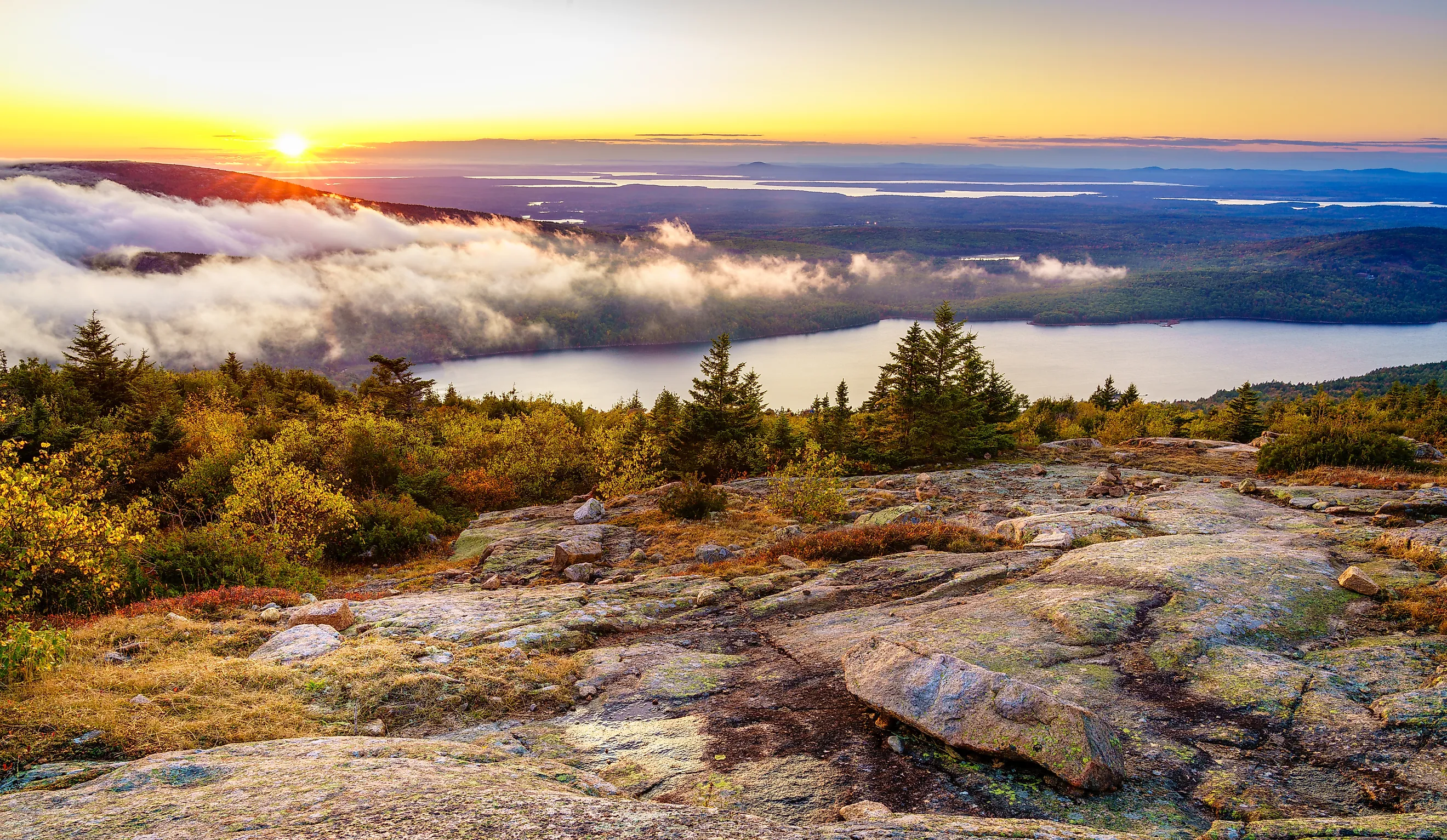
Acadia is a genuine heavyweight, so this is no consolation prize. Sprawled mostly across Maine's Mount Desert Island, it draws around four million visitors a year and contains Cadillac Mountain, which at over 1,500 feet is the tallest point on the entire U.S. Atlantic seaboard. It was the first national park created east of the Mississippi River, way back in 1919. So New England is not lacking a national park because its one entry is weak. It is lacking a second, third, and fourth for reasons that have almost nothing to do with scenery.
New England Got Civilized First

Here is the core of the whole thing. The national park was invented in 1872, when Yellowstone became the first. By 1872, New England had been settled, farmed, logged, fenced, and subdivided by Europeans for roughly 250 years. Every scenic valley already had a name, an owner, a stone wall, and probably a dairy cow. So when the government went looking for grand landscapes to preserve, New England presented a problem: there was almost nothing left to preserve that somebody did not already own. The region's head start, the very thing that makes it feel so storied and old, is exactly what left it without room for big new parks.
The West Had Land to Spare

Out West, the situation was the opposite. When Yellowstone, Yosemite, and the other early parks were created, they were simply carved out of enormous tracts of land the federal government already owned outright. It cost essentially nothing to draw a boundary around land nobody had claimed yet and call it a park. In New England, the feds owned almost no big blocks of land, so making a park meant buying it or being handed it, parcel by parcel, at great expense. That is why the eastern parks that do exist, like Great Smoky Mountains and Shenandoah, had to be painstakingly assembled from purchased private property decades later. Free land makes parks easy. New England had none to offer.
It Also Wasn't Flashy Enough

There was a taste problem, too. The early national parks were chosen for sheer over-the-top spectacle, the kind of scenery that made jaws drop and justified a cross-country train trip. Think erupting geysers, mile-deep canyons, thousand-year-old giant sequoias, and waterfalls the height of skyscrapers. New England, for all its glory, does not really do spectacle. It does gentle, glacier-worn mountains, tidy autumn forests, covered bridges, and a rocky coastline. It is lovable and lyrical rather than colossal, and in the early days of the park system, lyrical did not make the cut. New England simply did not have a geyser to show off.
Acadia Was a Rich-Guy Group Project

So how did Acadia beat the odds? Money, basically. In the late 1800s, Mount Desert Island became a summer playground for some of America's wealthiest families, and a handful of them decided to protect it from the development they themselves had brought. Led by George B. Dorr, the tireless "father of Acadia," landscape thinker Charles W. Eliot, and philanthropist John D. Rockefeller Jr., they quietly bought up land and handed it to the federal government. Rockefeller alone donated roughly 11,000 acres and personally financed the park's famous network of carriage roads. Acadia is essentially the only national park built from donated private land, which means New England's single park exists mostly because a few millionaires gifted their vacation views to the public. Thanks, rich people.
New England Is Drowning in Parkland Anyway

Now for the twist that keeps this from being a sad story: New England is absolutely loaded with protected land. It just does not carry the specific "National Park" label. The region has two sprawling national forests in the White Mountains and Green Mountains, the wildly popular Cape Cod National Seashore, and dozens of national historic sites and monuments covering everything from Revolutionary battlefields to Boston's old streets. Add hundreds of beloved state parks on top, and the region is arguably one of the best-protected corners of the country. The label "National Park" is rare here, but public wild space very much is not. New England did not miss out. It just files its treasures under different paperwork.
One and Done

So New England has a single national park not because it is unworthy of more, but because it was simply too early, too settled, and too subtle for a system built around free federal land and giant Western spectacle. Acadia squeaked in only because a few wealthy families willed it into existence. The next time someone scoffs that the whole of New England musters just one national park, you can smile and explain the truth: the region is not short on natural wonder. It just got civilized a couple centuries before anyone thought to start handing out the trophies.