The Most Visited National Park In America
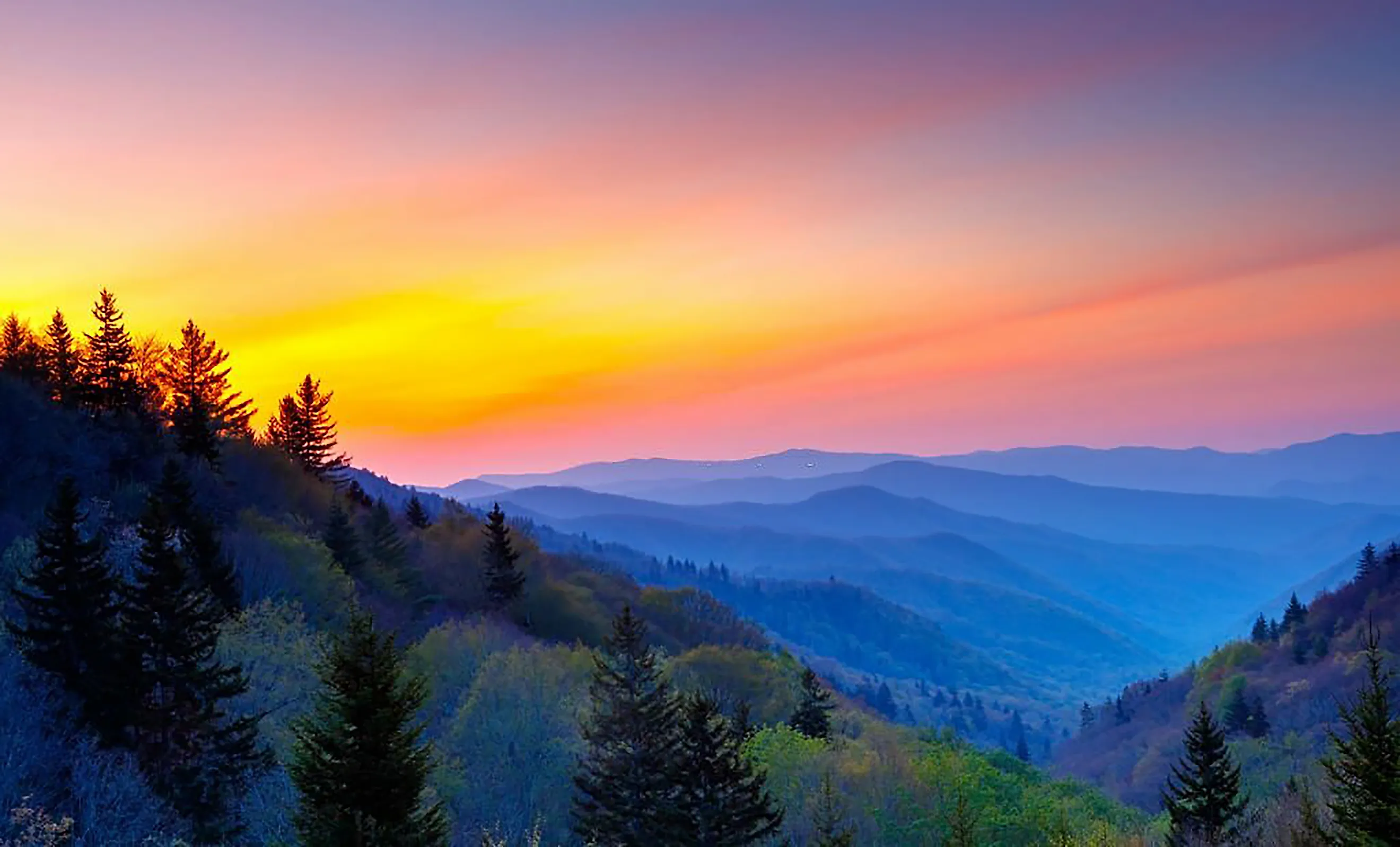
Great Smoky Mountains National Park is the most visited national park in the United States. Spread across Tennessee and North Carolina, it gives visitors misty mountain views and gorgeous hiking trails. According to the National Park Service, the park received 11,527,939 recreation visits in 2025. Zion National Park ranked second with 4,984,525 visits, so the Smokies welcomed more than twice as many visits as any other formally designated national park. Its appeal does not depend on one landmark. A trip can include a waterfall walk, wildlife watching, or several nights in the backcountry.
A National Park Made for Scenic Drives

Many people explore the Great Smoky Mountains through its roads and overlooks. The National Park Service reports 384 miles of roads and 70 scenic overlooks within the park. Newfound Gap Road crosses between Tennessee and North Carolina, passing forests that change as the elevation rises. Drivers can stop for views of overlapping ridges, especially when low clouds produce the blue-gray haze associated with the mountains. The Foothills Parkway offers another panoramic route, while smaller roads lead to streams, picnic areas, trailheads, and historic places. This network lets visitors who cannot manage long hikes experience a large mountain landscape.

Cades Cove is the park's best-known drive. According to the National Park Service, its one-way loop is 11 miles long and usually takes two to four hours to tour. The road circles a valley enclosed by mountains, with chances to see deer, wild turkeys, and black bears. Stops lead to churches, cabins, cemeteries, and old homesites. On selected Wednesdays, usually from May through September, the loop closes to motor vehicles so cyclists and walkers can enjoy it more slowly. Cades Cove combines scenery, wildlife, and history in a single outing.
Mountain Views and Trails for Different Abilities

Hiking is another major attraction. The National Park Service lists 848 miles of trails, including 74 miles of the Appalachian Trail. Routes range from gentle riverside walks to steep climbs through high-elevation forest. Kuwohi, formerly called Clingmans Dome, reaches 6,643 feet and is the park's highest point, according to NPS statistics. A steep paved path leads from the parking area to an observation tower with wide Southern Appalachian views. Easier walks are available near Sugarlands, Oconaluftee, Deep Creek, and Elkmont.

The variety makes the park suitable for both first-time walkers and experienced backpackers. Spring brings wildflowers, summer covers the valleys in deep green, autumn draws visitors for changing leaves, and winter opens long views through bare trees. Instead of offering one essential hike, the Smokies provide many routes and reasons to return.
Waterfalls, Streams, and Forest Shade

Water shapes much of the visitor experience. The National Park Service records about 2,900 miles of streams, while high mountain areas receive more than 85 inches of rain in an average year. This produces waterfalls and cascades throughout the park. Popular hikes lead to Laurel Falls, Grotto Falls, Rainbow Falls, Abrams Falls, and Ramsey Cascades. According to NPS, the best-known waterfall trails together receive more than 200,000 visitors annually. Some require demanding hikes, while others can be reached on shorter routes or seen near roads after heavy rain.
Visitors can picnic beside creeks, photograph moss-covered rocks, and fish in mountain streams. NPS states that the park protects one of the eastern United States' remaining wild trout habitats. It also warns that swift currents, slippery rocks, and cold water make swimming or climbing around waterfalls dangerous. Marked trails and established viewing points offer the safest experience.
Wildlife and a Living Laboratory

Black bears are the park's best-known animals, while elk are commonly watched around Cataloochee Valley and Oconaluftee. Visitors may also encounter deer, wild turkeys, birds, squirrels, and salamanders. The National Park Service advises staying at least 50 yards from both bears and elk, and at least 25 yards from all other wildlife. These minimum distances protect people and prevent animals from being disturbed by vehicles, crowds, and cameras.
The wildlife reflects extraordinary biological variety. Current NPS statistics list more than 22,000 documented species, including about 1,000 species described as new to science. Changes in elevation, rainfall, and forest type create numerous habitats in one protected landscape. Visitors experience this diversity through wildflowers, fireflies, fungi, birdsong, old-growth trees, and salamanders near wet rocks. The Smokies are both a recreation destination and an important site for biological research.
Historic Communities Within the Mountains

The Smokies also preserve Appalachian history. According to current National Park Service statistics, the park maintains 123 historic structures. Log homes, barns, churches, schools, and gristmills show how communities lived before the park was established. The Mountain Farm Museum near Oconaluftee provides an accessible introduction to farming life, while Cades Cove and Cataloochee contain additional homesites, religious buildings, and cemeteries. These places add human stories to a trip and give visitors meaningful stops between hikes and wildlife sightings.
Gateway Towns Around the Park

Four towns anchor the main approaches to the park, and each opens onto a different side of it. Gatlinburg sits at the northern end of Newfound Gap Road, the only route that crosses the park end to end, and feeds visitors straight into the Sugarlands entrance. It is the busiest of the gateways, packed with shops, restaurants, and attractions along a compact main strip. Most first-time trips start here because the Sugarlands Visitor Center and the cross-park drive to Cherokee both begin at its edge.

Townsend, west of Gatlinburg, bills itself as the peaceful side of the Smokies and puts visitors closest to Cades Cove and Little River Road. Cherokee holds the southern approach through the Oconaluftee entrance, on the lands of the Eastern Band of Cherokee Indians, where the Museum of the Cherokee Indian and the Mountain Farm Museum stand within reach and the Blue Ridge Parkway begins about half a mile south. Bryson City lies roughly ten miles west of Cherokee and runs on outdoor recreation, with the Great Smoky Mountains Railroad and the Deep Creek trails and tubing runs drawing visitors to the North Carolina side.
Accessibility, Camping, and Crowds

Location is central to the park's success. The National Park Service states that the Smokies lie within a day's drive of more than half the United States population. The park charges no entrance fee, although NPS requires a parking tag for vehicles parked longer than 15 minutes. Nearby Gatlinburg, Townsend, Cherokee, and Bryson City provide lodging and restaurants, making the park practical for weekend trips and family vacations.
NPS statistics list 10 developed campgrounds with about 1,000 sites, and the park recorded more than 420,000 camper nights in 2024. More than 100 backcountry campsites and shelters support longer trips. Popularity can create congestion at Cades Cove, Kuwohi, Newfound Gap, and major waterfall trailheads. Arriving early, visiting on weekdays, or choosing quieter areas such as Cosby, Fontana, Big Creek, and Abrams Creek can provide a calmer experience.
Why the Smokies Remain Number One
Great Smoky Mountains National Park leads the rankings because it offers many kinds of enjoyment in one accessible landscape. Visitors can watch elk at sunrise, drive through Cades Cove, climb to a viewpoint, walk beside a stream, tour a cabin, or camp beneath the forest canopy. The 11,527,939 recreation visits recorded by the National Park Service in 2025 reflect more than name recognition. They reflect a park that works for sightseers, families, photographers, wildlife watchers, hikers, anglers, and campers. No single trip can reveal everything, giving millions of people a reason to return.