How Many Acres Do America's National Parks Cover?
According to the U.S. National Park Service (NPS), the United States has 63 National Parks covering approximately 52.5 million acres of land. Together that totals the size of the state of Kansas (per U.S. Census figures). It is important to note that the NPS actually manages 85 million acres over more than 400 sites. These include national monuments, historic sites and recreation areas. Here, our focus is on its 63 national parks which span 30 different states and two US territories. California is the state with the most national parks. Its nine individual national parks cover 6.35 million acres and account for 12% of all national park acreage in the U.S.
The Largest and the Smallest National Parks

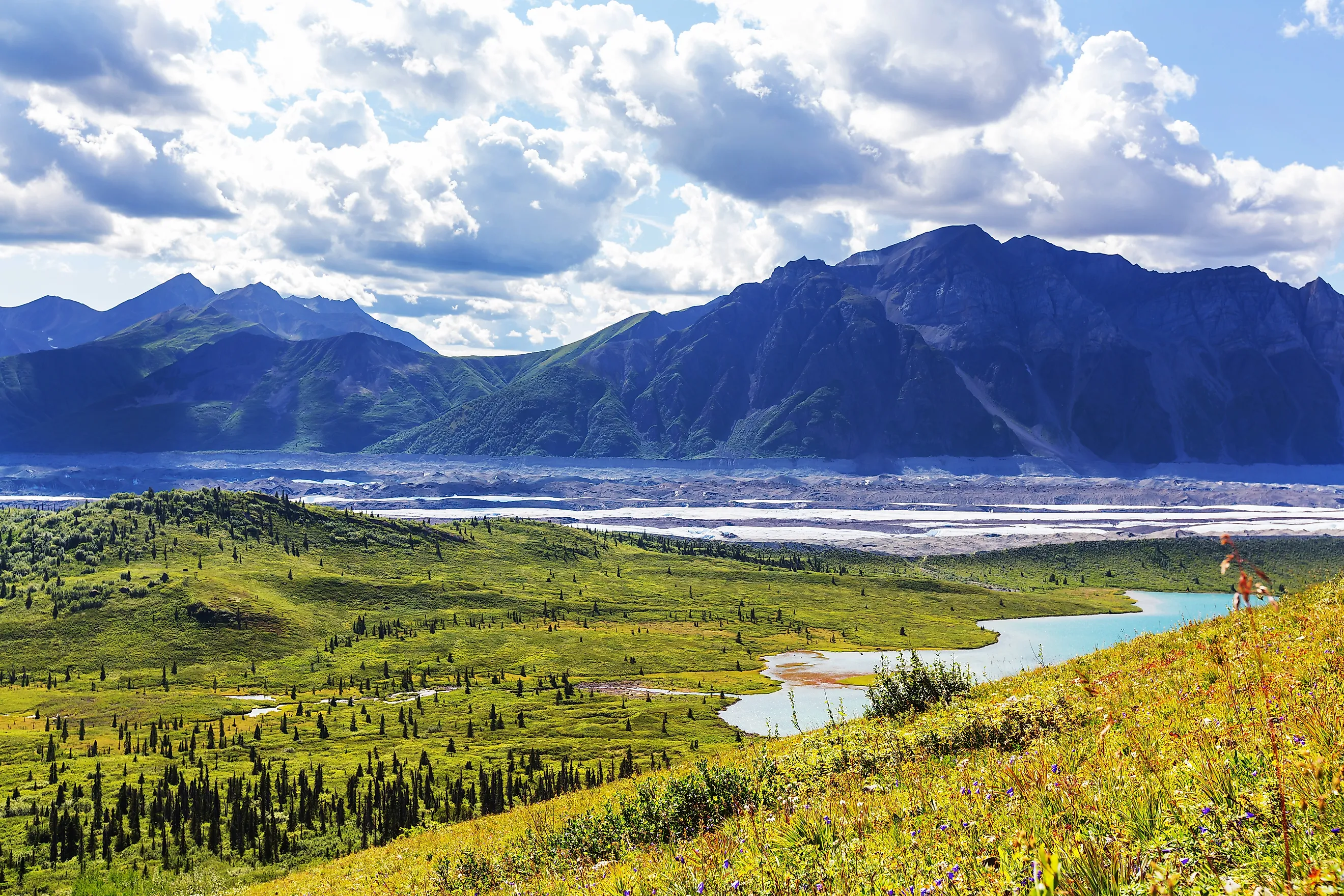
The largest national park in the U.S., Wrangell-St. Elias National Park in Alaska, takes up 8.3 million acres (just for the park; there's also a separate national preserve). This park constitutes 16% of all national park acreage, and together with its adjoining national preserve it covers more ground than the country of Switzerland.
Six of the top 8 largest national parks are in Alaska. That state's national parks, combined, make up over half of the acreage of all 63 parks.
Outside of Alaska, the largest national park is Death Valley National Park, at 3.4 million acres.
The smallest national park, Gateway Arch National Park in Missouri, measures just 192.8 acres.
Parks with more than one million acres make up the top 12 largest national parks.
America's 12 Largest National Parks
1. Wrangell-St. Elias National Park, Alaska

At 8,323,146.48 acres, Wrangell-St. Elias National Park in Alaska is larger than the state of Maryland. Counting its adjoining preserve, it is larger than Yellowstone National Park, Yosemite National Park, and the country of Switzerland combined.
2. Gates of the Arctic National Park, Alaska

Measuring 7,523,897.45 acres, Gates of the Arctic National Park in Alaska is the size of Massachusetts and Rhode Island combined. It is notable for having no paved roads, trails, or park facilities.
3. Denali National Park, Alaska

At 4,740,911.16 acres, Denali National Park in Alaska is larger than the state of New Jersey. It is also the site of the tallest peak in North America, Mount Denali (at 20,310 feet high).
4. Katmai National Park, Alaska

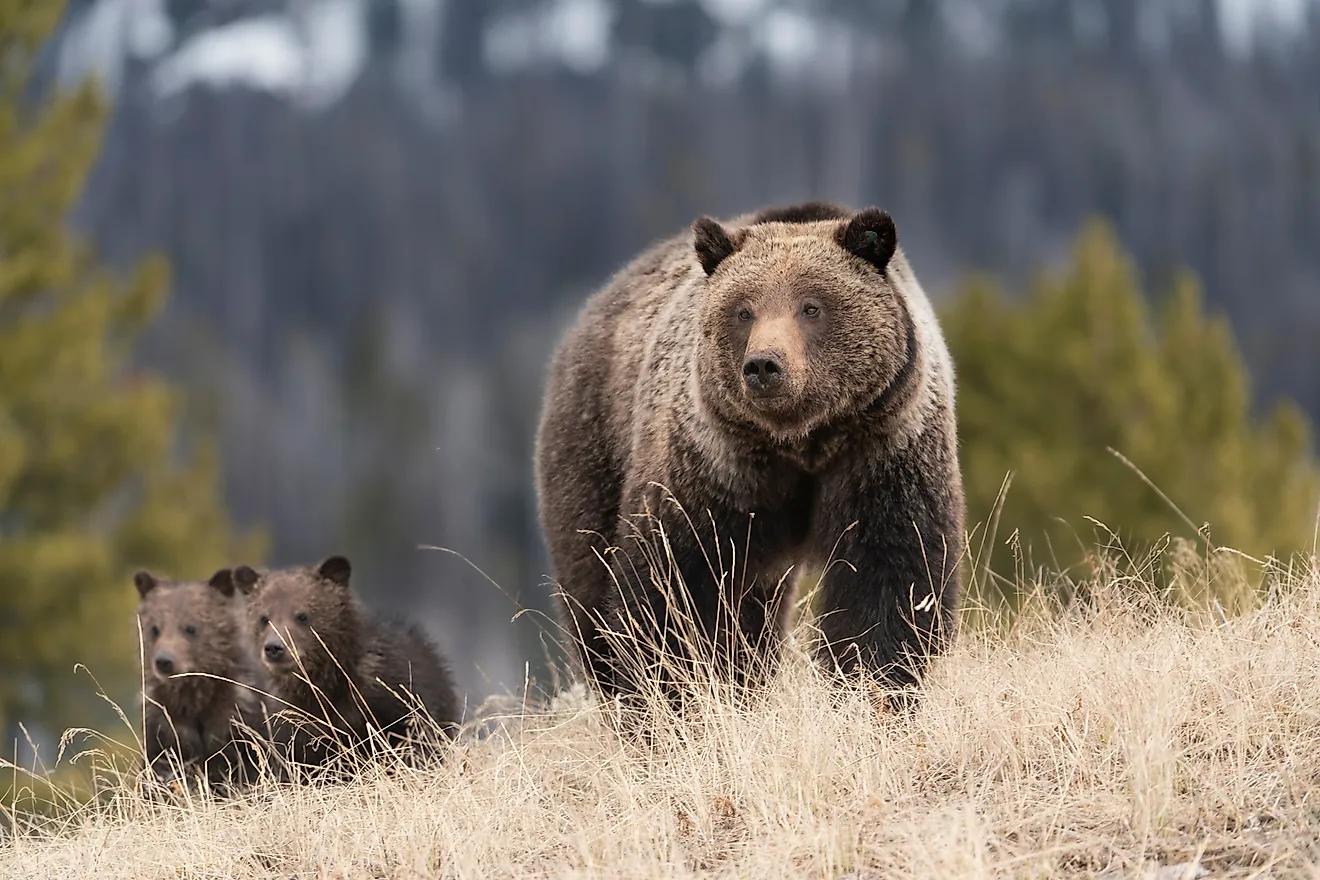
Accounting for 3,674,529.33 acres, this national park is larger than the state of Connecticut. It is home to thousands of brown bears and the Valley of Ten Thousand Smokes.
5. Death Valley National Park, California/Nevada

At 3,408,374.95 acres, Death Valley National Park is the largest national park in the continental U.S. It is bigger than the states of Delaware and Rhode Island combined.
6. Glacier Bay National Park, Alaska

Measuring 3,223,383.43 acres, Glacier Bay National Park is a bit larger than the state of Connecticut. Twenty percent of the park consists of pure marine waters, and glaciers cover about 27% of the park.
7. Lake Clark National Park, Alaska

Comprising 2,619,816.49 acres, Lake Clark National Park is larger than the states of Delaware and Rhode Island combined. It sits at the convergence of two mountain ranges and contains two active volcanoes.
8. Yellowstone National Park, Wyoming/Montana/Idaho

At 2,219,790.71 acres, Yellowstone National Park is larger than the states of Rhode Island and Delaware combined. It covers 3,472 square miles across three states: Wyoming, Montana, and Idaho.
9. Kobuk Valley National Park, Alaska

Measuring 1,750,716.16 acres, this national park is more than three times the size of the Great Smoky Mountains National Park. It is notable for the caribou wandering through the park, as well as for its 100-foot-high active sand dunes.
10. Everglades National Park, Florida

Covering 1,400,539.30 acres, Everglades National Park in Florida is a little larger than the size of Delaware. It contains the largest subtropical wilderness in North America, and was the first national park created for its biodiversity.
11. Grand Canyon National Park, Arizona

At 1,201,647.03 acres, Grand Canyon National Park in Arizona is larger than the state of Rhode Island. It includes 278 miles of the Colorado River within the canyon. The city of Los Angeles could fit inside the park almost four times.
12. Glacier National Park, Montana

Measuring 1,013,126.39 acres and rounding out the "million-acre parks," Glacier National Park in Montana is 1.3 times the size of Yosemite National Park. New York City could fit inside the park five times. Glacier National Park contains 175 named mountains, 700 miles of trails, and more than 760 lakes.
The U.S.'s Great National Parks
From the vast, 8.3-million-acre wilderness of Alaska's Wrangell-St. Elias down to the minuscule (by comparison) 192-acre footprint of Gateway Arch National Park, America's national park system spans a mind-boggling spectrum of size and geography. Combined, these 63 protected spaces cover more than 52 million acres of mountains, deserts, forests, and a varying landscape. Big or small, each park offers a piece of public land that is worth protecting, and, more importantly, worth exploring.
[Park acreages are sourced from the official U.S. National Park Service Land Resources Division Acreage Reports as of June 30, 2026, measured in gross area acres. Geographic scale comparisons are calculated using U.S. Census Bureau land area measurements (excluding water area).]