The Most Powerful Storms The Great Lakes Have Ever Seen
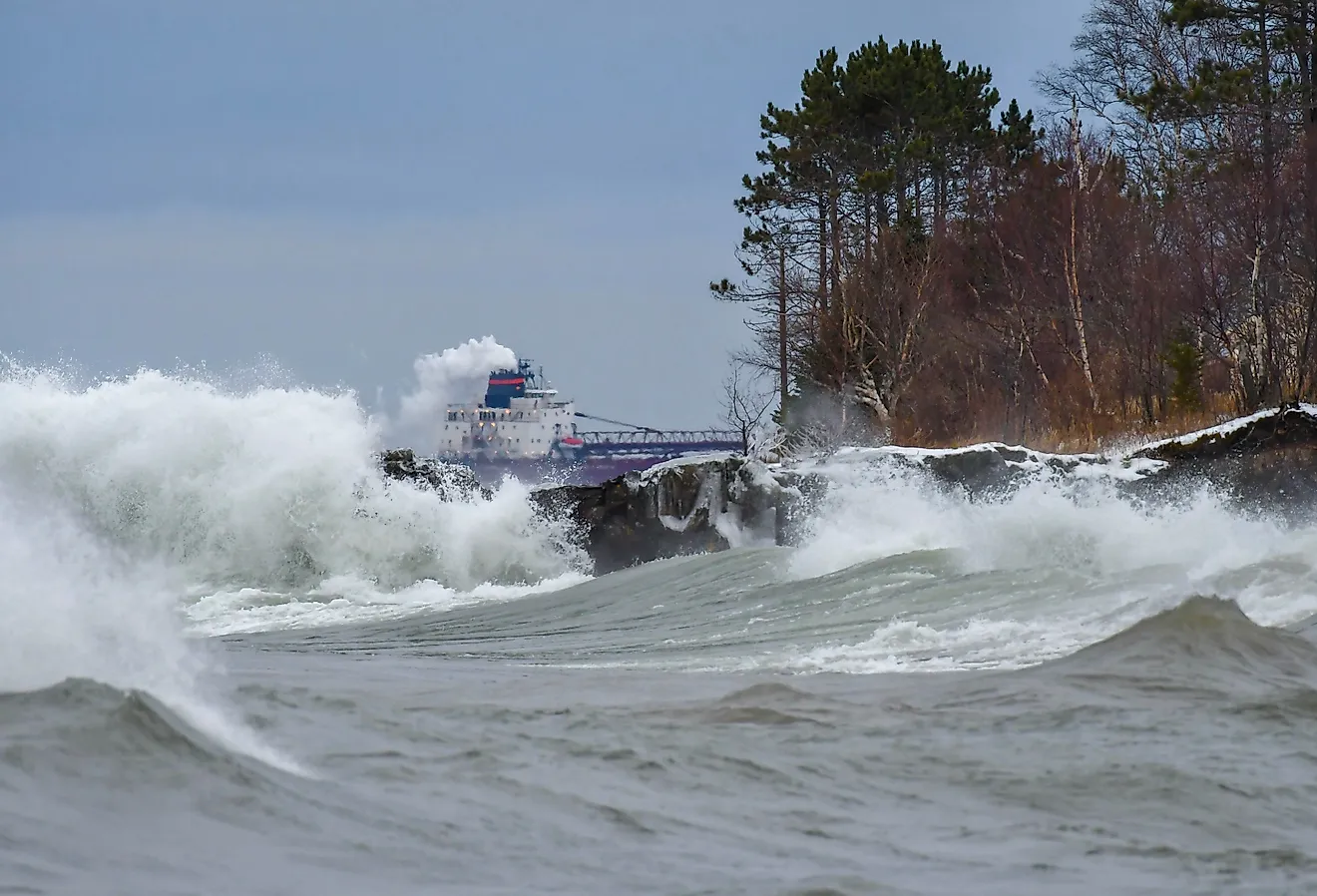
On the five Great Lakes, Lake Michigan, Lake Superior, Lake Erie, Lake Huron, and Lake Ontario, and across the states that border them, legendary storms have been the subject of numerous books, documentaries, and even popular songs, and many of them deserve the infamy they have achieved. It's possible that earlier storms were even worse and caused even more death and damage, but our knowledge of those is limited, since measurement and recording techniques were sparse prior to 1911, according to the National Weather Service.
The storms discussed here were chosen using a combination of record wind speeds, high waves, fatalities, and destruction of ships and property, with most of those metrics drawn from National Weather Service reports. Experts agree that the White Hurricane of 1913 is by far the worst storm in recorded history across all metrics, while the Edmund Fitzgerald storm of 1975 is certainly the best known, and the Great Lakes Storm of 1892 was so severe that it changed the way ships were built. These are six of the most powerful storms the Great Lakes have ever seen in recorded history, ranked by severity, with the worst first.
The White Hurricane of 1913

Although an older storm than the White Hurricane could have been far worse than this one, recording methods available before 1911 were patchy and unreliable at best. This storm is the clear number one worst storm since then, bar none, with metrics that are almost unimaginable.
It's nicknamed the White Hurricane for a reason. On November 7th, fast-moving, polar, and erratic winds came from the west side of the Canadian Rockies and reached the Great Lakes. Unseasonably warm waters in the lakes reacted to this "Alberta Clipper" system (named for the fast-moving low-pressure systems that form over Alberta, Canada) and caused an extreme drop in temperature and cyclonic, hurricane-like, white-out conditions. Winds were as high as 90 mph and waves were up to 35 feet tall. All five of the lakes were impacted, but the worst of the storm was centered on Lake Huron.
The storm destroyed eight freighters and more than 30 other ships. The exact death toll is not known, but the National Weather Service estimates there were between 250 and 300 fatalities. Countless other people were injured.
The storm lasted four days. But one of the most horrific details about this unprecedented storm was the lull that occurred midway through. On November 8th, dozens of captains sailed their ships into open water, thinking it safe to get back to work. Without reliable ship-to-shore radios, which didn't come into wide usage until the 1920s, sailors did not know that the storm was about to take an unusual about-face. There was nowhere to hide.
The Armistice Day Storm of 1940

On November 10th, 1940, a "Panhandle Hook" storm travelled from the southwest Texas panhandle and moved towards the northeast. As these types of storms pass the Gulf of Mexico, they suck up warm water. When this weather system collided with a wall of Arctic wind going south from Canada, a violent combined storm known as an "extratropical cyclone" was formed.

On the morning of the 10th, weather on the Great Lakes, and across much of the Midwest, was unseasonably balmy. Within hours the temperature dropped from the mid-60s into the single digits and teens Fahrenheit, accompanied by 50 to 80 mph winds.
On the Great Lakes, waves reached up to 23 feet tall. The heavy snow and blizzard-like conditions hit Lake Michigan particularly hard. Three freighters completely sank and many smaller boats were lost or irreparably damaged. Across all of the lakes, 69 lives were lost.
It wasn't only the Great Lakes that were impacted, though. Most of the Midwestern states received massive amounts of snow across the two-day disaster. Parts of Minnesota were buried under more than two feet of snow. An additional 85 deaths occurred in the Midwest, aside from the 69 in the lakes. Because this was Armistice Day, a number of men who had taken the day off to hunt ducks along the Mississippi River were trapped without warning and froze to death.
Outrage that this storm had not been better predicted caused the weather tracking systems in the US to fundamentally change. One of the worst aspects of the storm was that it developed overnight, when weather bureaus were closed. After this storm, 24-hour tracking systems were created.
The Edmund Fitzgerald Storm of 1975

Although not the worst storm in Great Lakes history, the Edmund Fitzgerald storm on November 9th and 10th is arguably the most famous.
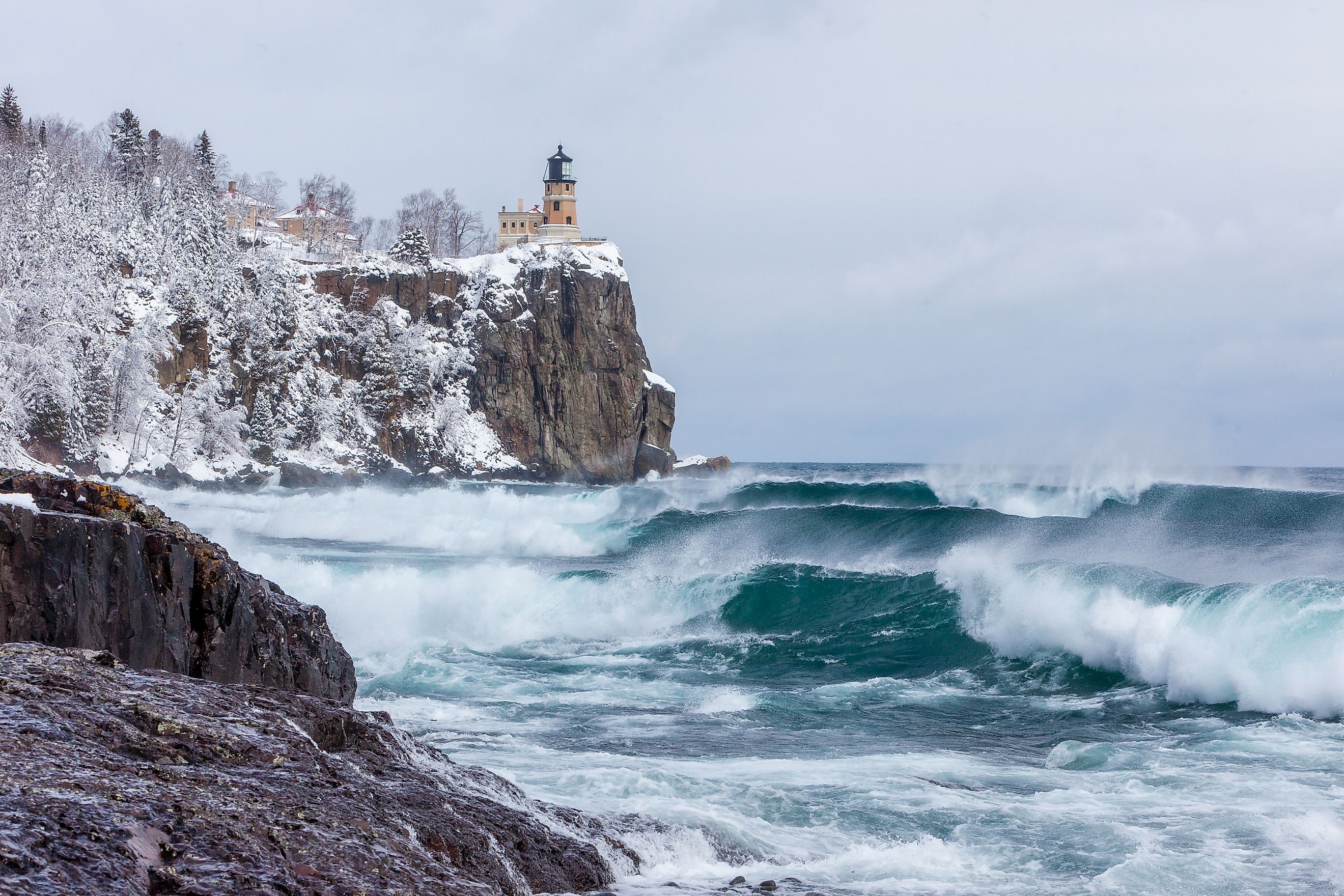
This storm was largely centered on Lake Superior. At 729 feet long, the Edmund Fitzgerald freighter was one of the largest ships on the lakes, loaded at the time with more than 26,000 tons of iron ore. It was lost so quickly that it was never able to even send out a distress signal. All 29 crew members were lost.
Exactly how that happened so quickly has been a matter of debate ever since. It had been in communication with a nearby ship just 10 minutes before it sank and indicated that it was holding its own. Theories range from getting slammed by rogue waves to hitting a shoal on nearby Caribou Island, ripping a hole in the hull.
This storm started out as a classic November gale that then exploded rapidly, creating winds averaging 65 to 69 mph, but getting as high as 86 mph. Waves got as high as 35 feet.
As a consequence of this tragedy, maritime weather safety was advanced again, with improvements in technology and observation methods.
The story of the Edmund Fitzgerald's tragic and mysteriously sudden demise was made famous in a song by Gordon Lightfoot. The site where it sank has been named a protected grave site.
The Great Lakes Cyclone of 1978

Although the Great Lakes Cyclone of 1978 was not nearly as severe as the 1913 storm, meteorologists say that its formation was extremely similar. Arctic air plunged south above the Great Lakes and hit warmer air from the south. This resulted in a sudden and extreme barometric drop, among the lowest ever recorded in the mainland US outside of a tropical storm.
This storm also differed because it was more of a land disaster. Because it happened in January, rather than in the autumn, ice limited water travel.
Between January 25th and the 27th, blizzard conditions with blinding snow incapacitated all methods of transportation across the Midwest. More than 100,000 cars were stranded, often with people inside, forced to wait out the storm. Major cities were paralyzed and there were major power outages across the region. More than 70 people died from exposure, heart attacks, and traffic accidents.
During the storm, wind speeds were as high as 82 to 111 mph across the lakes, and snow drifts reached as high as 20 feet. Although tall waves could not develop because of the ice, the storm did cause damage to numerous ships and boats that were moored in harbors.
The Great Lakes Storm of 1892

Because this storm happened so much earlier than good tracking methods existed, it is a bit difficult to place it accurately in the ranking of worst storms. However, this August 30th disaster has a strong place in Great Lakes storm lore.
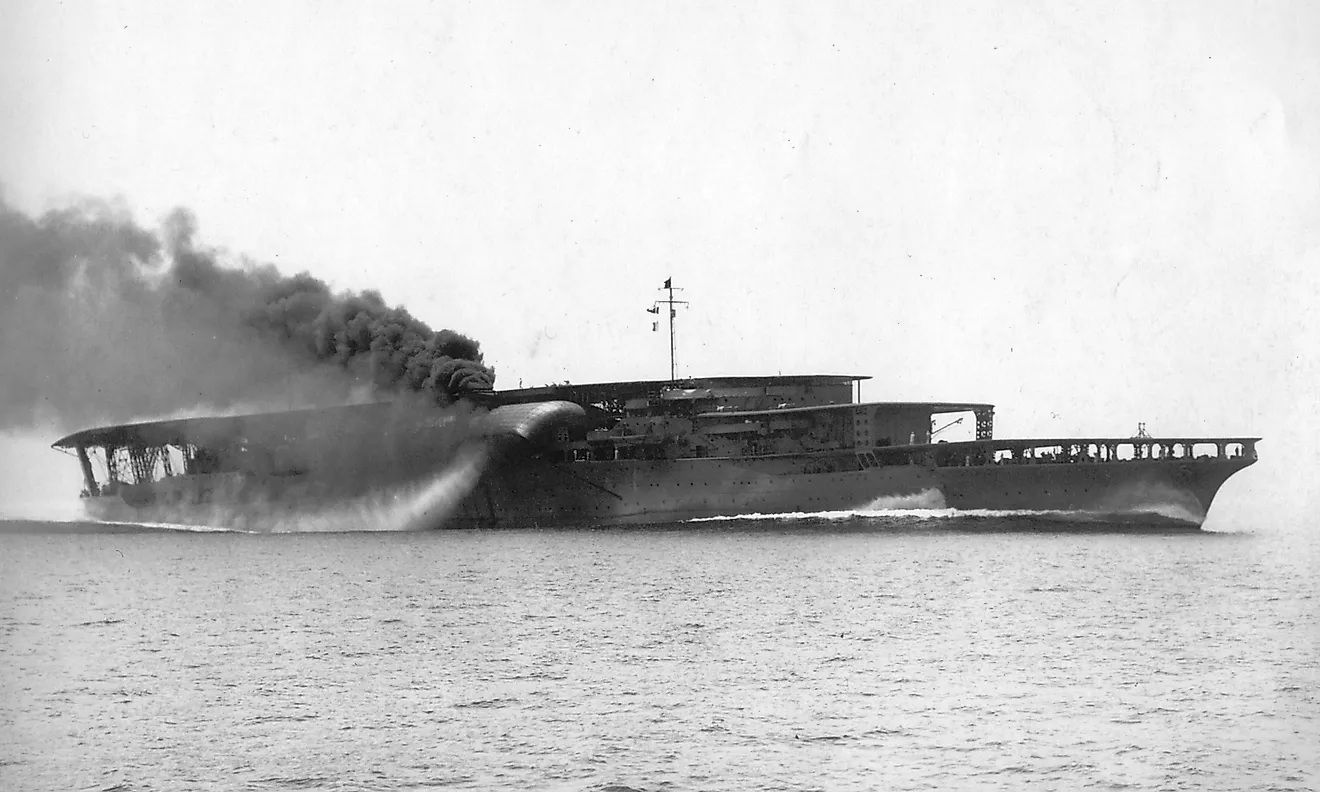
It also changed the way ships were built. The steel freighter Western Reserve was considered to be cutting-edge construction at the time. Experts thought it was impossible to destroy its steel hull, made from Bessemer steel. However, during the storm, with winds around 70 mph, its hull broke literally in half. After this point, more flexible types of alloys were used, and the internal framing of ships was significantly reinforced.
As well, internal water-ballast tanks were installed in newly constructed ships going forward. Another problem with the Western Reserve was that it had no cargo in it at the time of the storm and was sitting high above the water, making it extremely light and easy to toss around.
Tragically, although design and materials were improved on commercial ships after this, many passenger ships continued to be built using the older methods. The SS Titanic was one of these.
The Great Lakes Storm of 1892 claimed the lives of 26 of the 27 people aboard the Western Reserve, with a single survivor who reached shore, and a few additional sailors were also killed elsewhere on the lakes. The wreck of the Western Reserve was located in Lake Superior in the summer of 2024, and the discovery was announced in early 2025.
The Derecho Storm of 1998

What is different about this violent storm from the others that come before it in the list is the type of storm that it was. Unlike the others, the Derecho (named because it was a "progressive hybrid derecho" fueled by an unstable atmosphere) was a straight-lined system of thunderstorms that raced from South Dakota, across the Great Lakes and then into New York. At its start in South Dakota, it produced an F4 tornado, the second highest category of twisters, nearly destroying the town of Spencer. However, the worst damage was in Michigan. The National Weather Service describes it as one of the most memorable storms to hit that state.
During this event on May 31st, winds raged between 60 and 90 mph and, in the hardest-hit Michigan communities, damage surveys estimated gusts as high as 130 mph, ranking it among the most powerful straight-line wind events on record in the US. These incredible winds are precisely what make this storm a strong contender for the list of most powerful Great Lakes storms.
Unfortunately, the storm hit Michigan around 5:00 AM, when people were still asleep in bed. Hundreds of people were injured, and several were killed, from falling trees or being trapped in homes and businesses that were destroyed. Some buildings were literally flattened by the wind. Over two million people lost power.
On the lakes, the winds created a rapid seiche, which is rather like the effect of making a huge slosh when you drop into a bathtub. The tugboat Stephen M. Asher was flipped and capsized, and dozens of smaller recreational boats were slammed against the shore or into marinas, many of which were severely damaged or destroyed. Extreme flooding occurred.
A Pattern Still Being Written
The sheer size of the Great Lakes makes weather in and around them behave in unpredictable and dramatic ways. Recording methods have improved with each generation, which is part of why the storms best documented here cluster in the last hundred years rather than before them. As monitoring sharpens and the climate shifts, the ranking of the most powerful storms in Great Lakes history is likely to change in the decades to come.