The American Cities That Get Their Water From Another State
In 2021 the state of Mississippi asked the Supreme Court for roughly $600 million on the grounds that Memphis had been stealing its groundwater. The wells in question were entirely inside Tennessee. Mississippi's argument was that the water under them had started out next door.
The Court heard it, which tells you the question was not silly. A lot of large American cities drink water that originates, is stored, or is physically withdrawn outside their own state line, and the legal machinery holding those arrangements together is older and more fragile than most residents realise.
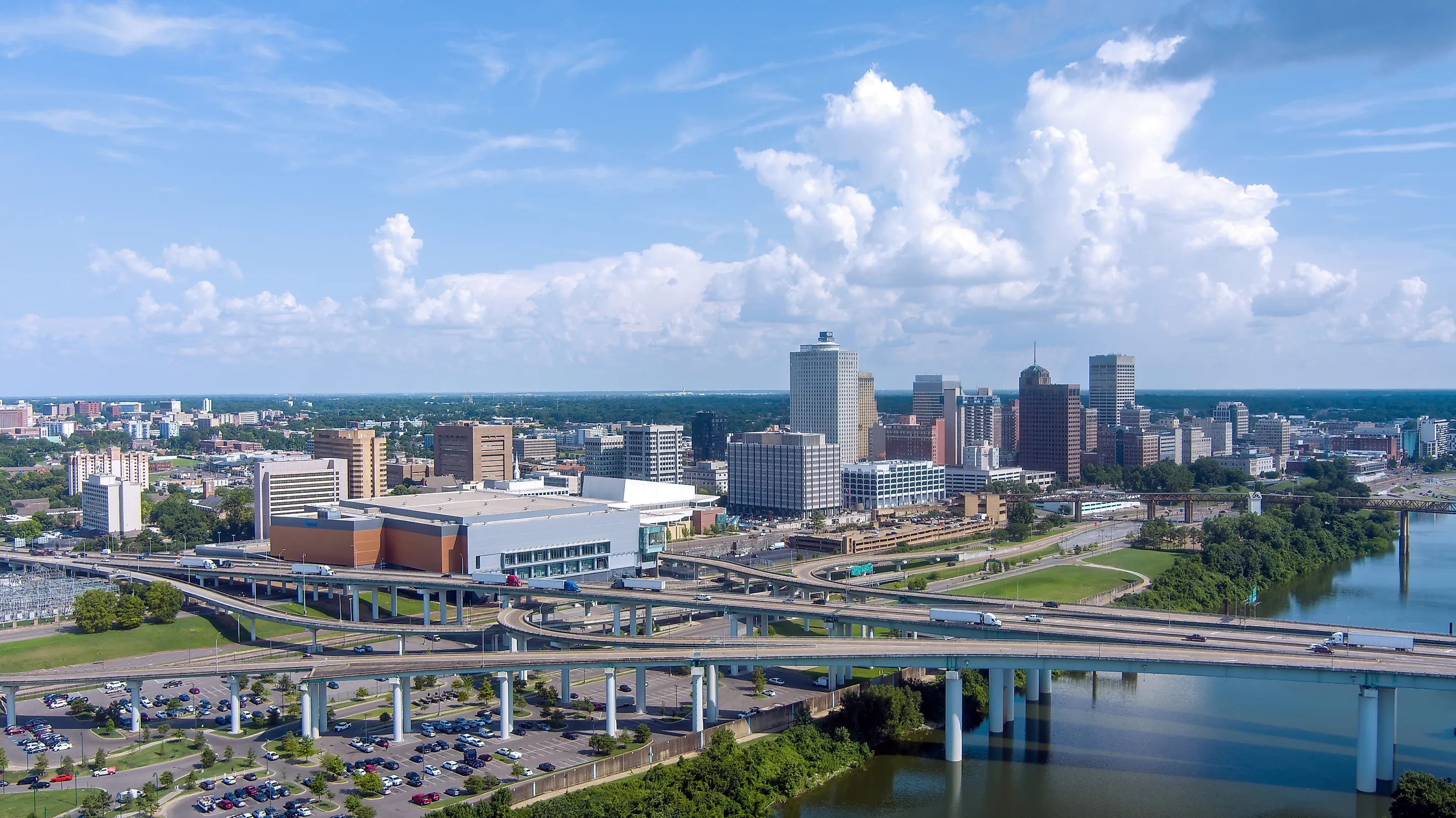
Memphis, Tennessee

Memphis sits on one of the better municipal water supplies in the country, drawn from the Middle Claiborne Aquifer, also called the Memphis Sand. The sand filters it so thoroughly that the city has long marketed the result as some of the cleanest tap water in America.
The complication is that the aquifer does not stop at the state line. It underlies Mississippi, Arkansas, Missouri, Kentucky, Alabama, and others, and Mississippi argued that heavy pumping around Memphis was pulling water out from beneath its own territory.
On 22 November 2021 the Supreme Court ruled unanimously against Mississippi, but not on the merits. It found the aquifer is an interstate resource subject to equitable apportionment, the doctrine used to divide shared rivers between states, and Mississippi had expressly declined to sue on those grounds. It was the first time the Court applied that doctrine to groundwater, which means every city sitting on a shared aquifer now has a precedent to think about.
Washington, DC

The capital has essentially no water of its own. Nearly all of it comes out of the Potomac, through intakes at Great Falls and Little Falls that sit on the Maryland side of the river, and travels down the Washington Aqueduct, which the Army Corps of Engineers has operated since the 1850s.
The same system also supplies Arlington County and the City of Falls Church in Virginia, so a federal agency is withdrawing water in one state and delivering it to a district and a second state.
The arrangement works because the Potomac is governed by an interstate compact and a cooperative operating agreement between Maryland, Virginia, DC, and the water utilities, which coordinates releases from upstream reservoirs during droughts. Without it, three jurisdictions would be drawing on the same river with no referee.
El Paso, Texas

El Paso takes a large share of its supply from the Rio Grande, but the river does not arrive on its own schedule. The water is held behind Elephant Butte Dam in New Mexico, about 125 miles upstream, and released on an allocation worked out between the two states.
That allocation has been fought over for most of a century. Texas sued New Mexico at the Supreme Court over Rio Grande deliveries, arguing that groundwater pumping below Elephant Butte was intercepting water owed downstream, and the litigation has run for more than a decade.
The city also sits over the Hueco Bolson, an aquifer shared with New Mexico and with Ciudad Juárez across the border, which makes El Paso one of the few American cities whose water politics are simultaneously interstate and international.
Las Vegas, Phoenix, And Tucson

Southern Nevada draws about 90 percent of its water from Lake Mead, which sits on the Nevada and Arizona line. None of that water falls in Nevada. It is Colorado River runoff, most of it snowmelt from the Rocky Mountains in Colorado, Wyoming, and Utah, delivered under the 1922 compact that divided the river between seven states.

Arizona's two largest cities do something more elaborate. The Central Arizona Project lifts Colorado River water out of Lake Havasu and carries it 336 miles uphill to Phoenix and on to Tucson, climbing roughly 2,900 feet along the way. It is one of the largest and most expensive water conveyance systems ever built, and it exists because the river itself runs along the far edge of the state.
The catch is seniority. Arizona accepted junior status on that water in exchange for federal funding of the canal, which is why Arizona takes cuts before California does when the river is short.
Los Angeles And San Diego

Southern California's imported supply arrives by two long aqueducts and a canal, and the largest of them starts out of state in every sense that matters. The Colorado River Aqueduct runs 242 miles from Lake Havasu on the Arizona border to the Los Angeles basin, carrying water that fell as snow in the Rockies.
San Diego is the most exposed. The county imports the overwhelming majority of what it uses, historically most of it Colorado River water bought through the Metropolitan Water District, which is why the region has spent heavily on desalination and recycling to reduce the dependency.

Los Angeles also draws from the Owens Valley, 230 miles north, which is inside California but far enough away and contentious enough that the distinction has never much comforted anyone in Inyo County.
Why The Paperwork Matters More Than The Pipe

Every arrangement here rests on an agreement rather than on geography. Compacts, Supreme Court decrees, and federal operating rules are what let one state's water reach another state's taps, and several of those documents were written when the populations involved were a fraction of today's.
The Colorado River Compact divided a river in 1922 using flow figures from an unusually wet stretch of years, which is the root of the shortage that has occupied the basin states ever since. The guidelines governing how shortages get shared have now lapsed and are being renegotiated.
So when a city says its water comes from another state, the honest reading is that it comes from a negotiation. Pipes are the easy part. Memphis found that out in front of nine justices.