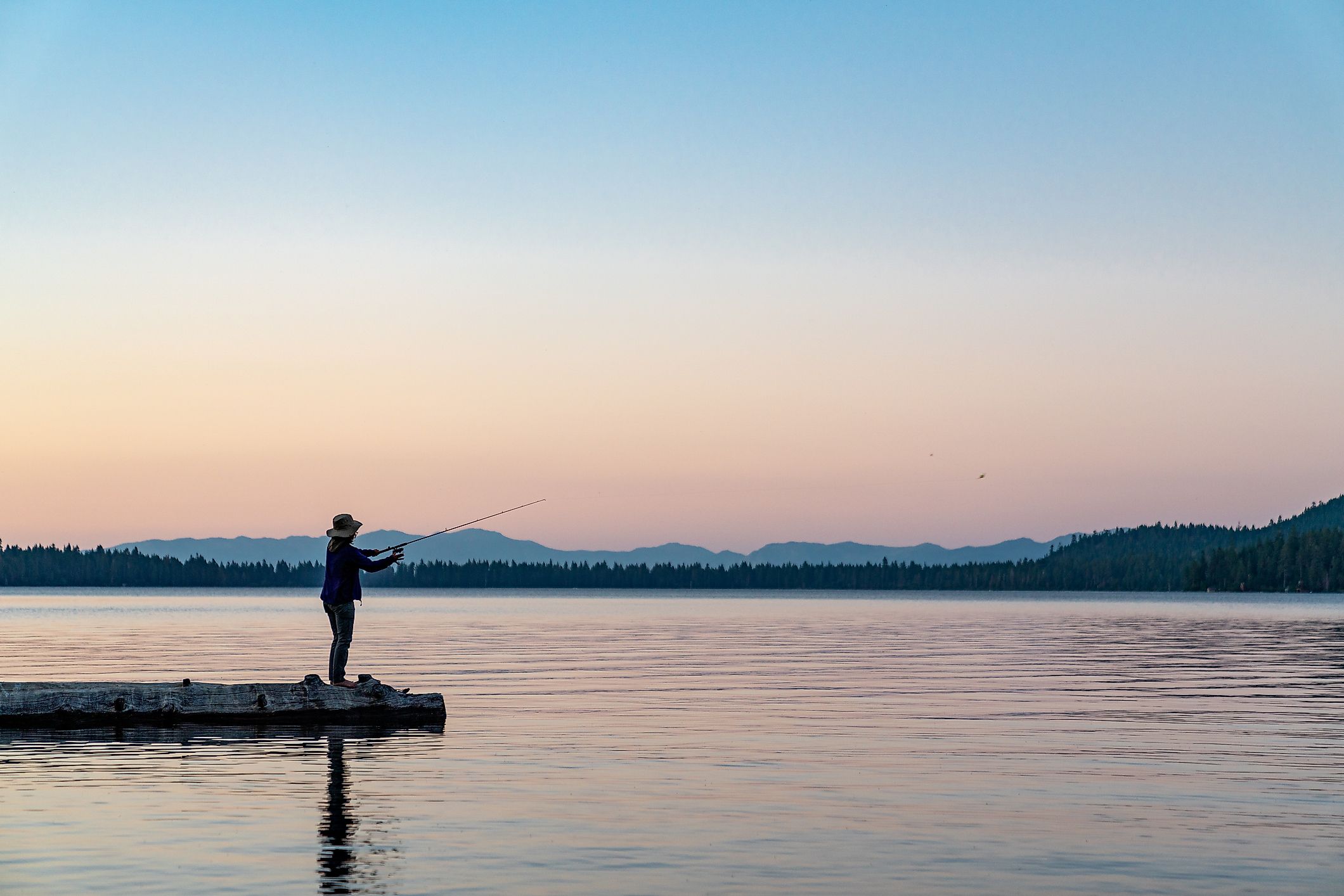
The Lakes Open To Fishing Year-Round
Casting for stripers on Lake Mead at midnight in February is fully legal. Wisconsin anglers work the Lake Michigan harbor walls for brown trout in January with ice crunching underfoot. Year-round fishing has its fine print. Keep a Lake Erie smallmouth from New York waters in December and it has to measure 20 inches, with a limit of one. Ten lakes are legal to fish every month of the year, but each comes with rules worth checking before the first cold-weather cast.
Lake Tahoe, Nevada Waters

Snowbanks beside the ramp do not end fishing season at Lake Tahoe. Nevada's 2026-2027 regulations list Tahoe and its tributaries as open all year, with fishing allowed from one hour before sunrise until two hours after sunset. The daily limit is five game fish, and small closed areas remain around places such as the Cave Rock boat ramp. Lake trout, usually called Mackinaw around Tahoe, are a favorite cold-weather target.
The setting gets serious once winter storms roll across a lake sitting more than 6,000 feet above sea level. One calm morning can put boats over deep water, and fresh snow and rough wind can change access by the next day. Nevada does not shut the fishing season for winter, though, so anglers can still legally chase fish beneath snow-covered Sierra peaks when conditions cooperate.
Lake Mead, Nevada-Arizona

The fishing clock at Lake Mead is generous. The National Park Service permits fishing from shore and boats 24 hours a day. Lake Mead National Recreation Area stays open throughout the year. Anglers need the appropriate Nevada or Arizona license. Striped bass draw much of the attention, with channel catfish, bluegill, black crappie, and other warm-water species sharing the reservoir.
July fishing can start early around this stretch of the Mojave, before the desert heat takes over the day. January is another story, with cool mornings and far more comfortable afternoons on the water. Changing reservoir levels can affect which ramps or stretches of shoreline are usable, but they do not create a winter fishing closure. Casting for stripers at midnight in February is legal here, a claim few famous American lakes can make.
Lake Okeechobee, Florida

Florida makes this one easy. The Florida Fish and Wildlife Conservation Commission states that the state's freshwater fisheries have no closed season, so Lake Okeechobee stays open to anglers throughout the calendar. For one of America's best-known largemouth bass waters, there is no spring opener to wait for. The bass rules are much more specific. Florida allows a five-fish daily bag for largemouth bass, with only one fish measuring 16 inches or longer per angler. Black crappie under 10 inches must be released, and the daily crappie limit is 25.
Seasonal conditions still change the fishing. Winter and early spring bring comfortable air and busy bass fishing, and summer adds heat, humidity, and a strong incentive to launch early. Okeechobee anglers can keep fishing through both.
Lake Havasu, Arizona-California

One of Lake Havasu's best-known fish weighs about as much as a small bowling ball. Arizona records include a 6-pound redear sunfish caught here in 2021, followed by a 16-inch catch-and-release redear record in 2025. Arizona Game and Fish describes angling on Havasu as busy throughout the year, and redears are only part of the attraction. Largemouth bass, smallmouth bass, striped bass, channel catfish, flathead catfish, and bluegill all live in the reservoir.
The state line adds a licensing wrinkle. California allows a valid California or Arizona sport-fishing license to be used from either shore along the Colorado River boundary section. Midsummer afternoons can be fiercely hot. Winter mornings can be chilly enough for jackets and gloves. Havasu keeps producing fishing opportunities at both ends of that temperature swing.
Lake Lanier, Georgia

The US Army Corps of Engineers leaves little room for interpretation at Lake Lanier, where fishing is permitted throughout the year. The Corps operates the Little Hall Fishing Tournament Complex year-round, with the facility able to accommodate tournament activity around the clock. Spotted bass, largemouth bass, striped bass, crappie, and catfish keep fishing boats on Lanier well after the peak summer boating crowds have thinned out.
Georgia's normal bag limits, size restrictions, and fishing-method rules still apply, but the area below Buford Dam has separate safety requirements. December rolls into January with the reservoir still available to anglers. The rule comes directly from the federal agency managing the lake rather than having to be pieced together from scattered seasonal reports.
Lake Michigan, Wisconsin Waters

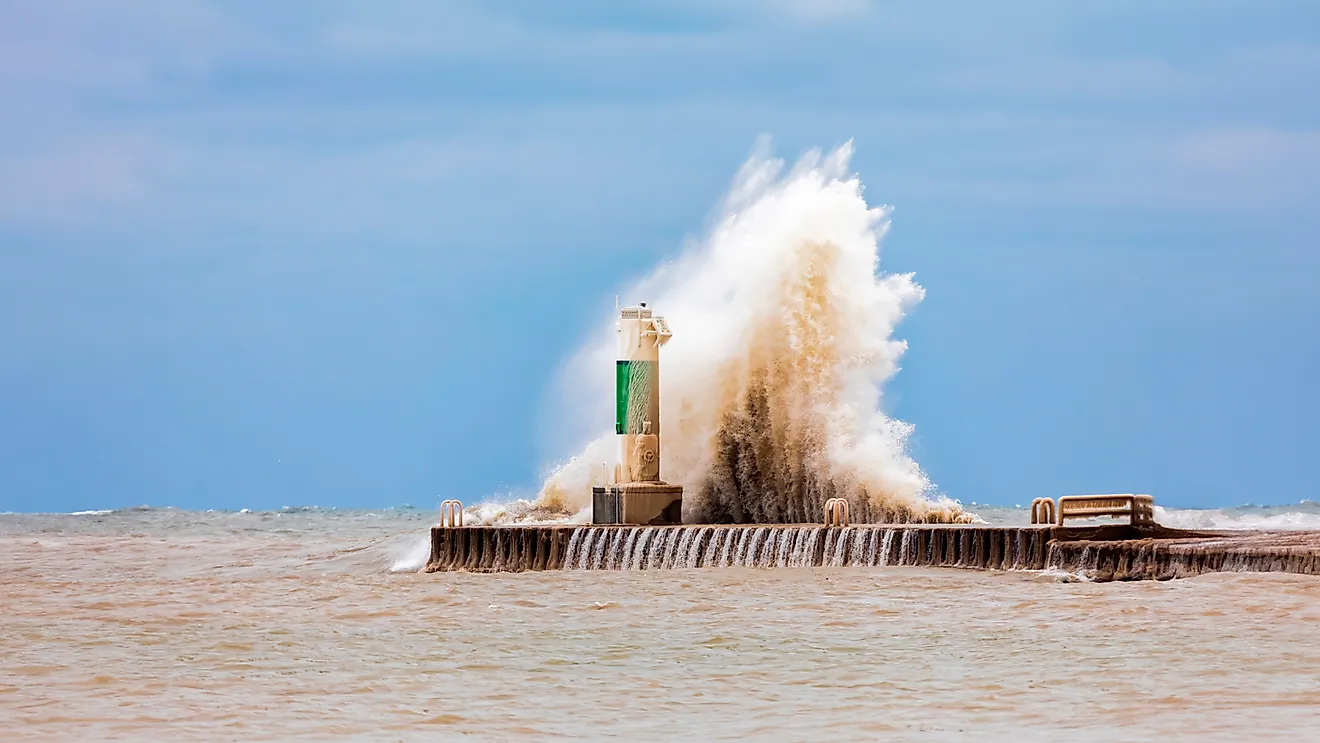
January fishing on Lake Michigan can involve brown trout, a harbor wall, and ice crunching under a pair of boots. Wisconsin's Department of Natural Resources includes Lake Michigan among its year-round fishing waters and specifically points anglers toward winter brown trout near tributary mouths and harbors. Warmer discharges can concentrate gizzard shad and round gobies, bringing feeding trout close enough for shore anglers to reach.
Lake trout come with another clear rule. Wisconsin's 2026 Great Lakes guidance keeps their Lake Michigan season open throughout the year. The daily bag is five fish in combination with other trout and salmon, with a 10-inch minimum length. The Mid-Lake Reef Complex is the key exception because anglers may not target or possess lake trout inside that refuge.
These rules apply to Wisconsin waters. Michigan, Illinois, and Indiana manage their own portions of the lake, so anglers crossing jurisdictions need to check the regulations on that side.
Lake Erie, New York Waters

A winter smallmouth from Lake Erie comes with a much stricter measuring tape than a summer one. New York's Department of Environmental Conservation allows black bass fishing all year in its Lake Erie waters. From December 1 through June 14, bass must measure at least 20 inches and the daily limit is one. On June 15, the minimum drops to 12 inches and the daily limit rises to five through November 30. Brown trout, rainbow trout, coho salmon, Chinook salmon, and lake trout have all-year seasons under New York's Great Lakes regulations, but walleye and muskellunge follow separate dates.
Smallmouth bass are a major part of the attraction. DEC reports them around rocky structure and drop-offs in about 15 to 35 feet of water, with many fish weighing two to four pounds and occasional specimens reaching five or six. Summer may be friendlier on the fingers, but winter does not clear the anglers off the New York side of Erie.
Lake of the Ozarks, Missouri

Quite a few Lake of the Ozarks favorites run straight through the calendar, New Year's Day and New Year's Eve included. Missouri's 2026 regulations give January 1 through December 31 seasons to black bass in impoundments, white and striped bass, blue catfish, channel catfish, flathead catfish, crappie, walleye, and sauger. That leaves plenty to fish for after the summer speedboats and packed docks have faded from the shoreline.
Paddlefish follow a defined season of their own, and certain methods come with separate restrictions. Size and harvest rules vary by species, so the reservoir is never a regulatory free-for-all.
Winter brings one more detail. Missouri recognizes tip-ups and other ice-fishing gear as pole-and-line methods, although Lake of the Ozarks does not develop reliable fishing ice every year. Some winters barely cooperate at all. Bass, crappie, and catfish remain legal targets either way.
Lake Texoma, Texas-Oklahoma

Striped bass give Lake Texoma a reason to stay busy in cold weather. Texas Parks and Wildlife says striper guides work the reservoir throughout the year, and Texoma supports one of the country's few self-sustaining landlocked striped-bass populations. Water flowing in from the Red and Washita rivers creates conditions that allow the fish to reproduce naturally.
January and February are not dead months. Texas fishing reports from early 2026 recorded striped bass, blue catfish, crappie, largemouth bass, and smallmouth bass as water temperatures sat in the upper 40s and low 50s Fahrenheit. Stripers were reported around deep channels and structure, and blue catfish occupied deep flats and river-channel areas.
The awkward part is paperwork. About two-thirds of Texoma is in Oklahoma. A Texas license covers the Texas portion, but a Lake Texoma license allows fishing across the reservoir. Bag and size rules vary by species, so crossing the state line deserves a little attention before the first cast.
Sam Rayburn Reservoir, Texas

Sam Rayburn gives fish plenty of places to disappear, and that is half the fun. Texas Parks and Wildlife describes the reservoir as an excellent year-round fishery for largemouth bass, crappie, and catfish. Hydrilla, standing timber, flooded vegetation, humps, flats, creek channels, and brush create a wide range of fish habitat. State survey summaries estimate that about 75 to 80 percent of annual fishing effort targets black bass. That is a large share for one group of fish.
The bass do not stay put as the calendar moves. During fall, winter, and spring, largemouths often remain active for longer portions of the day and use shallower water. Summer pushes more action toward early mornings, evenings, vegetation edges, brush piles, deeper ledges, and creek channels. Crappie move too, using shallow vegetation around the spring spawn and deeper brush or channels at other times. Same reservoir, completely different fishing puzzle.
The Final Cast
Winter anglers on these lakes learn to pack gloves right next to the tackle box. The reward can be a 6-pound Havasu redear or a Tahoe Mackinaw caught beneath snow-covered Sierra peaks. Anglers who check the license and local limits first can fish all ten lakes in any month they like. Pick a lake and circle any date on the calendar.