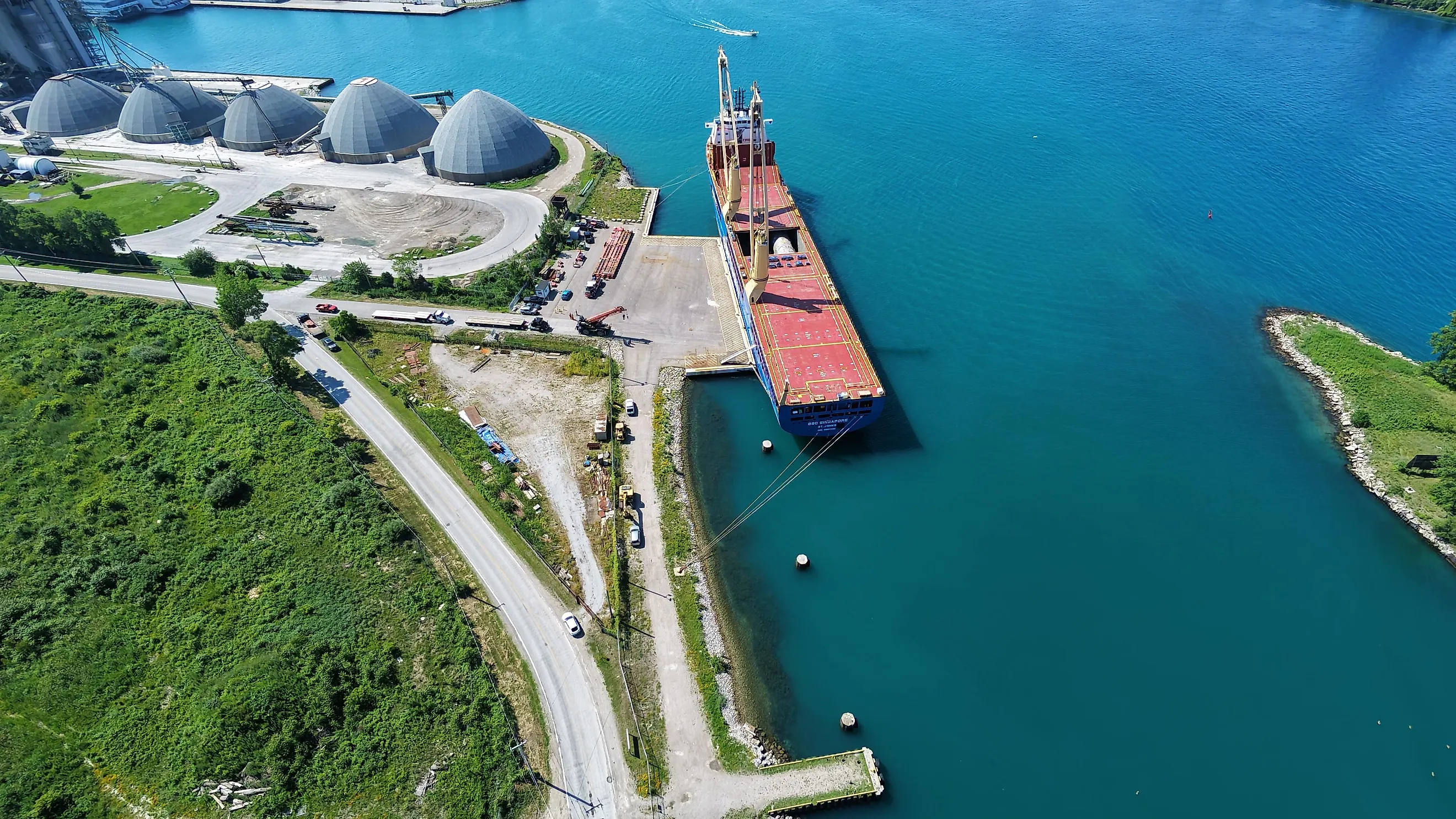
How Great Lakes Freighters Dock Without Tugboats
Look at the bow of a laker above the waterline and you will often see a cross inside a circle painted on the hull plating. That mark is a warning to small craft, and it tells you exactly where the ship keeps the equipment that lets it dock on its own. Beneath it is a tunnel running clean through the hull with a propeller inside it. A 1,000-foot vessel can push its own bow sideways against a dock without a tugboat touching it, and on the Great Lakes that is the normal way to arrive.
A Tunnel Through The Hull

The device is simpler than its effect suggests.
A tunnel thruster is a transversal propulsion unit built into the hull below the waterline, with a propeller mounted inside a tube that passes all the way through the ship. Running it pushes water out one side and the bow moves the other way.
Most are driven by electric motors, some hydraulically. Larger vessels carry them at both ends.
It Works Without Forward Motion

That is the property that makes docking possible, and it is what a rudder cannot do.
A rudder only steers when water is flowing past it, which means a ship needs to be moving to turn. A bow thruster lets the captain swing the vessel to port or starboard with no forward motion at all.
The effect actually weakens as the ship gains speed, because of the Coanda effect pulling the jet along the hull. Thrusters are at their best at a standstill, which is precisely when they are needed.
The Power Figures Are Modest

Against 8,000 horsepower of main engine, the thrusters are small.
The Mark W. Barker carries 1,000 horsepower electric bow and stern thrusters. The Algorail had a 600 horsepower bow thruster and a 1,000 horsepower stern unit, while the Saginaw was retrofitted with 1,000 horsepower at the bow.
That is enough because the job is lateral nudging rather than propulsion. Moving a hull sideways a few feet at a time needs far less power than driving it forward.
The Reason Is Cost

The engineering exists to avoid a recurring bill.
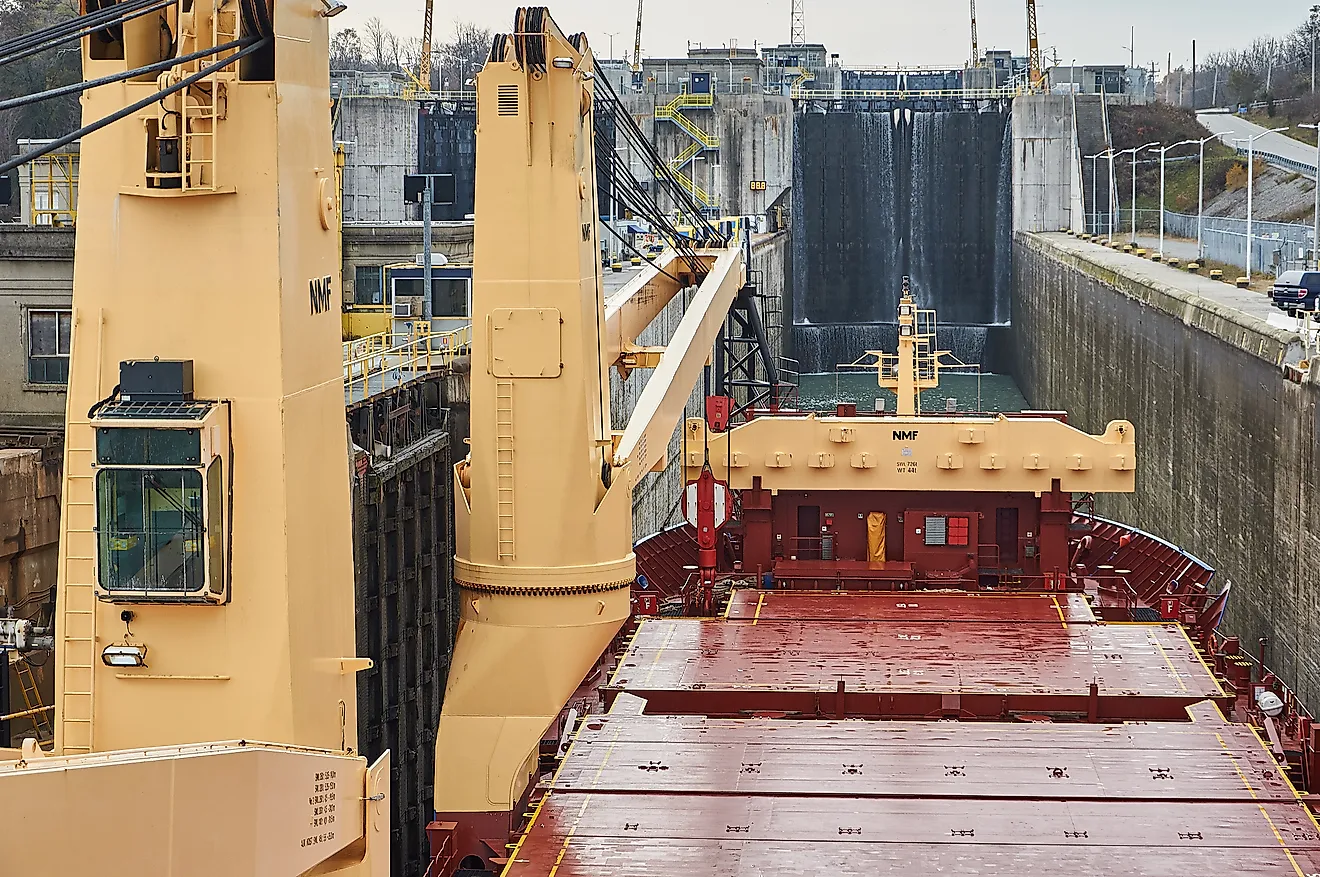
Ships working between Great Lakes ports have to maneuver through tight locks, breakwater channels and docking slips constantly. Building in a bow thruster avoids the cost of a tugboat helping them do it.
An ocean vessel docks a handful of times per voyage. A laker making 40 or more trips a season would be paying for tug assistance at both ends of every one.
The Cuyahoga Is The Proving Ground

One river gets named more than any other when thruster capability is discussed.
Freighters equipped with thrusters can follow the kinks of a narrow river such as the Cuyahoga at Cleveland without tugboats, provided all goes well. The Mark W. Barker was deliberately built at 639 feet partly to navigate it.
That qualification, provided all goes well, is doing some work in the original source. The Cuyahoga has bends tighter than the ships using them are long.
Thrusters Chew Up Riverbanks

The self-docking approach has a cost that gets passed to the infrastructure.
The churning action of thrusters forces water against the banks of a river or a narrowly confined harbor, which has an undermining effect on the shoreline. Using a tug instead prevents much of that damage.
A tug applies its push through the ship's hull. A thruster applies it through a jet of water aimed at whatever happens to be alongside.
One Person Watching Both Ends

There is a second argument for tugs that has nothing to do with horsepower.
A tug relieves the ship's captain of the need to watch over both bow and stern of a very long vessel at the same time. On a thousand-footer those points are a fifth of a mile apart.
Bow cameras help. The Mark W. Barker's captain noted he would be using his to check whether fishing boats were clearing the way.
Tugs Are Still On Speed Dial

Self-docking is the default rather than an absolute.
Tugboats on the lakes assist vessels that have run aground, have engine trouble, have lost a bow thruster, or simply want help through a difficult passage. One tug captain put it plainly: when you need a tug, you really need one.
Historically tugs worked by nudging the bow or stern sideways while the ship's own engines provided the thrust. The thruster does the same job from inside the hull.
The Tunnel Has To Stay Underwater

There is one operating condition that defeats the whole system.
If the tunnel emerges above the waterline, thruster performance suffers and the unit and surrounding hull can be damaged. A ship riding high in ballast sits further out of the water than a loaded one.
Tunnel thrusters also increase a hull's resistance moving forward, which has to be mitigated by fairing the plating behind the aperture. The capability is not free even when it is switched off.
Self-Unloading Completes The Picture

Thrusters only solve half the independence problem.
A laker also carries its own unloading boom, discharging tens of thousands of tons in hours without shore cranes. Combine that with self-docking and the vessel needs almost nothing from the port it visits.
It arrives without a tug, ties up, empties itself and leaves. The dock supplies a berth and somewhere to put the cargo.
The Short Answer

Great Lakes freighters dock without tugboats because they carry tunnel thrusters built through the hull at bow and often stern, typically around 1,000 horsepower, which push the vessel sideways at zero speed in a way no rudder can. The circled cross painted above the waterline marks where they are.
They exist for economic reasons rather than engineering pride. A ship docking dozens of times a season cannot afford tug assistance at every berth. The trade-offs are real, including eroded riverbanks, added hull resistance, and one captain watching a thousand feet of ship at both ends simultaneously.