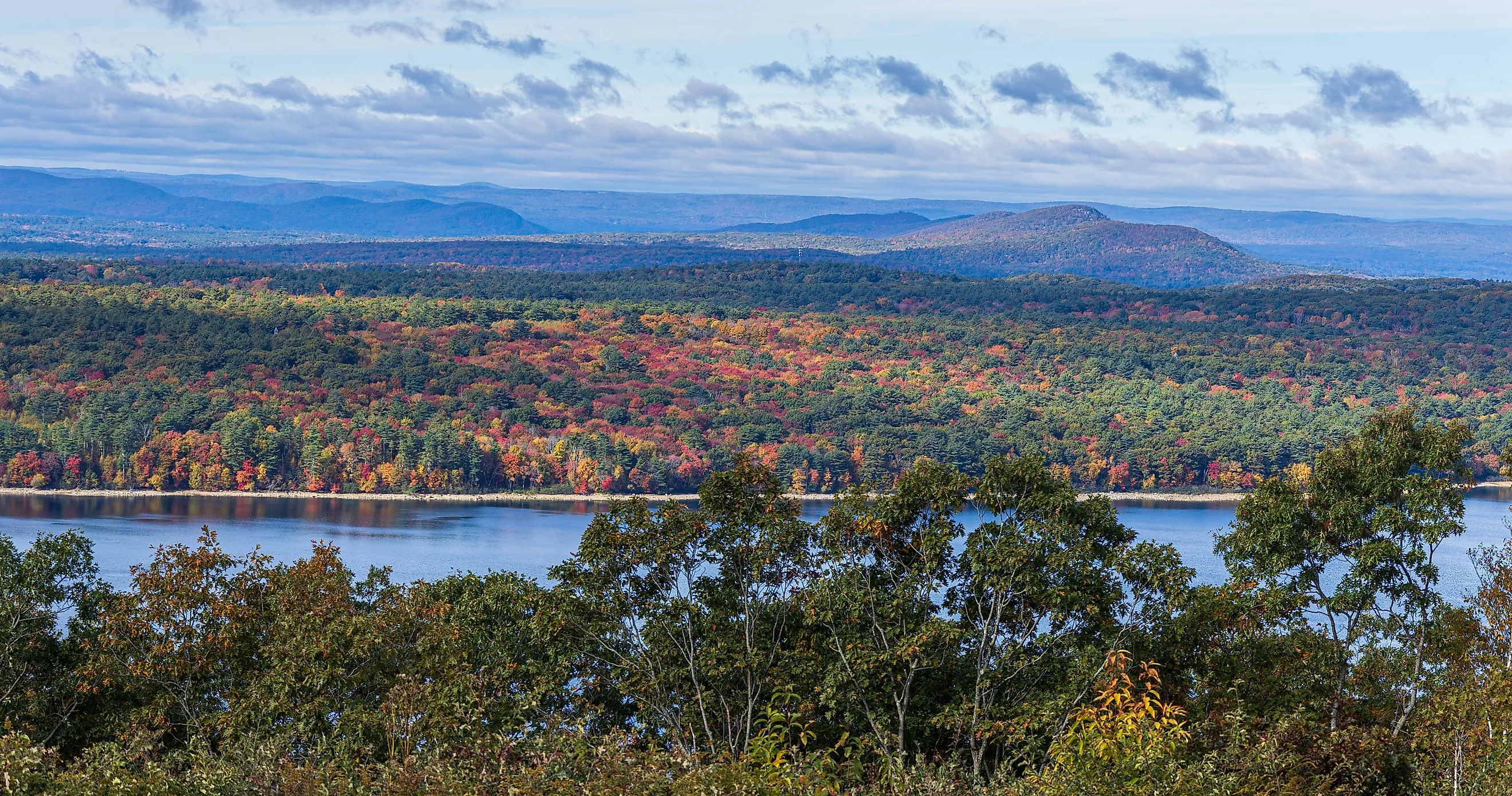
The American Lakes Closed To The Public To Protect Drinking Water
Twenty-six miles east of downtown Portland there is a 102 square mile stretch of the Mount Hood National Forest that almost nobody has set foot in for over a century. Every road into it is gated. Rangers patrol for trespassers. Vehicles entering on official business are rinsed down to stop invasive plants coming in on the tires. The reason is not security in the usual sense. It is that roughly 950,000 people drink the water that falls on it, and it reaches them without ever passing through a filter.
Bull Run Is Closed By Federal Law

The closure is not a local policy decision. It is written into statute and has been for a long time.
President Theodore Roosevelt signed the Trespass Act in 1904, restricting access to the Bull Run Reserve. Congress passed the Bull Run Act in 1977, creating the Bull Run Watershed Management Unit covering the drainage area and a closed perimeter around it.
Portland city code prohibits entry into the Closure Area outright. No unauthorized public entry is allowed, and land management inside is limited to what is needed to protect water quality and run the supply.
The Closure Replaces A Filtration Plant

This is the part that explains why a city would seal off a piece of national forest.
Portland does not filter its Bull Run water. It qualifies for filtration avoidance under the Surface Water Treatment Rule, which Oregon approved in 1992, and the terms of that approval include restricting access to the watershed and maintaining a protection program.
The forest is doing the job a treatment plant would otherwise do. Keeping people out is part of the treatment process.
Seventeen Billion Gallons Behind The Gates

The scale of what sits inside the closure is considerable.
Rain and snowmelt across the protected watershed feed the Bull Run River and its tributaries into two reservoirs holding more than 17 billion gallons. The Forest Service owns 94 percent of the land, Portland 5 percent and the Bureau of Land Management the remaining 1.
The water then moves to Portland entirely by gravity, requiring no fuel to shift it from intake to storage.
Seattle Does The Same Thing

Portland is not alone in the Pacific Northwest, and the arrangement there is equally strict.
The two major reservoirs supplying Seattle are closed to public access, with paid tours of one as the only route in. The logic is identical: a protected upland catchment substituting for treatment infrastructure.
Both cities sit below mountains with high rainfall and little development, which is the geography that makes an unfiltered supply possible in the first place.
Quabbin Restricts Rather Than Bans

The eastern model is usually a middle ground rather than a closure.
Quabbin Reservoir in central Massachusetts supplies metropolitan Boston and is heavily restricted rather than sealed. Swimming is prohibited, body contact with the water is prohibited, and boating is tightly controlled.
Visitors can walk and fish in designated areas. What they cannot do is get in, which is the distinction that matters for a surface supply.
The Rules Are About Contact

Across all these systems, the restrictions follow a pattern once you look at what is actually banned.
Swimming, wading and anything else putting a human body into the water is the first thing to go. Boats come next, then dogs and livestock, then general access.
The pathogen of concern is usually Cryptosporidium, which is shed by mammals and resists chlorine. A filtration plant removes it. A closed watershed tries to prevent it arriving.
Portland Is Building The Plant Anyway

After a century of avoiding filtration, Portland is now building a filtration plant.
Low-level Cryptosporidium detections in 2017 led the Oregon Health Authority to require filtration under a bilateral compliance agreement. The facility east of Gresham carries a 2.1 billion dollar price tag, and the city has sought an extension beyond the original September 2027 deadline.
Some residents have questioned whether it is necessary. The detections are the regulator's answer.
Unfiltered Means Shutting Down Sometimes

The weakness of relying on a watershed rather than a plant shows up in heavy weather.
Without filtration, heavy rainfall can raise turbidity high enough that the Bull Run supply must be taken offline. In December 2025 Portland ran on 100 percent groundwater for seven consecutive days.
A filtration plant would handle muddy water. A closed forest cannot stop rain.
Fire Is The Threat Nobody Can Gate Out

The closure keeps out people. It does not keep out the thing that now worries managers most.
The Camp Creek Fire burned 1,600 acres in three days on dry east winds, threatening to put ash into a Bull Run reservoir. Ash in an unfiltered supply is a direct problem rather than a manageable one.
Filtration would remove ash and debris from a future fire. That argument has done a lot of work in justifying the new plant.
The Closure Has Its Critics

Excluding the public from a forest is not universally popular, and the history gives critics something to point at.
From 1958 loggers entered the Bull Run daily to clear-cut stands inside the closed watershed, while the public who were excluded were assured the logging was minimal. Logging was eventually halted and the watershed closed again.
Critics note the closure kept hikers out while heavy equipment went in, and that runoff from old logging roads still muddies the water during winter rain.
The Short Answer

Portland's Bull Run watershed is the clearest case, 102 square miles of national forest closed to the public by federal law since 1904, holding 17 billion gallons for 950,000 people and delivering it unfiltered. Seattle closes its two supply reservoirs the same way. Quabbin in Massachusetts restricts contact rather than access.
In every case the closure is a substitute for treatment. Portland is now spending 2.1 billion dollars on the plant it spent a century avoiding, which suggests the forest was always doing a job that was difficult to guarantee.