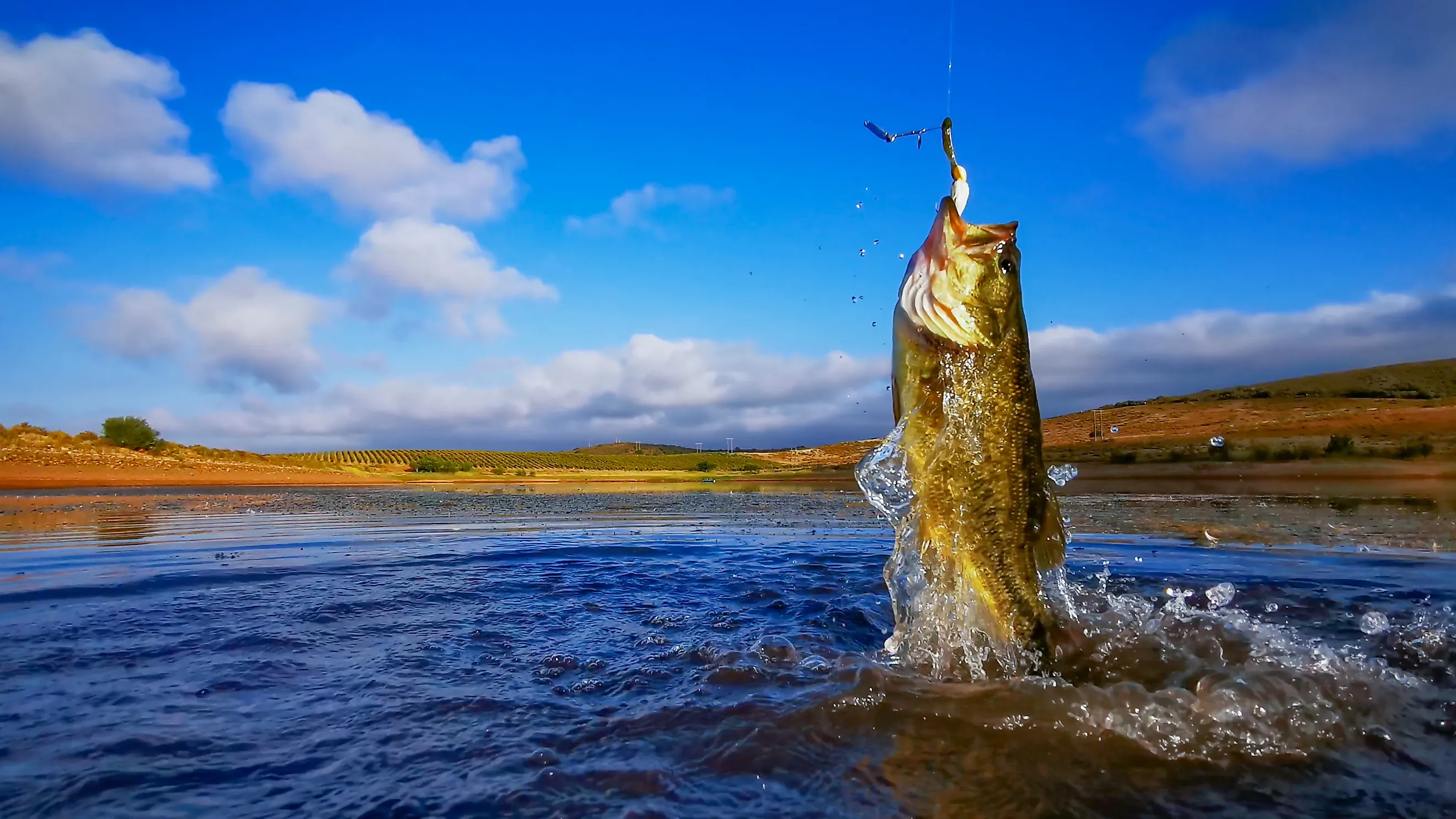
The Best Bass Fishing Lakes In The South
A five-bass stringer over 42 pounds sounds impossible, but anglers have caught one at Caney Creek Reservoir. Texas holds two of the country's benchmarks, an 18.18-pound state-record bass from Lake Fork and enough 13-pound fish at O.H. Ivie to shift national trophy rankings. Southern lakes share long growing seasons, heavy forage, and decades of Florida-bass stocking, but they still fish very differently. In some, the biggest bass sit in shallow grass and cypress roots, while in others they hold along flooded timber or deep river ledges. Pickwick makes the list for its strong smallmouth, Lake Lanier for its oversized Alabama bass. This ranking covers lakes where anglers catch exceptional fish year after year, not lakes famous for a single historic catch.
Lake Fork, Texas

Lake Fork has the most complete trophy-bass record of any southern reservoir. Texas Parks and Wildlife reports that the lake produced more than 65% of the fish in the state's historical top 50 largemouth bass list. Its catches include the Texas record, an 18.18-pound fish landed in 1992. Fork's success began with Florida largemouth stockings, abundant flooded timber, and harvest rules designed to protect fish through their fastest growth years. The current 16-to-24-inch slot limit prevents anglers from keeping most mature bass while allowing limited harvest below and above the protected range. Creek channels and submerged roadbeds give older fish deep-water refuge when shoreline vegetation declines or summer temperatures rise.
O.H. Ivie Reservoir, Texas
O.H. Ivie has become the South's most productive reservoir for bass exceeding 13 pounds. Texas Parks and Wildlife identified it as the leading source of Legacy Class ShareLunkers over the six seasons ending in 2026. That run included repeated catches above 14 pounds and several fish approaching the Texas top-ten record range. Ivie's bass feed heavily on gizzard shad and other open-water forage, while flooded brush provides cover during periods of higher water. The reservoir can also change quickly. Drought and municipal demand expose habitat, close ramps, and reduce the amount of fishable water. Its extraordinary trophy output is firmly documented, although its future performance will remain tied to rainfall and reservoir elevation.
Santee Cooper Lakes, South Carolina

Lakes Marion and Moultrie in South Carolina form a single bass fishery with two distinct environments. Marion contains expansive swamps, standing timber, and river-fed backwaters. Moultrie has a more open basin with deeper offshore structure and extensive cypress habitat around its margins. Bassmaster ranked Santee Cooper first in its southeastern division for 2026 after another sequence of exceptionally heavy tournament catches. The system can produce fish from shallow woody cover during the spawning period and from offshore depressions later in the year. South Carolina fisheries research has also documented rapid early growth among Santee Cooper largemouth bass. Navigation is demanding because submerged timber remains widespread, especially in the upper reaches of Lake Marion.
Sam Rayburn Reservoir, Texas

Sam Rayburn supports trophy fish without sacrificing the catch rates needed for large tournaments. Texas Parks and Wildlife estimates that black bass account for 75% to 80% of annual fishing effort on the reservoir. More than 400 bass tournaments may be held there during a busy year. Rayburn's 16.80-pound lake record confirms its upper size potential, while recent ShareLunker catches show that giant bass remain present. The lower reservoir contains deep creek channels and submerged timber. Farther north, anglers encounter riverine habitat and broad flats. Hydrilla expands and contracts with water levels, but bass can shift to brush or offshore structure when vegetation becomes scarce. The reservoir's size prevents fishing pressure from concentrating in one small area.
Lake Tohopekaliga and the Kissimmee Chain, Florida

West Lake Tohopekaliga anchors a connected central Florida system that also includes Cypress, Hatchineha, and Kissimmee lakes. The Florida Fish and Wildlife Conservation Commission's TrophyCatch tracker lists more than 500 Lake Tohopekaliga bass between eight and 9.9 pounds, along with dozens exceeding ten pounds. Water moves through canals and river channels between the lakes, giving bass access to spawning marshes and deeper refuge. Hydrilla can hold large concentrations of fish, while bulrush and Kissimmee grass support spawning and juvenile survival. Habitat restoration remains important because stabilized water levels and accumulated organic sediment can reduce the quality of shallow vegetation. Major drawdowns and planting projects have been used to rebuild parts of the chain.
Toledo Bend Reservoir, Texas and Louisiana

Toledo Bend's bass population occupies nearly 185,000 acres along the Texas-Louisiana border. That scale creates several fisheries within the same reservoir. The upper end is shallower and more river-influenced, while the lower basin contains clearer water and deeper structure. Louisiana has repeatedly stocked Florida bass to strengthen the fishery's genetic potential, including nearly half a million fingerlings in 2025. The Toledo Bend Lake Association also recognizes released bass weighing at least ten pounds, creating a long-running record of trophy catches. Aquatic vegetation has fluctuated sharply over time, forcing bass to rely more heavily on timber and creek channels during lean years. Even then, Toledo Bend continues to produce heavy tournament limits and double-digit fish.
Caney Creek Reservoir, Louisiana
Caney Creek covers only about 5,000 acres, yet its tournament weights rival those from reservoirs many times larger. Louisiana's 2025 Annual Tournament Report Information Project found that Caney produced nine of the ten heaviest individual bass reported from participating tournaments. It also accounted for seven of the ten largest five-fish stringers. The strongest reported limit weighed more than 42 pounds. Caney's clear water and steep depth changes distinguish it from Louisiana's broad, muddy floodplain lakes. Submerged timber remains important, particularly where it intersects with creek channels or changes in bottom contour. Tournament reporting is voluntary, so the results cannot measure the entire population. The concentration of heavy catches nevertheless shows an unusual density of mature largemouth bass.
Lake Guntersville, Alabama

Lake Guntersville is built around vegetation. Hydrilla and milfoil create feeding cover across large sections of the Tennessee River reservoir, allowing bass to remain shallow well beyond the spring spawning period. Alabama's Bass Angler Information Team has repeatedly recorded high average bass weights at Guntersville, including the leading average among participating state reservoirs in a recent reporting cycle. The 15-inch minimum length limit protects younger largemouth and smallmouth bass from harvest. During summer, fish leave the thickest grass and gather along river ledges or the outer edges of submerged plants. Strong current can make those offshore areas especially productive. Grass coverage changes from year to year, but Guntersville has enough alternative habitat to remain competitive when vegetation recedes.
Rodman Reservoir, Florida

Rodman Reservoir has produced Florida's most concentrated record of exceptionally large bass. Florida fisheries researchers found that TrophyCatch participants had their highest trophy-bass success rate at Rodman during the 2023-2024 reporting period. The reservoir also produced more Hall of Fame catches, meaning bass of at least 13 pounds, than any other Florida waterbody in that study year. Rodman floods part of the Ocklawaha River valley, leaving a maze of timber beside the original river channel. Periodic drawdowns expose the lakebed and reduce accumulated vegetation before the reservoir refills. These operations temporarily restrict navigation, but they also renew shallow habitat. Deep sections near the barge canal provide refuge when warm surface water makes the stump fields less productive.
Chickamauga Reservoir, Tennessee

Chickamauga's trophy era grew from Florida largemouth stockings and the survival of strong year classes in the Tennessee River system. The reservoir produced Tennessee's 15-pound, 3-ounce largemouth record. Genetic testing identified that fish as an F1 hybrid between native and Florida largemouth bass, demonstrating how stocked genetics contributed to its growth. Chickamauga contains shallow backwaters near its upper end and deep main-river structure closer to the dam. Aquatic vegetation can produce strong shoreline fishing, while current positions bass along shell beds and ledges during summer. Water releases through upstream dams influence both fish location and feeding activity. The reservoir faces heavy tournament pressure, but its length distributes anglers across numerous creeks and broad river sections.
Pickwick Lake, Alabama, Mississippi, and Tennessee

Pickwick supports a genuine mixed fishery rather than a largemouth population with a few incidental smallmouth bass. Tennessee wildlife officials describe both species as abundant and report that they form most of the reservoir's black-bass catch. Angler-harvest data collected over ten years placed the average largemouth above 2.6 pounds and the average smallmouth above 2.2 pounds. Smallmouth concentrate around current-swept rock, especially below Wilson Dam and along deeper ledges. Largemouth are more closely associated with shoreline cover and quieter tributary water. A 15-inch minimum length applies to both species in Tennessee waters. Pickwick is especially valuable for anglers seeking heavy smallmouth without leaving the southern United States.
Lake Murray, South Carolina

Lake Murray's bass follow blueback herring, a pelagic forage fish that encourages largemouth to leave the shoreline and hunt in open water. That behavior can scatter fish across points and suspended timber, making electronics more important than visible cover. The lake demonstrated its current quality during the May 2026 Bassmaster Elite Series, when the winning four-day catch weighed 90 pounds, 14 ounces. Murray also has a 14-inch minimum length for largemouth bass. Spawning fish use pockets and protected shoreline cover, but the fishery changes after the herring become active. Bass may then gather briefly around offshore structure before following moving forage. That mobility makes Murray difficult to pattern, yet it also supports rapid growth among fish that successfully exploit the herring population.
Orange Lake, Florida
Orange Lake is shallow enough for vegetation and water level to control nearly every part of its bass fishery. When hydrilla and native emergent plants are abundant, the lake produces exceptional numbers of heavy Florida bass. Florida's TrophyCatch program recorded an average weight of 9.93 pounds among 64 qualifying Orange Lake catches during a 2023 comparison with Fellsmere Reservoir. The lake also produced the heaviest approved TrophyCatch bass of the preceding season, a 14-pound, 1-ounce fish. Low water can strand ramps and sharply reduce accessible habitat. Productive periods return when rainfall expands the vegetated shoreline and floods new feeding cover. Orange is therefore a genuine trophy lake whose performance rises and falls with hydrology.
J.B. Thomas Reservoir, Texas
J.B. Thomas moved from obscurity to national prominence after producing a remarkable concentration of eight-pound-plus bass. Bassmaster placed it first in the Central Division for 2026, while Texas Parks and Wildlife rated its largemouth opportunity as excellent. The reservoir's 2023 fisheries survey found a balanced bass population and numerous juvenile fish. That biological evidence matters because trophy submissions alone could reflect a small group of old bass without adequate replacement. J.B. Thomas remains vulnerable to severe water loss. It was last full in 1962 and has repeatedly fallen to a fraction of its conservation capacity. Turbid water and limited vegetation also separate it from the classic profile of a trophy reservoir, making its recent productivity scientifically unusual.
Lake Lanier, Georgia

Lake Lanier earns its place through the quality of its Alabama bass, commonly called spotted bass by anglers. Georgia wildlife officials describe the reservoir as best known for spotted and striped bass, with largemouth more common in the upper end. The Alabama bass population follows blueback herring through clear, deep water and frequently suspends above standing timber. Rocky shorelines become important during spring, while open-water feeding dominates much of the warm season. Lanier does not produce as many double-digit largemouth as the Texas or Florida lakes higher in the ranking. Its strength is a deep-water fishery capable of producing five-bass limits composed entirely of large Alabama bass, a feat few southern reservoirs can match consistently.
What the Ranking Shows
No single lake leads every measure of bass quality. Lake Fork has the strongest historical trophy record, while O.H. Ivie has produced the most remarkable recent run of giant fish. Santee Cooper and Sam Rayburn support heavy catches across much larger and more varied environments. Florida's leading lakes document extraordinary numbers of eight-pound bass through TrophyCatch, although those figures depend on voluntary reporting. Pickwick and Lanier rank highly for species other than largemouth. A formal scientific comparison would need to standardize catches by fishing effort, reservoir area, season, water level, and reporting method. Without those controls, the most defensible ranking is one built from several independent lines of evidence rather than a single record fish or tournament result.