The Deepest Shipwreck Ever Found In The Great Lakes
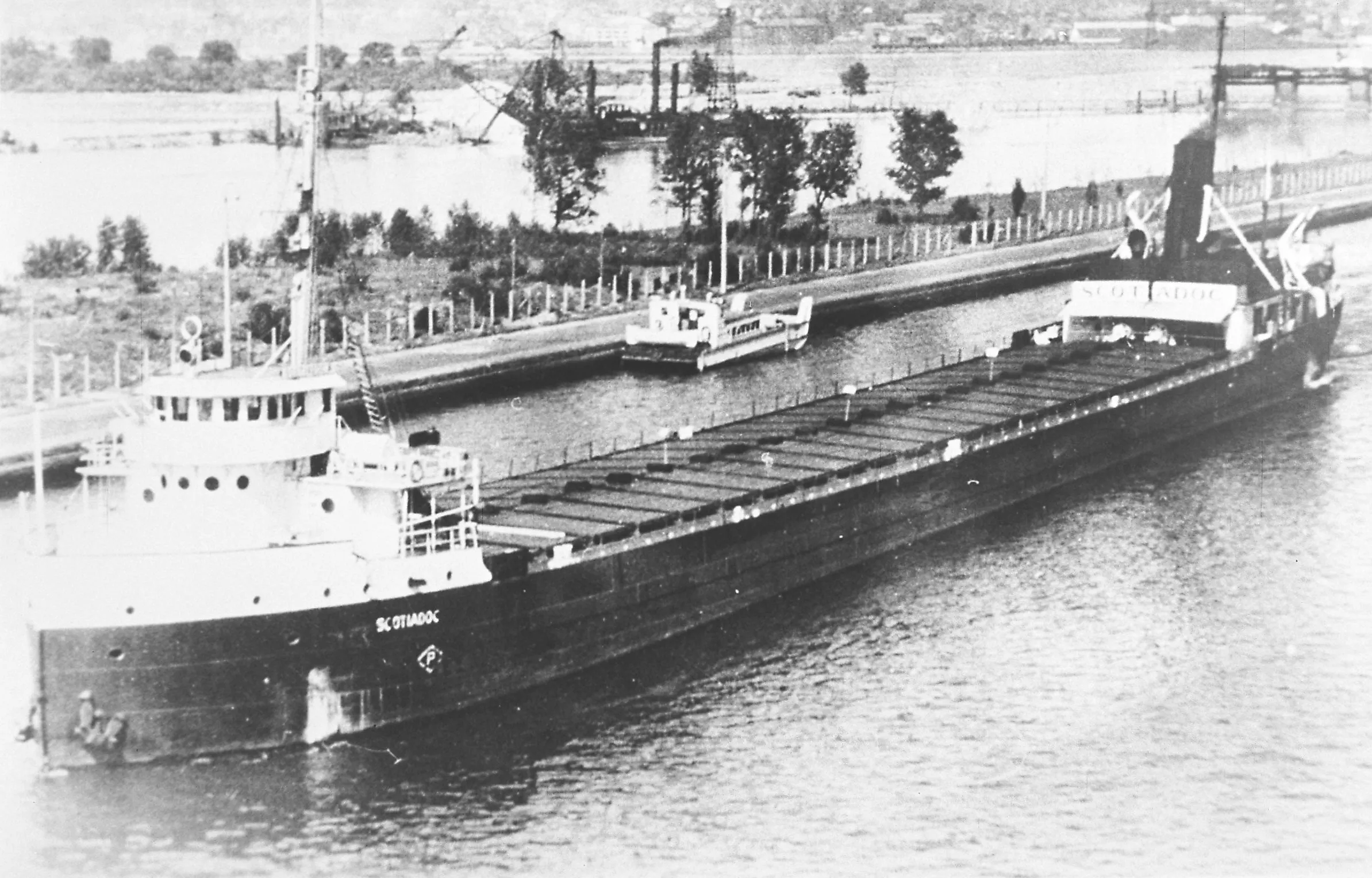
Lake Superior has swallowed hundreds of ships, but one rests farther beneath the surface than any other known wreck in the Great Lakes. The SS Scotiadoc, a 424-foot steel bulk freighter, sank near Trowbridge Island southeast of Thunder Bay, Ontario, in 1953. When shipwreck hunters finally confirmed its location 60 years later, they found its bow approximately 850 feet down and its stern near 870 feet. That extraordinary depth made Scotiadoc the deepest known shipwreck yet located anywhere in the Great Lakes. Its story combines an avoidable collision, a dramatic evacuation, decades of detective work, and unusually difficult underwater exploration in one of the deepest regions of Lake Superior.
Radar Did Not Stop The Collision

Scotiadoc left Port Arthur (now part of Thunder Bay, Ontario) on June 20, 1953, carrying roughly 260,000 bushels of wheat and a crew of 29. Near Trowbridge Island, heavy fog and rain reduced visibility so severely that crews had to rely heavily on instruments. Both Scotiadoc and the approaching freighter, Burlington, had radar and detected one another before impact, yet the ships failed to establish clear radio communication about how they would pass. As the distance between them rapidly closed, Scotiadoc attempted a late turn while Burlington continued on its course. Burlington struck Scotiadoc on the starboard side near the stern, tearing open the hull and scraping alongside it.
The collision is especially striking because it happened during an era when radar was already changing Great Lakes navigation. Technology could reveal an approaching vessel, but it could not compensate for inadequate communication and poor decisions in deteriorating conditions.
Twenty-Eight Escaped, One Did Not

Floodwater entered the damaged hull faster than Scotiadoc's pumps could remove it, leaving Captain George Edgar Morris little choice but to abandon the ship. Most of the crew successfully reached the port-side lifeboat, but launching the starboard boat became much more dangerous as the freighter settled in rough water. Part of the lifeboat suddenly dropped, throwing five men into the cold lake. Four managed to catch ropes or reach assistance, while 39-year-old Wallace McDermid of Sault Ste. Marie disappeared and became the sinking's only fatality. The other 28 crew members survived.
Scotiadoc continued taking on water after the evacuation and appears to have descended stern-first, consistent with the location of the collision damage. The speed and confusion of the sinking also contributed to the mystery that followed, because no precise modern position could be recorded as the freighter disappeared beneath Lake Superior.
Deeper Than Any Known Wreck

The depth of Scotiadoc is what separates it from every other known shipwreck in the Great Lakes. The freighter rests upright on sloping terrain, with its bow approximately 850 feet below the surface and its stern around 870 feet, or roughly 259 to 265 meters. That is considerably deeper than the approximately 750-foot depth associated with the Isaac Jenkins in Lake Ontario, which had been regarded as the previous record holder.
Lake Superior itself averages about 483 feet deep and reaches a maximum depth of roughly 1,332 feet, so Scotiadoc lies far below the lake's average bottom while still several hundred feet above its deepest basin. The distinction matters: Scotiadoc is the deepest known wreck yet discovered, not proof that no ship lies deeper. Lake Superior still contains large areas below 870 feet, and some vessels lost on the Great Lakes have never been located.
A Search Without Coordinates

Searchers could not simply travel to a recorded coordinate because Scotiadoc sank decades before GPS navigation became available. Its final position had been estimated using contemporary navigation methods and witness accounts, leaving researchers with a broad search area southeast of Thunder Bay. Shipwreck hunters examined court records, crew testimony, reported positions, and estimates of how far the damaged freighter might have traveled after the collision. Sonar surveys then covered likely sections of lakebed in repeated parallel passes.
The underwater landscape around Trowbridge Island complicated the work because steep ledges and rocky formations produced sonar returns that could resemble portions of a ship. Searchers also had relatively little experience surveying targets approaching 900 feet deep. Years of searching gradually reduced the possibilities until a previously recorded sonar target drew renewed attention during the 2013 expedition season.
A Camera Read The Name

Locating a suspicious sonar shape was only the beginning because researchers still needed visual evidence proving which ship they had found. At nearly 900 feet, even lowering a camera posed substantial engineering challenges. Searchers Jerry Eliason, Ken Merryman, and their collaborators used a heavy tethered underwater camera lowered from the research boat Heyboy. Hundreds of feet of cable made manual recovery impractical, so the vessel needed a davit and winch to handle the system.
Darkness presented another obstacle. Artificial lights were necessary at that depth, but particles suspended in the water could reflect the illumination back toward the camera and obscure details. On September 7, 2013, the equipment finally produced decisive footage. The camera recorded recognizable sections of the freighter and, most importantly, lettering on the hull spelling out Scotiadoc. After roughly six decades underwater, the missing vessel had been conclusively identified.
Still Recognizable After Seven Decades

The discovery footage showed that Scotiadoc had not collapsed into an unrecognizable pile of metal. Much of its long cargo section remains intact, and the vessel sits upright on the lakebed, making its overall form easy to distinguish. The stern carries substantial damage consistent with the collision and sinking, while the pilothouse separated from the main vessel and landed nearby.
Its condition illustrates one reason deep Great Lakes shipwrecks can survive remarkably well. Cold freshwater slows many forms of biological deterioration found in warmer or saltier environments, while extreme depth protects a wreck from waves, anchors, recreational divers, and most direct human disturbance. For maritime researchers, that preservation leaves physical evidence that can be compared with historical accounts of the disaster. Nearly 20 miles southeast of Thunder Bay, the remains of a working Great Lakes freighter still occupy the exact place where a routine wheat voyage ended more than seven decades ago.