How Many US Lakes Are Bigger Than Rhode Island?
At 1,214 square miles, Rhode Island is the smallest US state by area. Its 48-mile north-south by 37-mile east-west footprint is small enough that six freshwater lakes in the country (or partly in the country) cover more surface area than Rhode Island does. Five of them are the Great Lakes; the sixth straddles the border between the US and Canada. To see how a small state stacks up against bodies of water that read more like inland seas, the six are listed below from smallest to largest.
Lake of the Woods

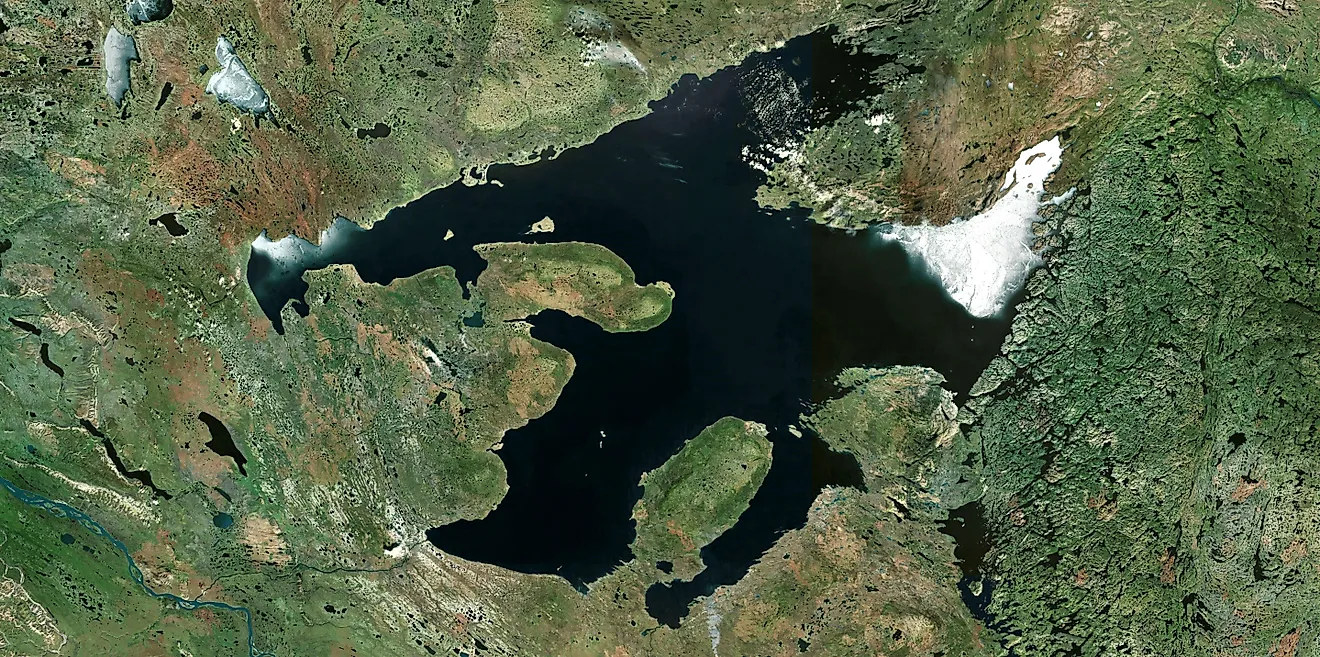
At 1,679 square miles, Lake of the Woods straddles the borders of northern Minnesota, Ontario, and Manitoba. The lake runs more than 70 miles long and contains over 14,500 islands, more than any other lake in the world. Its main inflows are the Rainy River, Shoal Lake, and Kakagi Lake.
Visitors can access the lake from several state parks and recreation areas, including Zippel Bay State Park on the southern shore and Garden Island State Recreation Area, a 734-acre island known for its pelican and gull populations. The lake earned the title Walleye Capital of the World for its dense walleye fishery, and it also supports populations of great blue herons, mallards, double-crested cormorants, and a black bear population in the surrounding woodlands.
Lake Ontario
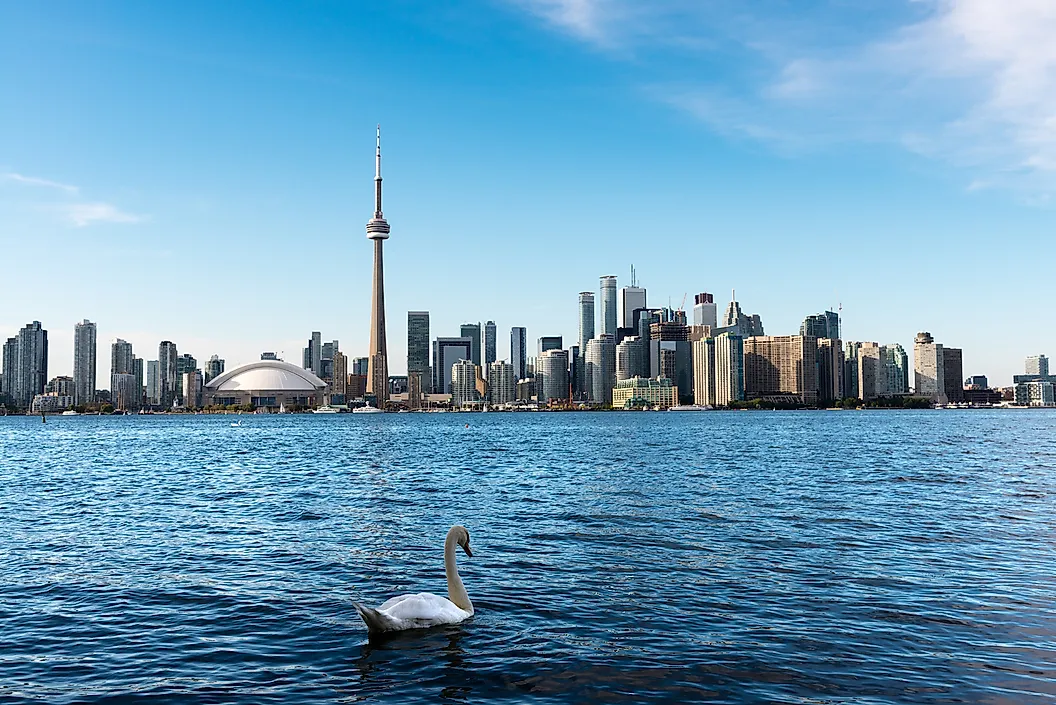
Lake Ontario is the smallest of the Great Lakes by surface area at 7,340 square miles, sitting along the international border between New York and the Canadian province of Ontario. Despite its size, it is the most strategically important of the five for shipping. As the closest Great Lake to the Atlantic Ocean, it serves as the final downstream link in the Great Lakes Waterway, with all upstream traffic passing through Lake Ontario before reaching the St. Lawrence Seaway.
Around 9 million Americans and Canadians draw their drinking water from the lake, and roughly 25% of Canada's population lives in its watershed (more than in any other watershed in the country). The Niagara River, which carries about 80% of the lake's inflow, also produces Niagara Falls, the highest-volume waterfall in North America, with a vertical drop of about 170 feet. The lake holds nearly 100 beaches and supports several endangered species, including the piping plover (which nests in the dunes along the eastern shore) and lake sturgeon, the largest freshwater fish in Canada.
Lake Erie

At 9,910 square miles, Lake Erie reaches New York, Pennsylvania, Ohio, Michigan, and the Canadian province of Ontario. It is the shallowest of the Great Lakes at only 210 feet at its deepest point, and because it sits the farthest south, it is also the warmest. The two factors combine to make Erie the most biologically productive of the five.
The biological richness peaks at Pelee Island, the largest island in the lake, which holds a rare alvar habitat: shallow soils over flat dolomite and limestone bedrock that support specialized grasslands and shrubs. The endangered Lake Erie water snake and blue racer both live on the island, and more than 70 species of migratory birds plus large numbers of monarch butterflies pass through it each year. Below the surface, Erie holds a few unusual residents for a temperate freshwater lake, including freshwater jellyfish and freshwater sponges. The lake provides drinking water and (via hydroelectric stations downstream on the Niagara River) electrical power to about 12 million people on both sides of the border.
Lake Michigan

Lake Michigan covers 22,300 square miles, nearly 15 times the surface area of Rhode Island. It is the only Great Lake that lies entirely within the US, bordered by Wisconsin, Illinois, Indiana, and Michigan. By volume it ranks second among the five at 1,180 cubic miles, and by depth it ranks second at 925 feet at its deepest point. It connects to Lake Huron through the Straits of Mackinac, where the two lakes share a single water level, which has led to a long-running debate over whether they should be considered a single hydrologic body.
More than 12 million people live within the Lake Michigan watershed, including the metropolitan areas of Chicago and Milwaukee. The lake's moderating climate gives the eastern shore its fruit-belt agriculture (tart cherries, peaches, and apples), and the surrounding forests and dunes support populations of moose, grasshopper sparrows, and the federally endangered Hine's emerald dragonfly. The lake holds the largest freshwater dune system in the world, anchored on the southern shore by Indiana Dunes National Park, with extensive coastal wetlands running along much of the shoreline.
Lake Huron

Lake Huron is fractionally larger than Lake Michigan at 23,007 square miles. Parts of it form the international border between Michigan and Ontario. The shoreline holds the turquoise shallows of the Bruce Peninsula and the 30,000 Islands of Georgian Bay (the world's largest freshwater archipelago), and an estimated 1,000 shipwrecks lie preserved at the bottom of the lake in cold, low-oxygen water.
Despite its size, fewer people live around Lake Huron than around any of the other Great Lakes (about 3 million in total). More than half its watershed is forested, including stretches of Carolinian forest in the south where broadleaf deciduous trees reach their northern limit. The lake's beaches are unusually long for the Great Lakes; Wasaga Beach, on Georgian Bay, runs about 14 kilometers and is the longest freshwater beach in the world. Rare species along the shore include blueheart flowers, five-lined skinks, and the federally threatened Lake Huron locust, an insect adapted to the open dune habitat. Travelers can cross the Straits of Mackinac on the Mackinac Bridge, which links Michigan's Upper and Lower peninsulas with a total span of roughly five miles, making it one of the longest suspension bridges in the Western Hemisphere.
Lake Superior

Lake Superior is fittingly named: at 31,700 square miles, it is the largest freshwater lake in the world by surface area. By volume it ranks third at 2,900 cubic miles, behind only Lake Tanganyika and Lake Baikal. Lake Superior touches Ontario, Minnesota, Michigan, and Wisconsin, and its retention time (the time an average drop of water spends in the lake before flowing out) is about 191 years.
The lake is also the deepest of the Great Lakes, with an average depth of 483 feet and a maximum of 1,332 feet. The cold, deep water keeps the lake the coldest of the five and contributes to its reputation as the cleanest. Less than 5% of its shoreline has been developed, only about 673,000 people live in its watershed, and the surrounding country supports populations of woodland caribou, gray wolves, lynx, and moose. The deep-water siscowet, a fatty subspecies of lake trout, lives only in Lake Superior. The lake's open water and shoreline cliffs also draw a major raptor migration each fall, with more than 10,000 birds of prey (including bald eagles) tracked annually at Hawk Ridge above Duluth.
Does Size Matter?
Rhode Island is dwarfed by all six lakes, but the comparison says less about the state than it does about the freshwater scale of the upper Midwest and Canadian Shield. Tens of millions of people draw drinking water from these lakes, hydroelectric stations on their outflows generate gigawatts of power, and rare species (some of which exist nowhere else) survive in the cold deep water and along the surrounding dunes and shorelines. The smallest US state would fit inside any of them with room to spare, and Lake Superior alone could hold roughly 26 Rhode Islands.