Why Some Lakes Resist Invasive Species Better Than Others
The Great Lakes are sometimes described as the most heavily invaded freshwater system in the world, with about 188 documented non-native aquatic species established in the basin and roughly a third of those classified as invasive by environmental scientists. The damage runs through fisheries, water-supply infrastructure, native biodiversity, and recreation. The same pattern shows up across many other North American lakes, but with significant variation: some lakes have been overwhelmed, while others have remained largely intact even when nearby waters are heavily invaded. The reasons are not arbitrary. Three factors do most of the work: water temperature and chemistry, the strength of the native ecological community, and the level of human activity, especially shipping and recreational boating. The lakes that have held the line tend to score well on all three.
The Conditions That Build Resistance

Healthy native ecological communities resist invasion. Diverse plant communities crowd new arrivals out of usable habitat through what ecologists call biotic resistance: dense native vegetation leaves little open substrate for non-native plants to colonize, and an established food web populated by native predators tends to keep the populations of any new arrival in check. Predator pressure on egg and larval stages of invading fish and invertebrates is particularly important; in lakes where populations of native predatory fish have collapsed, invaders can establish far more easily.
Cold water and low dissolved-mineral content add another layer of defense. Many of the most damaging aquatic invaders, including zebra and quagga mussels, require relatively warm water and adequate calcium concentrations to grow shells and reproduce. Lakes whose summer surface temperatures stay low and whose calcium levels remain below about 12 milligrams per liter are largely outside the physiological range these mussels can tolerate. Low nutrient inputs further restrict the algae blooms that many invaders depend on for food.
The third factor is human disturbance. Lakes with heavy commercial shipping, dense residential development on the shoreline, agricultural runoff in the watershed, or significant recreational boat traffic are far more exposed to introductions, and the chemistry of the water in those lakes tends to be more accommodating to the invaders that arrive. Shoreline conversion, where natural marsh and forest are replaced by lawn and hardscape, removes the buffer of native vegetation and provides easy footholds for invasive shoreline plants.
Why Some Lakes Are More Vulnerable

The mirror image of resistance is exposure. Lakes with low native diversity, simplified food webs, or high connectivity to other water bodies tend to be the most vulnerable. Many small lakes in the western mountain ranges of North America were historically fishless, which made them ecologically valuable but also defenseless against the deliberate stocking of non-native trout in the 20th century; in many of those lakes, introduced trout have driven native amphibian populations to local extinction.
Connectivity multiplies the risk. Lakes joined by canals, locks, or river-shipping channels share their invasions: a species introduced to one part of the system can move freely through the rest. The Great Lakes are connected to the Atlantic by the St. Lawrence Seaway and to the Mississippi via the Chicago Sanitary and Ship Canal, and that connectivity has allowed nearly every invader that has reached one Great Lake to spread to the others within a few years.
The Great Lakes: A Case Study In Vulnerability

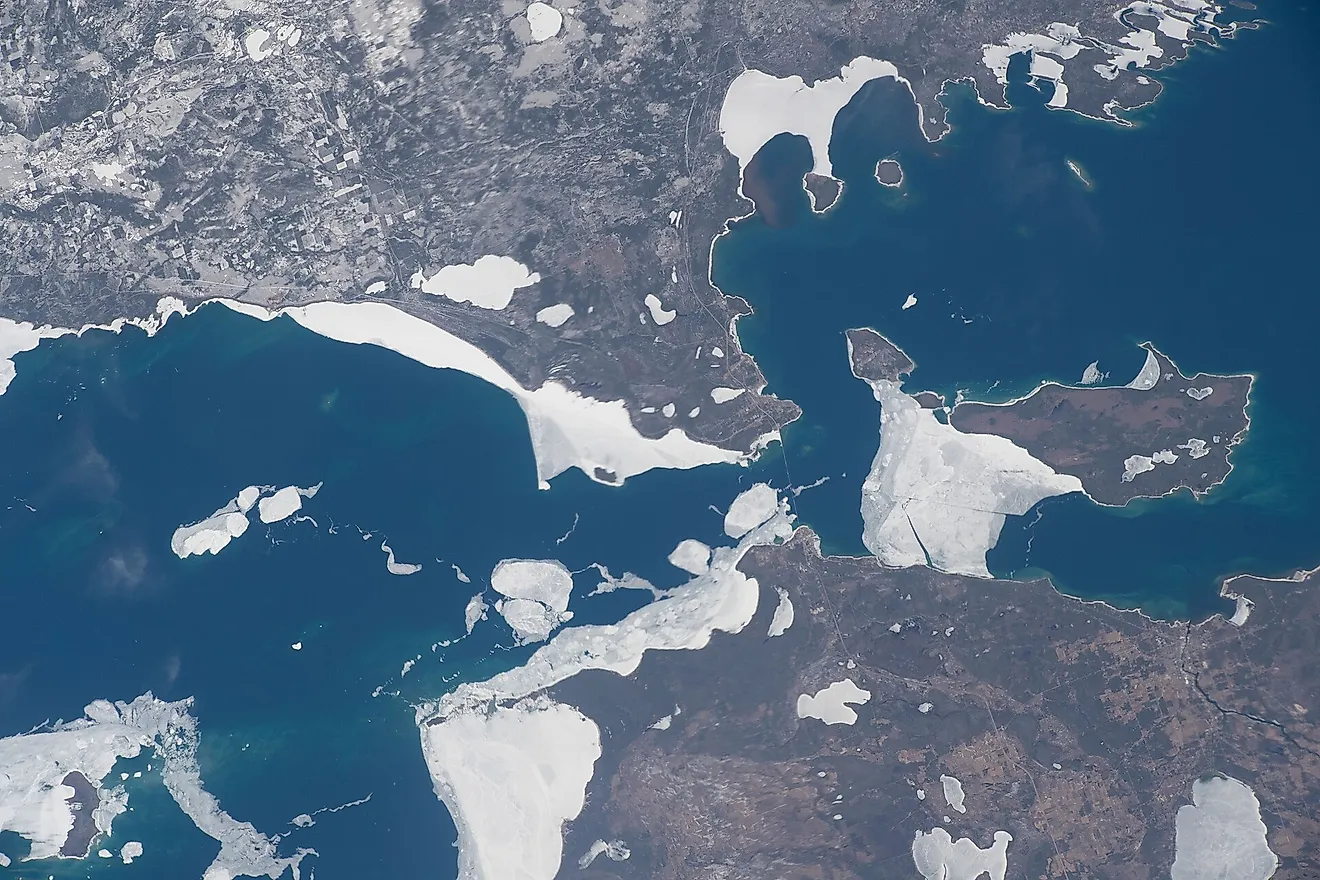
The five Great Lakes, Superior, Huron, Michigan, Erie, and Ontario, plus the connecting St. Lawrence River, form a single hydrologically connected system that drains 295,000 square miles of land in the United States and Canada. The same connectivity that supports the basin's commercial shipping, hydroelectric generation, and drinking-water supply for tens of millions of people has also made it one of the most invaded freshwater systems on the planet. According to a 2024 paper in the Journal of Great Lakes Research using data from the Great Lakes Aquatic Nonindigenous Species Information System (GLANSIS), 188 non-native aquatic species have been documented in the basin as of 2023, and 78 of those qualify as invasive under standard impact criteria.
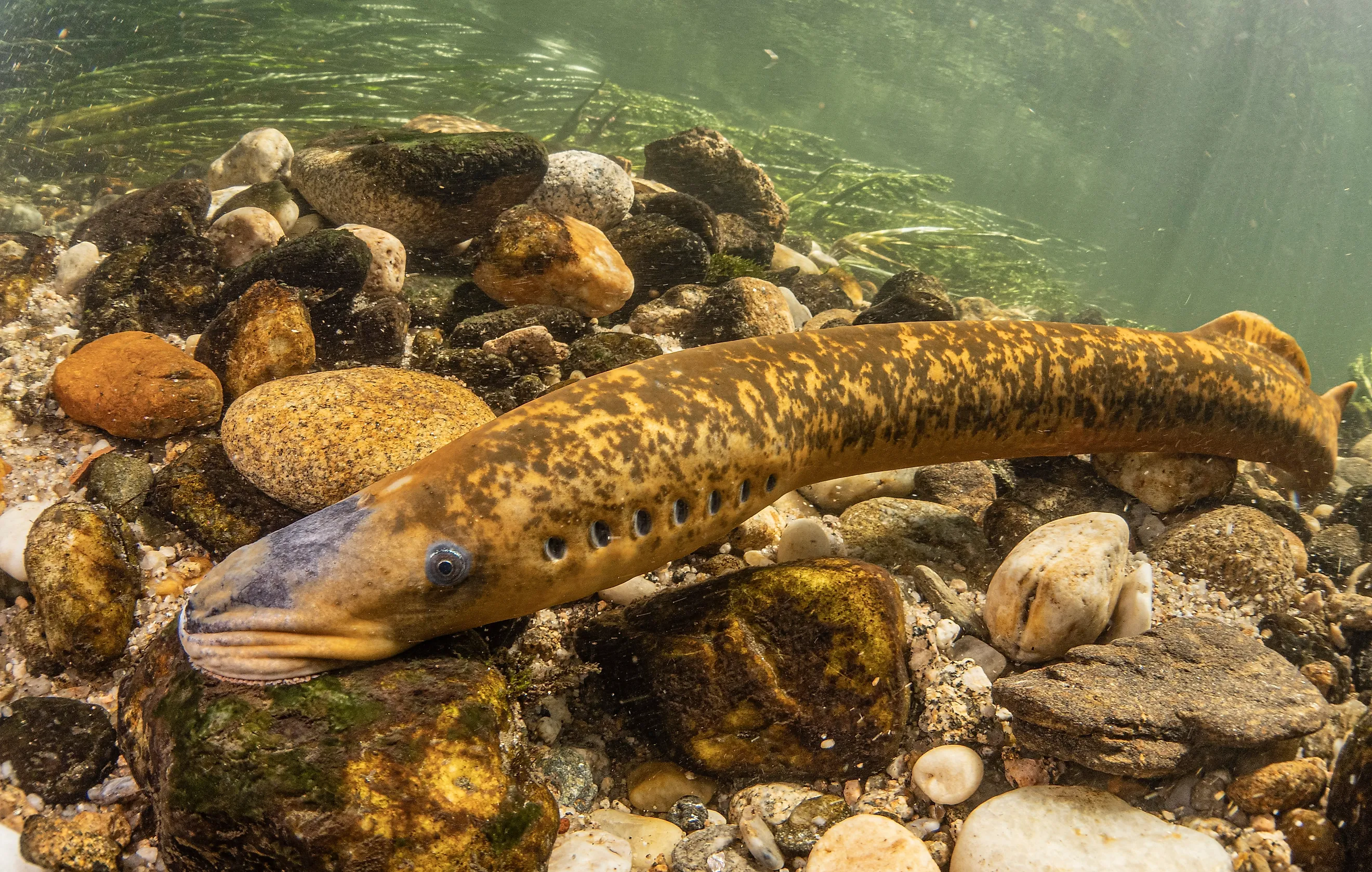
The single most damaging invader is the zebra mussel (Dreissena polymorpha), native to the Black and Caspian Sea region. Zebra mussels arrived in the late 1980s in the freshwater ballast of trans-Atlantic freighters and were first detected in Lake St. Clair in 1988. Within ten years they had spread to all five Great Lakes and into the Mississippi system. The closely related quagga mussel (Dreissena rostriformis bugensis), introduced through the same pathway, now dominates the deeper offshore zones. Both species filter enormous volumes of plankton, restructuring food webs from the bottom up and clogging municipal and industrial water intakes; control costs across the basin run to many millions of dollars per year. Other major invaders include the sea lamprey (a parasitic fish that nearly collapsed Great Lakes lake-trout fisheries in the mid-20th century before being controlled by chemical lampricides), the alewife (a small herring that crashed native fish populations before being checked by introduced Pacific salmon), the round goby, the spiny water flea, and the wetland-choking common reed (Phragmites australis).
Within the Great Lakes themselves, vulnerability is not uniform. Lake Erie is the shallowest and warmest of the five, with the highest nutrient loading and the heaviest agricultural runoff in its watershed; it consistently ranks as the most heavily invaded. Lake Ontario, sitting at the base of the system at the head of the St. Lawrence Seaway, receives both the introductions arriving from the Atlantic and the accumulated invasions moving downstream from the upper lakes. Lake Michigan, with its large industrial corridor along the Chicago and Milwaukee shorelines, and Lake Huron, second-shallowest of the lakes, both carry heavy invasive loads.

Lake Superior is the partial exception. It is the largest, deepest, and coldest of the Great Lakes, with low calcium and a watershed dominated by undeveloped forest. Its water-residence time of about 191 years dilutes everything that enters it. Surface water temperatures rarely exceed the threshold zebra and quagga mussels need to reproduce reliably, and as a result, mussel densities in Superior remain a fraction of those in the lower lakes. The lake is not invader-free (sea lamprey was historically severe, and rusty crayfish, ruffe, and spiny water flea are all present), but it has held up better than any of the other four under the same shipping and ballast-water pressure.
Lakes That Have Stayed Intact

The lakes that have remained largely intact share a recognizable profile: cold water, low nutrient and calcium concentrations, limited road access, and no commercial shipping. Great Bear Lake and Great Slave Lake, both in Canada's Northwest Territories, sit on the Canadian Shield in subarctic conditions, with surface temperatures that rarely warm enough to support most of the major aquatic invaders. Their watersheds are sparsely populated and agricultural runoff is minimal. Both lakes hold intact native fish communities, including lake trout, lake whitefish, and Arctic grayling.
Cold mountain lakes in the Rocky Mountains and the high Canadian Shield show similar patterns. Lake Minnewanka in Banff National Park, fed by glacial meltwater, has cold water year-round, low calcium, and no shipping access; its main exposure is recreational boat traffic, and Parks Canada now requires watercraft inspections to limit the introduction of zebra and quagga mussels from infested waters elsewhere in the United States. Many lakes in northern Minnesota, including Lake of the Woods, hold intact cold-water fish communities and limit boat traffic to recreational craft, with mandatory inspection and decontamination programs at major launches. None of these lakes is permanently safe; the recreational boat trade has carried zebra mussels into many smaller inland waters in recent decades. The combination of cold water, isolation from commercial shipping, and active inspection regimes has slowed the rate of new introductions.
What Resistance Means For Lake Management
The lakes that resist invasion are not doing so accidentally. The cold-water, low-calcium, lightly-developed lakes of the far north and the high mountains illustrate what aquatic ecosystems look like before industrial-scale shipping and shoreline conversion change the conditions. The practical lesson for the rest is straightforward: limit the introduction pathways, defend the native predator and plant communities that keep arrivals in check, and protect the watershed-level inputs (nutrients, sediments, runoff) that determine whether a lake is hospitable to invaders or not. Once an aggressive invader is established, the cost of management runs into the millions of dollars per year and effective eradication is rarely possible. Prevention is dramatically cheaper than control, and the lakes that have stayed intact provide the clearest evidence of which conditions still work.