5 Snake-Filled Waters In Queensland
Queensland, Australia, is more than twice the size of Texas and home to approximately 120 snake species, about 65 percent of which are venomous. (The global average is closer to 15 percent, so Queensland runs much higher than most regions.) Despite the high venomous percentage, very few Queensland snakes are lethal to humans, and many species are so remote or aquatic that encounter rates stay low. The five water bodies below are where Queensland's snakes concentrate most densely, from Cape York rivers to suburban lagoons and the open ocean.
Fitzroy River

The Fitzroy River runs about 300 miles through Central Queensland. Though not the state's longest river, its tributaries cover more than 55,000 square miles, making the Fitzroy the largest catchment that drains into the Great Barrier Reef. The basin supports saltwater marshes, freshwater wetlands, and irrigated agriculture, and Queensland Government's WetlandInfo database records over 1,000 animal species across the system.

Of the 204 reptile species recorded in the Fitzroy basin, a significant share are snakes. Common serpent residents include the eastern brown snake (Pseudonaja textilis, one of the world's most venomous land snakes); the spotted python (Antaresia maculosa, a non-venomous constrictor); and the ornamental snake (Denisonia maculata, a mildly venomous frog specialist). Snake populations become more visible during floods; the 2010-2011 Queensland Floods brought both snakes and saltwater crocodiles into residential neighbourhoods along the Fitzroy basin.
Lawn Hill Gorge

Lawn Hill Gorge sits at the centre of Boodjamulla National Park in Queensland's Outback, a tree-lined watering hole carved into the sandstone plateau and flanked by hundreds of miles of arid terrain. The park's name Boodjamulla means "Rainbow Serpent Country" in the Waanyi language, a fitting name for a gorge with three species of snake specially adapted to aquatic life: the common keelback (Tropidonophis mairii, a non-venomous species so ubiquitous in freshwater wetlands it's often just called the freshwater snake); MacLeay's water snake (Pseudoferania polylepis), which uses mild venom to subdue fish and frogs; and the Arafura file snake (Acrochordus arafurae), a non-venomous and almost entirely aquatic species nicknamed "elephant trunk snake" for its loose, grey skin.

Also present in Lawn Hill and along its banks are the olive python (Liasis olivaceus), green tree snake (Dendrelaphis punctulatus), and Children's python (Antaresia childreni). Boodjamulla National Park suffered significant flooding in recent years and has reopened in phases; visitors should check with Queensland National Parks for current access conditions before planning a trip.
Lockhart River

Located in the Cape York Peninsula of Far North Queensland, the Lockhart River shares its name with a nearby town and Aboriginal shire. The Lockhart River complex supports 82 reptile species, about a third of them snakes. The common keelback, MacLeay's water snake, and water python (Liasis fuscus) move through the river and its tributaries, while terrestrial serpents including the coastal taipan (Oxyuranus scutellatus, one of the world's most venomous snakes) and mulga snake (Pseudechis australis) patrol the shores.

Arboreal snakes, suspended in trees nourished by the Lockhart River's wet tropical climate, are especially plentiful and unfortunately attractive to illegal wildlife trade. In 2024, six green tree pythons (Morelia viridis) and two brown tree snakes (Boiga irregularis) were poached from the area; officers caught the poachers and returned the snakes to the wild.
Coombabah Lake

Australian wildlife does not restrict itself to the remote outback. Crocodiles, dangerous spiders, and many snake species inhabit urban areas, including urban water bodies, and Coombabah Lake is a prime example. Located in Coombabah, a suburb of the City of Gold Coast, the lake and its approximately 3,000 acres of wetlands support about 15 snake species in dense suburban surroundings.

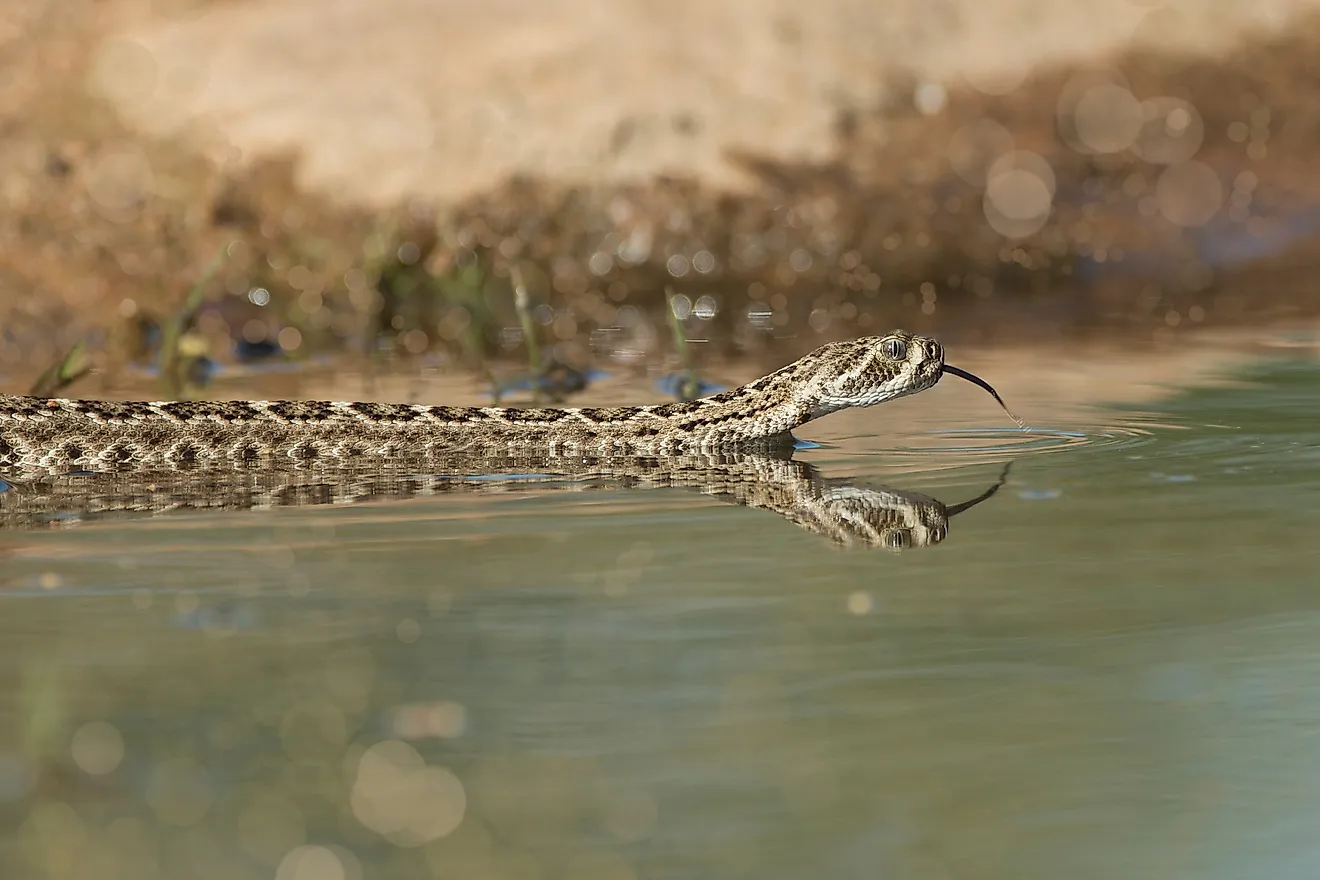
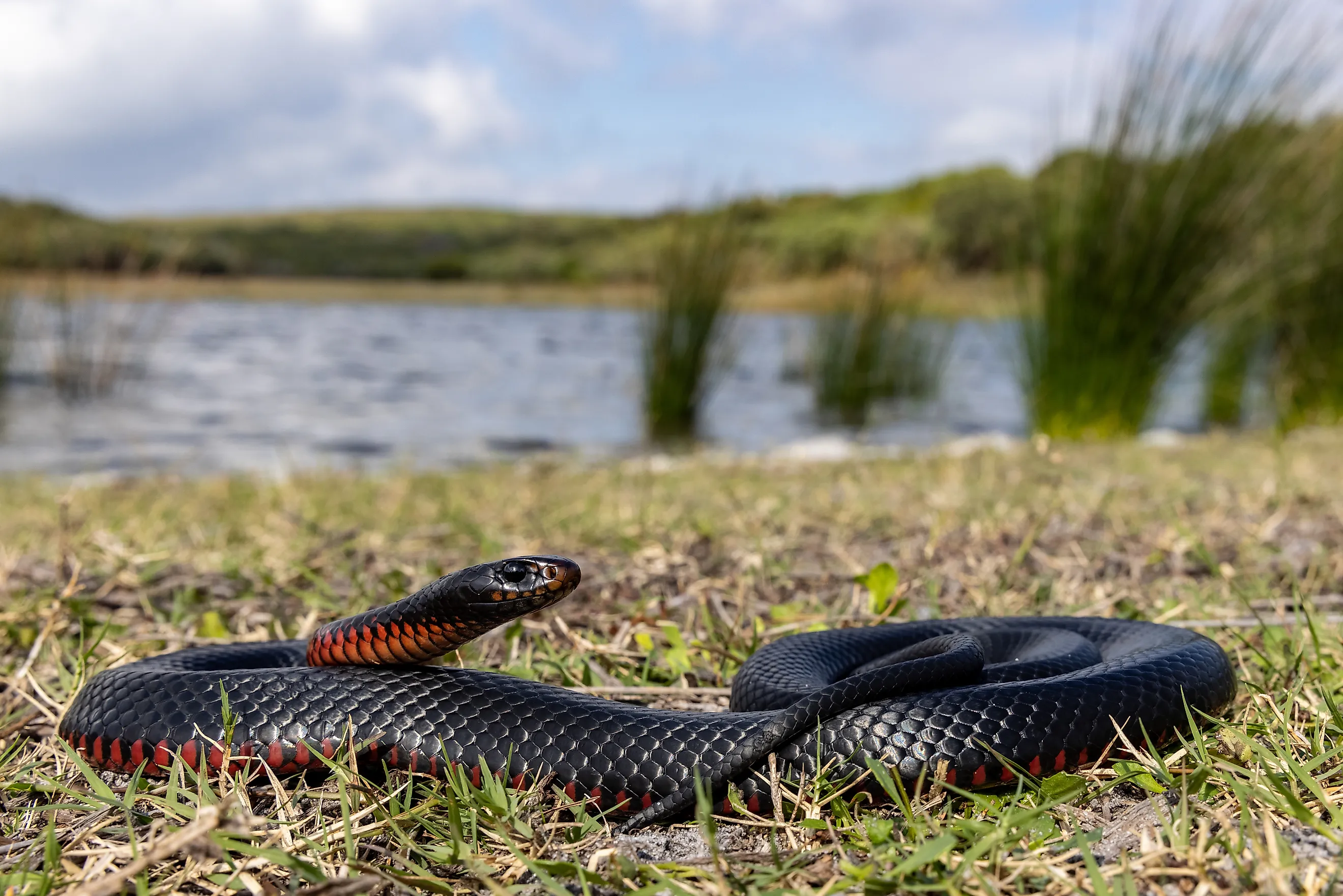
The aquatic species include the common keelback, the black-bellied swamp snake (Hemiaspis signata, also known as the marsh snake, mildly venomous), and the red-bellied black snake (Pseudechis porphyriacus, a venomous marsh dweller that is arguably the most common snake around the lake). Terrestrial species range from the small blackish blind snake (Anilios nigrescens) to the much larger carpet python (Morelia spilota). Snake encounters are frequent enough that a dedicated Coombabah Snake Catcher operates on-call 24/7 for reptile relocations.
Coral Sea

Most of Queensland's "snake-filled" waters actually hold snakes near the water rather than in it; only a small fraction of snake species are fully aquatic. The Coral Sea is an exception. Spanning nearly 2 million square miles, the Coral Sea is an arm of the Pacific Ocean bounded by Queensland, New Caledonia, Papua New Guinea, Vanuatu, and the Solomon Islands. Since most sea snakes are fully adapted to marine life and cannot survive on land, the Coral Sea genuinely is filled with them: olive sea snake (Aipysurus laevis), elegant sea snake (Hydrophis elegans), mosaic sea snake (Aipysurus mosaicus), horned sea snake (Hydrophis peronii), yellow-bellied sea snake (Hydrophis platurus), eastern turtle-headed sea snake (Emydocephalus annulatus), reef shallows sea snake (Aipysurus duboisii), spine-bellied sea snake (Hydrophis curtus), and several others.

Roughly 15 sea snake species are found along the Great Barrier Reef, the Coral Sea's defining feature. Despite their high toxicity, sea snakes are generally timid, and fatal bites on humans are extremely rare; most snorkelers and divers who encounter one report that the snakes simply swim past or away.
Where Queensland's Snakes Live
From peninsular rivers to outback gorges, suburban lakes, and open seas, Queensland's water bodies concentrate serpent populations across distinct habitats. Not all residents are aquatic, but all rely on water to survive. The Fitzroy, Lawn Hill, Lockhart, Coombabah Lake, and Coral Sea each hold their own combination of species. Whether you're seeking snakes or avoiding them, keeping a respectful distance from the snakes themselves is the only rule that applies everywhere.