5 Most Snake-Filled Bodies Of Water In The Maritimes
Canada's Maritime provinces of New Brunswick, Nova Scotia, and Prince Edward Island are not necessarily known as the most reptile-friendly landscapes in the world, but they do, however, boast a decent number of wetlands and waterways that have just the right amount of warmth, vegetation, and food sources for these cold-blooded predators to survive. Destinations like Kejimkujik Lake and Bras d'Or Lake, along with the banks of rivers like the Shubenacadie, show how the region's many backwaters and forested shorelines can concentrate a small but diverse range of species. Like in most of North America, garter snakes and ribbon snakes are quite widespread and common here, while species such as northern red-bellied, northern ringneck, and even the odd smooth greensnake may also be spotted.
Kejimkujik Lake, Nova Scotia

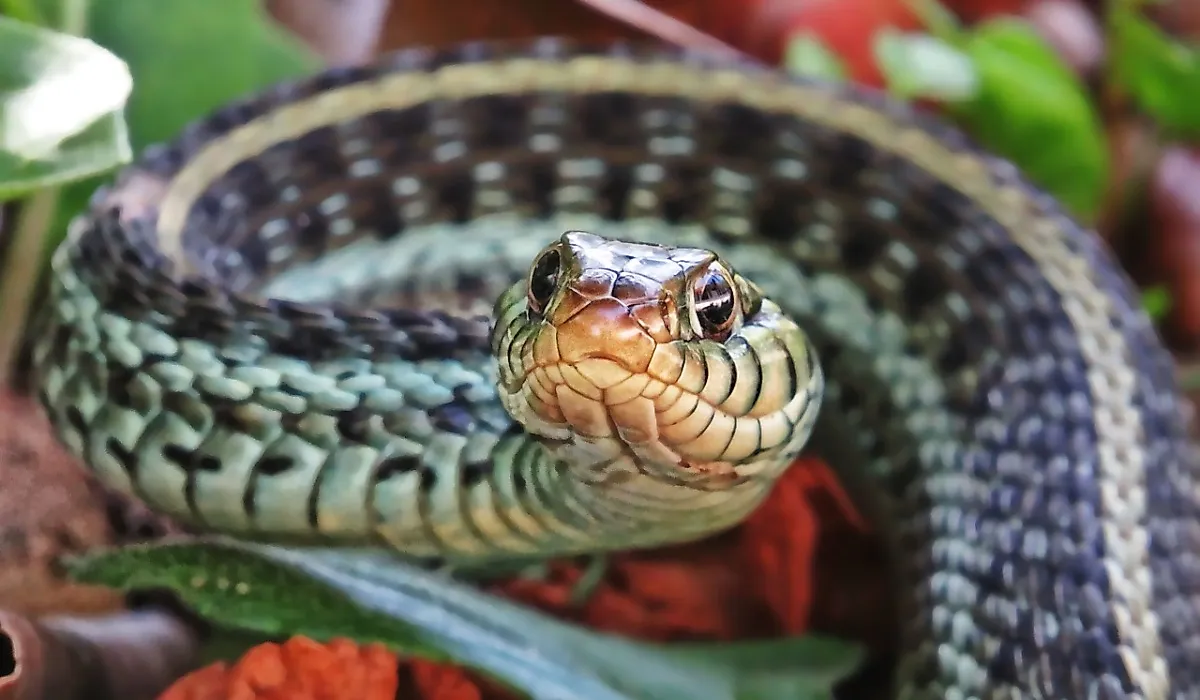
Kejimkujik Lake is a well-known home to a variety of amphibians and reptiles, and is one of the better places in the Maritimes to encounter snakes. Located within Kejimkujik National Park in southern Nova Scotia's interior, its slow-moving inlets, warm shallows, and densely forested shorelines create ideal conditions for species like garter snakes and eastern ribbon snakes. Garters are notable for their black and yellow stripes running lengthwise down their bodies, while ribbon snakes look fairly similar, but with more vivid yellow stripes, brown hues instead of black, and a thinner stature.

These snakes mainly concentrate along local marsh edges, especially in late spring and early summer when water temperatures rise and amphibian prey is abundant. Numerous canoe routes that pass through sheltered coves reveal habitats that are well-suited for basking on low branches or moving between reed beds. Unlike colder, wind-exposed lakes nearby, Kejimkujik’s protected interior waters maintain stable conditions that support higher herpetological activity in general, with turtles, salamanders, and frogs abundant here, too. The result is a much more lively destination when compared to many other freshwater bodies in Atlantic Canada.
Shubenacadie River, Nova Scotia

The Shubenacadie River is another water system in Nova Scotia where snake activity is quite common, particularly along its meandering freshwater stretches and adjacent wetlands. Furthermore, the river’s tidal influence, attached to Cobequid Bay, creates shifting shorelines, mudflats, and marsh channels near its mouth that, again, support amphibians and reptiles alike, which in turn attracts maritime garter snakes and eastern ribbon snakes. These species are most often encountered in the upper river sections further from the coast, where vegetation is thicker, and human disturbance is diminished.

The mix of freshwater habitat and periodic tidal push creates a highly varied ecological zone that centers prey and shelter opportunities in a relatively narrow slice of the province. During the warmer months of the year, resident snakes in and around the river use exposed banks, fallen logs, and reed beds for thermoregulation, especially in the early morning and late afternoon.
Morell River, Prince Edward Island

Morell River is one of the few places on Prince Edward Island where northern red-bellied snakes turn up with some consistency, particularly along its wooded upper reaches east of St. Peter's Bay. This is a small, relatively shy species, typically under 30 cm long and with a muted brown or gray back, a faint pale stripe, and a distinctly red or orange underside.

Red-bellied snakes rarely enter open water (unlike the garters that also call the river home), instead staying in saturated leaf litter, moss, and rotting wood within proximity to the riverbank. That being said, the Morell’s slower tributaries help feed the shaded floodplain forests that create the damp, stable conditions that these land-based snakes on this small island province often require. You may also spot the rare smooth greensnake here, small and covered in bright green scales that blend in well with fresh grass. Run-ins are uncommon and usually brief, often when individuals cross narrow footpaths or emerge from under debris after rain.
Grand Lake, New Brunswick

Just east of Fredericton in New Brunswick, Grand Lake hosts a pattern of snake activity similar to most Maritime freshwater systems, largely because of its size and the amount of shallow, vegetated shoreline it has. Wind exposure keeps the main parts of the lake cooler, but protected backwaters warm quickly and therefore draw reptile activity. With that, sightings tend to cluster where submerged vegetation meets muddy banks, rather than along the lake’s more exposed, wave-cut edges.

This is a fairly reliable place to encounter the eastern garter snake if you know where to look. These snakes tend to move between thick grasses and open water throughout the day, even in more populated parts of the lake where cottagers spend their summers. But in its quieter coves and feeder streams, northern ribbon snakes show up as well. When active, both species hunt along the shoreline for amphibians such as frogs and tadpoles, as well as small fish and invertebrates. During warmer periods, they may also be seen basking on logs, rocks, or low vegetation near the water.
Bras D'or Lake, Nova Scotia

Within Cape Breton, Bras d'Or Lake is better known for its brackish water and broad inland sea-like size, but its countless sheltered inlets and hidden shoreline pockets support several of the region’s snake species, too. In these damp edge zones, northern red-bellied snakes can be found under leaf fall, driftwood, and moss within a short distance of the water. Furthermore, northern ringneck snakes also occur in similar microhabitats, a species that is slightly more slender, dark-bodied, and marked by a thin yellow or orange neck ring and a bright, spotted belly.

Neither species enters the lake itself, as there are, in fact, no watersnakes native to Nova Scotia. Instead, both stay on moist ground along shaded coves, where decaying wood, loose stones, and organic debris create stable cover and foraging conditions. In these spots, your average maritime garters, as well as the occasional eastern smooth green snake, have also been recorded.
Keep an Eye Out for Snakes in These Maritimes Waters
Maritime snakes thrive and multiply in specific conditions spread across a number of lakes and rivers. Sheltered coves, hidden tributaries, and shaded banks around the region's thousands of different bodies of water all combine to regularly produce human-snake run-ins, from larger, more visible species to smaller snakes hiding in craggy terrain.