How Ballast Water Brought Invasive Species To The Great Lakes
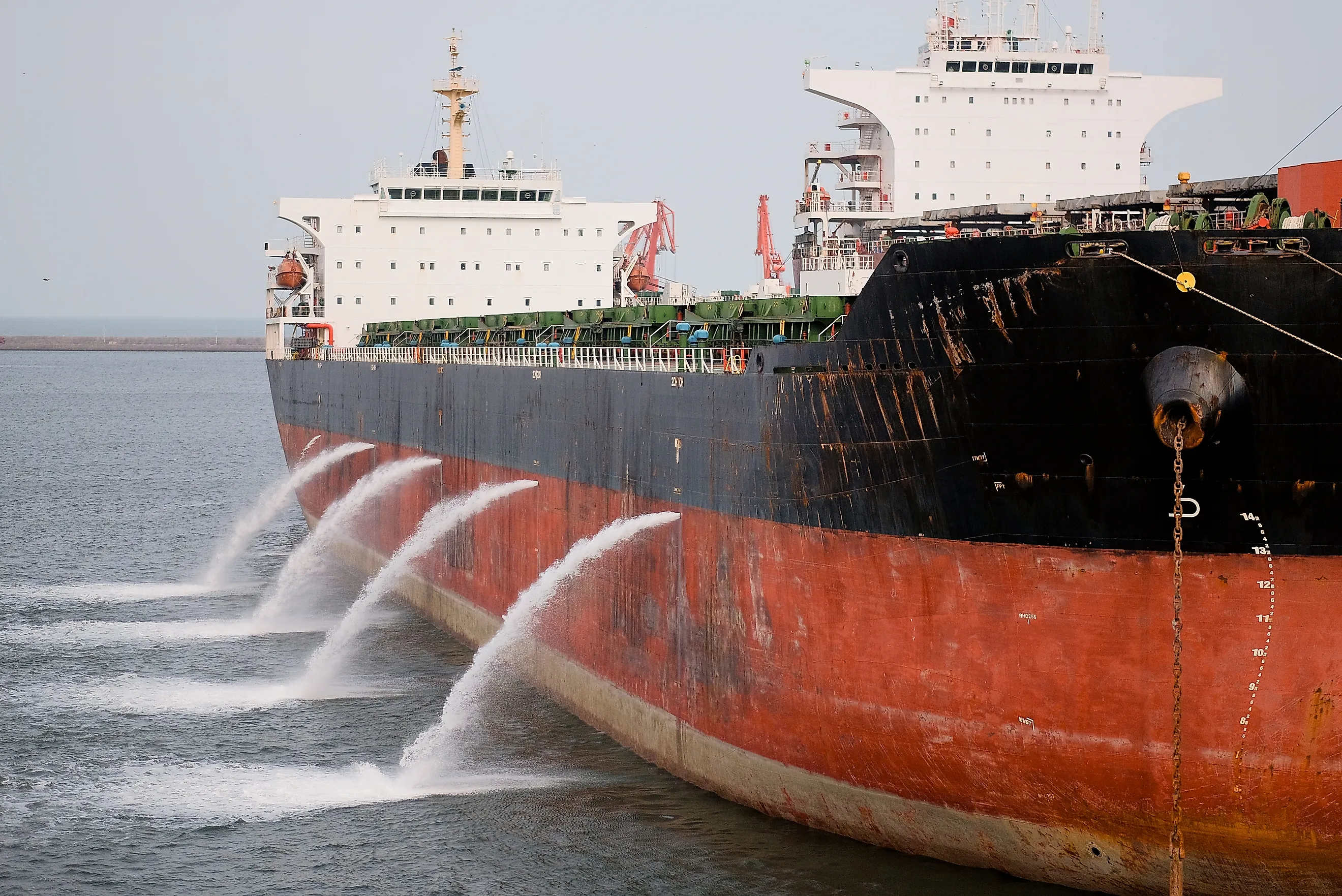
Ballast water in ships has brought invasive species to the Great Lakes in the past as ships release these waters into the Great Lakes. Ballast water plays a crucial role in keeping ships from tipping over while they have no cargo. This water, however, can contain invasive organisms that can spread rapidly through the Great Lakes, damaging the ecosystem and environment in the process. In this story, we will examine the practice of storing and releasing ballast water, how it has brought in invaders, and what work has been done to prevent ballast water from carrying invasive species.
What is ballast water?

Ballast water is a critical component to helping vessels navigate through oceans, seas, or other large bodies of water. The term has a long history, dating back to at least the late 1400s as an English term meaning a material that is placed at the bottom of a seafaring vessel, usually some sort of heavy material to provide balance.
William Falconer defined ballast as gravel, iron, or stone that is stored in the hold of a ship as a way to balance it, especially when it had no cargo or cargo that didn't weigh a significant amount, such as tea or tobacco. Even before the term was invented, sailors were using some form of ballast materials, with groups such as Vikings placing ballast stones in their longboats.
Although ballast was usually made of solid material, water was also used on occasion. An English mathematician, for example, proposed a submarine design that utilized ballast water in 1578. In 1827, British naval architect Ralph Rewcastle designed the first technique for ballast water tanks, built as water-tight wells inside a ship's hull. By the 1850s, it had been a common practice.
Rewcastle would note in his patent that "the water ballast is not only perfectly safe but also extremely convenient, as well as a great saving of expense."
The downside of ballast water

While convenient, ballast water does have a downside. It can carry living organisms from one place to another. This is nothing new, as there is evidence that the Mya arenaria soft shell clam traveled from North America to Europe while hiding in ballast in Norse longboats.
When ships enter a port, they release ballast water to make room for additional cargo and keep the ship balanced. They can release all of it at once or smaller amounts. This practice had an unintended consequence of non native species moving from one part of the world to another. One of the first identified species brought over through this practice was Asian phytoplankton called Odontella, which was found in the North Sea in 1903.
Not all non native species are considered invasive species. In order to meet this criterion, the species must breed rapidly, outcompete native species for resources, or cause harm to the environment. In some cases, they also have no natural predators.
How did ballast water introduce invasive species to the Great Lakes?

The Great Lakes have had several invasive species enter their waters, many of which traveled through canals into the lakes, such as the sea lamprey. Ballast water technology was first introduced within the St. Lawrence River in the 1880s. However, the waters were too narrow for many ships to pass through at a time.
In 1959, this changed with the construction of the St. Lawrence Seaway. This engineering project would move 210 million cubic yards of earth and rock to create seven locks to lift vessels 246 feet above sea level. It enabled far more ships to travel through the St. Lawrence River than ever before, and their ballast waters brought with them many new invaders.
According to Michigan State University, 65% of all non-indigenous aquatic species (AIS) entered the Great Lakes through ballast waters as ships sailed to ports on the Great Lakes and released ballast waters containing these AIS. From 1980 to 2000, around 80% of invasive species in total came from ballast waters.
These invaders often came from when ships were at freshwater or brackish-water ports, as organisms from these ports could survive in the freshwater environment of the Great Lakes.
These species include multiple forms of mussels such as zebra mussels and quagga mussels. Zebra mussels attach themselves to other native mussels and can cause biofouling, which prevents other species from moving. They also consume large amounts of plankton, leaving other species with little to eat.
Another invader introduced through ballast waters is the round goby. Native to the Black and Caspian seas, they reproduce quickly and can outcompete the native fish for resources. In addition, they spread disease by eating mussels, which is spread to other fish that consume them. They can also carry viral hemorrhagic septicemia, which kills native fish.
What was done to prevent this?

In the late 1980s to the early 1990s, both Canada and the U.S. began adding guidelines for ballast water, which was officially made into law in the U.S. in 1994.
The primary requirement was for any transoceanic boats that were entering the Great Lakes from another freshwater or brackish port. Under this standard, ships had to either exchange ballast water while still at sea or keep ballast water tanks sealed while within the Great Lakes.
Despite these requirements, invaders were still entering the Great Lakes in large numbers from the 1990s to 2000s. Researchers began looking into possible explanations and found one with No Ballast on Board ships. These vessels operated at maximum cargo and thus had no ballast water on board. They accounted for 80% of ballast in the Great Lakes.
Researchers discovered that these boats still had residual ballast water and sediments in their tanks, which mixed in with freshwater taken in as ballast at the Great Lakes once they reached a port. When this water was later released, the invasive species living in the residue escaped.
To combat this, Canada and the U.S. passed regulations in 2006 and 2008 requiring all ships to rinse ballast tanks with saltwater both to remove and kill any potential species, as freshwater creatures that would thrive in the Great Lakes cannot survive saltwater. Thanks to these efforts, there have been no reported invasive species entering through ballast waters since 2006, according to Michigan State University.
The ongoing fight against invasive species
Despite this success via transoceanic vessels, invasive species can still enter the Great Lakes through other methods. For example, private boats can carry invaders from one lake or body of water to the Great Lakes if not properly sanitized. In addition, invasive species such as the Asian carp have been slowly making their way north from the Mississippi River basin and could overwhelm Lake Michigan if they ever got through electrical barriers in the Chicago Sanitary and Ship Canal.
There are several ongoing efforts to keep invaders out, such as the Brandon Road Interbasin Project in Joliet, Illinois, which will utilize a mixture of underwater sounds, electrical barriers, and a barge clearing system to keep Asian carp out of Lake Michigan, although the project has currently been halted due to administrative reviews. On the ballast water side, there is still the issue of freighter ships that sail only within the Great Lakes, which can in turn move invasive species from one lake to the next. In addition, the invasive species that are already in the Great Lakes have to be dealt with through a variety of measures, including physical cleaning and introducing species that can consume invasive species.
When maintaining an environment as complex as the Great Lakes, the fight to deal with invasive species is a continuing one that requires constant vigilance and innovation.