How A Great Lakes Freighter Gets Through The Soo Locks
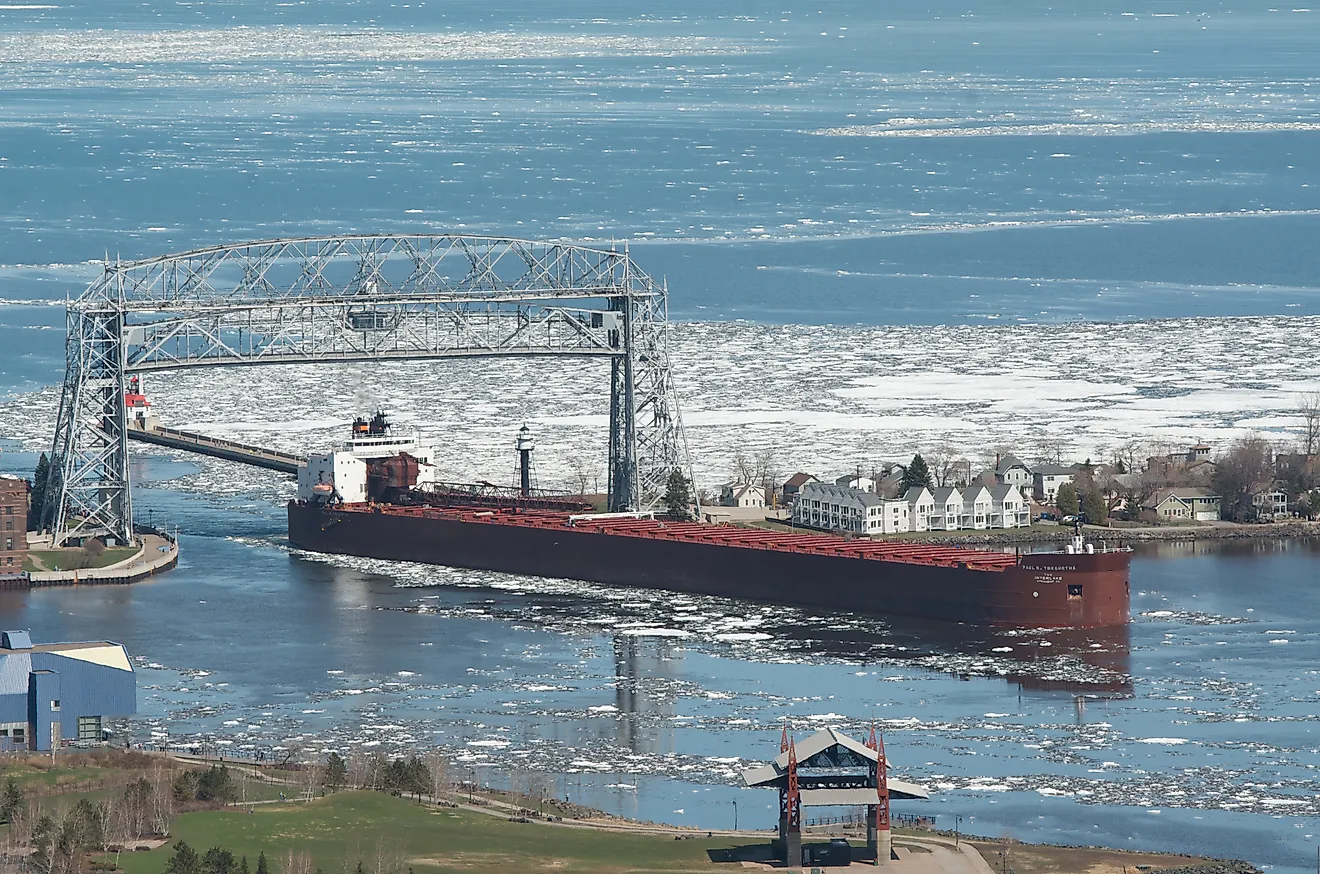
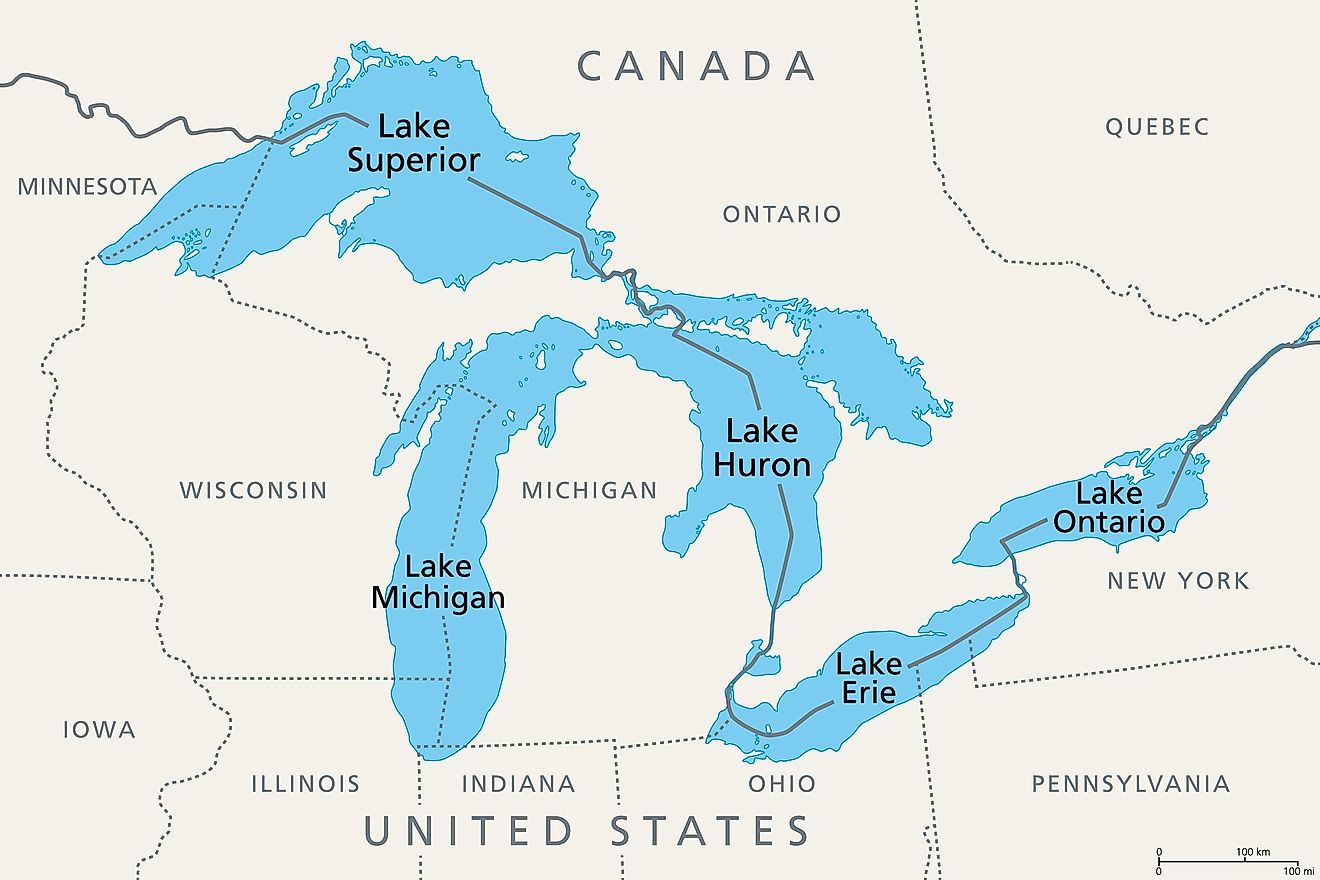
At Sault Ste. Marie, Michigan, the St. Marys River falls 21 feet over rapids no cargo ship can run, and every freighter headed from Lake Superior to the lower lakes has to get down that drop through the Soo Locks. Some of those freighters are longer than 1,000 feet. The Paul R. Tregurtha, at 1,013.5 feet, enters a chamber that leaves less room beside its hull than the width of a front door. Then the water around it starts to fall. More than 4,500 vessels make the trip each year, carrying up to 80 million tons of iron ore, coal, wheat, and limestone. For the Tregurtha, the descent begins with a radio call out on the open lake.
The Passage Starts With a Radio Call Off Whitefish Point

The Tregurtha's trip down the St. Marys begins out on Lake Superior, off Whitefish Point on Michigan's Upper Peninsula. That is where a downbound ship, one bound for the lower lakes, makes its first report to Soo Traffic, the radio call sign of the U.S. Coast Guard's Vessel Traffic Service for the river. The service manages a 77-nautical-mile area covering the river's full length, and every power-driven vessel 40 meters long or more, about 131 feet, has to take part, keeping its radio on VHF channels 12 and 13 and reporting at set points on the way down.
The calls matter most as the ship nears the locks, where registered vessels are generally passed through in the order they arrive at the dispatch point. A freighter that arrives behind another one waits its turn. In 2023, the Lee A. Tregurtha, a shorter laker, needed close to two hours to go from waiting to enter the Poe Lock to pulling out of it.
Only One Chamber Fits a Thousand-Footer

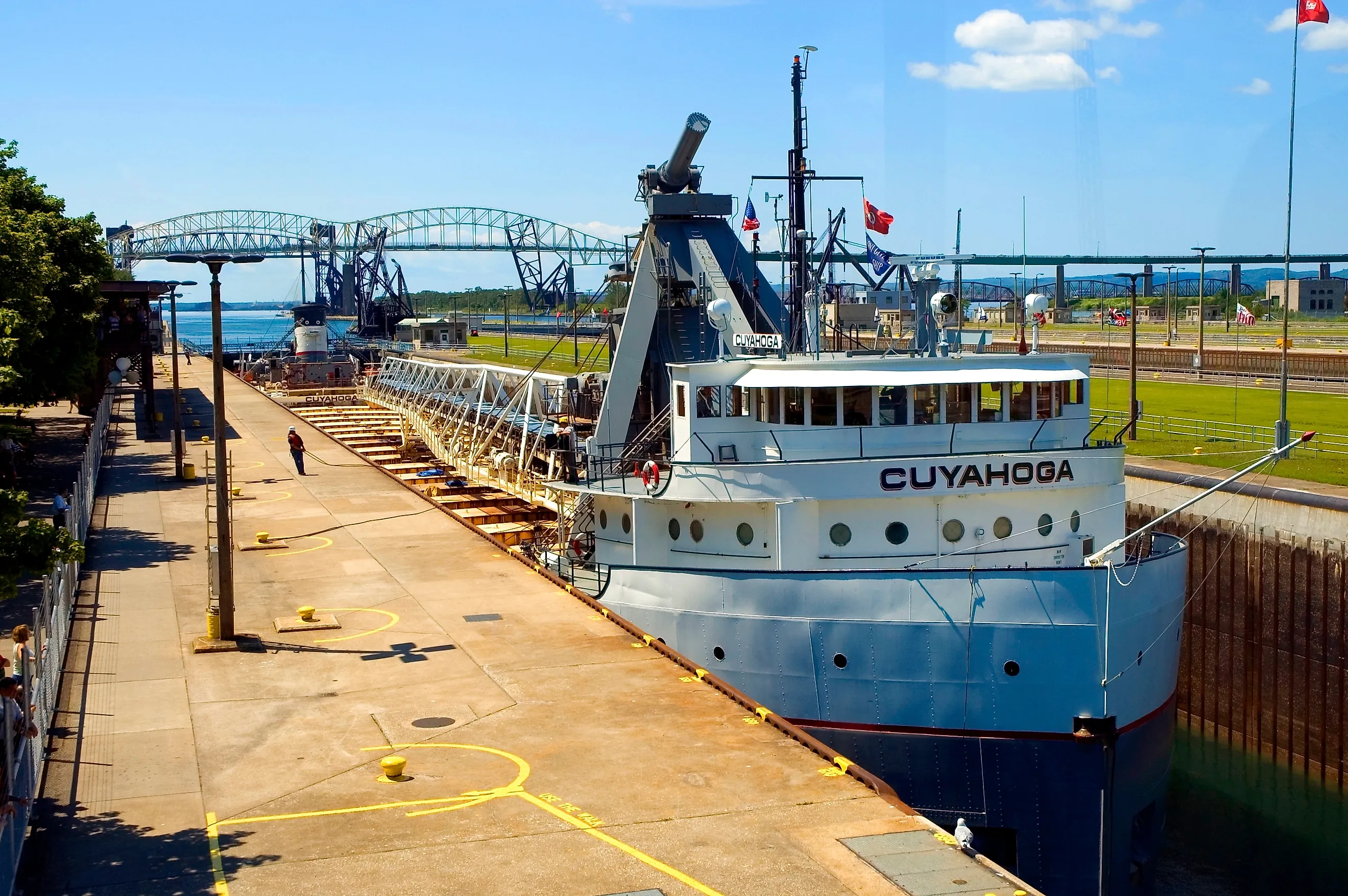
The Paul R. Tregurtha's hull is 105 feet wide, and the Poe Lock it has to use is 110 feet wide and 1,200 feet long, with 32 feet of water over its sills. That leaves about two and a half feet between the ship and each wall. The Soo's other commercial chamber, the MacArthur Lock, is 800 feet long and 80 feet wide, and it takes no vessel longer than 730 feet or wider than 75 feet. It also stayed closed for repairs when the 2026 season opened. More than 88 percent of the cargo tonnage through the Soo travels on ships too big for any chamber but the Poe.
Even in the Poe, the Tregurtha needs extra care. Ships up to 100 feet wide and 1,000 feet long pass through without special restrictions. Wider vessels, up to 105 feet including the fenders on their sides, and longer ones, up to 1,100 feet, fall under special handling requirements, and any ship over 1,000 feet has to carry six mooring cables and winches. At 1,013.5 feet, the Tregurtha arrives with all six.
The Crew Ties the Ship to the Lock Wall

The last stretch into the Poe is slow by rule. A ship approaching the locks may not go faster than 2.5 miles per hour, slower than a typical walking pace, as it lines its bow up with the open chamber.
The people who tie the freighter up come from the freighter itself. Under normal weather, a ship with a bow thruster and friction winches must put two of its own crew on the pier as line handlers, and a ship without that equipment needs four. The line handlers take the mooring cables on the pier, and the deckhands aboard work the winches.
Gravity Lowers the Ship 21 Feet

Behind the Tregurtha, the miter gates close. Each set is a pair of gates that swing out from the side walls and meet in the middle, sealing the ship in water still at the level of the upper river.
The water leaves through culverts that run below the lock floor. The valves that control them sit about 60 feet below the top of the lock wall, and when the lower valves open, the water in the chamber drains toward the lower river and the ship drops with it. Gravity alone moves the water, and no pumps are involved. In the Poe, one 21-foot change moves about 22 million gallons, roughly the volume of 33 Olympic swimming pools, compared with about 10 million in the smaller MacArthur. With the ship tied in, the drop takes 15 to 20 minutes, between about 1 and 1.4 feet a minute.
An upbound ship goes through the same steps in reverse. The emptying valve closes, the filling valve opens, and water from the upper river runs down through the culverts to lift the ship 21 feet. In either direction, a lockage takes 40 to 60 minutes from the time a vessel approaches the lock until it leaves.
Below the Locks, Traffic Splits by Direction

When the water in the chamber matches the lower river, the lower gates swing open and the Tregurtha pulls out at no more than 6 miles per hour. Once it clears the canal, a downbound ship may run up to 10 mph on the stretch toward Six Mile Point, while upbound ships on the same water are held to 8. Farther south, near Neebish Island, the channels are one-way. The West Neebish Channel carries downbound ships only, and upbound ships use the Middle Neebish Channel, so the Tregurtha does not meet an oncoming freighter there. It cannot pass a slower one either, because a vessel 350 feet or longer may not overtake a ship going the same way in those channels. From there the Tregurtha follows the river on toward Lake Huron.
Watching a Lockage From Soo Locks Park

Freighters keep moving through the Soo until the locks close for the winter on January 15. In downtown Sault Ste. Marie, the observation platform in Soo Locks Park sits beside the chambers and gives a direct view of the locking process, and the park lists its hours as 9 a.m. to 9 p.m. The Soo Locks Visitor Center, which posts estimated arrival times for the ships and runs a hotline at 906-202-1333, closed for the year on October 31 and reopens on May 1.
Soo Locks Boat Tours put passengers through the same drop the freighters make, passing through both the Michigan and Canadian locks. The 2026 season ran from May 15 through mid-October.
The calendar sets the outer limits of every passage. The locks close each year from January 15 to March 25, and the Poe is drained for maintenance over the winter. During the 2025-26 season, 284 different ships went through, and the Lee A. Tregurtha passed through the locks more often than any of them, 94 times. None paid a toll; cargo is taxed at its destination port instead, with the money going to the federal Harbor Maintenance Trust Fund. With more than 88 percent of the tonnage restricted to the Poe, one chamber carries most of that cargo. The New Soo Lock, under construction in the footprint of the old Sabin Lock, will match the Poe at 1,200 feet long and 110 feet wide and is on track for completion in 2030. It will give the biggest freighters a second chamber, with the same two and a half feet of water on each side of a 105-foot hull.