How Nevada Residents Will Be Affected by Lake Mead Reallocation
Nevada residents are looking to the state government as the federal government adds new rules dictating the state's Colorado River water usage.
The U.S. government's new rules may seem like they will impact Nevada residents tremendously. However, most residents will see little to no impact at all, at least for the next two years, since the state already uses less water than its reduced allocation. Meanwhile, the state is challenging the rules in federal court.
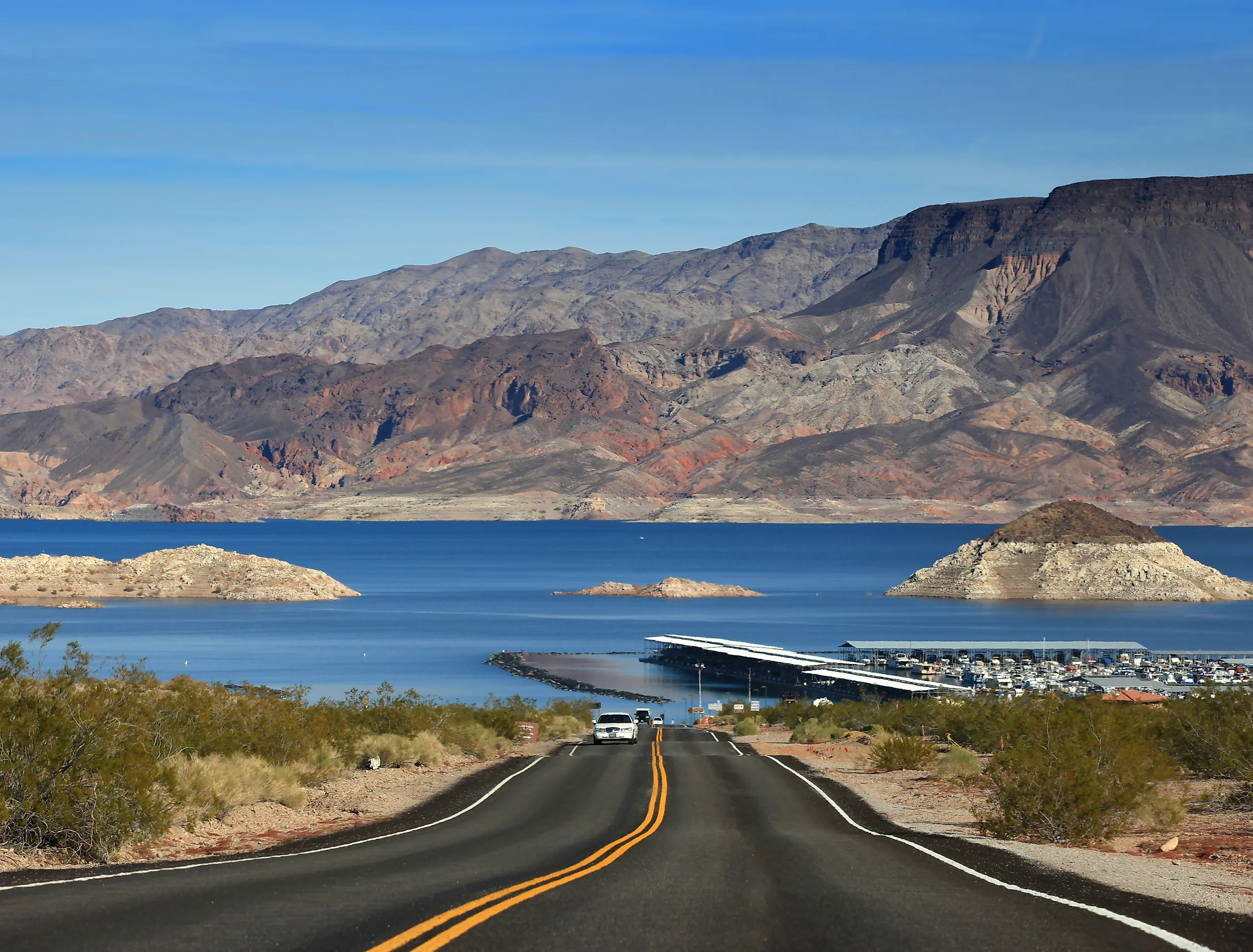
Lake Mead has fallen more than 190 feet, with projections expecting another 35 feet by July 2028. The new rules would shift more attention to upstream Lake Powell.
The New Federal Colorado River Rule

In August 2026, the United States federal government put forward new operating guidelines that would restrict Lower Basin states' access to the Colorado River supply. Arizona, California, and Nevada will see a combined 1.25 million acre-foot reduction annually in 2027 and 2028.
Under the Lower Basin states' proposed sharing agreement, Arizona would have a 760,000 acre-foot reduction, California 440,000 acre-feet, and Nevada 50,000 acre-feet, beginning in January 2027.
For Nevada, that 50,000 acre-feet provides water for roughly 100,000 households for a year. However, the state already uses well under its reduced supply of 250,000 acre-feet a year, with Nevada reporting 198,570 acre-feet used in 2025.
What Nevada Residents Can Expect

The state of Nevada already receives a smaller share of the Colorado River water compared to Arizona and California, with most of that water going towards communities in the Las Vegas Valley.
Many of the restrictions focus on reducing water used outdoors. A program incentivizes replacing grass with desert landscaping and installing water-efficient equipment at businesses.
Southern Nevada also has a 2021 state law, taking effect January 1, 2027, that prohibits Colorado River water from being used to irrigate nonfunctional grass on properties that are not exclusively single-family residences or used for recreation, like parks and sports fields.
Commercial properties, apartment complexes, common areas within homeowners associations, and government facilities are all covered by the law.
Southern Nevada communities rely on Lake Mead for about 90 percent of their drinking water. The region has infrastructure designed to keep water flowing from the lake when its level is low, using the Low Lake Level Pumping Station to withdraw water.
What's Happening In Court

After the federal government's announcement in August, the State of Nevada, the Colorado River Commission of Nevada, and the Southern Nevada Water Authority filed a lawsuit against the Interior Department.
The suit asks the court to halt the new rules until the federal government accounts for the toll that a cut of up to 71 percent would have on the state's economy. Such a cut would affect more than 2.3 million Southern Nevada residents.
It also objects to the fact that Upper Basin states like Colorado, Utah, New Mexico, and Wyoming face no mandatory restrictions, only voluntary conservation goals.
While no ruling has been made public, residents should expect these light restrictions to come into effect, with no ruling likely until mid-2027.