The Top Steel-Producing States In America
The American steel industry is one of the largest in the world, producing approximately 82 million metric tons each year. According to the United States Geological Survey's February 2026 report, Indiana, Ohio, Texas, and Pennsylvania were the country's four leading steel-producing states in 2025. Nearly one in every five metric tons of raw steel produced in the United States in 2025 came from Indiana. The USGS does not publish a complete state-by-state production ranking. Consequently, the first four states below are ranked by estimated 2025 output, while the rest are listed alphabetically.
1. Indiana - 15.6 Million Metric Tons

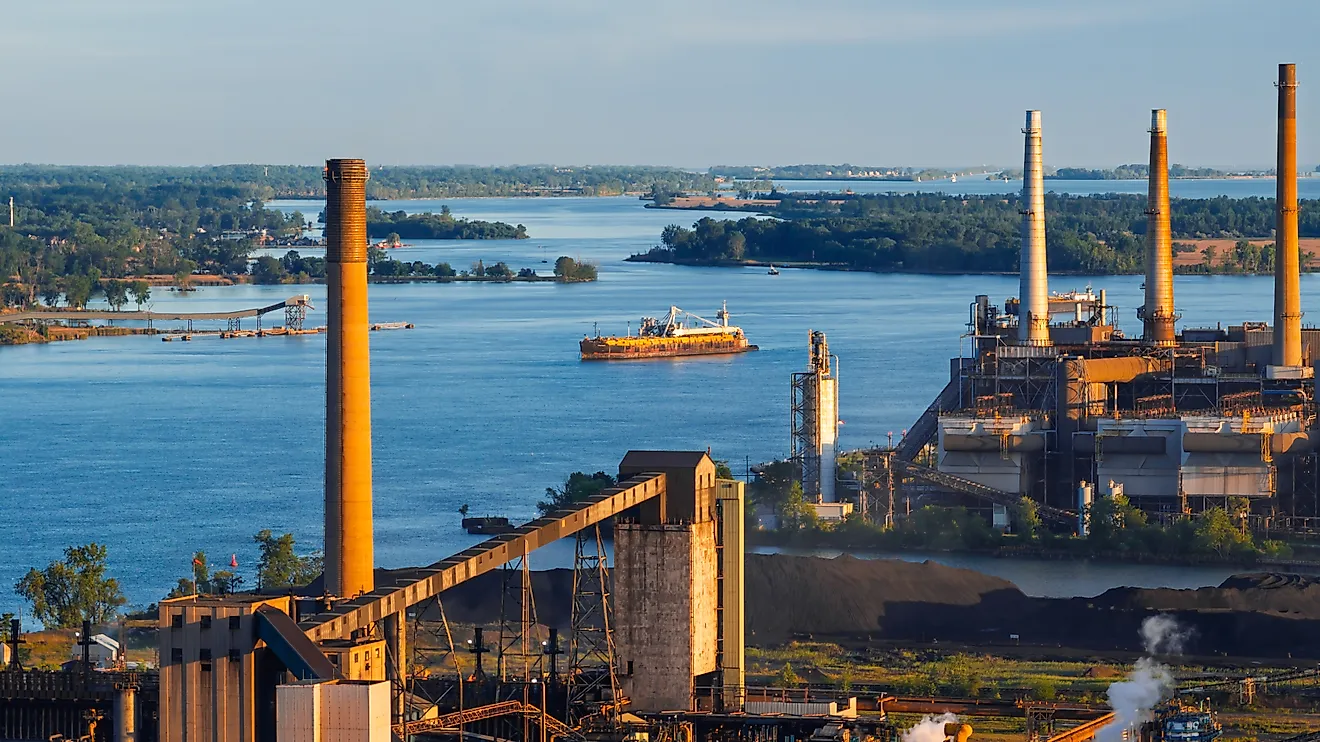
Indiana produced an estimated 15.6 million metric tons of raw steel in 2025, accounting for 19% of the national total. Much of that production is concentrated along the southern shore of Lake Michigan, particularly in Gary, East Chicago, and Burns Harbor. The region combines access to Great Lakes shipping routes with rail connections serving manufacturers across the Midwest.
U.S. Steel's Gary Works remains one of Indiana's principal steelmaking facilities. As of November 2026, the company reported that the operation had annual raw steel production capability of approximately 7.5 million short tons. The facility uses blast furnaces and produces flat-rolled steel for customers in automotive manufacturing, construction, and other industries.
Nearby, Cleveland-Cliffs operates integrated steelmaking facilities at Indiana Harbor and Burns Harbor. The latter can produce approximately 5 million short tons of raw steel annually. Steel Dynamics also operates an electric arc furnace flat-roll mill in Butler, with estimated annual production capacity of 3.2 million short tons as of 2026.
2. Ohio - Approximately 6.6 Million Metric Tons

Ohio accounted for approximately 8% of American raw steel production in 2025, equivalent to 6.6 million metric tons. Its steelmaking operations are distributed across northeastern and southwestern Ohio, including Cleveland, Middletown, and smaller communities with electric arc furnace mills.
Cleveland-Cliffs operates two of the state's principal integrated steelmaking facilities. Cleveland Works produces flat-rolled steel, while Middletown Works manufactures products used in automotive, appliance, and construction markets. Both facilities remained part of the company's operating steelmaking network in 2026.
Ohio also has a range of smaller mills serving specific markets. Nucor's Marion facility produces steel bar and other long products, while additional steelmakers manufacture specialty grades for industrial applications.
3. Texas - Approximately 4.1 Million Metric Tons

Texas produced approximately 4.1 million metric tons of raw steel in 2025, representing 5% of American production. Its steel industry supplies construction materials, structural components, sheet steel, and products used by equipment manufacturers throughout the South and Southwest.
Steel Dynamics operates a flat-rolled steel mill in Sinton, near Corpus Christi. The facility has an annual production capacity of approximately 3 million short tons and includes coating and painting operations. Its location provides access to Gulf Coast transportation networks and customers in Texas and neighboring states.
Farther north, Gerdau operates an electric arc furnace mill in Midlothian. According to the company's 2025 annual filing, the facility had installed crude steel capacity of approximately 1.4 million metric tons per year. It produces rebar, merchant bars, and structural beams, connecting Texas steelmaking directly to the construction industry.
4. Pennsylvania - Approximately 3.3 Million Metric Tons

Pennsylvania produced an estimated 3.3 million metric tons of raw steel in 2025, approximately 4% of the national total. Although Pittsburgh remains closely associated with American steelmaking history, active production also extends into the surrounding Monongahela Valley and other parts of the state.
U.S. Steel's Mon Valley Works continues to manufacture raw steel in the Pittsburgh region. Its Edgar Thomson Plant in Braddock operates blast furnaces that supply the company's downstream processing operations. As of November 2026, U.S. Steel reported approximately 2.9 million short tons of annual raw steelmaking capability at Mon Valley.
Additional mills produce specialized steel products for industrial and construction customers. Pennsylvania's steelmaking operations are supported by established rail networks, river transportation, and a concentration of manufacturers that purchase finished steel.
Other Top Steel Producers
The following states contain operating steel mills as of 2026. They are listed alphabetically, not in descending order of production, because comparable statewide raw steel output figures are not available from the USGS.
Alabama

Alabama's steel industry includes electric arc furnace mills, plate mills, and facilities producing steel for pipe manufacturing. Production is concentrated around Birmingham, Decatur, and Tuscaloosa.
U.S. Steel operates the Fairfield Tubular facility near Birmingham. In its November 2026 operating report, the company listed the site's electric arc furnace steelmaking and seamless pipe operations as active, with annual raw steel capability of approximately 900,000 short tons.
Nucor also operates a flat-rolled steel mill in Decatur and a plate mill in Tuscaloosa. These facilities serve manufacturers requiring sheet and plate steel, while other Alabama operations produce steel bars and structural products.
Arkansas

Arkansas has become an important location for electric arc furnace steel production, particularly around Blytheville and Osceola in Mississippi County. This section of northeastern Arkansas is home to several mills with direct access to the Mississippi River and regional rail networks.
U.S. Steel operates two Big River Steel facilities near Osceola. As of November 2026, Big River Steel and Big River Steel 2 had combined annual raw steel production capability of approximately 6.3 million short tons. Both facilities use electric arc furnaces and manufacture flat-rolled steel.
Nucor operates additional steelmaking facilities in the Blytheville area, including its Arkansas sheet operation and Nucor-Yamato structural steel operation. Farther west, Gerdau's Fort Smith mill had installed crude steel capacity of 500,000 metric tons annually at the end of 2025.
Illinois

Illinois steel production is concentrated around the Chicago metropolitan area and the Mississippi River corridor. The state has both integrated steelmaking and electric arc furnace facilities.
U.S. Steel's Granite City Works, across the Mississippi River from St. Louis, provides an example of the importance of checking current operating status. The facility has approximately 2.8 million short tons of total annual raw steel capability. As of November 2026, Blast Furnace B was operating, while Blast Furnace A and approximately 1.4 million short tons of associated capacity remained idled.
Illinois also contains Nucor's Kankakee steel mill, located in Bourbonnais. The operation produces long steel products used in construction and industrial applications. Both locations were listed among active steelmaking operations in 2026, although their production processes and products differ.
Kentucky

Kentucky's steelmaking industry includes two Nucor facilities along the Ohio River that serve different markets. Both were operating as of 2026. Nucor Steel Gallatin, located in Ghent, manufactures flat-rolled steel. Following a completed expansion, the mill has annual production capability of approximately 2.8 million short tons. The facility produces sheet steel for applications including manufacturing, construction, and pipe production.
Nucor's Brandenburg mill, farther down the Ohio River, specializes in steel plate. The plant began shipping to customers in 2023 and has annual plate production capacity of approximately 1.2 million short tons. Its products are used in heavy equipment, infrastructure, and other applications requiring thicker steel sections.
Michigan

Michigan's automotive industry is a major consumer of steel, but the state also produces raw steel for customers beyond vehicle manufacturing.
Gerdau operates an electric arc furnace mill in Monroe, south of Detroit. According to the company's filing for 2025, Monroe had installed annual crude steel capacity of approximately 730,000 metric tons. The facility manufactures specialty bars and shapes used in industrial applications.
Michigan also has steel finishing operations that process material produced elsewhere. This distinction is particularly important in Dearborn, where Cleveland-Cliffs idled the primary steelmaking equipment at Dearborn Works in 2025 while retaining certain processing operations.
As of 2026, Monroe provides a verified example of active primary steelmaking in Michigan. Steel rolling, coating, and other downstream manufacturing should not be counted as raw steel production simply because those activities take place within the state.
Mississippi

Mississippi's principal steelmaking operations include Steel Dynamics' Columbus facility, located in the state's Golden Triangle manufacturing region. The Columbus Division produces flat-rolled steel using electric arc furnace technology. Steel Dynamics lists annual production capacity of approximately 3.4 million short tons at the facility, which has undergone multiple expansions since opening in 2007. Its products are distributed by truck, rail, and water to customers across the southern United States and Mexico.
Mississippi also has Nucor's Jackson steel mill in Flowood, which produces long steel products. These facilities serve different markets, with Columbus concentrating on flat-rolled material and Jackson on steel shapes.
Missouri

Missouri's steelmaking sector includes Nucor's rebar micro mill in Sedalia, located in Pettis County. Unlike mills producing flat steel for vehicle bodies or appliances, this facility concentrates on reinforcing steel used in concrete construction.
The Sedalia plant melts scrap steel in an electric arc furnace and processes the molten material into rebar. A Missouri Department of Natural Resources permit issued in December 2025 governs its operation. The facility's permit documentation includes a production limit of 450,000 tons of cast steel over a rolling 12-month period.
That permitted limit does not represent actual production. However, it provides a primary-source measure of the facility's authorized steelmaking activity. As of 2026, the Sedalia plant remains an example of Missouri's role in producing construction-grade steel.
North Carolina

North Carolina contains steelmaking facilities producing plate, reinforcing bar, and other long steel products. The state also hosts Nucor's corporate headquarters in Charlotte, although its headquarters location should not be confused with the location of its steel mills.
In Hertford County, Nucor operates a plate mill near Cofield. The facility manufactures steel plate used in equipment, transportation, construction, and industrial applications.
Nucor also completed construction of a rebar micro mill in Lexington in 2025. According to the company's subsequent annual filing, the facility entered its production ramp-up phase with expected annual capacity of approximately 430,000 short tons.
Gerdau provides another example of active steelmaking in the state. Its Charlotte electric arc furnace mill had installed annual crude steel capacity of 410,000 metric tons at the end of 2025 and produces rebar and merchant bars.
South Carolina

South Carolina's steel production includes sheet, structural, and bar steel manufacturing. Two of its active facilities are operated by Nucor.
Nucor Steel Berkeley, located in Huger near Charleston, produces flat-rolled sheet and structural steel. The company has reported annual production capability of up to 3.5 million short tons at the facility. Its products serve industries including construction, transportation, agriculture, and equipment manufacturing.
Nucor also operates a steel mill in Darlington, where production focuses on long steel products. These mills represent active raw steelmaking in South Carolina as of 2026. The former Liberty Steel facility in Georgetown, which ceased operations in 2024, should not be counted among the state's operating steel producers.
Tennessee

Tennessee has several steelmaking facilities that specialize in bars, reinforcing steel, and structural products. Among them are Gerdau's Jackson mill and Nucor's Memphis operation.
Gerdau's Jackson facility uses an electric arc furnace to manufacture rebar and merchant bars. The company's 2025 filing identified installed annual crude steel capacity of approximately 629,000 metric tons at the plant. Nucor's Memphis steel mill produces steel shapes for construction and industrial customers. Both operations were included in their respective companies' active manufacturing networks in 2026.
Tennessee's steelmaking activity is primarily associated with long products rather than the large flat-rolled mills found in Indiana and Ohio. Its mills supply products used in building construction, machinery, and other manufacturing applications.
Virginia

Virginia's steelmaking industry includes electric arc furnace facilities in Petersburg and Roanoke, both of which were operating as of 2026. Gerdau operates a mill in Petersburg that produces merchant bars and structural beams. The company's 2025 annual filing listed installed crude steel capacity of approximately 821,000 metric tons per year at the facility.
Steel Dynamics operates its Roanoke Bar Division in western Virginia. According to the company's January 2026 investor presentation, the mill had estimated annual steel production capacity of 720,000 short tons. Its products include merchant bar and reinforcing steel.
These facilities give Virginia an established presence in construction-related steel production, with mills positioned to supply customers across the Mid-Atlantic and southeastern United States.
Where America's Steel Production Is Concentrated
The four states identified by the USGS as the leading raw steel producers in 2025 accounted for approximately 36% of national output. Indiana alone contributed 19%, followed by Ohio at 8%, Texas at 5%, and Pennsylvania at 4%.
The remaining production was distributed among states with integrated mills, electric arc furnaces, and specialty steelmaking facilities. As of 2026, the industry included both large Great Lakes operations and smaller mills manufacturing specific products for regional markets.