The American Towns Built Entirely Around A Car Plant
In 1928, the largest integrated factory in the world stood not in Detroit but next door in Dearborn, Michigan, where Ford's Rouge complex turned raw materials into finished cars on a single site. In Kenosha, Wisconsin, cars rolled off local assembly lines for 86 years, and at its peak the industry there employed as many as 15,000 people. In Lordstown, Ohio, General Motors opened an assembly plant on former farmland in 1966, and the complex built more than 16 million vehicles before production stopped in 2019. Marysville is where Honda built the first Accord made in America in 1982, and the Ohio town has since grown to a population of more than 25,000 residents. All four towns grew around the assembly line, and Kenosha and Lordstown also show what happens to a local economy when the line shuts down.
Dearborn, Michigan

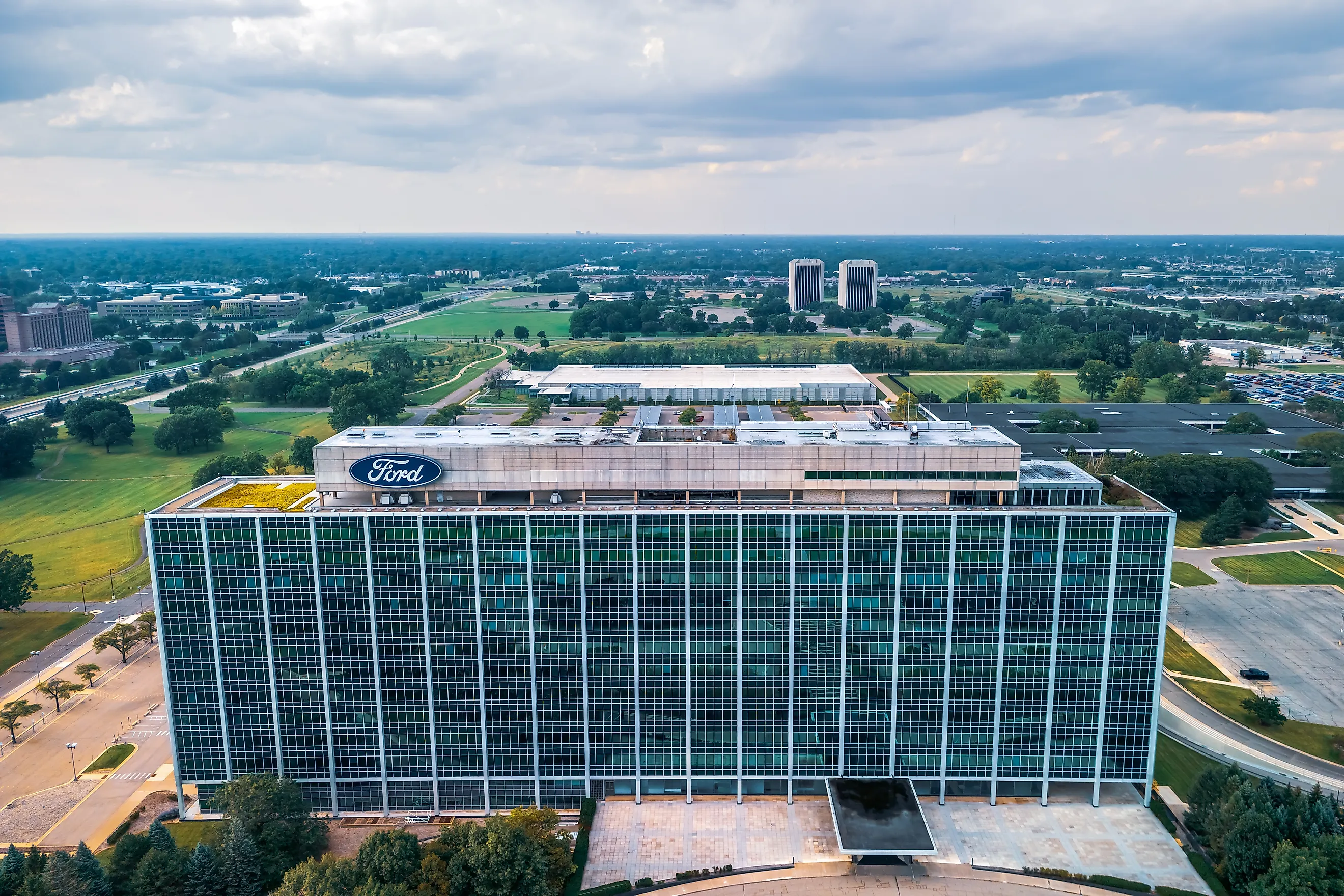
Michigan is synonymous with car manufacturing in the United States, and in Dearborn, the entire town was shaped around the Ford Motor Company. Henry Ford began developing land around the Rouge River in the early 1900s, and created an industrial complex that turned raw materials into automobiles in a single process. Eventually he shifted his full-scale manufacturing operations that were originally in Detroit to Dearborn, and this grand operation attracted thousands of citizens looking for steady work and pay.

Soon after, new homes, roads, and shops filled the neighborhood, all built around the car factories. Immigrants from the Middle East and workers from America's South brought their traditions and life experiences, molding the town into a diverse community. Ford created not only jobs but also a booming business that influenced how the city expanded and how people lived. Today, a strong Middle Eastern presence and heritage thrive in local neighborhoods and landmarks in and around the area. It serves as a city of promise because of the automobile industry.
Kenosha, Wisconsin

Kenosha, Wisconsin, is a major automobile town, and its factories became the center of its urban life and economic growth. Industrialist Thomas B. Jeffery moved his manufacturing business to Kenosha in 1900, and by 1902 his factory was producing Rambler cars, laying the foundation for an automobile industry that would change the city for generations. The company later became Nash Motors, and then merged in 1954 with Hudson Motor Car Company to create American Motors Corporation, AMC.

Thousands of Americans relied on the company as production expanded, with it supporting local neighborhoods, restaurants, and small businesses. The automobile industry in Kenosha employed as many as roughly 15,000 people at its peak, making it a powerful economic force. In 1987, when Chrysler acquired AMC, car production stopped in the town, ending an era of prosperity for the city's middle-class economy.
Lordstown, Ohio

Lordstown was once a quiet rural town until General Motors came in the 1960s and transformed it. A giant assembly plant was built on over 1,000 acres of farmland and opened in 1966, adding thousands of automotive assembly and manufacturing jobs to the community. This boom also pushed high-paying manufacturing wages into the neighboring Mahoning Valley and triggered a population increase. Local businesses in Lordstown and nearby relied heavily on the spending of factory workers to keep the economy growing.

The plant shaped the identity of its community by manufacturing compact vehicles, vans and sedans like the Chevrolet Vega, Cavalier, Cobalt, and Cruze. Sadly, though, in 2019, when GM halted its 53 years of vehicle production in Lordstown, it eliminated almost hundreds of jobs, triggering a devastating economic blow. Many of the workers were forced to leave and find jobs in other states with GM facilities.
Marysville, Ohio

Honda chose Marysville, Ohio, in the late 20th century to develop a major automotive manufacturing center. The once agricultural community entered the industrial plant era in the 1970s, beginning with motorcycle manufacturing and later shifting to automobiles in 1982. The first Honda Accord that was built in America came off the assembly line, merging Japanese automakers with the United States.

Honda's presence brought thousands of jobs to the community of suppliers and surrounding businesses, transforming the small-town population from roughly 8,000 to over 30,000. Additionally, the boom created a need for advanced transportation infrastructure, converting part of the highway into a four-lane divided highway and allowing easier connections to nearby Columbus and Interstate 270.
Driving Forward
The influence of car plants in these towns didn't just stop at the factory doors. The automobile industry has helped create some of the most recognizable vehicles in the United States. Their stories share incredible growth beyond the town, but they also reveal the risks and vulnerabilities of depending on a single employer. If production leaves, it deeply affects local businesses, families, and entire regions, but if it stays, the reward is continued prosperity.