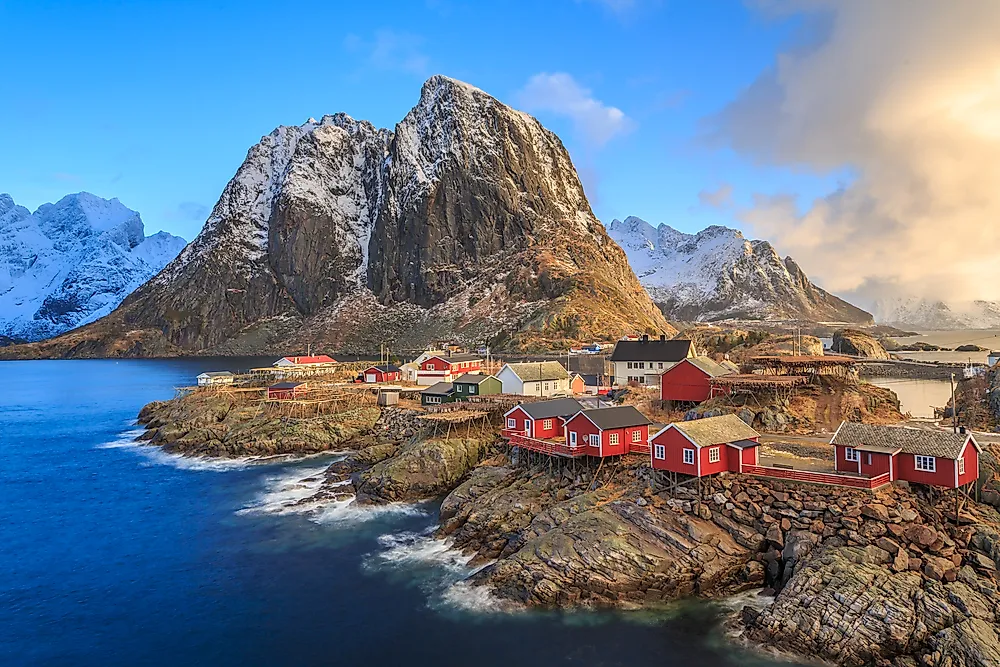
The Largest Archipelagos in the World
An archipelago is a group of islands in a body of water, varying in size and location, from small collections of a dozen islets to massive clusters of thousands in oceans. Some of the largest archipelagos in the world comprise tens of thousands of islands, such as the Archipelago Sea in Finland, which contains over 50,000 individual landmasses. The remaining largest archipelagos in the world by number of islands are the Canadian Arctic Archipelago, the Stockholm Archipelago, the Thirty Thousand Islands, the Malay Archipelago, the Indonesian Archipelago, Lake of the Woods Islands, the Japan Archipelago, the Småland Archipelago, and the Öregrund Archipelago.
This article looks at some of the world's largest archipelagos and ranks them based on the estimated number of islands they comprise. While exact counts can vary depending on definitions and measurements, the rankings are based on commonly cited figures and highlight archipelagos known for their sheer scale.
The Largest Archipelagos In The World (Number Of Islands)
| Rank | Archipelago Name | General Location | Estimated Number of Islands |
|---|---|---|---|
| 1 | Archipelago Sea | Baltic Sea, Finland | 50,000+ |
| 2 | Canadian Arctic Archipelago | Arctic Ocean, northern Canada | 36,563 |
| 3 | Stockholm Archipelago | Baltic Sea, Sweden | 30,000 |
| 4 | Thirty Thousand Islands | Georgian Bay, Lake Huron, Canada | ~30,000 |
| 5 | Malay Archipelago | Between Southeast Asia and Australia | ~25,000 |
| 6 | Indonesian Archipelago | Southeast Asia, Indonesia | 17,504 |
| 7 | Lake of the Woods Islands | Ontario, Manitoba, and Minnesota | 14,632 |
| 8 | Japanese Archipelago | East Asia, Japan | 14,125 |
| 9 | Småland Archipelago | Southeast coast of Sweden | 12,740 |
| 10 | Öregrund Archipelago | Baltic Sea, Uppsala County, Sweden | 9,722 |
1. Archipelago Sea (50,000+ Islands)
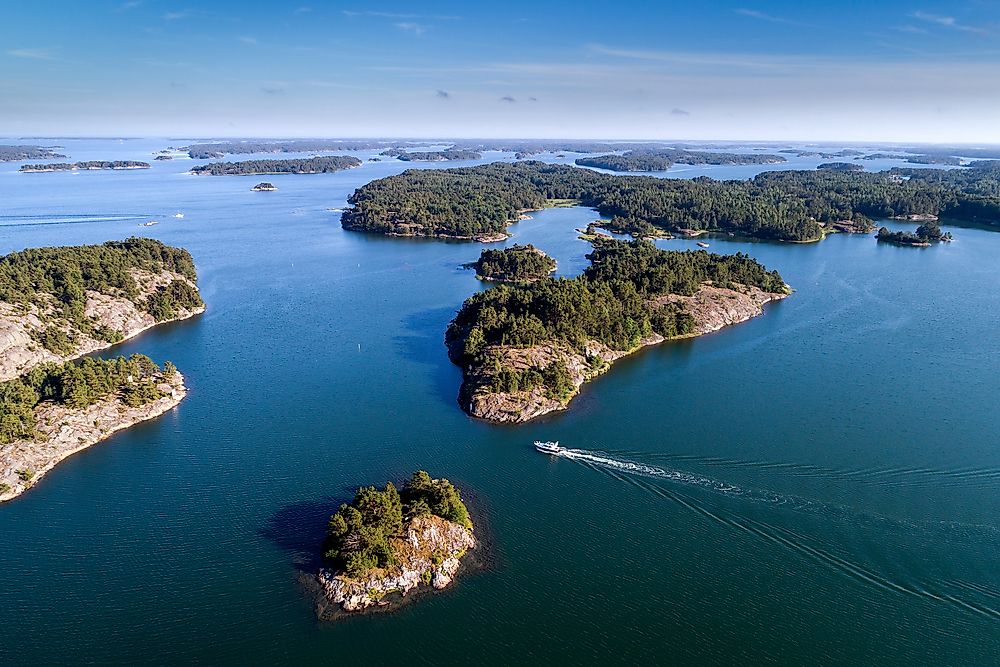
The Archipelago Sea is the largest archipelago in the world by number of islands, with estimates indicating over 50,000 islands. Located in the Baltic Sea and partly in Finland, this massive cluster comprises many small, tightly grouped islands. In fact, over 17,000 of the islands in this archipelago are smaller than 0.5 hectares (1.2 acres), and there are also thousands of skerries, which are small, rocky, and uninhabitable islets. Only around 250 islands are larger than 1 square kilometre (0.4 sq mi), and some of them are home to small villages and towns. Among these communities, the Archipelago Sea is home to approximately 60,000 people, most of whom reside in nearby Åland, an autonomous region of Finland comprising numerous islands.
While it is difficult to calculate the exact area due to the vast number of islands, the Archipelago Sea covers approximately 8,300 square kilometres (about 3,205 square miles), of which around 2,000 square kilometres (roughly 772 square miles) consists of land. The remaining area consists of shallow waters, narrow straits, and channels that separate the islands. The archipelago was largely formed after the last Ice Age, when retreating glaciers shaped the bedrock and rising land levels exposed thousands of small islands. Today, the area supports fishing, boating, and seasonal tourism, and is also renowned for its rich biodiversity, which includes seabirds, seals, and extensive marine ecosystems.
2. Canadian Arctic Archipelago (36,563 Islands)

Located in the north of the Canadian mainland, in the Arctic Ocean, is the Canadian Arctic Archipelago. It is one of the largest archipelagos in the world, both in terms of the number of islands and area, comprising a whopping 36,563 islands. 36,469 are minor islands, while 94 are major islands with an area greater than 130 square kilometers. Some of the most notable are Baffin Island, spanning over 500,000 square km and home to 13,000 people, as well as Victoria Island, containing the world’s largest island within an island within an island. In total, the archipelago spans 1,407,770 square kilometers (543,540 sq mi), an area larger than many countries, including France and Pakistan.
The islands are sparsely populated due to the extremely cold climate, with most residents living in small Inuit communities along the coastlines. Similarly, most of the archipelago is covered in ice year-round, and people can witness large glaciers and unique ice caps. Wildlife such as polar bears, seals, and Arctic foxes are common across the larger islands and surrounding waters.
3. Stockholm Archipelago (30,000 Islands)

According to recent estimates, the Stockholm Archipelago is the third-largest archipelago in the world, with 30,000 islands. It is located in the Baltic Sea, in Sweden, and has a vast human population and extensive housing throughout. Specifically, the archipelago’s array of islets features around 10,000 permanent residences and 50,000 holiday homes. Moreover, tourism is popular with regular boat tours and trips, allowing people to visit and see the array of landmasses throughout.
All this is possible due to the tightly clustered nature of the islands, which together cover a total area of about 1,700 square kilometres (roughly 656 square miles), of which approximately 530 square kilometres (around 205 square miles) are land. Many islands are connected by ferries and bridges, allowing for year-round access. The archipelago comprises rocky outcrops, forested islands, and sheltered waterways, all of which play a crucial role in local transportation, recreation, and coastal development.
4. Thirty Thousand Islands (~30,000 Islands)

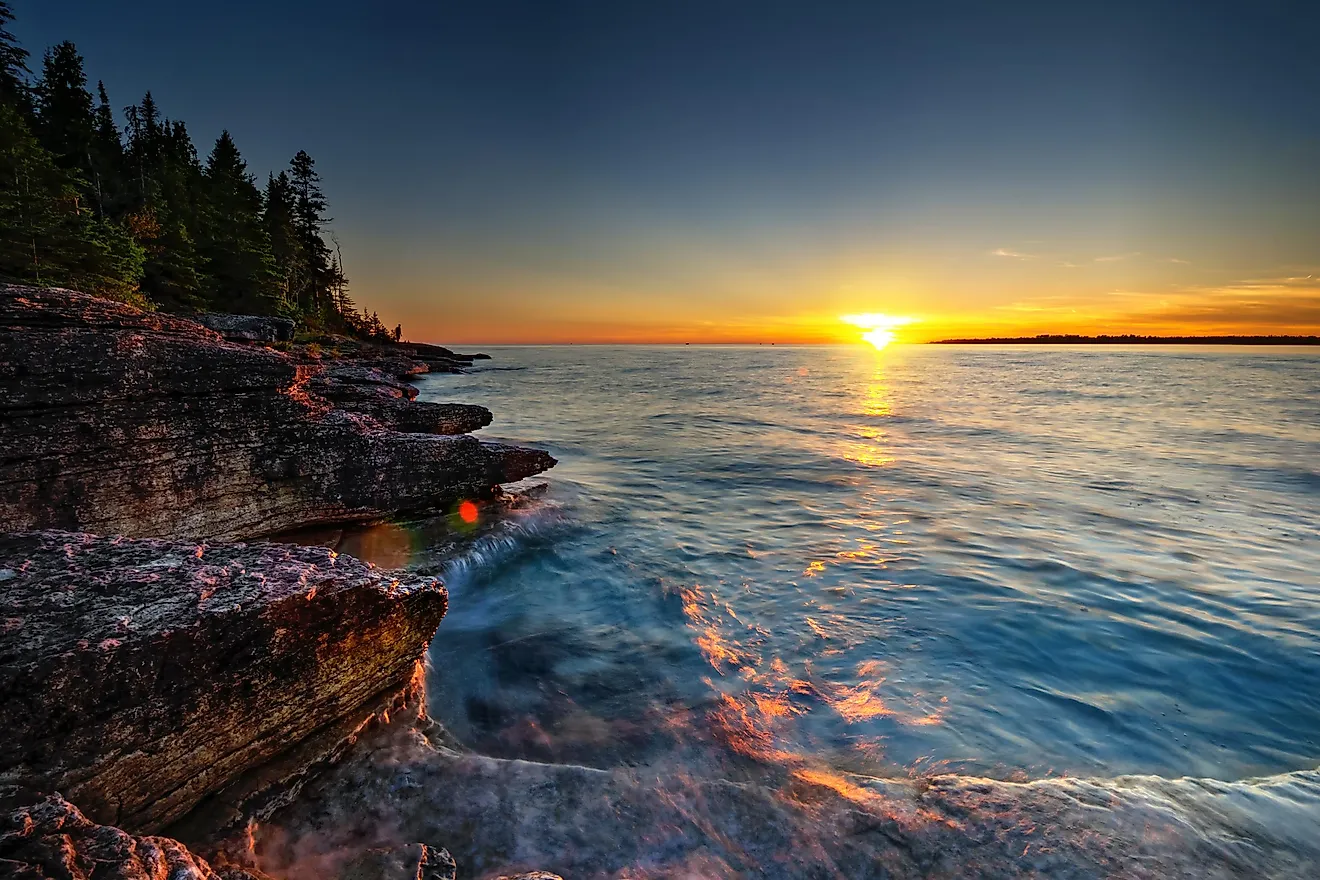
The Thirty Thousand Islands is one of the largest freshwater archipelagos in the world, with approximately 30,000 islands and islets. The archipelago is located in Georgian Bay, part of Lake Huron, and is known for its dense concentration of small, rocky islands scattered across shallow waters. Most of these islands are uninhabited, while others feature seasonal cottages and private properties. The landscape is characterized by exposed granite bedrock, pine forests, and narrow channels separating the islands.
The area is part of the UNESCO-designated Georgian Bay Littoral, which covers about 347,000 hectares (860,000 acres) and stretches roughly 200 kilometres (120 miles) along the shoreline. Moreover, it is a prime tourist destination, offering endless opportunities for camping, hiking, boating, and swimming. Sites like Massasauga Provincial Park are especially popular, with some of the best backcountry campsites in the region. The region is also rich in flora and fauna, with over 800 native vascular plant species, including red pine, birch, and the ram's head lady's slipper.
5. Malay Archipelago (~25,000 Islands)

The Malay Archipelago is situated between Southeast Asia and Australia, spanning the Indian and Pacific Oceans. The archipelago has over 25,000 islands, making it the fifth-largest by number of islands. These islands are sparsely located, so much so that there are many smaller archipelagos within the larger cluster. Among these are major island groups and even countries, including Brunei, East Timor, Singapore, the Philippines, and others. In total, the archipelago is home to approximately 380 million people, making it one of the most populated archipelagos in the world.
Beyond population centers, the region lies along the Pacific Ring of Fire, giving it a high concentration of active volcanoes and frequent seismic activity. Its tropical climate supports rainforests, coral reefs, and some of the world’s highest levels of biodiversity. With its vast array of islands, countries, and geological features, the Malay Archipelago also covers a massive area of approximately 2,870,000 square kilometres (1,110,000 square miles). This scale places it as the largest archipelago in the world by total area, extending along the Equator for more than 3,800 miles (6,100 kilometres).
6. Indonesian Archipelago (17,504 Islands)

The Indonesian Archipelago is one of the largest island systems in the world and forms the geographic foundation of the country of Indonesia. While it is part of the broader Malay Archipelago, this entry refers specifically to islands that fall within Indonesia’s modern political boundaries. According to official government data, the Indonesian Archipelago comprises 17,504 islands. However, this figure is still debated, as Indonesia’s National Institute of Aeronautics and Space has reported counts as high as 18,306 islands based on satellite surveys and differing definitions of what qualifies as an island.
The archipelago covers a land area of approximately 1,904,000 square kilometres (about 735,000 square miles) and stretches across the Equator. It includes some of the world’s largest islands, such as Java, Sumatra, Kalimantan, Sulawesi, and Papua. Java alone is home to more than half of Indonesia’s population. Many of the islands are volcanic, as the region lies along active tectonic boundaries, resulting in fertile soil, frequent earthquakes, and hundreds of active and dormant volcanoes.
7. Lake of the Woods Islands (14,632 Islands)

Lake of the Woods Islands is a set of islands and the third archipelago on this list in Canada. Located in 4,350 square kilometres (1,680 square miles) Lake of the Woods (body of water) in the provinces of Ontario and Manitoba and the U.S. state of Minnesota, the archipelago has approximately 14,600 islands. This places it at the seventh-largest in the world, which is impressive considering the entire group is located within a freshwater lake. These islands are home to small settlements like Angle Inlet in Minnesota and Kenora in Ontario, as well as hundreds of wildlife species. Some of the most common are the piping plover, the American white pelican, and the bald eagle, all of which nest here.
Most of the islands are forested and low-lying, with rocky shorelines shaped by glacial activity after the last Ice Age. The area is popular for boating, fishing, and seasonal tourism, while large portions of the islands remain undeveloped and protected for conservation.
8. Japanese Archipelago (14,125 Islands)

The Japanese Archipelago is a cluster of islands that forms the country of Japan. The collection of islands has 14,125 individual landmasses, making it the eighth-largest in the world by number of islands. While earlier estimates indicated around 6,000-7,000 islands, an official survey by the Geospatial Information Authority of Japan in 2023 counted the new total, which is nearly double the previous figure. Among these, there are five main islands: Hokkaido, Honshu, Shikoku, Kyushu, and Okinawa. These islands, as well as thousands of smaller ones, are split into three island arcs spanning 377,975.24 square kilometers (145,937.06 sq mi), making it the largest island country in East Asia.
The islands are highly mountainous, with over 70% of Japan’s land area covered by mountains. The archipelago sits along the Pacific Ring of Fire, which explains the high number of volcanoes and frequent earthquakes. Japan has over 110 active volcanoes, including Mount Fuji, the country’s highest peak at 3,776 meters (12,389 feet). The coastline stretches for approximately 29,751 kilometres (18,486 miles), one of the longest coastlines in the world relative to land area.
9. Småland Archipelago (12,740 Islands)

The Småland Archipelago is a cluster of islands along the southeast coast of Sweden in the Baltic Sea. The collection of islands has 12,740 individual landmasses, making it the ninth-largest in the world by number of islands. The islands vary widely in size, but most are small and low-lying, formed by glacial erosion and post-Ice Age land uplift. Granite bedrock dominates the landscape, along with pine forests, shallow bays, and sheltered inlets.
The archipelago extends for more than 200 kilometres (about 125 miles) along the coast and includes well-known island groups near towns such as Oskarshamn, Västervik, and Kalmar. Only a small fraction of the islands are permanently inhabited, with many used as summer homes or remaining entirely uninhabited. Ferry routes and small passenger boats connect several islands to the mainland, while others are accessible only by private boats. Parts of the archipelago are protected under the Natura 2000 network, supporting seabirds, seals, and coastal marine ecosystems.
10. Öregrund Archipelago (9,722 Islands)

Also located in Sweden, the Öregrund Archipelago is in Uppsala County, north of Småland. This archipelago is slightly smaller than its counterpart, with a total of 9,722 islands according to recent estimates. It also connects to the Stockholm Archipelago to the south. The area is popular for outdoor activities and tourism, and it boasts many harbors, including Öregrund Gästhamn, a well-used marina with facilities such as fresh water, electricity, and docking services.
Most of the islands are small skerries formed by glacial activity and post-Ice Age land uplift, with granite bedrock and shallow coastal waters dominating the landscape. Only a limited number of islands are permanently inhabited, while many are used as seasonal summer homes or remain undeveloped. The surrounding waters support fishing for species such as perch and pike, and several parts of the archipelago are protected as nature reserves and Natura 2000 sites, preserving seabird habitats and coastal ecosystems.
Largest Archipelagos In The World
These ten archipelagos are some of the largest in the world, ranging from the Archipelago Sea to the Öregrund archipelago. With thousands of islands, they make up large portions of the world, and some are home to major cities and countries, like the Malay Archipelago with Singapore, Malaysia, and more. Together, these vast island groups highlight how archipelagos can shape coastlines, ecosystems, and human settlement across the world. Whether in polar regions, tropical zones, or freshwater lakes, their scale and diversity make them some of the most striking geographic features on Earth.