The Creation of a New Ocean Might Split Africa Into Two Parts
The Earth's surface is always changing, shaped by the movements of underlying tectonic plates. The theory of plate tectonics has provided humans with a new perspective on the Earth's geological processes, including the formation of islands, mountains, volcanoes, and earthquakes. There is currently evidence that Africa is splitting into two continents, allowing space for a new ocean to come rushing in. This proof came in the form of volcanic eruptions in 2005, which initiated the theory of Africa's split, and cracks forming in Kenya in 2018 confirmed the suspicion.
The African continent, located on the African Plate, is experiencing significant geological changes due to the movements of surrounding tectonic plates. The ongoing formation of the East African Rift System is the most notable change. This rifting process has been occurring for over 30 million years and is gradually widening the rift valley. Over the next 5 to 10 million years, it could lead to the formation of a new ocean, as the Gulf of Aden and the Red Sea flood over the Afar region and into the East African Rift Valley, eventually splitting Africa into two separate landmasses.
Plate Tectonics and the New African Ocean

The scientific theory of plate tectonics describes how the Earth's lithosphere, consisting of several tectonic plates made up of both continental and oceanic crust, moves on the semi-fluid asthenosphere. These plates interact through different types of boundaries, and their movement is driven by forces such as mantle convection, gravitational sliding, ridge-push, and slab-pull mechanisms.
Initially proposed in 1912 by German meteorologist Alfred Wegener as "continental drift," the concept that continents move across the Earth's surface received skepticism due to a lack of a plausible mechanism to explain their movement. However, in the 1950s and 1960s, mapping of the ocean floor revealed mid-ocean ridges, which provided critical clues about plate movement. New oceanic crust forms at these ridges through seafloor spreading, which pushes the plates apart.
These discoveries led to the development of plate tectonics in the late 1960s, which combined continental drift and seafloor spreading into a comprehensive explanation of lithospheric motion. The theory not only explained the formation and movement of continents but also accounted for geological phenomena such as earthquakes and volcanic activity. With the creation of a new ocean, plate movement could split Africa into two parts, illustrating the continuous evolution of our planet.
The New Ocean and EARS

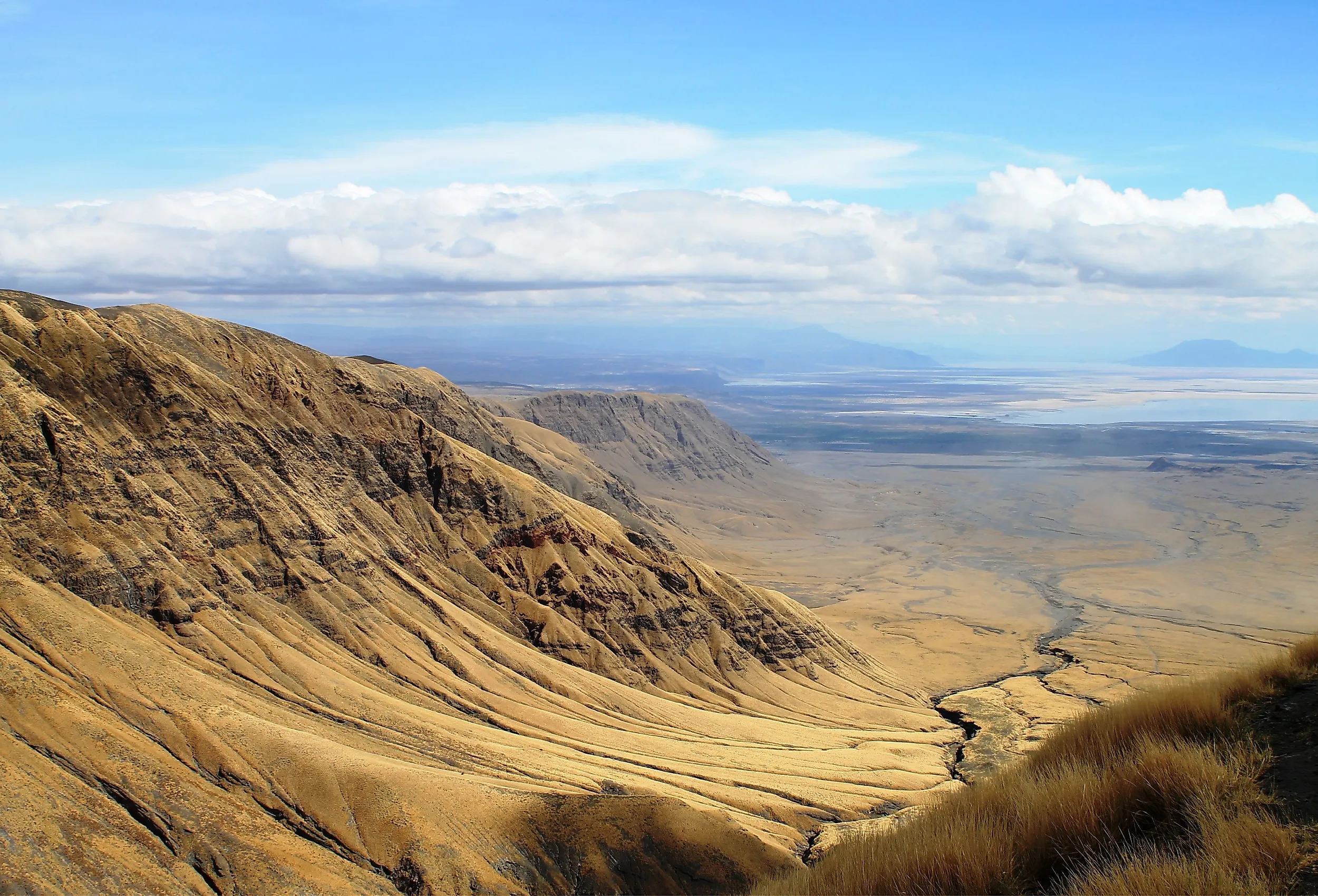
Scientists forecast that the Gulf of Aden and the Red Sea may flood the Afar region and the East African Rift Valley, created by the East African Rift System (EARS). This extensive geological feature extends more than 1,860 miles from the Afar Triple Junction in the north down to the Mozambique border in the south, passing through countries such as Kenya, Tanzania, and Uganda.
The EARS is caused by the separation of the Somali and Nubian plates. As the Somali Plate moves eastward away from the Nubian Plate, it leads to the formation of the rift valley and the extension of the continental crust. The movement of the Arabian Plate also contributes to the creation of the rift system. The Nubian Plate, situated west of the EARS, makes up most of the African continent. As the plates continue to diverge, the rift system expands, potentially leading to the splitting of Africa.
The region experiences frequent volcanic activity caused by tectonic plate interactions and magma upwelling from the mantle. Notable volcanoes such as Mount Kilimanjaro, Mount Kenya, and the Virunga Mountains are located here, and they serve as crucial habitats for endangered mountain gorillas. As the plates shift and diverge, seismic activity like earthquakes is common. The formation of a new ocean could additionally impact the movement of tectonic plates and influence the planet's future development.
How the Ocean Will Come Flooding In

Mantle plumes, upwellings of hot material from the Earth's mantle, are crucial in the separation of the African continent. They cause the crust to weaken and thin, allowing tectonic plates to stretch and divide.
The separation of tectonic plates has led to the formation of the Great Rift Valley and other geological features. The widening of the rift valley is also creating inland seas and lakes in depressions formed by the stretching of the crust. These water bodies could potentially merge to form a new ocean. Ocean floor spreading will likely contribute to the formation of a new ocean in the EARS. As the rift valley widens, ocean floor spreading will facilitate the expansion of the new ocean basin.
The separation between the Nubian and Somalian plates (as well as the adjacent Arabian plate) has been happening for approximately 30 million years, with the EARS widening and deepening gradually. The formation of a new ocean in the EARS could take another 5 to 10 million years. However, this timeline is subject to change.
The Ocean is Not the Only Change

The splitting of Africa into two new continents would significantly reshape global geography by creating a new ocean and new coastlines. This change could affect the movement and interaction of tectonic plates worldwide, leading to changes in geological events like earthquakes and volcanic activity.
The formation of a new ocean could also impact global climate patterns, altering ocean currents and atmospheric circulation, resulting in changes in temperature, precipitation, and storm patterns. This could affect ecosystems, agriculture, and human populations. Places like Saudi Arabia and the Sahara Desert were not always so arid. A change this large could see those regions become green again, or cause other areas to become deserts.
Splitting the African continent may cause major habitat changes, forming new environments and disturbing existing ecosystems. This can result in shifts in biodiversity, affecting species adaptation, migration, and extinction. The separation could also significantly influence the distribution of natural resources like water, minerals, and arable land, potentially causing competition and conflict among countries. These changes might severely impact local economies and global trade.
The emergence of a new ocean in Africa, driven by the geological activity of the East African Rift System, is a remarkable and inevitable event expected to occur in the distant future, perhaps in 5-10 million years. Though it is far off, studying this process can aid scientists in predicting future earthquake hazards, potentially saving many lives. While the breakup of the African continent and the formation of a new ocean may seem monumental, they are part of Earth's natural cycle and probably won't significantly affect current events. Still, this geological process highlights the ongoing transformations shaping our planet and demonstrates the vast complexity of the natural world.