Towns Named After a Mistake
Have you ever wondered where the name of your town comes from? A quick internet search or a visit to the local library should probably get you a quick, logical answer. New York honors the Duke of York in the New World. Washington comes from America's founding president. Bridgeport is a port city with... lots of bridges, and the list can go on.
But some geographic titles aren't as obvious. Some are mistakes altogether. Whether by clerical error or cartographic misjudgment, here are seven such places with names that don't necessarily represent their origins in the most accurate way.
Agloe, New York
Agloe is one of the most classic examples in the United States of a place whose name was created by mistake. Not through a spelling error, but through a cartographic invention that unexpectedly became real. In the 1930s, mapmakers Otto G. Lindberg and Ernest Alpers of the General Drafting Company came up with the name "Agloe" by combining their initials and placed it on a map of the Catskill Mountains as a copyright trap, with the fictional location designed to reveal whether competing map companies were copying their work or not.
The plan backfired when publisher Rand McNally later included Agloe on its own maps. Instead of admitting to copying, the company pointed to records showing the existence of the Agloe General Store, which had in fact been built at the mapped location after the owners saw the name on General Drafting Company's map and adopted it. The accidental settlement had briefly transformed a fictional moniker into a real, actual place!
Although Agloe never developed into a fully fledged town, and the store eventually closed, its unusual origin made it famous among map enthusiasts and historians alike.
Texarkana, Arkansas/Texas

Based on a geographic misconception dating to its founding in 1873, Texarkana's name originated from railroad surveyor Colonel Gus Knobel, who coined it by combining Texas, Arkansas, and Louisiana, believing the new settlement occupied the point where all three states met. In reality, while Texarkana does straddle the Texas-Arkansas border, the Louisiana state line lies about 30 mi (48 km) to the south.
But despite the miscalculation, the blended name seemed to have a nice ring to it and caught on, most importantly being adopted by the growing railroad community. The arrival of the Texas and Pacific Railway and the Cairo and Fulton Railroad then transformed Texarkana into an important transportation hub, with businesses and neighborhoods developing on both sides of the state line.
Today, the city exists as two municipalities (Texarkana, Texas, and Texarkana, Arkansas) that together function as a single metropolitan area. Although its name still suggests a three-state junction, it commemorates a geographic error that became one of the most recognizable place names in the American South.
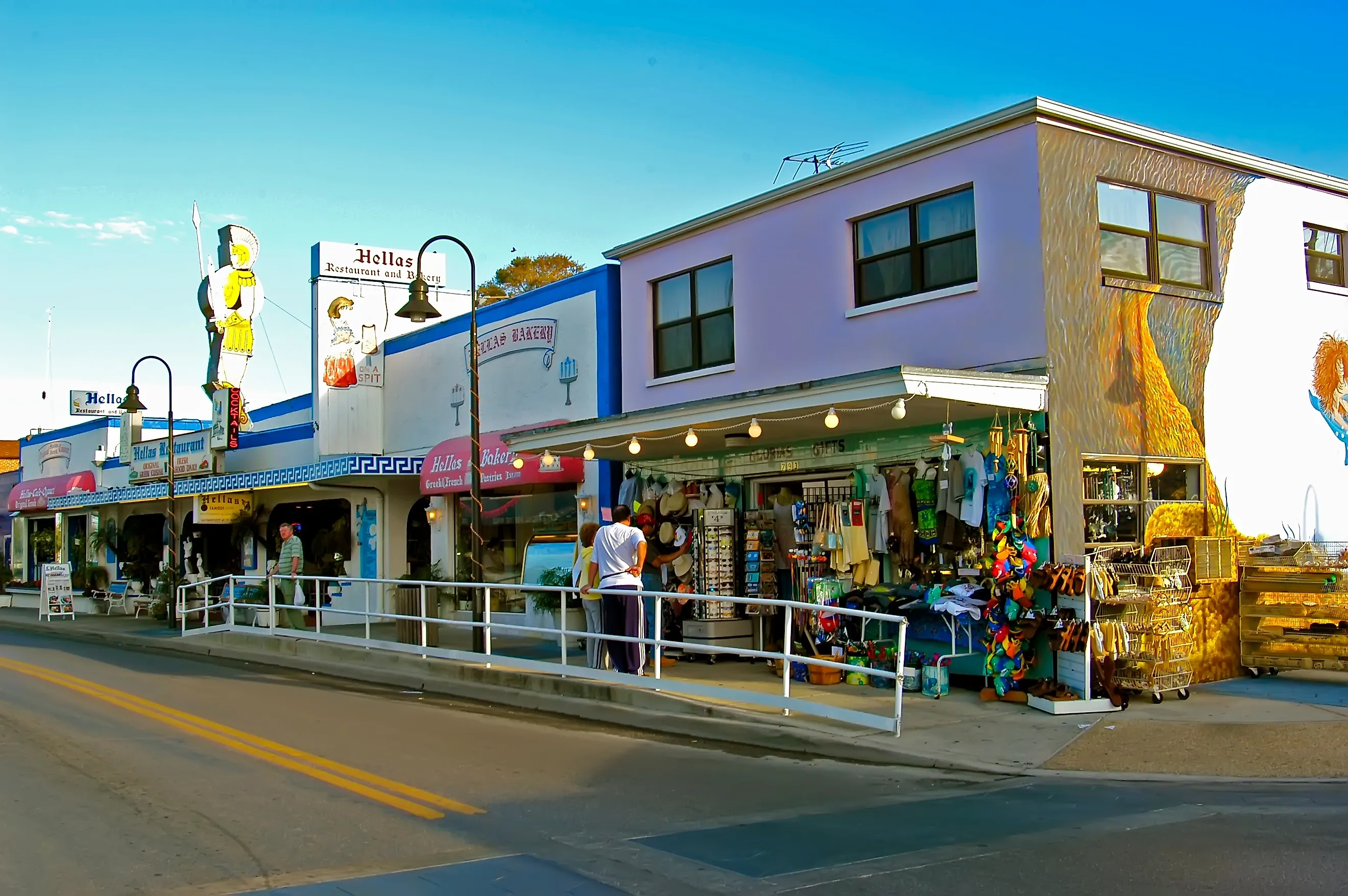
Tarpon Springs, Florida

Tarpon Springs has a case of mistaken identification involving the fish found in its nearby waters. When early American settlers arrived in the area, they noticed large fish leaping from the springs and nearby waterways. Believing the jumping fish were tarpon, they named the settlement "Tarpon Springs," of course. The fish were later identified as, in fact, mullet, a smaller species known for its distinctive habit of repeatedly jumping above the water's surface.
The name stuck, however, and became closely tied to the community's identity as a seaside destination. Located along the Gulf Coast near the Anclote River, Tarpon Springs is particularly famous for its sponge-diving industry, which attracted Greek immigrants who helped mold the town's unique cultural melange.
These days, its biggest draw is perhaps the historic Sponge Docks, where you can learn about the region's maritime heritage and the industry that once made it a major sponge-producing center. Renowned for its fishing charters, as well (as many coastal Florida settlements are), the mistaken name still remains somewhat appropriate.
Nameless, Tennessee

Nameless gained its comical name after local residents failed to agree on a label for their community. It started when locals of the small settlement in north-central Tennessee applied for a post office, which required them to provide an official community title. According to local tradition, disagreements among residents prevented them from choosing one, so they simply opted to submit the application without one (maybe to later come up with an idea in the meantime). But when the U.S. Post Office Department returned the paperwork, officials had stamped the blank space with "Nameless."
Rather than continue the debate, residents accepted the accident, and it became the community's official designation. Located in Jackson County near the scenic Cumberland Plateau, Nameless is still a rural farming settlement and remains a small, unincorporated community.
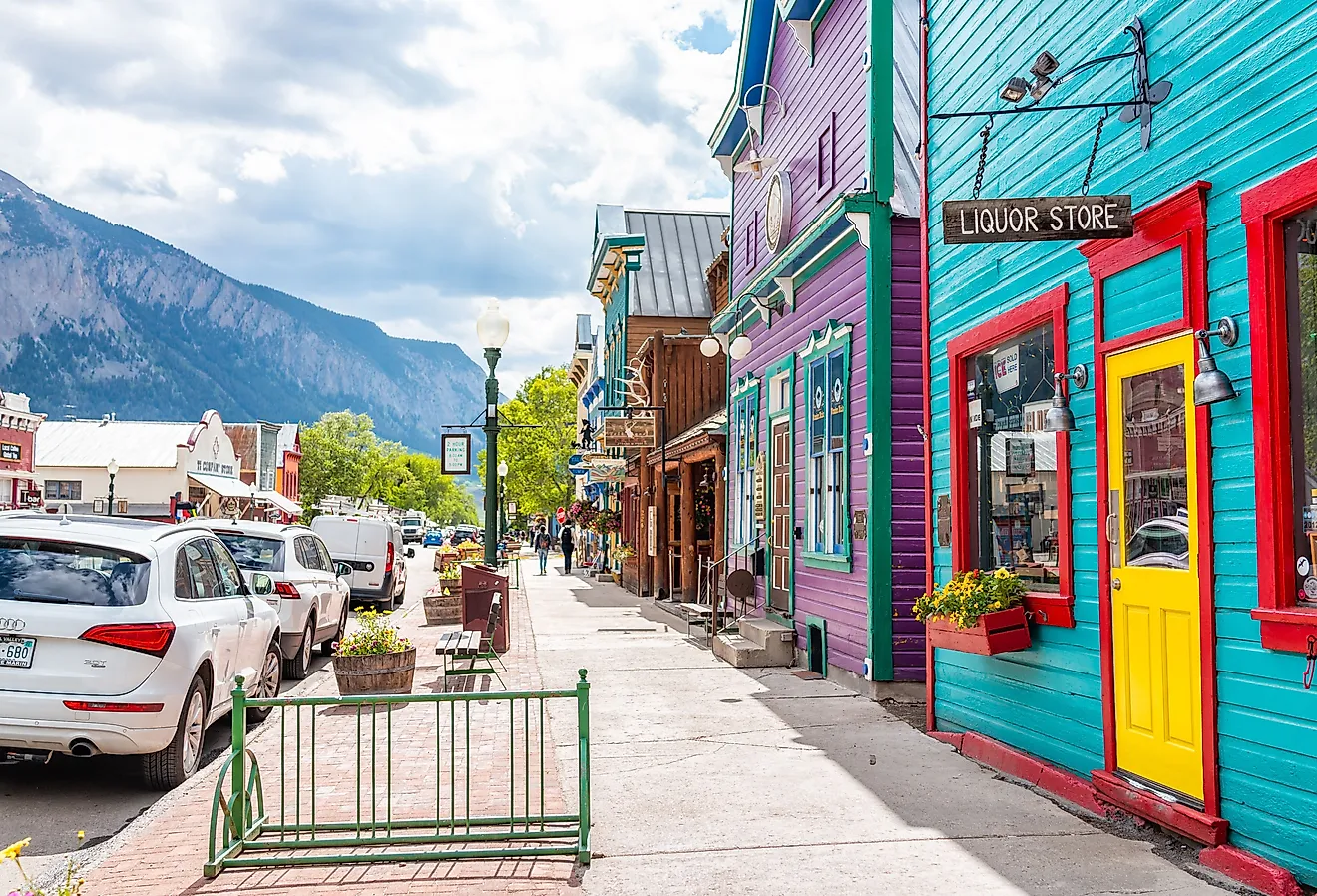
Larkspur, California

This one is a botanical mistake, one that has endured for more than a century. Georgiana Wright, the wife of developer Charles W. Wright, chose the name "Larkspur" in 1887 after admiring what she believed were fields of wild larkspur flowers covering the surrounding hills. Botanists later determined that the striking purple blooms were actually lupines, not larkspur. But by then, the name had already appeared on maps, property records, and railroad schedules, making any change impractical.
The community continued to grow under its mistaken name, particularly after ferry and rail connections linked Marin County more closely with nearby San Francisco. It eventually became a vital transportation hub for the Bay Area, a role it still fills today through the Larkspur Ferry Terminal and nearby highway connections.
Although the hills around Larkspur continue to burst into color each spring, the blooms that first inspired its name were never larkspur at all, leaving this spot with one of California's most misguided names.
Lerado, Kansas
Lerado owes its name to a simple spelling mistake that became permanent. When the community was started in Reno County during the mid 1870s, residents intended to name it Laredo, after yet another famed Texas border city. According to local accounts, the paperwork submitted to establish a post office contained an error, replacing the second "e" with another "a." But rather than correcting the application, the federal government accepted the spelling as Lerado, and the town retained the accidental label.
This not-so-grammatically savvy post office operated from 1874 until 1904, otherwise serving the surrounding farming community dutifully during its time. Like many settlements across the Kansas plains, Lerado primarily prospered around agriculture, with wheat, sorghum, and cattle ranching forming the backbone of the local economy.
Although it never grew into much of a proper town (not even being officially incorporated today), Lerado remains one of many examples displaying how simple clerical errors could shape a place's name before digital records made corrections easier. Funnily enough, the mistaken spelling is likely the destination's most distinctive historical feature in what is now an otherwise mundane piece of farmland.
Norfolk, New York
Norfolk possibly received its name through a mishap made during the community's initial development. When settlers established the town in St. Lawrence County in the early 1800s, it is thought that they may have intended to label the settlement something along the lines of "North Fork," making sense given its position on the northern fork of the Raquette River. However, according to some accounts, the original proposal was mistakenly recorded with the wrong spelling by a postmaster, and the error was never corrected. The name eventually became official when Norfolk was incorporated as a town in 1823.
Also sharing a title with a prominent county across the ocean in England (a place where many of New York's early settlers coincidentally originated from), this quiet community near the Canadian border rallied around farming, timber, and later industries connected to the region's waterways and rail lines. Norfolk also became known for its connection to the nearby Grasse River and the former lumber operations that greatly helped shape Upstate New York's budding economy.
While many communities were styled deliberately after European places or prominent figures, Norfolk's lasting identity could have come from just a small administrative error that was accepted and carried forward through generations.
Dive Deeper into Origins of these Interesting Places
Some towns and cities' names honor famous people or describe the physical landscape, but others survived because no one corrected an error. Through clerical slips, mistaken geography, and misidentified wildlife and plants, the above-mentioned communities prove that even simple misunderstandings can become permanent. Regardless, long after the original mistakes were uncovered, these names remained, turning accidental blunders into lasting pieces of local history that are, funnily enough, sometimes the most interesting aspect of these destinations.