11 Most Peaceful Small Towns In South Carolina
South Carolina has a quieter side that shines through in its small towns, where historic streets, coastline stretches, and nature trails are part of everyday life. A 140-acre millpond near Camden hides a paddling route through a flooded cypress forest, while the Atlantic has left an entire shoreline of bleached, fallen trees near Edisto Beach. In the Blue Ridge foothills, residents live within minutes of mountain trails and waterfalls. These 11 smaller towns have some of the state's most peaceful natural landscapes close to home.
Bluffton

Next to the May River, tidal marshes, old oak trees, and a walkable historic district give Bluffton a laid-back feel. The town has grown rapidly in recent years, but Old Town Bluffton still feels connected to its Lowcountry roots, with historic buildings, local art galleries, and quiet streets near the water.
Kayaking or paddleboarding on the May River brings visitors into the salt marshes, where dolphins occasionally surface near the boats. Oyster Factory Park is another peaceful spot to take in the landscape, with live oaks, a boat ramp, and views across the river. Calhoun Street is the place to browse gift shops, antiques, and galleries, including the Calhoun Street Gallery, which features handmade art and antiques. Nearby, the historic Heyward House Museum preserves a home that survived the Civil War and offers a look at Bluffton's 19th-century history. The old town's compact layout makes it easy to explore all four without spending much time in the car.
Walhalla

Walhalla sits close to the foothills of the Blue Ridge Mountains, where waterfalls, forest roads, and a small downtown give the town much of its character. Founded in 1850 by German immigrants, it is especially attractive in the fall, when the surrounding mountains turn red, orange, and yellow. Its location also puts some of South Carolina's most scenic mountain country within a short drive.
Stumphouse Mountain Park protects wooded slopes and the Stumphouse Tunnel, an unfinished railroad tunnel originally excavated before the Civil War. Nearby Issaqueena Falls drops across a broad rock face, with a short path leading to an overlook. Oconee State Park, north of town, offers forest trails, a small lake, and rustic cabins built during the 1930s. Back on Main Street, antique stores and restaurants provide a pleasant place to spend the afternoon. The Steak House Cafeteria remains a local favorite for fried chicken and homemade pie.
Beaufort

Shaded streets, Spanish moss, and tidal creeks in Beaufort create a peaceful Lowcountry atmosphere. Located on Port Royal Island, this coastal town is known for waterfront walks, historic architecture, and nearby maritime forests. Downtown can be lively, but quieter places are only a short walk or drive away.
Henry C. Chambers Waterfront Park follows the Beaufort River, with a brick promenade and swinging benches overlooking passing sailboats. About 16 miles east, Hunting Island State Park protects five miles of beach, salt marshes, and maritime forest, including the striking landscape of fallen trees along its eroding shoreline. The Beaufort Historic District is another pleasant place to walk, with centuries-old homes shaded by live oaks and Spanish moss. For a longer outing, the Spanish Moss Trail follows a former railroad corridor through woods, wetlands, and residential neighborhoods. Its paved route is popular with walkers and cyclists who want to explore beyond the downtown streets.
Landrum

Horse farms, green pastures, and winding country roads give Landrum a rural character. Downtown, old brick buildings, antique shops, and small restaurants form a compact center surrounded by the Blue Ridge foothills. With fewer than 3,000 residents, the town has remained small despite its location between Greenville and Asheville.
The 575-acre Blue Wall Preserve protects forests, streams, ponds, and wildlife habitat at the base of Hogback Mountain. A section of the Palmetto Trail passes through the preserve, and a separate path leads toward a waterfall. A short drive away, Campbell's Covered Bridge crosses Beaverdam Creek. Built in the early 1900s, it is South Carolina's last remaining historic covered bridge, now surrounded by a small park and walking trail. Lake Bowen, east of town, offers boating, fishing, and waterfront picnic areas. Back in Landrum, antique collectors browse the downtown shops, where old storefronts and the historic railroad setting recall the town's past.
Edisto Beach

The shoreline and surrounding landscape in Edisto Beach are central to everyday life. According to the town's website, it is one of the few remaining gently developed beaches on the South Carolina coast. The absence of high-rise hotels and large chain resorts gives it a different character from the state's busier beach communities, particularly outside the summer season.
Edisto Beach State Park protects more than 1,200 acres of shoreline, maritime forest, and salt marsh. Its Scott Creek Trail crosses wooded areas and boardwalks overlooking the wetlands, while cabins sit near the tidal creeks. At Botany Bay Plantation Heritage Preserve, Boneyard Beach is known for the weathered trunks and branches of trees left standing or scattered along the shore by erosion. Visitors can also explore the town's public beaches for sunrise walks and shell watching. On Big Bay Creek, kayaking offers another way to experience the marshes, where wading birds and other coastal wildlife gather. Botany Bay closes on Tuesdays and during certain scheduled hunts, so visitors should check access before heading out.
Santee

Santee developed around the lakes and highways of central South Carolina, and its character reflects that setting. Much of local recreation centers on fishing, boating, and time beside Lake Marion, South Carolina's largest lake. Despite its location near Interstate 95, the town has fewer than 1,000 residents and large stretches of protected lakeshore nearby.
Santee State Park covers 2,500 acres along Lake Marion, offering hiking and biking trails, fishing areas, and cabins built over the water. Pontoon boat tours take visitors through the lake's flooded cypress forest, where trees rise directly from the water. A short drive north, Santee National Wildlife Refuge protects wetlands and forests used by migratory birds, with trails and observation platforms for wildlife watching. The refuge also contains the Santee Indian Mound and Fort Watson Historical Site. The mound served as an Indigenous ceremonial and burial site centuries before British soldiers used it as a fortification during the Revolutionary War.
Orangeburg

In south-central South Carolina, Orangeburg is known as "The Garden City." The North Fork of the Edisto River runs along the edge of its public gardens, and the surrounding green spaces provide a quiet retreat from the roads, college campuses, and active downtown streets. Although Orangeburg is busier than some of the smaller communities on this list, its riverfront and gardens are unusually accessible.
Edisto Memorial Gardens covers more than 150 acres beside the river, with thousands of roses, camellias, azaleas, and walking paths. Within the gardens, the Horne Wetlands boardwalk stretches 2,600 feet through a tupelo-cypress wetland, bringing visitors close to the river's natural environment. The gardens also have a butterfly garden and a sensory garden, particularly attractive during the spring flowering season. Visitors who want to spend more time outside can explore the Edisto River by canoe or kayak, passing wooded banks and quiet stretches of water. The city's historic downtown offers another option, with older commercial buildings and local businesses reflecting Orangeburg's long history.
Georgetown

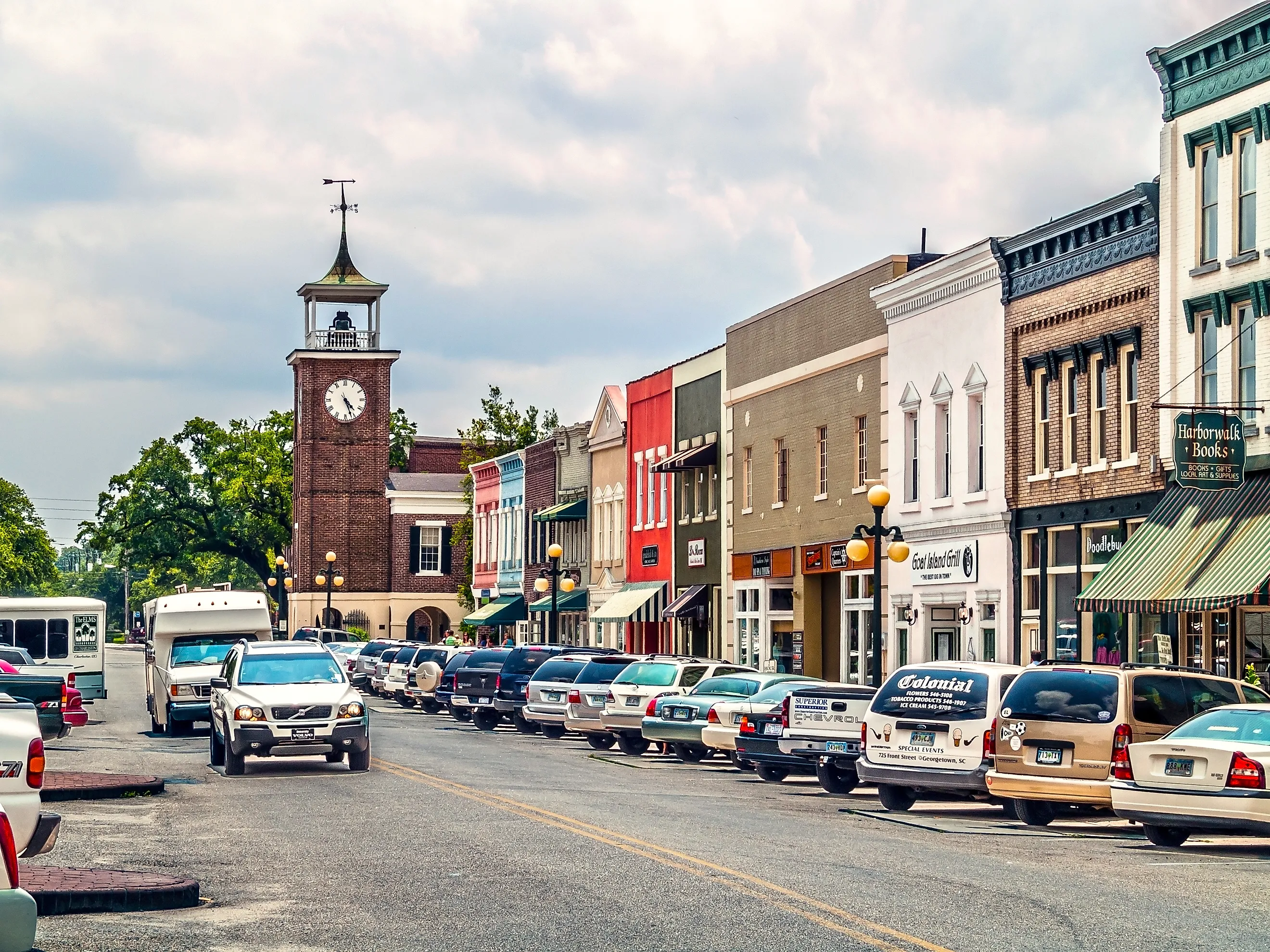
The waterfront is a big part of everyday life in Georgetown. The Sampit River meets Winyah Bay nearby, and the historic district grew around shipping, fishing, and trade. Today, visitors can still see the town's maritime history in its riverfront, old buildings, and working harbor. The combination of sheltered water and centuries-old streets gives Georgetown a slower pace than the larger coastal destinations nearby.
The wooden Harborwalk runs four blocks along the river downtown, passing restaurants, historic shops, and sailboats near Front Street. It connects the Kaminski House Museum on one end to the Rice Museum and Town Clock on the other. North of Georgetown, Hobcaw Barony is a 16,000-acre privately owned research reserve protecting marshes, forests, and wetlands. Guided tours allow visitors to explore parts of the property and learn about its ecology and history. East Bay Park and the adjoining Morgan Park provide another peaceful waterfront setting, with walking paths and views toward Winyah Bay.
Camden
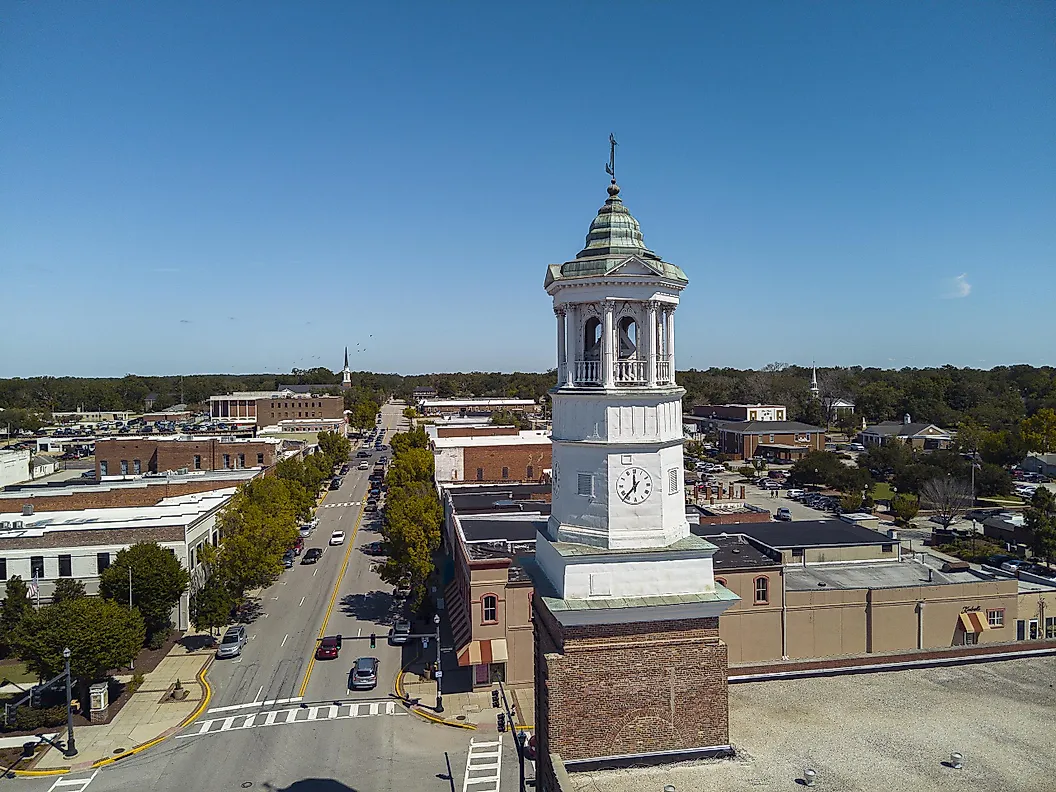
Camden's history and landscape have a large part in its relaxed atmosphere. Located in north-central South Carolina, it is the state's oldest inland city, with a long connection to the American Revolution and horse racing. The surrounding countryside includes forests, lakes, and river wetlands that are easy to reach from downtown.
Beside the Wateree River, Camden Riverfront Environmental Park offers walking paths, observation areas, and a kayak launch. Nearby Goodale State Park covers 763 acres and contains a 140-acre Civil War-era millpond where bald cypress trees rise from the water. Its three-mile canoe trail winds through the flooded forest, while a sandy nature trail offers another way to explore. About 20 minutes from Camden, Lake Wateree provides boating, fishing, and picnic spots along its wooded shoreline. Visitors interested in the town's past can explore Historic Camden Revolutionary War Park, where preserved and reconstructed buildings help tell the story of the region during the American Revolution.
Travelers Rest

With biking and outdoor recreation becoming increasingly popular in the Greenville area, Travelers Rest has grown into a lively small town. Its location in the foothills of the Blue Ridge Mountains remains a major part of its appeal. There are plenty of opportunities for socializing downtown, but wooded hills and quiet country roads are never far away.
The Swamp Rabbit Trail runs through town, following a former railroad corridor and connecting Travelers Rest with Greenville. Walkers and cyclists use the paved greenway to explore the surrounding area without getting into a car. Main Street offers locally owned restaurants, cafes, and shops, many within walking distance of the trail. A short drive away, Paris Mountain State Park has forest hiking trails and Lake Placid, where visitors can walk around the water or rent a kayak. Trailblazer Park, just outside the downtown center, adds a green outdoor gathering space and hosts a seasonal farmers market. Together, these places offer a balance between small-town activity and time outside.
Aiken

Aiken's relaxed character comes from its tree-lined streets, old gardens, equestrian traditions, and stretches of protected forest. Although it is one of the larger towns on this list, with a population exceeding 30,000, extensive green spaces remain part of its everyday landscape.
In the heart of Aiken, Hitchcock Woods is a privately owned forest spanning 2,100 acres, with approximately 65 miles of trails for walking and horseback riding. The property is open to the public, although bicycles and motorized vehicles are prohibited. Nearby Hopelands Gardens offers a more landscaped setting, covering 14 acres with old oak trees, ponds, and shaded pathways. Carolina Bay Nature Preserve protects a rare wetland ecosystem close to downtown, with short walking trails and an observation deck for watching wildlife. South of the center, Boyd Pond Park covers 210 acres and includes a 30-acre pond, a fishing pier, and wooded walking trails. Few South Carolina communities of Aiken's size have so much natural space within such a short distance of their residential neighborhoods.
Where South Carolina Slows Down
South Carolina's quieter towns draw much of their character from the land around them. Edisto Beach has maritime forests and undeveloped shoreline nearby, while Aiken offers miles of sandy paths beneath tall pines. In the Upstate, Walhalla and Landrum sit beneath the Blue Ridge foothills, with waterfalls and mountain trails close to town. Santee, Camden, and Orangeburg offer something different, with cypress wetlands, lakes, and rivers to explore. In coastal marsh, mountain forest, or an old millpond, these communities leave plenty of room for a peaceful afternoon outdoors.