The Snake Infested State Parks On The East Coast
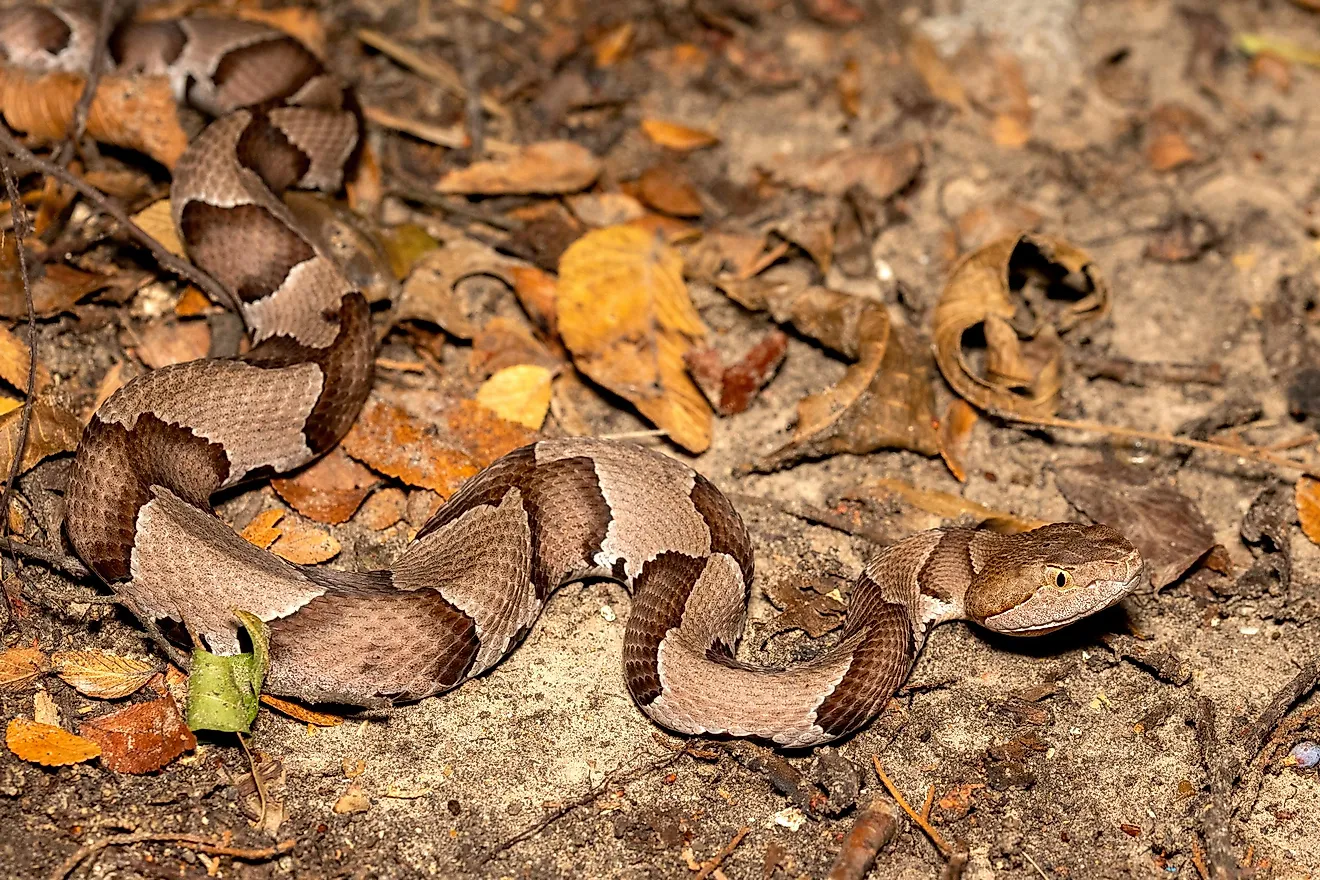
The Atlantic seaboard runs from barrier islands with almost no venomous snakes to cypress swamps that hold four species at once, and the dividing line sits roughly at the Virginia and North Carolina border. North of it the serious snake is the timber rattlesnake, confined to rocky inland ridges rather than the shore. South of it the coastal plain itself becomes the habitat, with cottonmouths in the blackwater and eastern diamondbacks in the pine flatwoods. These eight state parks hold the most. The species list changes completely as you move down the coast, and so does whether you need to worry about it.
First Landing State Park, Virginia

Virginia's most visited state park sits inside the city of Virginia Beach and contains something that has no business being there.
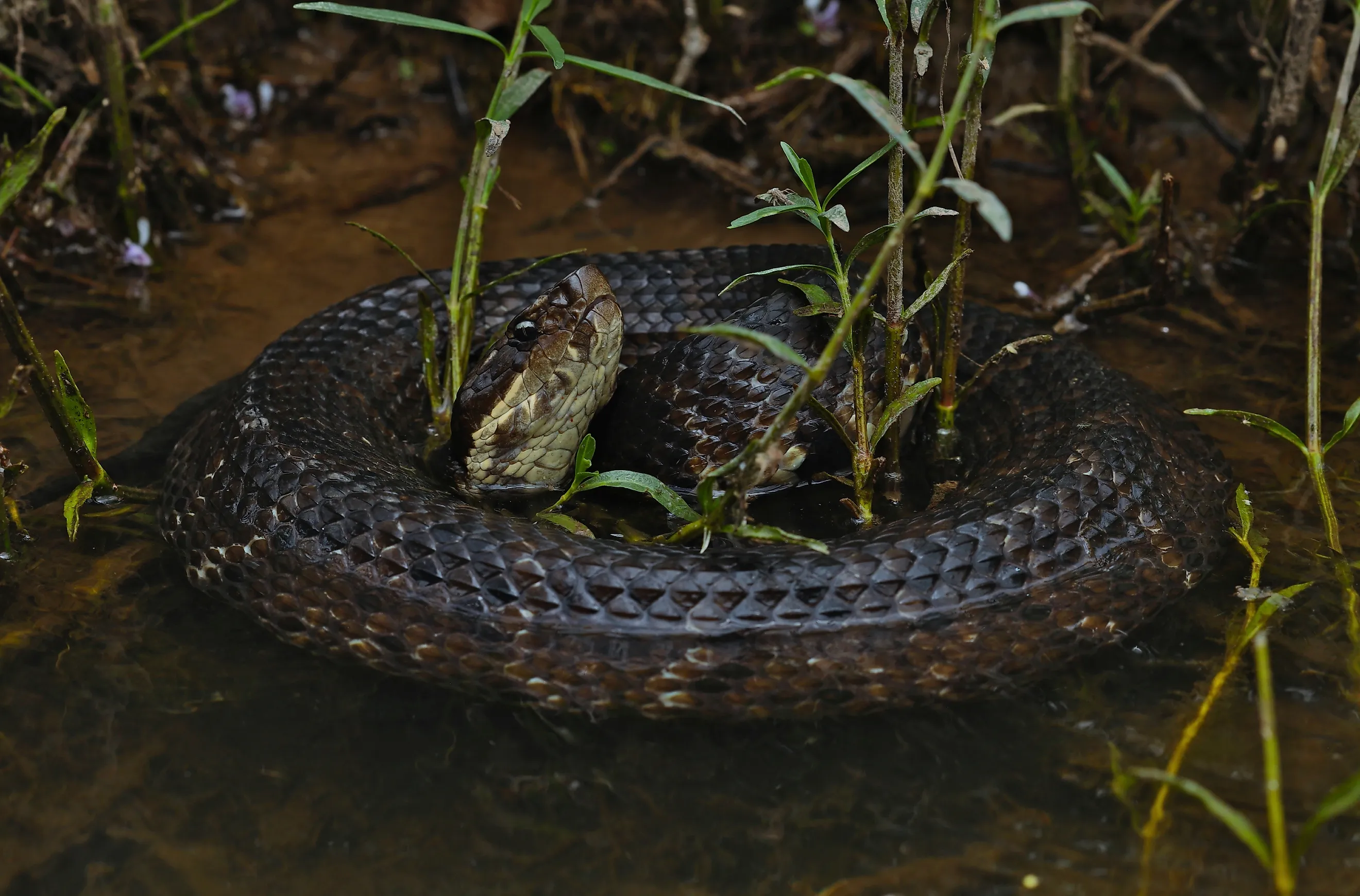
First Landing protects a bald cypress swamp at the northernmost point where that habitat occurs on the Atlantic coast, with Spanish moss hanging over blackwater a few miles from a resort strip. Cottonmouths reach their northern Atlantic limit in southeastern Virginia, and this is the kind of water they use.
The park also holds eastern cottonmouths' harmless lookalikes in quantity, chiefly northern watersnakes, which collect most of the reports along the Bald Cypress and Osmanthus trails.
False Cape State Park, Virginia

Immediately south of First Landing, False Cape is among the least accessible state parks on the East Coast and one of the best for reptiles.
There is no road in. Visitors walk, cycle or boat several miles through Back Bay National Wildlife Refuge to reach a mile-wide barrier spit running down to the North Carolina line, with maritime forest, dunes and marsh along its length.
That inaccessibility is the point. Eastern cottonmouths, black racers and hognose snakes occupy ground that sees a fraction of the foot traffic of any comparable coastal park.
Huntington Beach State Park, South Carolina

This is the best-known wildlife-watching park on the South Carolina coast, and the causeway is the reason. A freshwater lagoon on one side and salt marsh on the other sit either side of a raised road, concentrating alligators, wading birds and snakes into a strip visitors walk along. Cottonmouths use the freshwater margins, and banded watersnakes are abundant throughout.
The combination of brackish and fresh water in a small area is unusual, and it supports a wider snake list than a straightforward beach park would.
Hunting Island State Park, South Carolina

The most visited state park in South Carolina is a barrier island of maritime forest, lagoon and salt marsh south of Beaufort.
Its five thousand acres hold eastern diamondback rattlesnakes, cottonmouths, and the usual coastal complement of black racers, rat snakes and watersnakes. The lagoon and marsh boardwalk produce most of the sightings.
The eastern diamondback is the heavyweight of the American coast, the largest venomous snake in North America, and Hunting Island is within its range on the Sea Islands.
Edisto Beach State Park, South Carolina

Edisto protects one of the longest stretches of publicly accessible maritime forest left in the state, and that habitat is the whole point.
Behind the beach sit live oak and palmetto woodland and a tidal salt marsh, with four miles of trails running through both. Eastern diamondbacks, cottonmouths, corn snakes and racers all occur.
Maritime forest is a shrinking habitat along the whole southeastern coast, which concentrates the species that depend on it into the few protected blocks that remain.
Skidaway Island State Park, Georgia

Just outside Savannah, Skidaway sits where the Skidaway Narrows meet the salt marsh, and its trails run through precisely the transition zone snakes favor.
Live oak and cabbage palmetto woodland gives way to marsh along boardwalks, and the park supports eastern diamondbacks, cottonmouths and a long list of harmless species including rat snakes, racers and the eastern kingsnake.
The kingsnake is worth watching for rather than avoiding. It eats other snakes, including venomous ones, and is immune to their venom.
Jonathan Dickinson State Park, Florida

The largest state park in southeast Florida covers more than 11,000 acres on the Atlantic coast north of Jupiter, and its habitat list is why it tops this one.
Pine flatwoods, sand pine scrub, mangrove and cypress swamp sit within one boundary, with the Loxahatchee River running through as a federally designated Wild and Scenic River. Eastern diamondbacks, pygmy rattlesnakes, Florida cottonmouths and eastern coral snakes all occur.
Four venomous species in one park is the maximum available anywhere on the East Coast, and the scrub habitat is what adds the diamondback and the coral snake to the swamp species.
Assateague State Park, Maryland

The northern outlier on this list has the shortest species list and the best-known residents.
Maryland's only oceanfront state park occupies two miles of barrier island shared with the wild horses, and the snake list runs to northern watersnakes, black racers, eastern garter snakes and hognose snakes. None of them is venomous.
Maryland has 27 snake species and only two of medical significance, the eastern copperhead and the timber rattlesnake, and neither reaches the barrier islands. The dunes and marsh are watersnake and hognose country.
The Line Falls In Virginia

Reading the list from north to south, the change is not gradual. North of Virginia the venomous species are inland animals. Copperheads want rocky wooded slopes and timber rattlesnakes want talus with southern exposure, and neither is a coastal plain species. Barrier island parks like Assateague therefore have no venomous snakes at all.
From southeastern Virginia down, the coastal plain itself becomes habitat. Cottonmouths reach their Atlantic northern limit there, eastern diamondbacks start appearing in the Carolinas, and by Florida the list runs to four venomous species in a single park.
The Short List

Jonathan Dickinson leads on species count with four venomous snakes across pine scrub, flatwoods and cypress swamp. Hunting Island, Edisto and Skidaway hold diamondbacks and cottonmouths in maritime forest. Huntington Beach concentrates them along a causeway. First Landing and False Cape sit at the cottonmouth's Atlantic limit, and Assateague has none at all.
What changes down the coast is not how many snakes there are but which habitat they live in. In the north they are in the hills behind the shore. In the south the shore is the habitat.