The State Parks With Petrified Wood
Often confused for simple rocks, petrified wood preserves evidence of forests that grew millions of years before today's deserts, canyons, and grasslands took shape. In state parks across the American West, mineralized trunks, stumps, and fragments reveal where trees once flourished. Some parks protect individual logs beside interpretive trails, while others contain scattered fossils exposed to open air by erosion. Washington's Ginkgo Petrified Forest and Utah's Escalante Petrified Forest offer dedicated viewing routes, while other parks in Nevada, Texas, North Dakota, and beyond place these ancient remains within broader recreational settings full of rocky formations, layered cliffs, and steep, rugged badlands.
Ginkgo Petrified Forest State Park, Washington

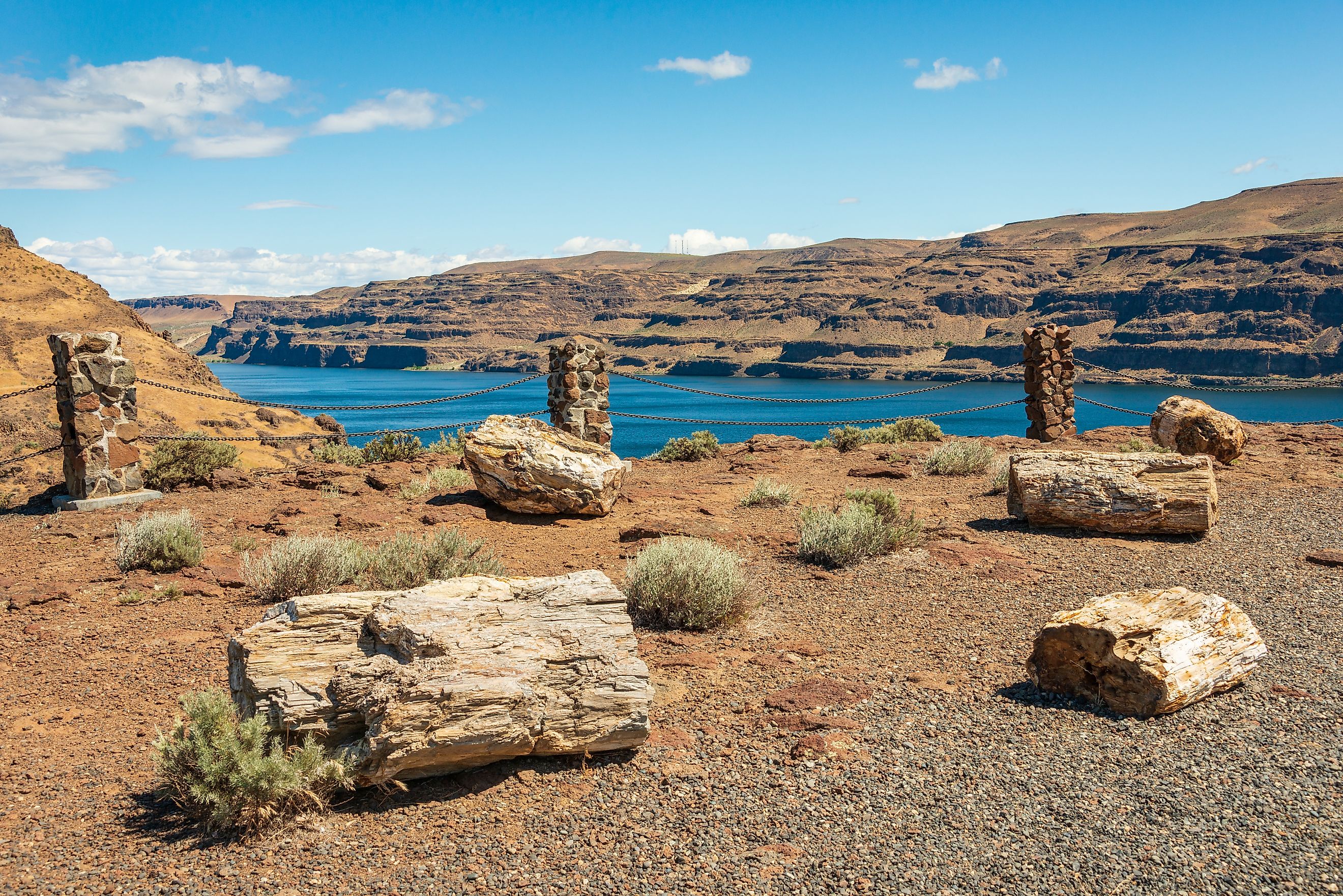
Petrified ginkgo trees are rare, but their discovery near the community of Vantage in 1932 helped establish the aptly named Ginkgo Petrified Forest State Park. Overlooking the Columbia River, the park preserves remnants of forests that grew roughly 15 million years ago, when central Washington boasted a much wetter climate than it does now.
Volcanic eruptions subsequently buried the ancient woodlands, which became mineralized over time as groundwater carried dissolved minerals into their organic tissues. The resulting fossils retain details of the region's ancient flora, sometimes even including recognizable grain and growth rings.

For a closer look, follow the Trees of Stone Interpretive Trail, where a number of excavated logs remain protected beneath metal grates. The Ginkgo Petrified Forest Interpretive Center also displays specimens in an air-conditioned building and explains the area's volcanic history and Ice Age floods.
Beyond its fossil deposits, it offers sweeping views high above the river and access to camping at nearby Wanapum Recreation Area as well. That being said, leave all petrified wood where it lies, regardless of where you are in the park.
Escalante Petrified Forest State Park, Utah

Notes of red, yellow, and purple streaks distinguish the petrified wood scattered across the slopes above Wide Hollow Reservoir. These colorful fragments at Escalante Petrified Forest State Park come from trees buried in sediment roughly 150 million years ago, during the Jurassic Period. Their remains occur in the multi-state Morrison Formation, which also preserves dinosaur fossils.
If you're at this Utah spot, however, the Petrified Forest Trail makes a 1-mile (1.6 km) loop through various deposits, pairing nice views across the reservoir and surrounding cliffs, too. For the greatest concentration of fossilized wood, continue onto the Trail of Sleeping Rainbows, a 0.75-mile (1.2 km) extension with steep sections and rocky footing. A separate display also features a petrified trunk measuring about 50 feet (15 meters), allowing you to appreciate the sheer size these ancient trees once maintained.
Below the fossil beds, Wide Hollow Reservoir is a hotspot for kayaking, fishing, and swimming, with camping available beside the water.
Valley of Fire State Park, Nevada

Fossilized trunks lying beside Valley of Fire's iconic red sandstone formations record a time when forests occupied this now arid region. Ancient waterways transported fallen trees before sediment buried them, allowing mineralization to preserve the wood. Their presence adds another unique chapter to the geology of Nevada's oldest state park, which opened in 1934.
Today, you are able to examine several logs for yourself at designated viewing sites along Valley of Fire Road. Protective fences surround the specimens, while interpretive signs document their origins. The Petrified Logs Loop near the park's western entrance is the best place for a short walk among these remains without requiring a lengthy backcountry hike (ideal for the often sweltering temperatures and lack of water sources here).
Nearby, the "Beehives" display curved sandstone layers formed from ancient sand dunes, while Atlatl Rock preserves Indigenous petroglyphs reached by a metal staircase. Combining these stops gives history and geology buffs alike a way to look at fossil wood, exposed sedimentary formations, and the area's human history.
Palo Duro Canyon State Park, Texas

Palo Duro Canyon State Park.
Petrified wood plays a large part in the rich fossil record exposed within Palo Duro Canyon's walls, alongside remains of reptiles, amphibians, and fish. Pieces occur in the Tecovas Formation, whose colorful sediments accumulated during the Late Triassic, more than 200 million years ago. Mineralized wood also appears in the overlying Trujillo Formation, the harder rock responsible for many of the canyon's ledges. Together, these layers document the ancient rivers and floodplains that once supported towering trees in northern Texas long before the gorge even existed.
The Prairie Dog Town Fork of the Red River later cut through the deposits, exposing their buried history. These days, Triassic Peak and the Spanish Skirts provide sights of the Tecovas strata, although spotting wood fragments here, not usually being demarcated, often requires a bit of closer observation and a practised eye. Regardless, all who come can explore the park's cool geology along its network of trails and scenic pullouts. Just leave any fossils undisturbed for others to see and scientists to study.
Little Missouri State Park, North Dakota

Hiking and horseback riding bring visitors into the fossil-bearing badlands of Little Missouri State Park, north of Killdeer. Petrified wood here mainly occurs among its eroded slopes, with fossilized stumps and scattered pieces encountered primarily along backcountry routes. These remnants recall the wooded environments that preceded western North Dakota's seemingly endless grasslands.
Much of the park requires travel on foot or horseback, and its more than 40 miles (64 km) of trails weave through a mix of ravines, buttes, and ridges overlooking the Little Missouri River. Routes descending from the rim offer ways to examine the terrain in more detail, although keep in mind that climbs back up can be demanding. Be sure to carry a trail map, too, since numerous intersecting paths may make straightforward navigation less obvious than the open views suggest.
The local campground includes facilities for horses, making an overnight stay practical for riders and hikers alike exploring longer routes through this state park's remote, rugged terrain.
Look Back in Time at these Ancient Woodlands
The remarkably preserved grain and shape of petrified wood in these destinations make America's ancient world a tangible thing, even where no living trees remain today. Seeing a fossilized trunk beside a desert trail or embedded in canyon sediments connects the surrounding rocks to a once lush environment. With that, always leave specimens in place so their details and position remain available for future visitors and researchers to examine.