11 Quebec Towns With Unforgettable Main Streets
Three towns on this list call their main street Rue Principale, but no two feel the same. In Baie Saint Paul, art galleries line Rue Saint-Jean-Baptiste alongside small statues of the town's legendary figures. Walk Rue Lafontaine in Rivière-du-Loup past plaques marking its heritage buildings, and you'll reach a 108-foot waterfall at the base of the street. Knowlton's Chemin Lakeside meets Chemin Knowlton in a New England-style downtown with century-old red-brick buildings and green squares. In Saint-Michel-de-Bellechasse, Rue Principale runs through the White Village, past 19th-century wooden homes painted so early sailors could find their way back to shore. Five of these main streets also run beside a bay, a river, a canal, or the open shoreline, putting the water at your side as you explore small-town Quebec.
Baie Saint Paul

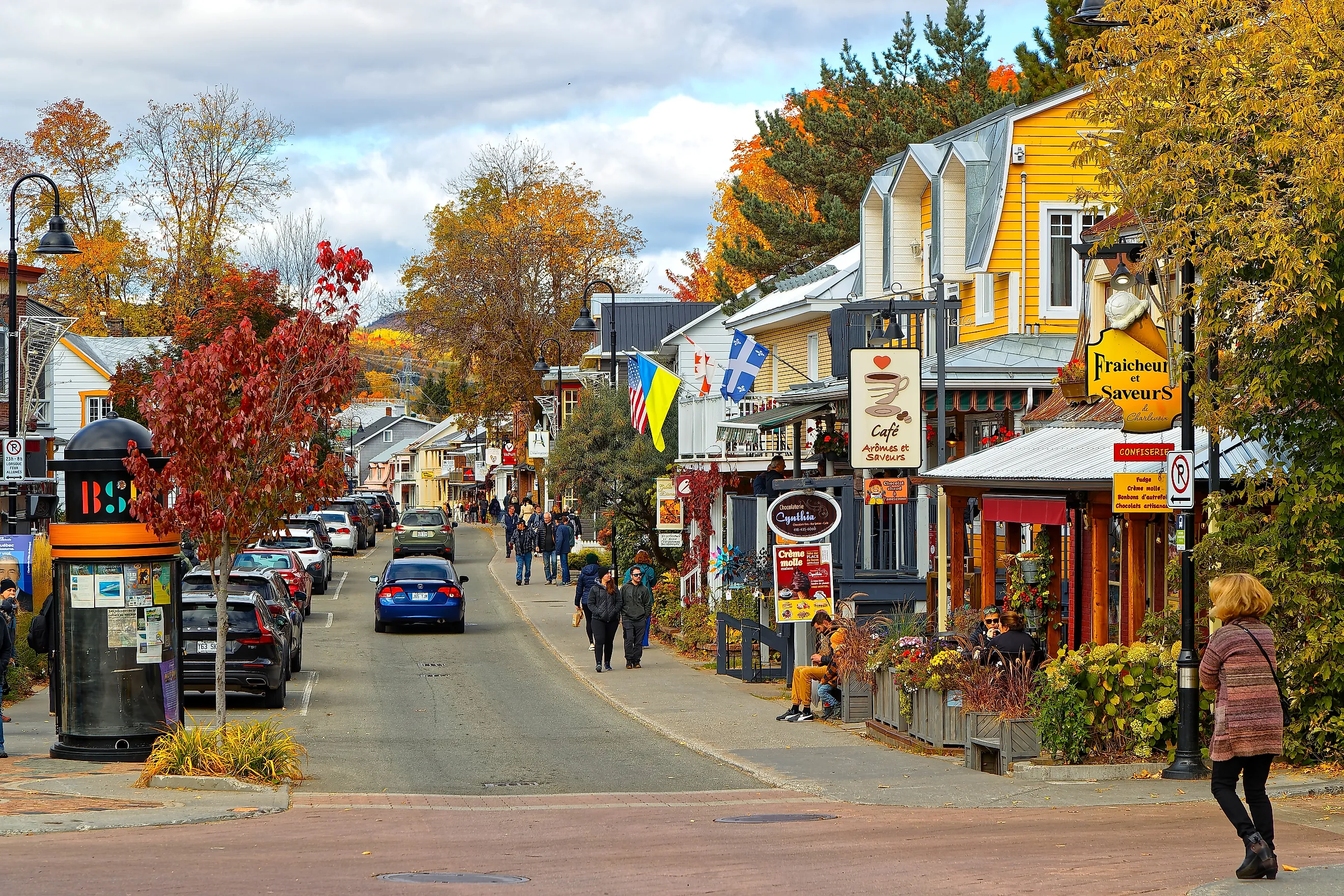
Baie Saint Paul's main street, Rue Saint-Jean-Baptiste, is one of those streets you can visit again and again and it offers something fresh and exciting every time. The street is lined with art galleries and microbreweries, but if you take the time to look closer, you'll find gems like the Hydromel Charlevoix, specializing in craft artisanal mead (honey wine), and honey-based spirits using local Charlevoix honey, or the Swiss-themed restaurant Ah La Vache ! which transports diners straight from rural Quebec to the Alps with authentic Swiss fondue and cured charcuterie boards. For dessert, try Fraicheurs et Saveurs, famous for its massive wall of rare, nostalgic candies and traditional soft-serve ice cream dipped in chocolate hard shells. Top it all off with a walk around Iris Art Gallery, just a few doors down, which showcases high-end, vibrant paintings. The street is also lined with small statues of the town's legendary figures and their interesting stories.
Magog

Running along the Baie de Magog, Magog's Rue Principale Ouest is the main thoroughfare of the town. Nearby is the Pointe-Merry Park, an expansive lakeside park that features lovely views of the greater Lake Memphremagog and Mount Orford in the distance. In summer, it is the perfect place to picnic while winter offers a popular skating trail. A few steps up Rue Principale Ouest is Bistro Kóz, which breaks away from the usual pub fare to offer creative, shareable Greek and Turkish-inspired tapas, grilled octopus, and signature cocktails (or mocktails). With a multi-level dining space, it's the perfect spot for dinner at sunset. Magog's oldest historic house, Maison Merry, built in 1821, is now a cultural-historical interpretation site and offers an interesting glimpse into the town's past.
Mont Tremblant

Many tourists associate Mont Tremblant as the ski resort's pedestrian village at the foot of the mountain but Rue de Saint-Jovite, the town's main drag, serves as the more authentic, day-to-day heart of the general community. Rue de Saint-Jovite is home to Le Petit Hameau St-Jovite, a charming open-air shopping and dining courtyard that features chocolate specialty shops, and there is often live music on the outdoor terrace throughout the year. The Espace Public is the town's open-air gathering spot and the Passerelle Du Ruisseau Clair serves as a pedestrian walkway and nature trail. In winter, the Espace Public features a family skating rink, while summer it's a place to cool down under water misters with live outdoor performances. As with most Quebec towns, the Catholic church anchors the main street, and Mont Tremblant is no exception. The Eglise de Saint-Jovite is an historic church that features a monumental bell and is a key landmark on Rue de Saint-Jovite.
Riviere-du-Loup

Rue Lafontaine is Riviere-du-Loup's main commercial and pedestrian street, but it's Parc des Chutes at the base of Rue Lafontaine that makes it unforgettable. This lovely urban park features a 108-foot (33-meter) high waterfall, surrounded by more than five miles (nine kilometers) of natural hiking trails, and a footbridge that offers perfect views of the falls. Further up the street is Café L'Innocent, a popular landmark in Riviere-du-Loup and a women-owned café that showcases local art while offering a globally inspired menu featuring premium coffee, specialty crepes, and vegan and vegetarian poutine. After all of that, walk it off along the rest of Rue Lafontaine and explore the street's architectural heritage on foot, where numerous plaques highlight the significance of the street's heritage buildings and points of interest.
Gaspé

Seeking shelter from a severe storm in mid-July 1534, explorer Jacques Cartier anchored his two ships in the safety of Gaspé Bay, and on July 24 he erected a cross claiming the territory for France. This historical landmark is now marked a short walk from Rue de la Reine, Gaspe's main street, and is one of the town's most popular monuments. Also at the site is an open-air museum that is a historical re-creation of downtown Gaspe as it looked in the early 1900s. Visitors can stroll through reconstructed heritage buildings like an old general store or walk along the waterfront boardwalk trail. Further up the street is Marche des Saveurs Gaspesiennes, a gourmet grocery market brimming with local cheese, fresh-baked bread, and other artisanal treats. Right next door is Paquebot Gaspe, a highly rated café that serves espresso, lattes, and breakfast sandwiches.
Salaberry-de-Valleyfield

Known for its unique nautical vibe, Rue Victoria runs parallel to the town's historic Old Canal (Vieux Canal). Once a textile and manufacturing town built around the local waterways and canals, the town's industrial heritage is captured beautifully in a restored church building now called MUSO, located near Rue Victoria. Salaberry-de-Valleyfield is also home to one of Quebec's largest marinas, Marina Valleyfield, where visitors can stroll along a lovely boardwalk pier that is lined with lively summer patios and microbreweries like the MVC Microbrasserie du Vieux-Canal, the perfect spot to watch the sunset and sip local brews.
Wakefield

Running alongside the scenic Gatineau River, Wakefield's Chemin Riverside forms the heart of this community in the Gatineau Hills. The historic Wakefield covered bridge, originally built in 1915 and rebuilt in 1997 after a fire, is the key attraction. Closed to vehicle traffic, the bright red bridge is popular with walkers and cyclists and is an iconic photo destination. A longtime fixture on Chemin Riverside that closed in 2020 and reopened under new ownership in 2025, The Black Sheep Inn is famous for its live music acts and has become one of the best intimate live venues in Canada. It holds a reputation from hosting exceptional musical acts ranging from local indie groups to established international stars, drawing crowds from across the National capital region. For nature lovers, a stop at Expéditions Wakefield & The River Walk Pathway is a must. Because Wakefield is a gateway to the Gatineau Hills and the Gatineau River, this outdoors shop rents canoes, kayaks, and paddleboards, and has everything needed for a day of hiking on the Gatineau Hills' extensive trail system.
Knowlton (Lac Brome)

Unlike many Quebec towns designed around a single strip, Knowlton is unique in that it features more of a New England-style layout thanks to its United Empire Loyalist roots. The main street of this Victorian village is Chemin Lakeside, which intersects with Chemin Knowlton to form the historic downtown core. With century-old red brick buildings and green squares, Chemin Lakeside is home to Lac-Brome Museum, which consists of several buildings including a 19th century academy and a fire station. It also features a rare Fokker D.VII German World War One fighter aircraft. For a quieter but equally informative experience, visit Brome Lake Books, a cozy independent English bookstore. Knowlton famously served as the inspiration for the fictional village of Three Pines in Louise Penny's Inspector Gamache mystery series, and this book shop is a primary pilgrimage site for fans, doubling as the inspiration for the bookstore in her novels. To round out the town's literary fame, Café Three Pines is the perfect place to stop for espresso, pastries, or a light lunch.
Tadoussac

The main street running through the scenic maritime village of Tadoussac is Rue du Bord-de-l'Eau (Waterfront Street). This historic street curves along the edge of Tadoussac Bay, offering splendid views of the St. Lawrence River. Dominating the street is Hotel Tadoussac, a grand heritage hotel that is instantly recognizable with its white façade, bright red roof, and massive maritime lawn. Originally constructed in 1864 and rebuilt in the 1940s, it is the place to stay while visiting Tadoussac. Just down the street is the Tadoussac Chapel, sometimes called Chapel of the Indians, a historic landmark built between 1747 and 1750, and is the oldest wooden church in North America. Inside is a number of exhibits showcasing the early Jesuit missions and fur-trading relationships with the local Indigenous people. Located at the end of the waterfront strip near the docks is the Marine Mammal Interpretation Centre. This museum serves as the perfect primer before going on a whale-watching excursion on the St. Lawrence. It features a large collection of whale skeletons, interactive audio recordings of marine songs, and naturalists eager to explain the ecosystems of the Saguenay-St. Lawrence Marine Park.
Percé

The scenic seaside village of Percé features seaside hotels, fish taverns, and art galleries along its main street, Route 132, locally called Rue Principale. The first stop for visitors is often the Percé UNESCO Global Geopark, located close to Rue Principale. Percé Geopark Pavilion serves as the entry point to the geological wonder called Percé Rock just offshore from the coast of Percé. Visitors can experience an immersive multimedia indoor exhibit before heading up the mountain trails to walk out on the suspended glass platform, which sits about 656 feet (200 meters) above sea level with great views of Percé Rock and the entire bay. The Promenade de la Grave & The Waterfront Boardwalk parallels Rue Principale and stretches right across the shoreline. It features plenty of benches to rest, a lookout tower, and access to the main beach and wharf. Beside the wharf is Musée Le Chafaud, a beautifully preserved 19th century cod-drying house that celebrates the area's maritime history. The museum hosts exhibitions featuring historic fishing artifacts and exhibits detailing the unique history of the Gaspé Peninsula.
Saint-Michel-de-Bellechasse

Widely known as the White Village, this community features an impressive concentration of 19th century neoclassical white wooden homes. The homes were painted white so that early sailors could navigate their way back to shore safely. The main street running through Saint-Michel-de-Bellechasse is Rue Principale, and while the white houses are a key attraction, so are the town's churches. The Church & Presbytery of Saint-Michel is the town's center. The presbytery, built in 1739, stands as one of the oldest preserved rectories in all of North America. In front of the church stands a wooden statue of Saint Michael by renowned sculptor Louis Jobin, and inside, visitors can view a collection of exhibits. Perched on a small hill just a short walk down Rue Principale is Chapelle Notre-Dame-de-Lourdes, a small but highly evocative neo-Gothic church built in 1879. Surrounded by trees and manicured gardens, this miniature chapel is one of the most popular sites in Saint-Michel-de-Bellechasse. At the lower end of the village center is the Marina and Quai de Saint-Michel-de-Bellechasse, which offers some of the nicest views of the St. Lawrence River estuary and rolling hills of Ile d'Orleans.
Eleven Unforgettable Experiences
Whether you are chasing history at the birthplace of Canada in Gaspé or listening to some legendary live music at Wakefield's The Black Sheep Inn, each of these 11 main streets tells an historical story while living enthusiastically in the present. While the venues add to the charm, it is the warm hospitality and French culture and people that leave these places in your heart and mind long after you leave. A journey through Quebec's towns and villages is often a reminder that the best travel experiences are found when slowing down and walking these streets on foot.