Why Copperheads Den Under Porches And Sheds
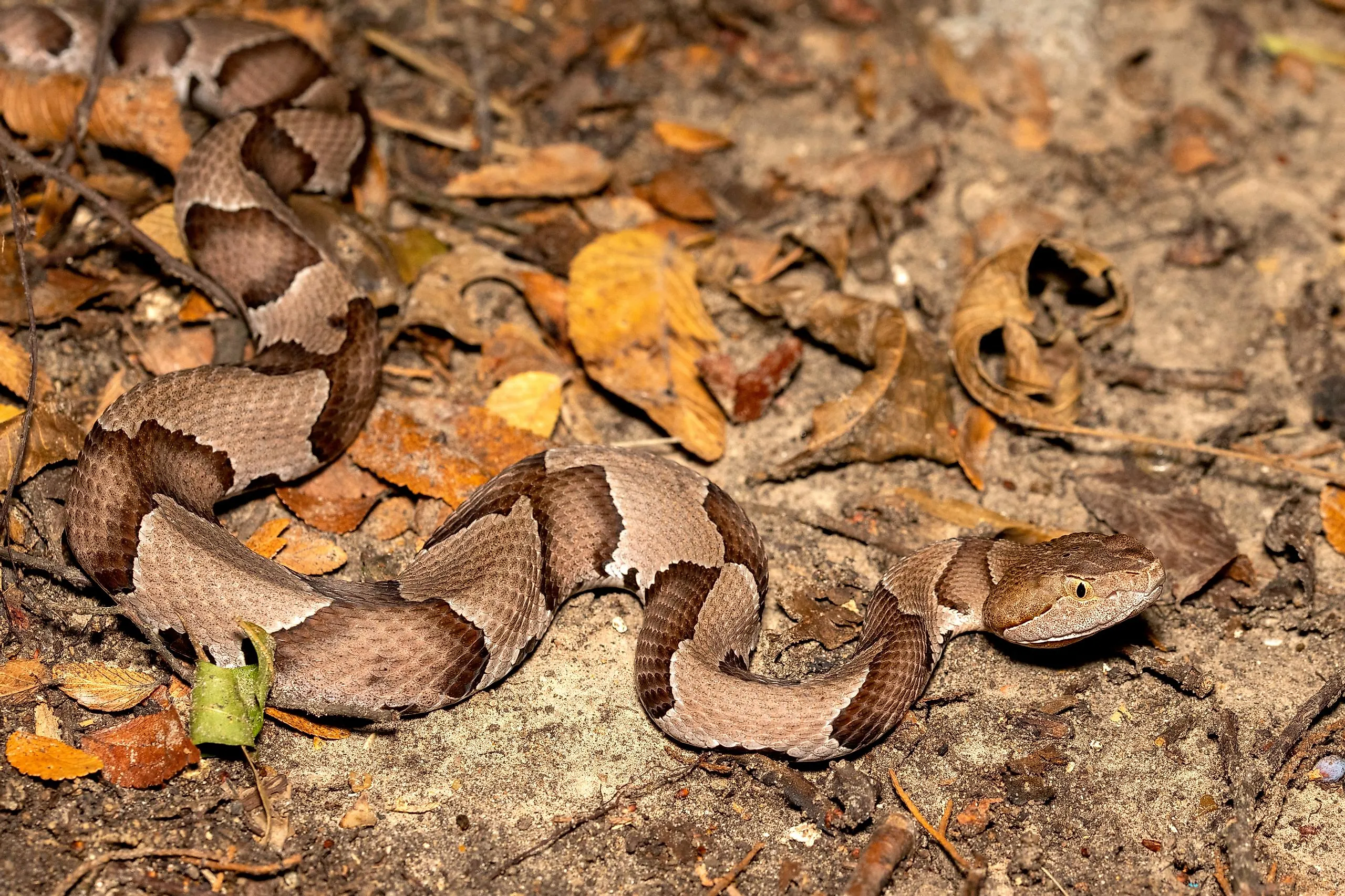
A copperhead hibernaculum needs three things: a space below the frost line, a temperature that stays above freezing, and a south or west-facing aspect that catches winter sun. A porch on the sunny side of a house delivers all three by accident. So does a shed on a concrete pad, a crawl space, and the void under a deck. The snakes are not improvising shelter when they move in. They are using something that meets the specification exactly, and because copperheads return to the same den year after year, a structure that works once will be used again.
The Specification Is Narrow

Overwintering sites are not interchangeable, which is why the same few places get used across generations out in wild country.
The space has to sit deep enough to be below the frost line and still stay above freezing. It needs an aspect facing south or west, because that catches the most sun through the shortest days. And it needs crevices rather than open volume, so the snake can wedge itself somewhere stable.
In a landscape that is mostly fields and lawns, almost nothing qualifies. A crawl space under a heated building qualifies easily.
A Porch Is Better Than A Rock Pile

Compared with the natural options in most suburban areas, built structures are a straightforward upgrade. Documented copperhead hibernacula include rock crevices, abandoned mines, caves, hollow logs, stumps, rodent burrows and the foundations of buildings. Of those, only the last is common in a developed landscape.
A porch also offers something a rock outcrop does not, which is a heated building on top of it. The floor above a crawl space leaks warmth downward all winter, which keeps the space more stable than anything natural nearby.
They Come Back

This is the part that changes how the problem should be handled, and most people discover it the following autumn.
Copperheads show strong fidelity to overwintering sites, returning to the same crevice year after year, and researchers describe these dens as annual meeting places used by the same individuals across seasons. The same den can be used by successive generations.
So a snake found under a shed in October is not a one-off visitor. It is an animal that intends to come back, and that may have been coming back for several years without anybody noticing.
It Is Rarely Just One

Copperheads den communally, which is unusual among snakes and matters a great deal here. Dozens may gather in the same site, and they regularly share it with timber rattlesnakes, black rat snakes, racers and garter snakes. The Smithsonian's National Zoo describes copperheads as social snakes on exactly this basis.
A crawl space being used as a hibernaculum is therefore unlikely to contain a single animal. It is more likely to contain several, possibly of more than one species.
Sealing In Autumn Is The Wrong Move

The instinctive response to finding a den under the porch is to close the gap, and when you do it matters enormously.
Wildlife exclusion guidance is consistent on the principle: sealing an opening while an animal is actively using the space traps it inside. Humane societies advise never installing a permanent barrier until you are certain nothing remains, and checking repeatedly afterwards.
Seal a copperhead den in November and the snakes do not leave. They stay under the structure all winter and emerge in spring into a space with no exit, which is a considerably worse situation than the one being solved.
Summer Is The Window

The useful timing follows directly from the animal's own calendar.
Copperheads are generally dormant from November to April in northern populations, with the active season running from March or April to early November further south. They leave the den in spring and spend summer in their hunting range, which is often some distance away.
Mid-summer is therefore when the space is most likely to be empty, and that is the time to do the work. Sealing in July prevents a return in October.
How Small The Gap Can Be

Exclusion fails most often because the inspection was not thorough enough. Gaps of a quarter inch or larger are sufficient, which includes foundation cracks, utility penetrations, crawl space vents, gaps under doors and the lattice skirting around most porches. Hardware cloth and steel wool close them. Lattice alone does not.
For sheds and decks the standard approach is galvanized mesh attached to the lower edge and buried, angled outward a foot or two, which also stops anything digging underneath.
Removing The Reason Works Better

Exclusion treats the symptom, and the reason the structure was attractive usually sits a few feet away from it.
Copperheads follow prey, and a yard with heavy rodent activity is a yard worth denning in. Spilled birdseed, pet food left out, unsecured bins and dense clutter all feed the mice that feed the snakes.
Clearing woodpiles, thinning mulch and securing food sources reduces the draw. A structure with no rodents around it is simply a cold space under a floor.
What Not To Do

Two common responses make things worse rather than better. Going in after the snake is the first. Most copperhead bites happen when somebody attempts to handle, catch or kill one, and a crawl space is the worst possible place to attempt any of it. If a venomous snake is confirmed under a structure, the job belongs to a licensed removal service, and some state wildlife agencies will handle it.
Chemical repellents are the second. They have a poor record against snakes generally, and none of them address the cover and prey that made the site attractive.
The Short Version
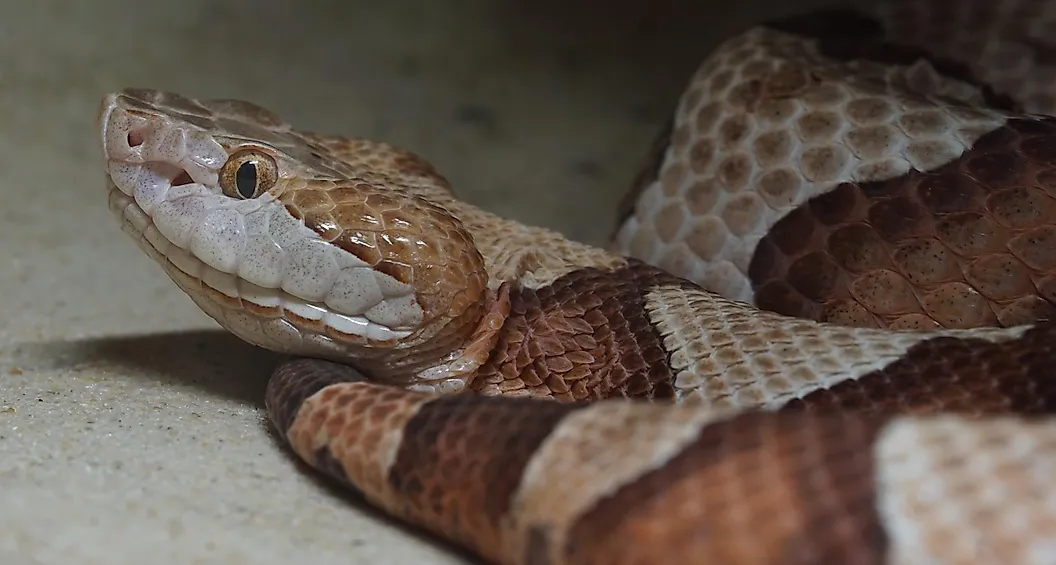
Copperheads den under porches and sheds because those structures meet the specification for a hibernaculum better than anything natural in a developed landscape: below the frost line, above freezing, warm from the building above and full of crevices.
They return to the same site annually, they rarely arrive alone, and sealing the gap in autumn locks them in rather than keeping them out. The work goes in during July, and it works considerably better if the rodents have gone first.