Where Trout Go When Rivers Freeze
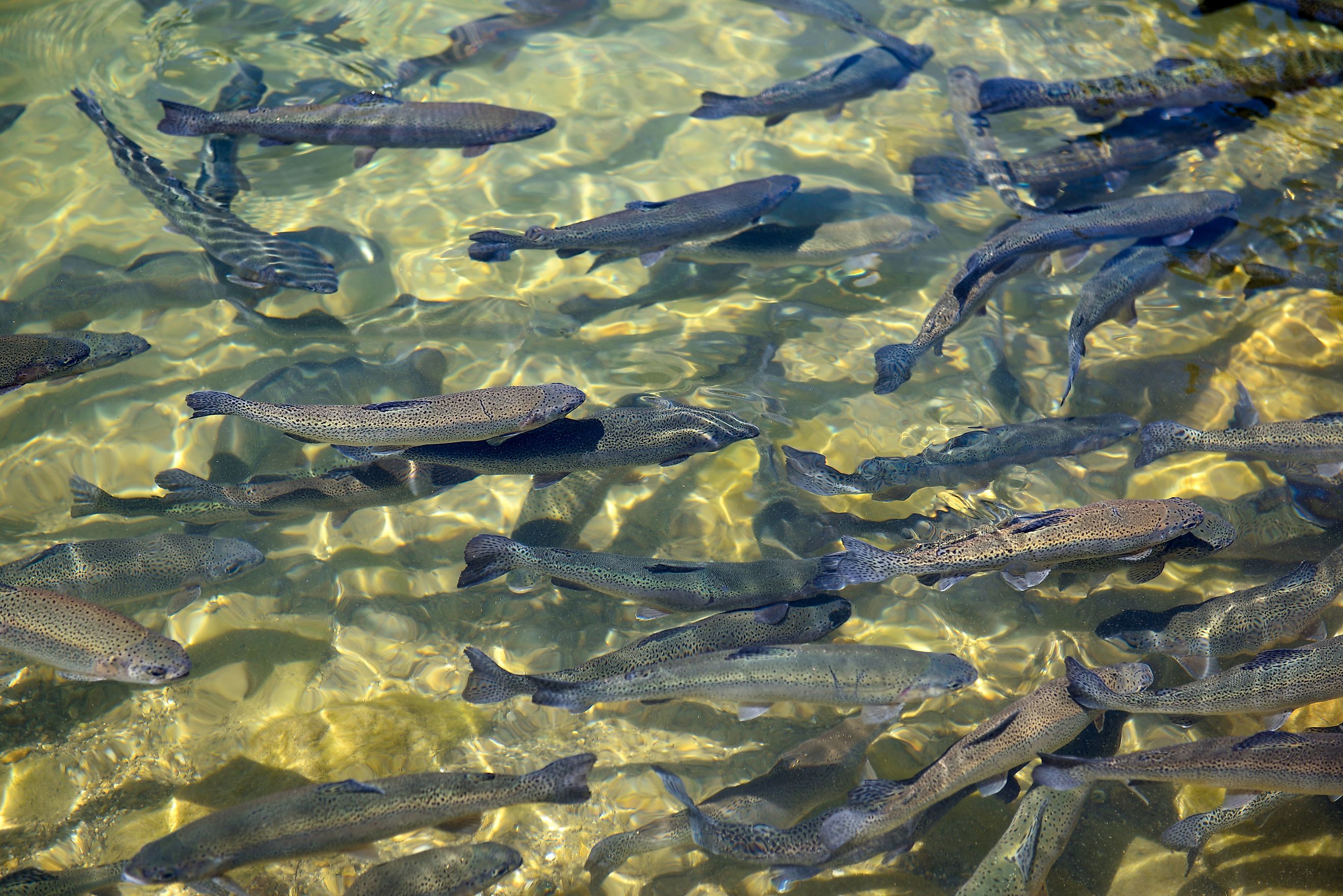
On Idaho's Henry's Fork, one of the most famous trout rivers in the West, the fish have a winter routine. Once they settle into their cold-weather homes in mid-November, they barely move until late February, according to researchers with the Henry's Fork Foundation. Most rivers never freeze solid. Instead, ice forms in layers on the surface, along the bottom, and as slush drifting through the current. Each kind changes where a trout can safely spend the winter. To survive, trout leave their summer feeding spots for deep pools, spring-fed stretches, and beaver ponds. There they slow down their bodies and wait for spring.
Rivers Rarely Freeze Solid

Moving water is hard to freeze all the way through. On most trout rivers, ice forms in three main ways. Surface ice is the familiar sheet that spreads across slow pools and along the banks, and water keeps flowing underneath it. Frazil ice is slush made of tiny ice crystals that forms in fast, turbulent water on bitterly cold nights, when the water is chilled just below freezing. When that slush sticks to rocks on the riverbed, it builds up into anchor ice, which can coat the bottom and fill the spaces between stones. On some rivers, ice can even pile up into dams that block the channel and push water out onto the floodplain.
Surprisingly, surface ice is often good news for trout. Henry's Fork researchers have found that trout actually use it as cover, hiding beneath the ice from eagles, otters, and other predators. The real danger comes from frazil and anchor ice, which can clog the gaps in the riverbed where small trout hide and suddenly break loose, scouring the bottom.
Deep, Slow Pools

Beautiful sunny winter day along the Bitterroot River in Montana.
As water cools in the fall, trout begin moving toward deep, slow water. Adult trout look for pools with large cobbles, boulders, or fallen logs, where they can rest out of the current and hide from predators. In Montana's Bitterroot River drainage, researchers at Montana State University tracked bull trout and cutthroat trout traveling up to about 3 kilometers (2 miles) in early fall to reach deep pools with woody cover or undercut banks. Once there, the fish stay close to the bottom, where the current is weakest, and conserve as much energy as possible.
Spring-Fed Hideouts

Deep pools are not always safe. In the Bitterroot study, frazil and anchor ice eventually formed in many of the pools and filled them in, forcing trout to make a second, longer move of several kilometers to stretches fed by groundwater. Water that seeps up from underground stays at a steady temperature all year, so it is slightly warmer than the river in winter and keeps ice from forming. In a Wyoming foothills stream studied by the US Geological Survey and the University of Wyoming, groundwater kept the water just above freezing and held a stretch of the channel free of ice for about 250 meters (820 feet) downstream. Researchers have found that winter conditions for trout depend more on how much ice forms below the surface than on how cold the air gets.
Beaver Ponds

Beaver ponds are some of the best winter refuges a trout can find. Behind a beaver dam, the water is deep and still. A stable cap of ice protects it, often topped with an insulating layer of snow. In the Wyoming study, both cutthroat and brook trout increasingly moved into beaver ponds as winter went on, where conditions stayed steady while pools elsewhere in the stream filled with ice. That makes beavers quiet allies for trout, one reason wildlife managers in many western states now see healthy beaver populations as good news for fish.
Downstream To Bigger Water

Not every trout can find a spring or a beaver pond close to home, so many simply move downstream. According to the Ausable River Association in New York, stream trout most often head toward quieter, slower water as winter sets in. Some leave small tributaries for larger rivers, lakes, or reservoirs where the water is deeper and less likely to fill with ice. Some of the most reliable winter trout water in the country is found below dams. Water released from the bottom of a deep reservoir stays at a fairly steady temperature year-round, so these stretches, called tailwaters, often stay open and ice-free even in the coldest months. That is why rivers flowing out of big reservoirs, such as the Green River below Flaming Gorge Dam and the San Juan River below Navajo Dam, are famous for winter fishing.
Slowing Down To Survive

Trout are cold-blooded, so their body temperature drops with the water's. In winter, their metabolism slows dramatically, and they need very little food. That is fortunate, because the insects they eat become much scarcer. The trade-off is that trout in cold water cannot move quickly. They react more slowly to predators and to sudden changes in flow, which is why safe, stable habitat matters so much. Fish that start the winter in good condition and find a secure spot tend to survive well. Those that end up in poor habitat face higher odds of dying before spring, a natural part of how wild trout populations rise and fall.
Why Winter Habitat Matters For Anglers
For many trout rivers, winter is the bottleneck. On the upper Henry's Fork, researchers have found that the amount of good winter habitat for young trout, not food or spawning areas, limits the size of the whole population. That is why river managers pay close attention to winter flows below dams. On the Henry's Fork, for example, boosting winter releases from Island Park Reservoir has been linked to more young trout surviving into the next year. For anglers, winter trout fishing is possible, but it takes patience. Fish cluster in deep pools and spring-fed runs, feed lightly on tiny insects like midges, and are easily stressed, so many anglers choose to fish gently and release their catch quickly.
Waiting For Spring
When rivers freeze, trout do not disappear. They gather in the deepest pools, the warmest springs, and the quiet water behind beaver dams, then slow their bodies to a near standstill and wait out the cold. When the ice breaks up and the days lengthen, they spread back into the riffles and runs to feed and spawn, ready to start the cycle again.