Why Great Lakes Freighters Are Painted The Colors They Are
One Great Lakes freighter has worn at least three different hull colors. Another has carried the same two stripes on its bow since 1990. A carferry on Lake Michigan went 40 years without a fresh paint job, then needed more than 800 gallons to get its old look back.
Watch the boats pass Duluth's Canal Park long enough, and the colors stop looking random. Red hulls. Black hulls. Brown above the waterline on one, gray and black slashes across the bow on another. Black smokestacks banded in orange. A red ship working the ice that hauls no cargo at all. The oldest of those colors was meant for an animal that has never lived in the Great Lakes. The rest have reasons of their own, and a boatwatcher can learn to read them from the pier.
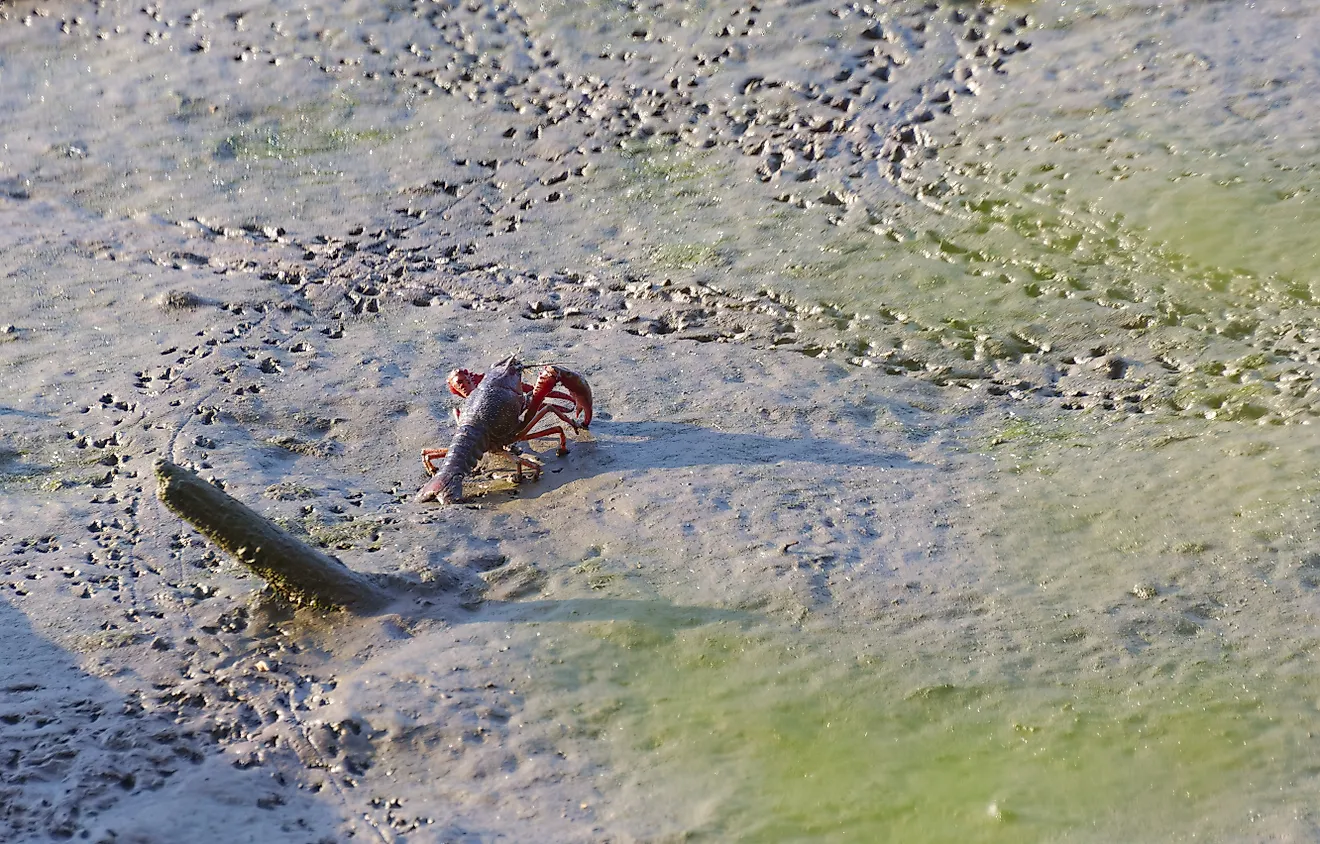
Copper Paint Made Ship Bottoms Red to Stop Shipworms

In 1761, the British Royal Navy began covering its hulls with copper plating to keep out shipworms. Copper later moved from sheet metal into paint, and in 1863 two American business partners, James Tarr and Daniel Wonson, filed a patent for a copper-based paint. The copper oxide in that kind of antifouling paint is typically red.
The color outlasted the wooden hull. Steel ships kept red bottom paint, and the coatings industry still describes red underwater hulls as a tradition that continues today. On the Great Lakes, where shipworms do not live, the animal that fouls hulls is the zebra mussel, first found in the lakes in the 1980s.
A Hull Color Tells You Which Company Owns the Ship

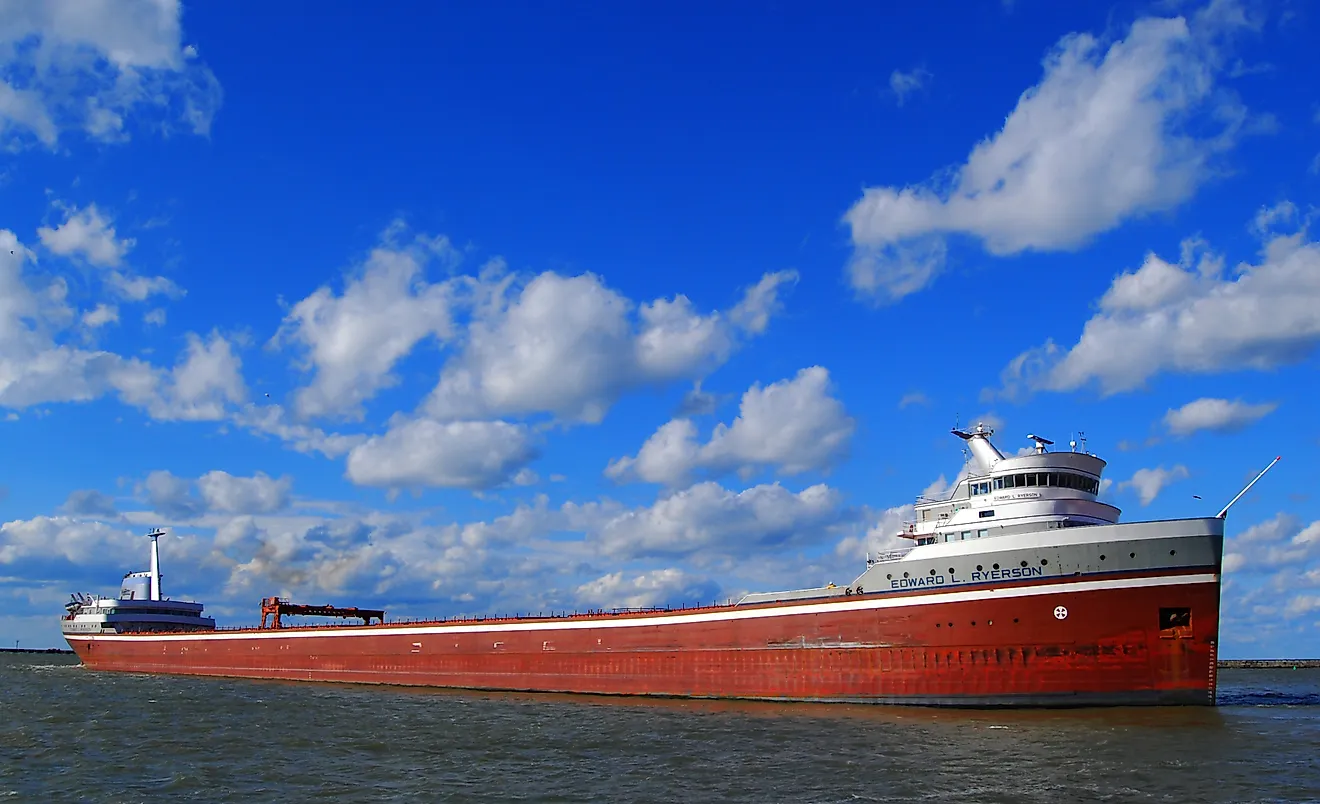
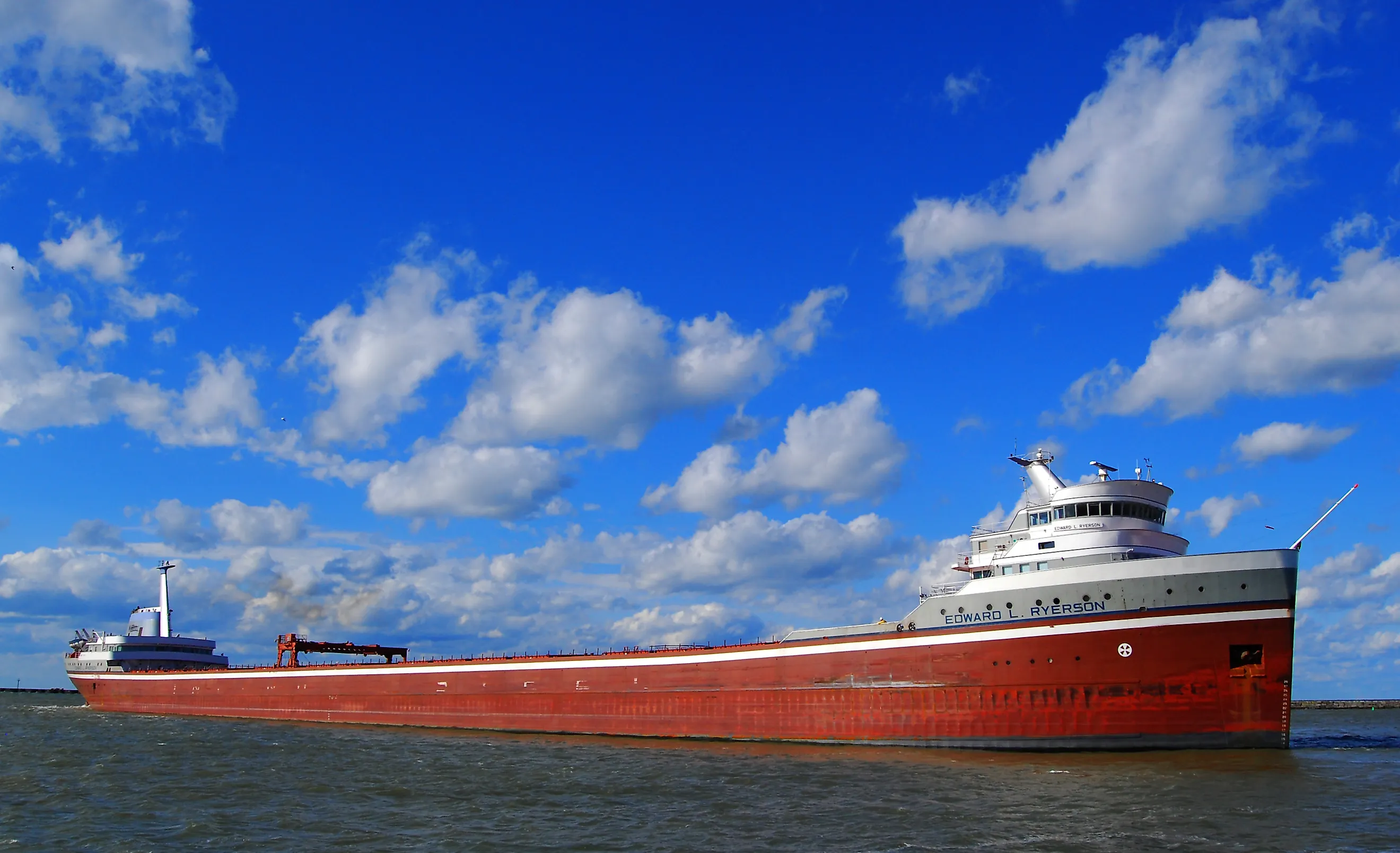
The Edwin H. Gott, a 1,004-foot ore carrier, has a red hull with a thick, diagonal gray stripe and a thinner black stripe across the bow. Great Lakes Fleet ships carry that scheme, and the Gott received its stripes at the start of the 1990 season, when the fleet adopted it. The stripes joined two old color codes into one. U.S. Steel's Pittsburgh Steamship Company, formed in 1901, painted its hulls red, while the Bradley Transportation Company painted its ships gray. The two fleets merged in 1967, and each kept its own look for another 23 years.
The older code is still on display in Duluth. The William A. Irvin, which sailed for Pittsburgh Steamship for its entire career, is now a museum ship there, and its tour begins and ends at the red hull.
Smokestacks Worked as Company Trademarks

On steamships of every kind, the funnel was one of the few parts of a ship a company could use to set its vessels apart, and its colors became an early form of trademark. Pittsburgh Steamship's boats were nicknamed "tin stackers" for their silver smokestacks. In the winter of 1938 to 1939, 22 of the 27 boats tied up in Milwaukee's mooring basin were tin stackers, so a glance at the stacks showed how much of the harbor belonged to one steelmaker.
The marks still work that way. Interlake Steamship ships carry a black smokestack with an orange band. The black stack with a red C belonged to Cleveland-Cliffs, and it disappeared from the lakes after that fleet shrank in the 1980s. Boatwatchers bring binoculars to read the logos and markings on the stacks, and the annual Know Your Ships field guide helps match them to fleets.
A New Owner Brings a New Coat of Paint

Because the colors belong to the company, a sale usually sends a ship to the paint shop. Cleveland-Cliffs sold the Edward B. Greene to Ford's Rouge Steel in 1985, and over the winter of 1984 to 1985 the ship was repainted in Ford colors at Fraser Shipyards in Superior, Wisconsin, and renamed Benson Ford. It later joined Interlake and now sails as the Kaye E. Barker. In January 2012, Canada Steamship Lines had the Spruceglen in dry dock at Halifax, Nova Scotia, being repainted in CSL red, the hull color of its domestic fleet.
The Kaministiqua shows how often one hull can change. It started out yellow and orange. Renamed Lady Hamilton in 1996, it had its hull repainted black and its funnel painted in the colors of Fednav, the company chartering it. In November 2006, as the Voyageur Pioneer, it was painted bright blue in Hamilton, Ontario. Lower Lakes Towing bought it in 2007, renamed it Kaministiqua in 2008, and painted its cabins and stack in Lower Lakes colors. In February 2026, Algoma Central agreed to buy Lower Lakes' Canadian operations and six ships, the Kaministiqua among them.
Tradition Keeps Some Colors the Same for Decades

Interlake's newest ship went into service in 2022 in colors its fleet already wore. The 639-foot Mark W. Barker has the company's red on the hull and its brown on the freeboard, the part of the hull above the water. Sherwin-Williams, which supplied the coatings, describes Great Lakes shipping as "a contact sport," and the hull coating went on in two thick coats directly over the steel. The project team expects the ship can operate for a decade before it needs a dry dock.
Older ships get the same colors back when they are repainted. Much of that work happens in winter, when the shipping season ends. The U.S. Coast Guard inspects commercial vessels every five years in dry dock, and at Fincantieri Bay Shipbuilding in Sturgeon Bay, Wisconsin, the yard blasts and paints both cargo holds and hulls. Over the winter before its 2022 season, the Lake Michigan carferry Badger was sandblasted and repainted in its signature black and white with red and gray stripes. It was the ship's first updated paint job in 40 years, and it took more than 800 gallons.
The Coast Guard Paints Its Hulls by the Job They Do

A red hull on a Coast Guard ship means something different from red on a laker. The Coast Guard color-codes its cutters by function and size. Buoy tenders have black hulls, and the service's icebreakers have red ones, including the Mackinaw, the Great Lakes icebreaker based in Cheboygan, Michigan. Each cutter also carries the diagonal "racing stripe," which the Coast Guard began adding to all of its vessels in April 1967 so the public could easily identify a Coast Guard ship.
Red turns out to mean three different things on the same water. Below the waterline, it is a habit that began with copper paint against saltwater worms. On a Great Lakes Fleet ore boat, or on the Spruceglen after its 2012 repaint, it is a company color. On the Mackinaw, it marks an icebreaker. That is why the hull alone rarely settles which ship is passing. The stripe at the bow narrows it to a fleet, the band on the stack names the company, and the Edward B. Greene and the Kaministiqua show that both can change with a single sale. The final check is set by federal rule. A U.S.-documented ship must carry its name on both sides of the bow and on the stern, in letters at least 4 inches tall, with its hailing port on the stern, so a laker that has changed colors still shows its name to anyone on the pier with binoculars.