6 Most Snake-Filled Bodies Of Water In Alberta
Between the alpine lakes of the Rocky Mountains and the rivers running through the prairies, several snake species call Alberta home. Only one is venomous, the prairie rattlesnake. Wetland edges around Waterton Lakes are prime garter snake territory, and the banks of the Peace River offer good denning sites. Rattlesnakes are less widespread but still turn up in certain river valleys across southern Alberta. The six bodies of water below across Alberta are ideal snake habitat.
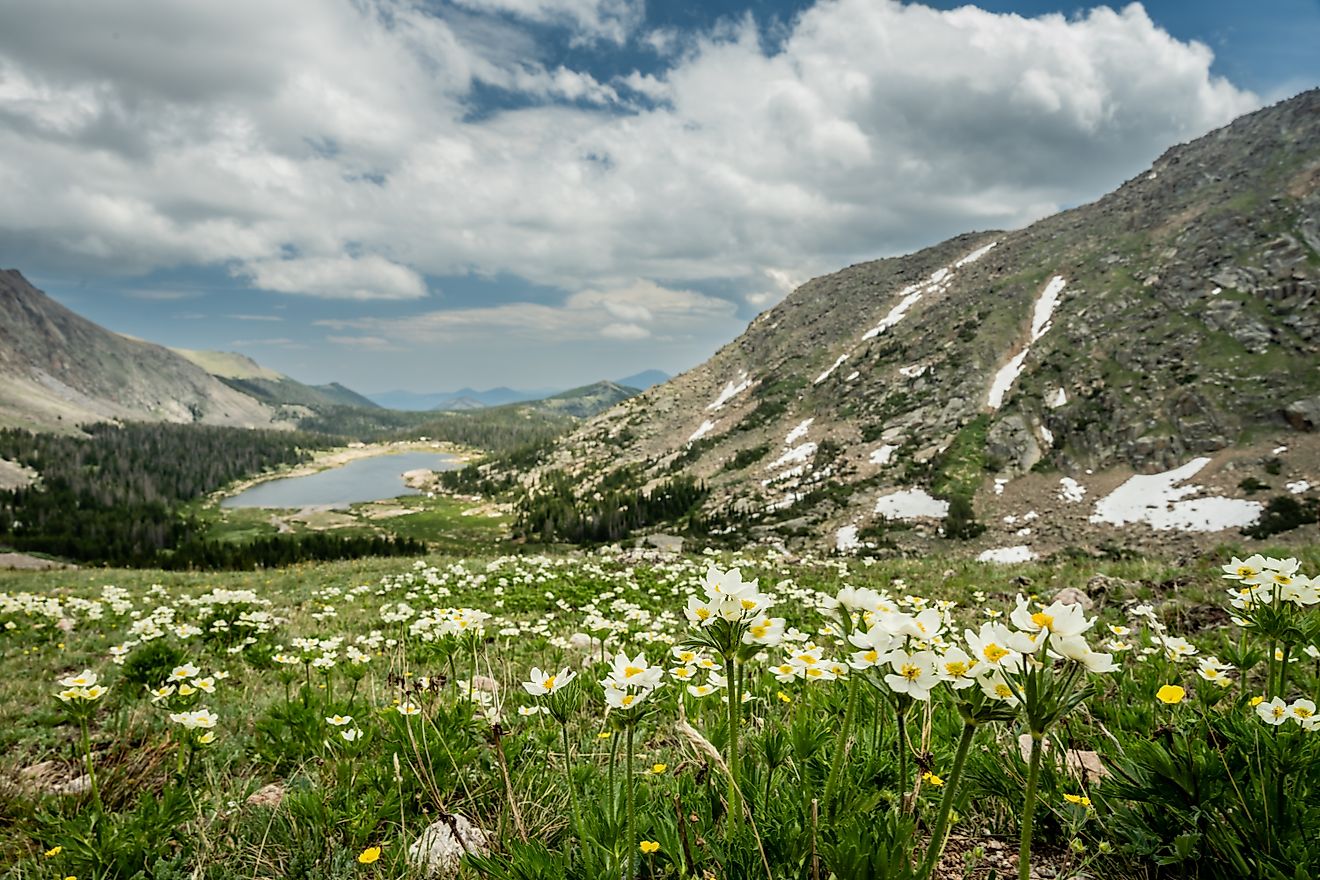
Waterton Lakes

Waterton Lakes is a chain of lakes comprising Upper, Lower, and Middle Waterton Lakes, as well as the Maskinonge wetland. Upper Waterton Lake is among the deepest lakes in the Canadian Rockies at 148 meters (487 feet) at its deepest point. The lake stretches between Alberta and across the United States border into Montana. The Waterton Lakes chain in Alberta is contained within Waterton Lakes National Park. Together, the lakes cover close to two-thirds of the park’s total water surface area.
The wandering garter snake (Thamnophis elegans vagrans) and the red-sided garter snake (Thamnophis sirtalis parietalis) are present within the ecosystems of Waterton Lakes National Park. They are found in a variety of habitats, although they prefer wetlands, ponds, lakes, and rock piles. The wandering garter snake usually grows to about 50 to 90 cm (20 to 35 inches) long and has a slim body with faint stripes that help it blend into wetland vegetation.
Sylvan Lake

Sylvan Lake is located in central Alberta, roughly midway between Calgary and Edmonton. The lake has a surface area of over 42 square kilometers (16.2 sq mi), with around 36 kilometers (22.3 mi) of shoreline. It features a 1.6-kilometer (1-mile) long beach, as well as boat launches and permits for power boating, waterskiing, and swimming. It is one of the most popular recreational areas in Alberta, attracting over 1.5 million visitors each year.
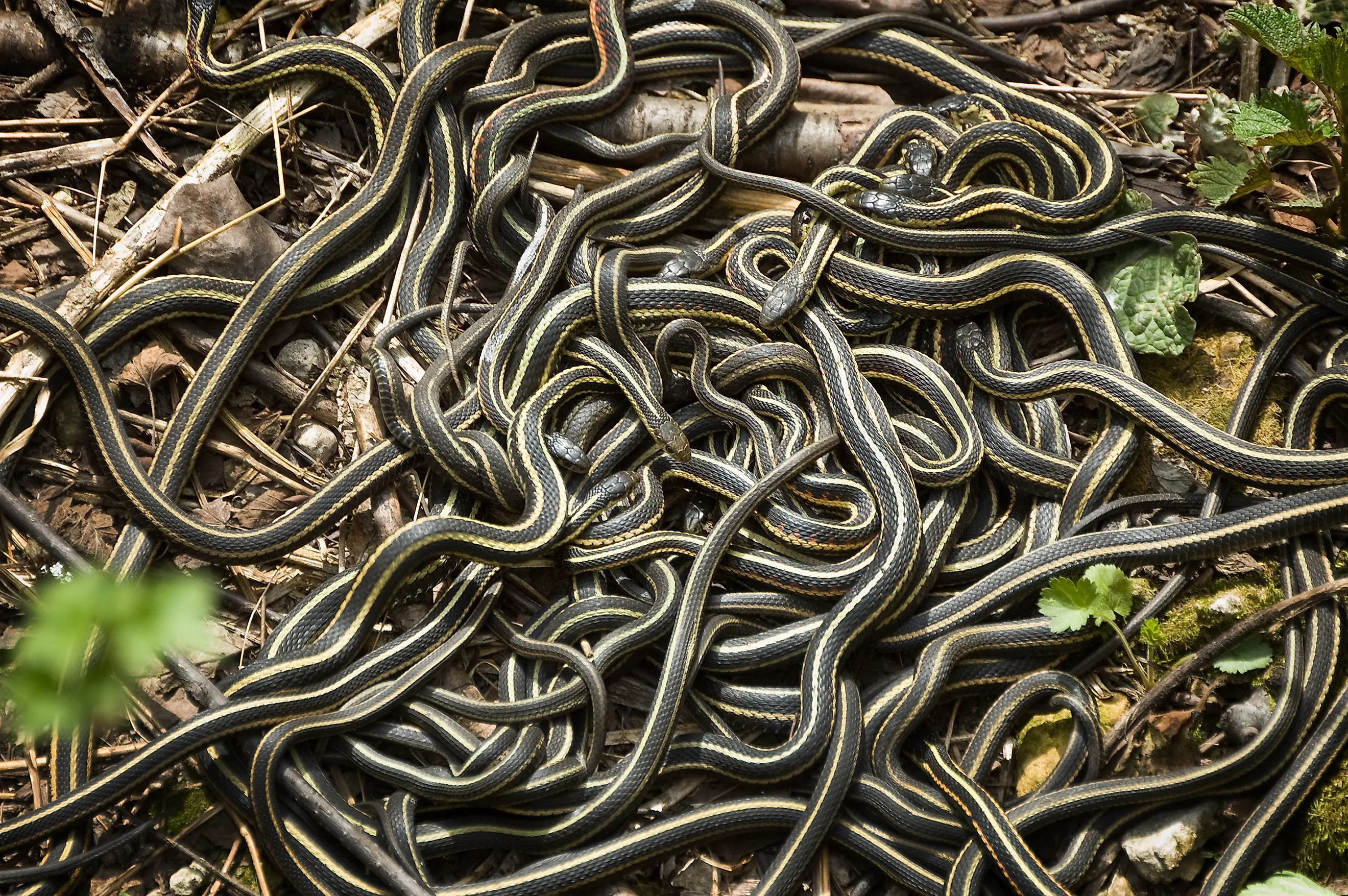
Sylvan Lake also attracts many garter snakes. In fact, there are so many garter snakes near Sylvan Lake that it was originally called "kinabik" (Snake Lake) by the Cree because of the high concentration of garter snakes in the area. Garter snakes are the most common snake in Alberta. Furthermore, while most snakes live solitary lives, garter snakes gather communally to hibernate in the hundreds. Garter snakes here are relatively small, typically around 45 to 75 cm (18 to 30 inches), but they often emerge in large groups from shared dens in spring.
Peace River

The Peace River originates in the Rocky Mountains of British Columbia before stretching across the border into Alberta. From there, it flows northeast until its confluence with the Athabasca River in the Peace-Athabasca Delta, which then forms the Slave River. The Peace River is the largest watershed within Alberta, accounting for roughly 28% of the provincial landmass. The south-facing slopes of the Peace River Valley contain some of the last remaining regional habitat for prairie and parkland vegetation.
Red-sided and wandering garter snakes both den along the foothills of the Peace River Valley. Garter snakes will use a variety of areas as hibernacula, including old wells, retaining walls, old animal burrows, and river valley slumps. The south-facing slopes of the river valley increase the warmth of dens. Garter snakes often share their hibernacula with other snake species, returning year after year to the same denning site. Red-sided garter snakes can reach 60 to 100 cm (24 to 39 inches) and are easy to recognize by their bright red side markings running along their bodies.
Bow River

The Bow River’s headwaters are at Bow Lake within Banff National Park. It flows southeast through the park, past the communities of Lake Louise, Banff, and Canmore. As the river exits the park, the Bow River turns east and flows through Calgary, the largest settlement along its banks. After flowing for a total distance of 587 kilometers (365 miles), the Bow River merges into the Oldman River to form the South Saskatchewan River.
As spring temperatures increase, garter snakes emerge from their winter dens. They are common throughout Alberta and are particularly abundant near the Bow River, where they live in grassy and wetland ecosystems. Their presence along the Bow River is a sign of the seasons changing. They will feed on other animals living near the river, such as slugs, insects, small rodents, fish, and amphibians. These garter snakes are fast-moving and lightweight, usually under 150 grams, which helps them quickly escape into grass or water when disturbed.
Red Deer River

The Red Deer River’s headwaters begin in the Rocky Mountains of Banff National Park, near Lake Louise. The river is primarily fed by snow melt, partially by glacier melt, and by multiple tributaries. The river flows for a total of 724 kilometers (450 miles) before entering Saskatchewan, where it joins the South Saskatchewan River. The banks of the river are composed of fractured sandstone bedrock, which provides various snake species with places to hibernate.
The red-sided garter snake is the most common snake spotted along the river, particularly in the upper reaches. Downstream in the lower badlands, it is not uncommon to see bull snakes (Pituophis catenifer sayi) and prairie rattlesnakes (Crotalus viridis), which is the only venomous snake found in Alberta. Bull snakes in this area can grow much larger, often reaching 120 to 180 cm (4 to 6 feet) long, making them among the longest snakes in Alberta. They were observed at a site on the Red Deer River near Drumheller, which is the northern extreme of their range. One study found that at least 30 adult bull snakes utilize a single bluff for nesting and denning, so it is best to avoid any you spot.
South Saskatchewan River

The South Saskatchewan River is a major tributary of the Saskatchewan River. The confluence of the Bow and Oldman Rivers forms it. The river flows east to Medicine Hat before crossing into Saskatchewan, where the Red Deer River joins it. The river flows into Lake Diefenbaker, a reservoir formed by the Gardiner Dam, before continuing its course through Saskatoon. Finally, it reaches its confluence with the North Saskatchewan River, which marks the beginning of the Saskatchewan River.
Along the river’s course, particularly in Medicine Hat, caution should be exercised for the potential presence of rattlesnakes. The prairie rattlesnake typically measures around 90 to 120 cm (3 to 4 feet) and uses its rattle as a warning signal before striking. While rattlesnakes may be most associated with desert habitats, prolonged heat can actually dry them out. During the bouts of hot weather in the summer, rattlesnakes may seek shade or cover in gopher holes. Beyond rattlesnakes, the river is also home to garter snakes and bull snakes in Alberta.
Alberta’s Snake-Filled Bodies of Water
While snakes are feared by many, they actually play an integral role in maintaining a healthy ecosystem by serving as both predators and prey. They manage pest populations such as slugs, insects, and rodents, and are consumed by larger predators such as hawks, ravens, and weasels. So, when the weather gets warmer, and you see snakes slithering along the banks and edges of Alberta’s bodies of water, it actually signifies a healthy ecosystem. While many of the bodies of water on this list are within national parks frequented by people, snakes would rather peacefully move away from people than engage in conflict with them.