5 Snake-Filled Waters In Missouri
Missouri has roughly 43 species of snakes, comparable to Louisiana and Florida, making it one of the snakiest states in the union. Helping serpents thrive in the Show-Me State are its waterways. Snakes get hydration, habitat, prey, and transportation from Missouri's hundreds of lakes and more than 110,000 miles of running water, including the two longest rivers in North America. See which of those waterways and water bodies are tops for Missouri snakiness.
Ozark National Scenic Riverways

Formed by the federal government in 1964, the Ozark National Scenic Riverways (ONSR) is the first national park area designated to protect a river system. This system comprises the Current and Jacks Fork rivers as they flow for 134 miles through 80,000ish acres of the Missouri Ozarks. Besides the rivers themselves, the park protects the rivers' residents, which include roughly 1,000 species of plants, 197 species of birds, 112 species of fish, 58 species of mammals (the most famous of which are feral horses), and 46 species of reptiles. Of those reptiles, around 25 are snakes.

The common water snake (Nerodia sipedon) is the most common aquatic serpent found within the ONSR — and Missouri as a whole. Though non-venomous, it is often mistaken for the northern cottonmouth (Agkistrodon piscivorus), a venomous aquatic species that is also found in the park. Three other venomous species, consisting of two rattlesnakes (Sistrurus miliarius, Crotalus horridus) and a copperhead (Agkistrodon contortrix), call the ONSR home. However, they are non-aquatic and constitute a small percentage of ONSR snake species.
Eagle Pool

Spanning 1,400 acres, Eagle Pool is the largest of several manmade pools in northwestern Missouri's Loess Bluffs National Wildlife Refuge. While created primarily as a refuge for migratory birds, especially the namesake bald eagle, Eagle and the other pools have become critical habitat for snakes. No fewer than three species of water snakes traverse the pools. They comprise the extremely common common water snake plus the diamondback water snake (Nerodia rhombifer) and the plain-bellied water snake (Nerodia erythrogaster).

Also, the semi-aquatic Graham's crawfish snake (Regina grahamii) is often found skirting the pools in search of its favorite prey. While the northern cottonmouth does not inhabit the refuge, the western massasauga (Sistrurus tergeminus) does. This venomous, terrestrial rattlesnake is the refuge's most important snake species. Missouri has only a few remaining western massasauga populations, the largest of which surrounds Eagle Pool.
Missouri River

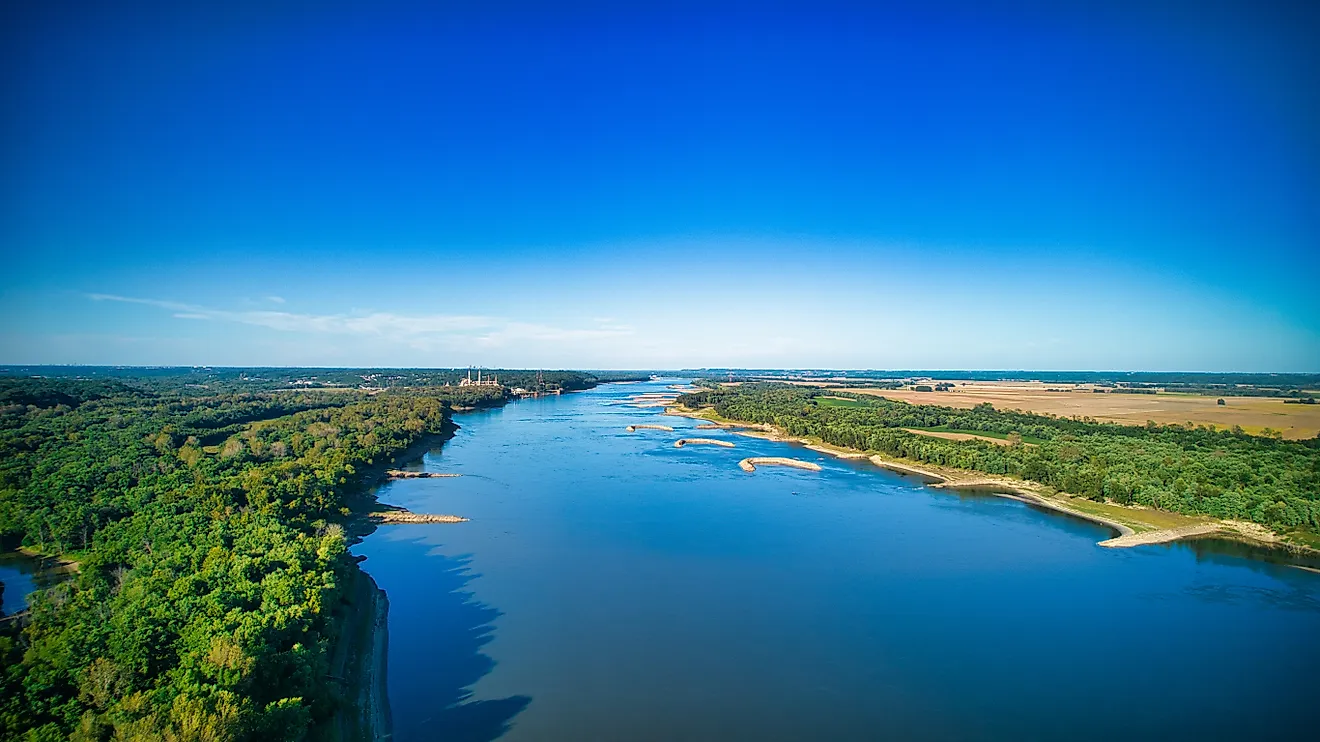
As North America's longest river, the Missouri River runs for nearly 2,500 miles through the north-central United States. It descends upon its namesake state, forming Missouri's northwestern border along Nebraska and Kansas before crossing the state's entire breadth from Kansas City at the Kansas border to St. Louis at the Illinois border, where it flows into the Mississippi River. Snakes are particularly abundant around those border cities.

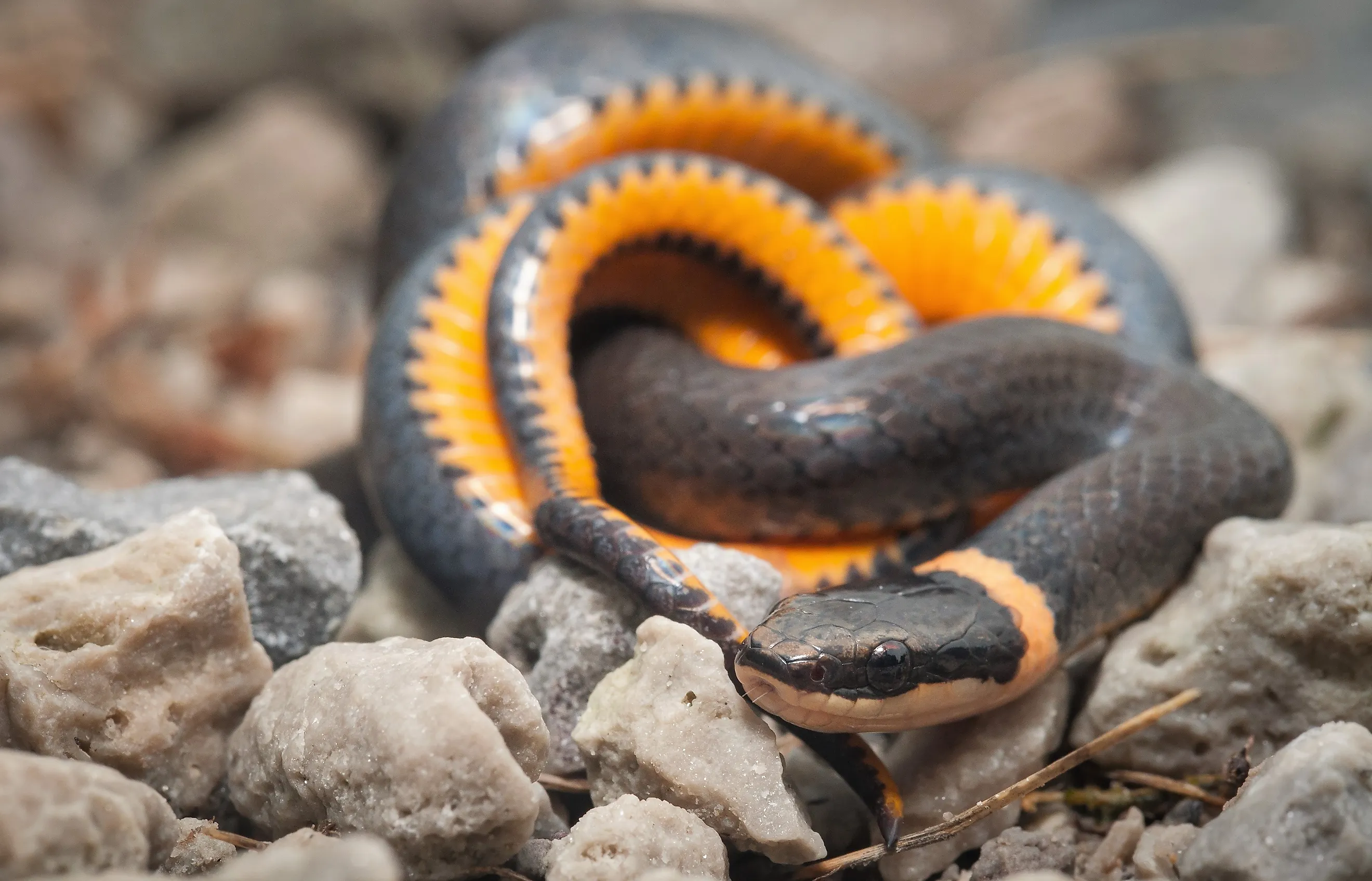
By Kansas City, the common water snake navigates the river while the common garter snake (Thamnophis sirtalis) and the North American racer (Coluber constrictor) patrol the banks. At St. Louis, the common water snake again rules the water while the forested flanks are dominated by the timber rattlesnake (Crotalus horridus). Some Missouri River snake hubs are in the middle of the state, such as the area around Columbia, which boasts small yet spectacular species like the ring-necked snake (Diadophis punctatus) and the eastern hognose snake (Heterodon platirhinos).
Mingo Swamp

Mingo Swamp is a southeastern MO wetland preserved as the Mingo National Wildlife Refuge. Per a US Fish & Wildlife brochure, "reptiles and amphibians are unusually abundant on the refuge." Its 20,000-odd acres contain more than 30 cold-blooded species, a large portion being snakes. Of Missouri's six kinds of largely aquatic snakes, five reside in the refuge.

They are the common water snake, northern cottonmouth, diamondback water snake, plain-bellied water snake, and banded water snake (Nerodia fasciata), not to mention semi-aquatic residents like the western ribbon snake (Thamnophis proximus) and the mud snake (Farancia abacura). Of course, Mingo also nourishes many terrestrial species, ranging from the eastern milk snake (Lampropeltis triangulum) to the western rat snake (Pantherophis obsoletus) to the speckled king snake (Lampropeltis holbrooki) to DeKay's brown snake (Storeria dekayi).
Mississippi River

Second among American rivers in length but first in might, the Mississippi River runs north-south from Minnesota to the Gulf of Mexico. Along the way, it forms the western border of Missouri between Illinois and small parts of Kentucky and Tennessee. Snakes are bountiful along this multi-state river route. As mentioned before, they are quite abundant at the confluence of the Mississippi and Missouri rivers near St. Louis, but arguably their hottest Mississippi River hotspot is north of Cape Girardeau along the Missouri-Illinois border. Preserving the snaky bluffs on Missouri's side are the Apple Creek Conservation Area and Trail of Tears State Park.

Doing the same on Illinois' side are the Trail of Tears State Forest and the Shawnee National Forest, the latter of which contains the famous "Snake Road," a 2.5-mile trail where you can see more than 20 serpentine species during spring or fall afternoons. The Mississippi River is its own thoroughfare, funneling the more aquatic snakes between each state's preserves. Among these interstate swimmers are the common water snake, northern cottonmouth, plain-bellied water snake, diamondback water snake, and even the rare Mississippi green water snake (Nerodia cyclopion).
Missouri's snake diversity ranks near the top. You can thank waterways for Missouri's serpentine wealth, since its thousands of miles of rivers, streams, creeks, ponds, lakes, swamps, and reservoirs provide the essentials for snake survival. While not all Missouri snakes live in water, they all live close to water. See aquatic and terrestrial kinds at the Ozark National Scenic Riverways, Eagle Pool, the Missouri River, Mingo Swamp, and the Mississippi River.