5 Snake-Filled Waters In Utah
Snakes play an important role in Utah’s ecosystems, especially near water, where food and shelter are reliable in a rather dry landscape. The state supports 31 snake species, including a small group of venomous species. Many of the species discussed in this article are protected under Utah wildlife laws, which make harassment or killing illegal. Utah's large lakes, reservoirs, and rivers concentrate prey and create predictable movement corridors, which explains why snake activity increases along shorelines and wetlands. Encounters occur when people move through brush, step onto warm surfaces, or place their hands near cover. Enjoy your outings by watching the ground ahead and giving snakes space. Awareness supports safety and helps preserve the serpentine population in their natural habitat.
Great Salt Lake

The high salinity of the Great Salt Lake prevents snakes from living in the water itself. However, the surrounding wetlands support one of the most snake-dense environments in Utah. Freshwater inflows feed large marsh systems that supply drinking water and prey. These conditions draw snakes to the lake’s margins, where dense grasses, gravel dikes, and sun-exposed paths allow movement and thermoregulation. The wandering garter snake is most often seen swimming through freshwater channels or resting near walkways. Great Basin gopher snakes use drier ground nearby and often get mistaken for rattlesnakes due to size. Great Basin rattlesnakes remain common on rocky slopes above the marsh rather than within it.

Encounters cluster in specific shoreline areas. At Great Salt Lake Shorelands Preserve, garter snakes regularly appear along the boardwalk and shed skins are easy to spot. Antelope Island State Park supports gopher snakes and rattlesnakes on rocky ground above the waterline. In the northern wetlands, Bear River Migratory Bird Refuge remains a reliable area to observe water-associated garter snakes near managed routes.
Fish Springs National Wildlife Refuge

In the middle of the Great Salt Lake Desert, Fish Springs provides permanent freshwater in an otherwise dry landscape. The refuge covers about 17,900 acres and contains nearly 10,000 acres of spring-fed wetlands that persist year-round. These springs discharge warm water near 80°F, keeping pools active even during cold months. The refuge sits more than 130 miles from Salt Lake City and remains isolated, yet it is the only major wetland within roughly 50 miles. Frogs, small fish, and rodents gather densely along the marsh edges, creating a reliable food base that keeps snakes concentrated instead of dispersed across open desert.

Wandering garter snakes appear most often in shallow marsh edges where they hunt amphibians and small fish. Great Basin gopher snakes use road margins and nearby drier upland zones. Great Basin rattlesnakes remain mainly in the surrounding rocky hills but move toward the refuge edge to hunt rodents. Western yellow-bellied racers cross open meadow areas during daylight, adding to the high snake density within this wetland system.
Sand Hollow Reservoir

This man-made reservoir attracts a high volume of snakes due to the persistent heat and desert terrain. The lower elevation ensures the ground stays warm from spring through fall, while rocks and brush along the shore provide ideal cover. Instead of scattering across the open desert, snakes concentrate near the reservoir to stay close to prey. This activity peaks during the summer, particularly in the early mornings and evenings when temperatures are more manageable.

Several species inhabit the area. Great Basin rattlesnakes favor the rocky slopes and brush near the shore. Great Basin gopher snakes are found in the same environments and are frequently confused with rattlesnakes due to their aggressive behavior when threatened. In sandy areas, Desert glossy snakes tend to emerge at night. Garter snakes remain closest to the water and are the most common sight for swimmers. While primarily terrestrial, these snakes can swim; rattlesnakes are often spotted crossing the water to cool off or reach new ground.
Lake Powell

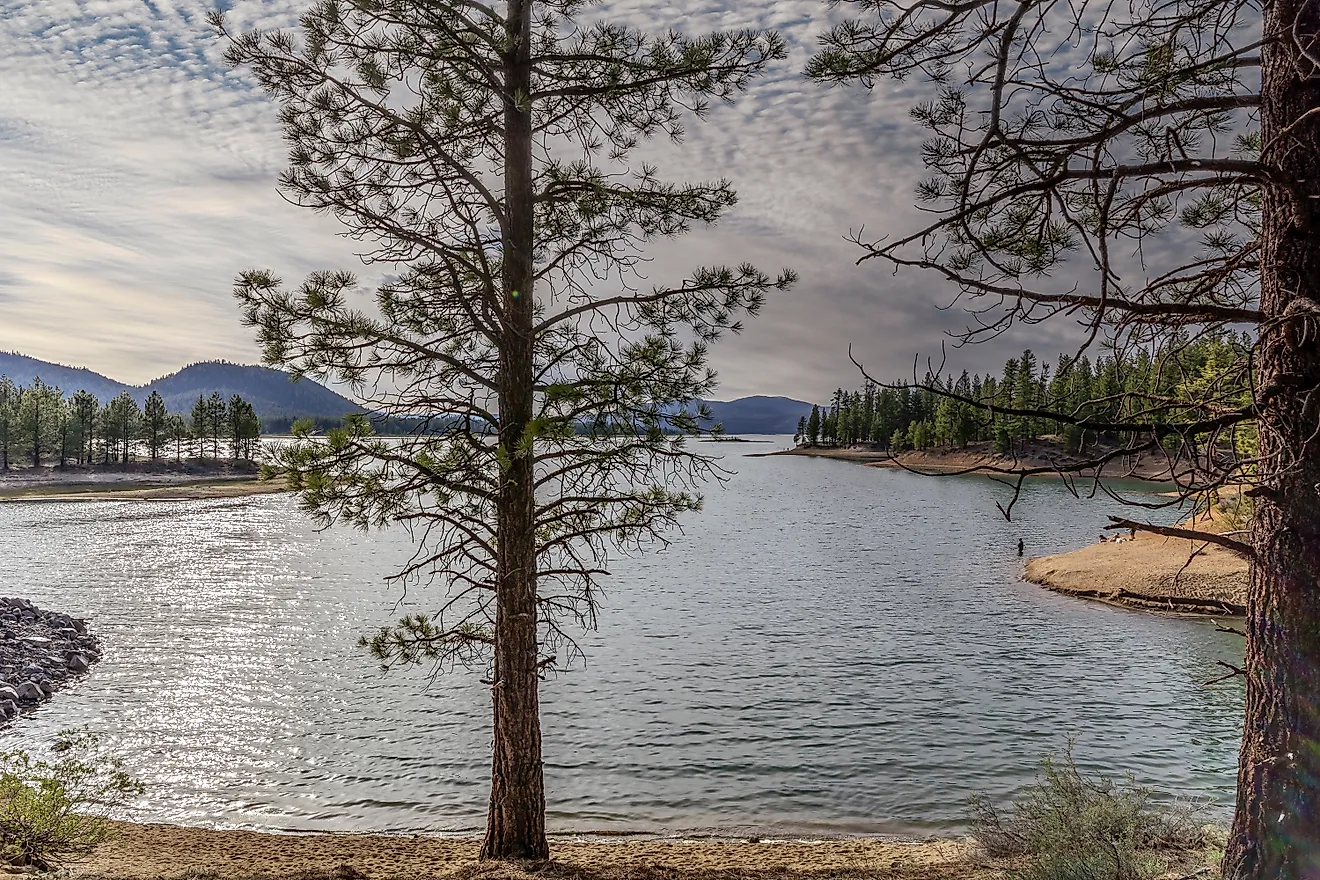
Lake Powell functions as a haven for snakes. The large reservoir allows for high activity because its shoreline consistently attracts prey. Dense brush along the water’s edge holds large numbers of small mammals and lizards that remain available through much of the year. Broken sandstone walls rise directly from the shoreline and fracture into ledges and cracks. These surfaces allow snakes to shelter and move without crossing open terrain, which reduces exposure and keeps activity concentrated near the lake. Seasonal water changes also affect movement. In spring, rising water can flood shoreline dens and force snakes to relocate, sometimes into the water itself.

Gopher snakes are the most common and patrol brush near the shoreline. Great Basin rattlesnakes occupy rocky ground above the water and have been documented swimming when relocating. Faded rattlesnakes, native to the Colorado Plateau, remain tied to cliff-side habitat. Garter snakes, including black-necked and wandering forms, swim near shore. Common kingsnakes also occur and influence local snake distribution through predation.
Green River

The Green River maintains high snake activity largely because it offers permanent water in an otherwise arid landscape. Dense vegetation along the banks allows snakes to move while staying hidden, while rocky slopes near the channel provide essential cracks for shelter. These conditions are especially evident near Flaming Gorge Reservoir, where steep rock faces meet the shoreline to form a stable refuge right next to the water. In the peak heat of summer, staying close to the river helps snakes minimize dehydration and avoid travel across exposed ground.

Snake diversity reflects these conditions. The midget faded rattlesnake slithers within the Green River Basin and remains tied to rocky ground near the water despite its small size and potent venom. It is listed as a Species of Concern in Utah, and state law prohibits killing or harassing it. Great Basin gopher snakes move through shoreline vegetation and often trigger false rattlesnake reports due to defensive behavior. Wandering garter snakes appear frequently along banks and shallow margins, while western terrestrial garter snakes concentrate in wetter segments nearby. Smaller species such as the southwestern black-headed snake use moist soil in streambeds and river bottoms, contributing to consistent sightings along the river.
Shared Water
Snake activity near water in Utah concentrates where food and shelter overlap. At Sand Hollow Reservoir, desert edges and shoreline cover create frequent encounters early in the article’s progression. That logic scales up at Lake Powell, where an extensive canyon shoreline supports wide distribution rather than fixed hotspots. The Green River shows how continuous water allows snakes to travel through otherwise dry terrain. Conditions intensify at Fish Springs National Wildlife Refuge, where permanent wetlands concentrate activity year-round. Along the Great Salt Lake, freshwater margins explain frequent sightings despite saline water nearby. Across all five, awareness and distance keep encounters brief and uneventful.