5 Snake-Filled Waters In Rhode Island
For outdoor adventurers and wildlife enthusiasts who love snakes but aren't necessarily looking to encounter rattlers, constrictors, and other high-profile predators in their natural habitats, Rhode Island is an abundant safe haven. The state is home to ponds, lakes, rivers, and coastal lagoons that host a surprising variety of non-venomous species, like the northern water snake and other common colubrids that thrive in wetland and riparian habitats. Whether you are keen to catch a glimpse or want to know which spots to avoid, the following are some of the most snake-filled waters in Rhode Island.
Watchaug Pond

Within Charlestown in southwestern Rhode Island, Watchaug Pond is a deep kettle pond created by retreating glaciers and surrounded by woodland and a protected area. One of the largest freshwater lakes in the state, it spans 573 acres and is ringed by a popular 8-mile loop hiking trail. The transition zones between shorelines and open water support several aquatic and semi-aquatic snake species that rely on both environments.

While ring-necked snakes will tend to stay undercover in the leaf litter and wooded areas near the trail, you are likely to see water snakes and might also spot an eastern ribbon snake near or in the pond, where they hunt small fish and amphibians. The latter are distinguishable by their dark coloring with thin yellow or white stripes running vertically down the length of their bodies. Ribbon snakes are small and harmless, and quite a sight to see rippling through the water.
Pawtuxet River

As it meanders through woodlands, floodplains, and old mill communities, the Pawtuxet River is the largest river contained within the state of Rhode Island, eventually emptying into Narragansett Bay and the Atlantic Ocean. It is an important watershed and supplies the state with much of its drinking water. Snakes that favor deep cover and warm basking spots thrive in slower sections of the river and along its wooded banks.

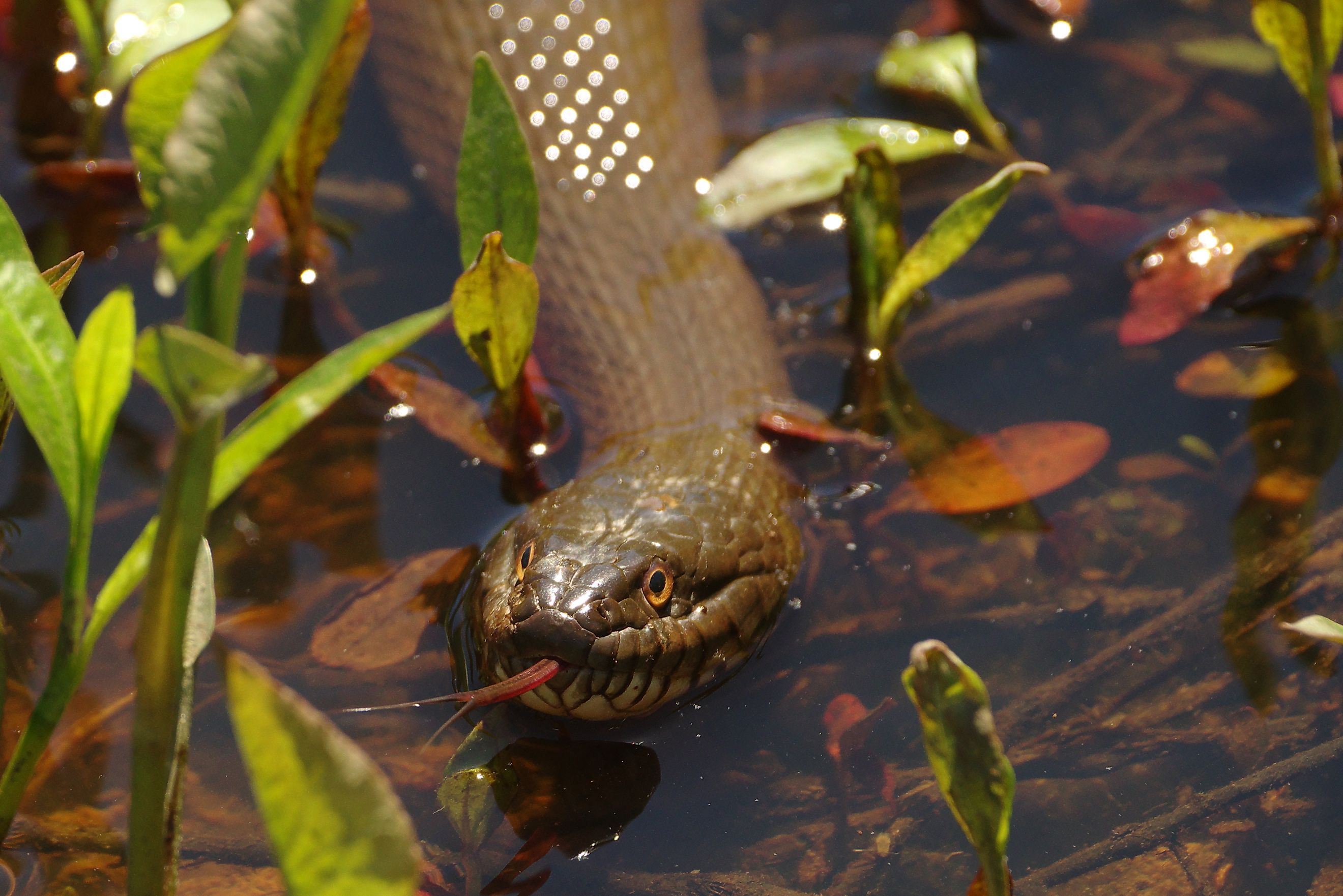
One such species is the semi-aquatic northern water snake, which makes its home near wetlands and streams where it enjoys ample food supplies and shelter. Northern water snakes are typically black or grey with some markings on their belly. They are curious, but harmless creatures. The Pawtuxet provides a living corridor for a range of reptilian species, with ring-necked snakes and northern red-bellied snakes also inhabiting the moist soils of neighboring floodplain forests.
Blackstone River

With marshes and green areas surrounding its banks, the Blackstone River runs through the north of Rhode Island, which was formerly dominated by industry and has mostly returned to its natural state. These regenerated ecosystems are home to numerous snake species that favor riverbank habitats. While the river itself is a prime habitat for species such as water snakes and ribbon snakes, the leaf litter along the water's edge is also ideal for ring-necked snakes and eastern gartersnakes.

This common species is widespread across the state and will most likely be spotted sunning on rocks or slabs of concrete, even in more populated areas where the river runs through towns. Their appearance is highly variable, as they can appear dark green, brown, or even tan colored, often with a pale stripe running down the length of their body and sometimes with a bold checkered pattern.
Bowdish Lake & Wilbur Pond

Bowdish Lake and nearby Wilbur Pond offer a tranquil retreat in the interior woods of Glocester, Rhode Island, surrounded by marshes and forests near the Connecticut border. The mix of shallow coves, grassy clearings, and forest edges attracts a range of semi-aquatic species that don’t live in water but depend on it. For patient hikers and campers, this area offers some of the best chances to observe snakes in a natural setting.

Once again, water snakes are very common here, while smooth greensnakes blend seamlessly into grassy sections, and you may even spot a northern red-bellied snake in the marshy areas. This smaller species feeds almost exclusively on slugs, so it favors moist, fertile soil. While the bright belly is a defining feature, physical appearance can vary from grey to brown to orange, often with three small pale dots on the neck. They rarely bite, but will display defensive behavior when threatened.
Trustom Pond

In South Kingstown, tucked behind coastal dunes and protected as a national wildlife preserve, Trustom Pond is Rhode Island’s last remaining undeveloped salt pond, making it a refuge for reptiles and other wildlife. The pond’s shifting mix of freshwater and brackish conditions, combined with surrounding marshes and shrublands, creates prime habitat for moisture-loving snakes. The abundance of bullfrogs and fish, among other food sources, supports a wide range of species.

Smooth greensnakes are common in coastal wetlands such as this. They feed on insects, snails, and salamanders, and their color and texture are ideal for blending into dense grassy sections, but if you're lucky, you'll spot one of these placid beauties basking on a warm rock during the day. Other species common in wet woodlands, though rarely spotted, are ring-necked snakes with their singular stripe and eastern ribbon snakes, which rarely bite but emit a foul-smelling odor when handled.
Rhode Island’s snake-filled waters are a reminder that wildlife can be found in unassuming places. It hides in the marsh grasses at Trustom Pond, slips along the forested edges of Watchaug, and basks quietly beside rivers that once powered mills. These snake species aren’t to be feared. They’re indicators of healthy ecosystems, clean water, and landscapes still doing what nature designed them to do. For hikers, paddlers, anglers, and curious explorers, encountering a snake along the shoreline in Rhode Island is a moment to pause and appreciate how much life thrives just beneath the surface and beyond the trail.