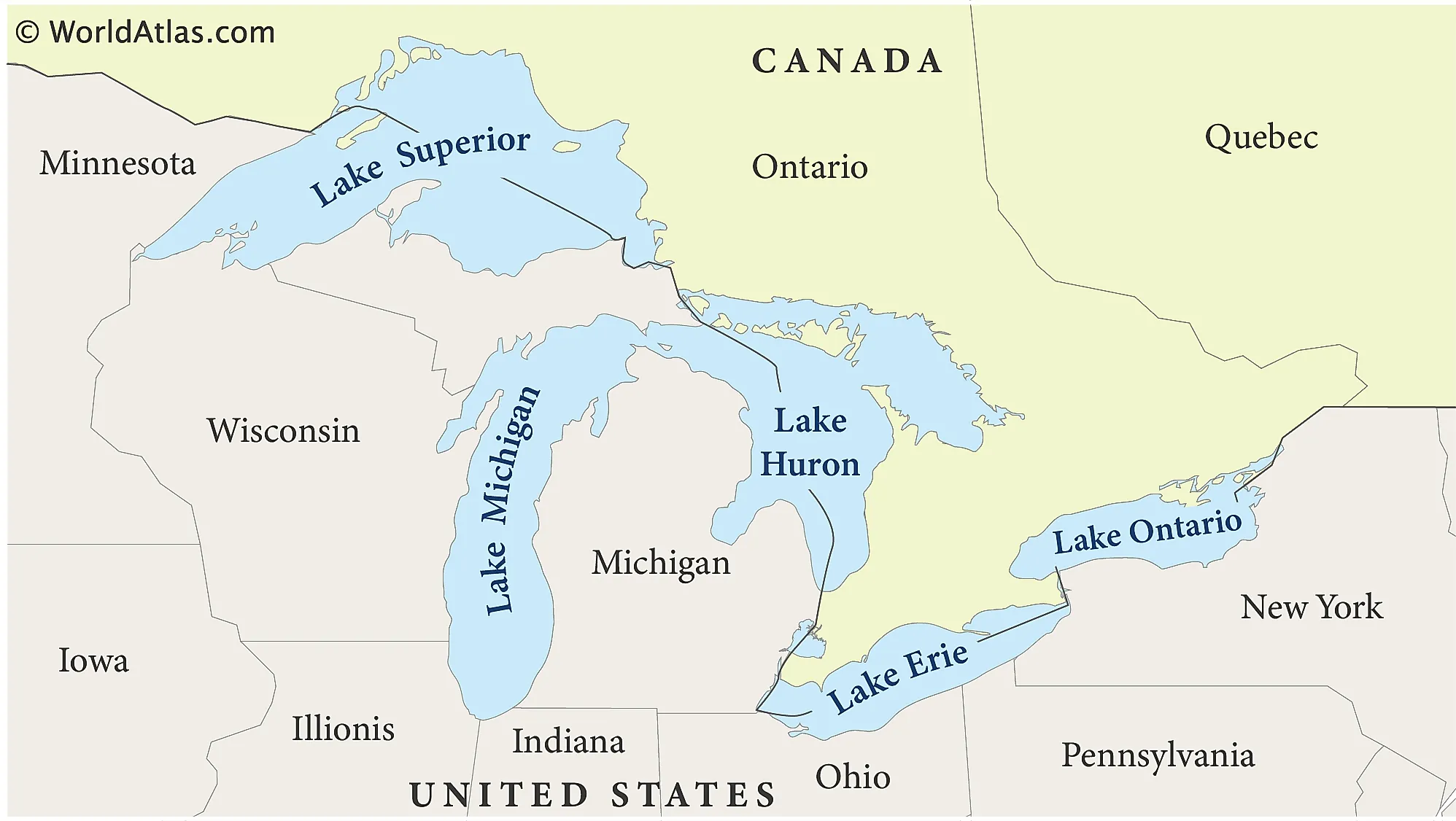
The Great Lakes Ranked by Water Volume
Lakes can be measured in a variety of ways, but perhaps the most telling is by volume. With a map, you can take a quick glance at the amount of area a body of water takes up, but depth is hard to perceive on a flat piece of paper.
The aptly named Great Lakes of North America are quite fascinating in their own right, forming the largest chain of freshwater lakes anywhere on the planet, each hosting its own variety of native flora and fauna, islands, and other geological features that have kept surveyors and scientists of all kinds busy for centuries. With that, we will now rank these mighty inland seas by how much volume each can store, and provide a few other cool facts about them along the way.
5. Lake Erie - 116 cu mi (484 km³)

Lake Erie ranks last among the Great Lakes by water volume, but it is anything but insignificant. It is the shallowest and warmest of the five lakes, a combination that shapes nearly every aspect of its geography. Those warmer waters fuel some of the most productive fisheries in North America, supporting populations of species like walleye, yellow perch, and smallmouth bass at a scale unmatched elsewhere in the Great Lakes system. Because of this, commercial and recreational fishing have long been central to Erie's economy.
Lake Erie also plays a major role in shipping and other Rust Belt industries. Port cities such as Cleveland, Toledo, and Buffalo developed because of their position as a key link between the upper Great Lakes and the St. Lawrence River, which eventually empties out into the Atlantic Ocean.
Erie's relatively shallow depth, however, has made it more sensitive to environmental stresses often brought on by said industrial operation. In fact, Lake Erie was the epicenter of a slew of well-known, severe pollution problems throughout the 20th century, thankfully followed by some of the most notable freshwater recovery efforts in the world in more recent decades.
Today, Lake Erie regularly experiences harmful algal blooms, especially in its shallow western basin, driven by nutrient runoff from surrounding lands, making it necessary to remain cautious before you decide to swim or fish in its waters.
4. Lake Ontario - 393 cu mi (1,656 km3)

Lake Ontario holds the smallest surface area of any of the Great Lakes at 7,340 sq mi (19,011 km²), yet it ranks higher than Lake Erie in water volume due to its far greater depth, averaging 283 feet. It serves as the final link in the Great Lakes chain, funneling water eastward directly into the St. Lawrence River and ultimately to the Maritime coast. This position has shaped its long-standing importance in regard to trade, transportation, and settlement on both sides of the U.S.-Canada border.
Like the other Great Lakes, Lake Ontario has faced its own problems with pollution and invasive species over the centuries that are currently being addressed. Highly urbanized centers on its shores include Toronto, Hamilton, Kingston, and Rochester, each depending heavily on the lake for drinking water, industry, and recreation, making the preservation of its environment all the more vital.
This sizable body of water plays a major role in the area's climate as well, with its sheer mass moderating temperatures along the shoreline, greatly influencing agriculture, particularly fruit-growing regions in both New York and Ontario.
The lake’s depth also gives it colder, more stable waters, which support species such as lake trout and Atlantic salmon, the latter only recently reintroduced after basically disappearing in the 1800s because of historic pollution and overfishing.
3. Lake Huron - 850 cu mi (3,550 km³)

Lake Huron's higher water volume is a result of its vast size and complex geography. It has the longest shoreline of any Great Lake at 3,827 miles, due to its thousands of bays, peninsulas, and islands. The most notable of these is Manitoulin Island, the largest freshwater island in the world!
Huron is also hydrologically linked to Lake Michigan through the Straits of Mackinac, meaning the two lakes share the same surface elevation and essentially function as a single system, and its generally pristine, cold waters boast diverse fish populations, including lake trout, whitefish, and salmon.
Many stretches of Lake Huron's shoreline remain relatively undeveloped, particularly along the Canadian side, giving it a more remote character than some of the others on this list. This has made it a stronghold for important coastal wetlands and migratory birds. However, Lake Huron still plays a key role in shipping, with major routes connecting the upper lakes to the industrial centers farther south.
While invasive species and fluctuating water levels have posed challenges, Lake Huron remains one of the most ecologically varied and untouched lakes in the Great Lakes system, making it hugely popular with outdoorsmen looking for an unforgettable wilderness adventure.
2. Lake Michigan - 1,180 cu mi (4,920 km³)

Lake Michigan stands out as the only Great Lake located entirely within the United States. Its size (the third largest of these lakes by surface area and second by volume) affects local weather, commerce, and daily life across four different states, all in immense ways. For example, its notable depth and 307-mile length allow powerful storms to build frequently, influencing regional climate and producing lake-effect snows along its eastern shore that tend to pound nearby cities during the winter months.
The shoreline of Lake Michigan has a mix of major urban centers and protected natural areas. Most notably, Chicago, Milwaukee, and Green Bay developed as critical ports along its western edge, while on the other hand, the eastern shoreline is known for extensive sand dunes, including Indiana Dunes National Park and Sleeping Bear Dunes National Lakeshore. These dune systems are actually among the largest freshwater dunes in the world, drawing in millions of tourists each year.
As with the other bodies of water on this list, Lake Michigan also provides a major source of drinking water for millions of Midwestern residents across Michigan, Indiana, Illinois, and Wisconsin.
1. Lake Superior - 2,900 cu mi (12,100 km³)

Lake Superior ranks first among the Great Lakes by water volume, depth, and surface area (unless you consider Lake Michigan and Huron to be one single body of water), dominating the system in both scale and presence. In fact, it holds more water than all the other Great Lakes combined! To top it all, Superior’s cold temperatures and long water retention time give it some of the clearest water in the world, particularly along its rocky northern and eastern shores.
Steep cliffs, basalt formations along its lengthy shoreline, and many remote islands define much of the landscape in and around Superior, including Isle Royale, which sits isolated in the lake’s northwest corner and forms one of the quietest, least visited national parks in the United States east of the Mississippi River. The lake’s size also creates powerful and often unpredictable storms, contributing to its long history of shipwrecks and maritime lore, namely that of the Edmund Fitzgerald.
Ecologically, Lake Superior is relatively resilient, with fewer pollution issues than the shallower, more populated lakes to the south. It's often frigid, very oxygen-rich waters support lake trout, cisco, and countless other native species, allowing it to be a major fishing destination both recreationally and commercially, as well as the site of numerous national, provincial, and state parks on both sides of the border.
Understand the Importance of these Mighty Bodies of Water
From Lake Erie’s shallow yet productive waters to Lake Superior’s vast, cold reserves, it is clear that the amount of liquid a lake can hold influences local ecology, climate, and human use in a variety of big ways. Together, the Great Lakes also function as an interconnected whole, forming the largest surface freshwater system on Earth and a resource of global importance, one that is vital to protect for future generations.