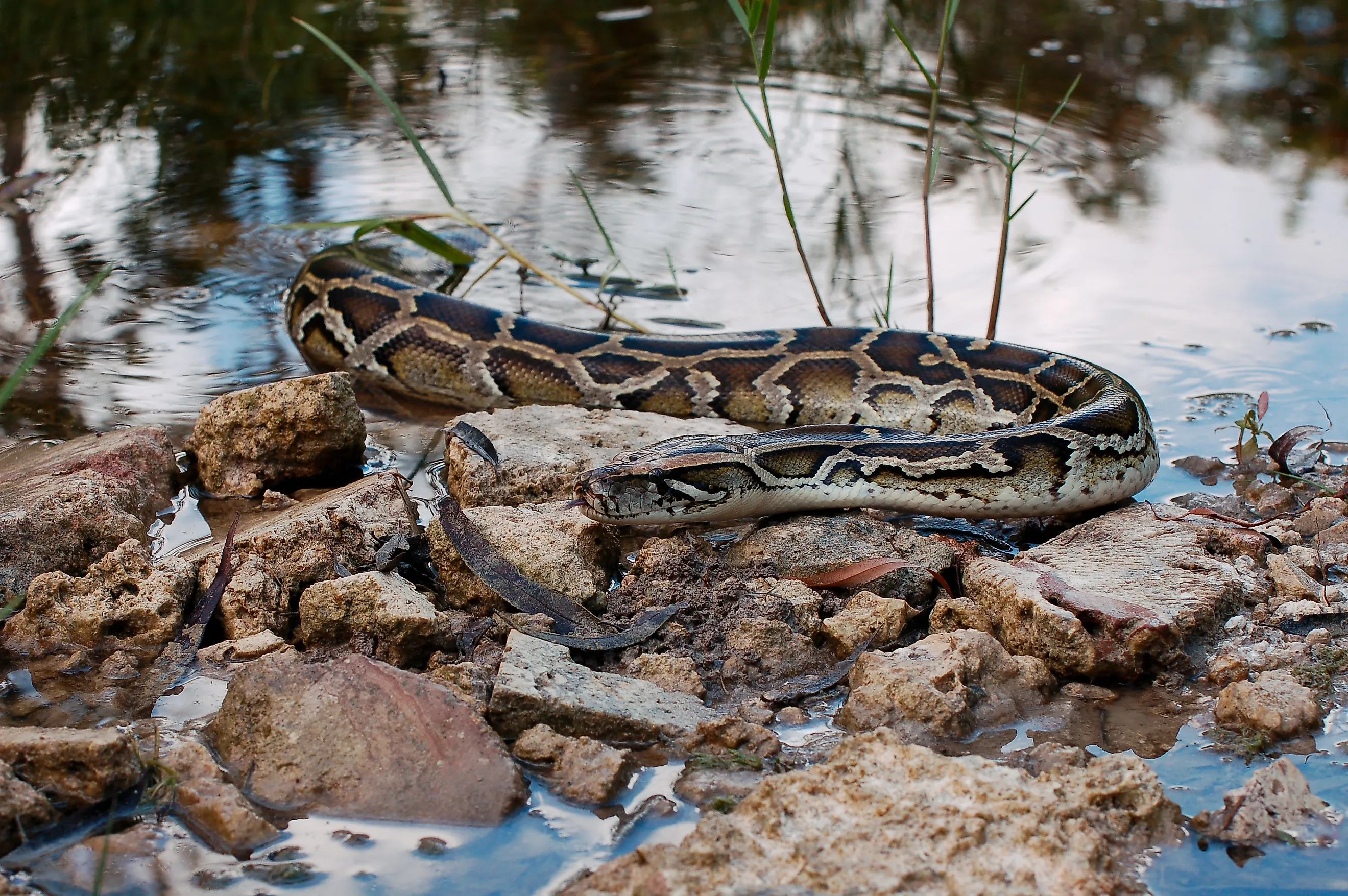
How Many Types Of Pythons Are There?
The family Pythonidae contains roughly 40 living species of non-venomous constricting snakes spread across about 11 genera. The familiar "true pythons" sit in the genus Python, which currently holds 10 species native to Africa and Asia. Two of the most famous pythons, the reticulated python and the Timor python, were reclassified into a separate genus, Malayopython, in 2014 and are no longer considered true pythons in the strict taxonomic sense. The remaining members of the family are scattered across Australia, New Guinea, and Southeast Asia in genera such as Antaresia, Aspidites, Liasis, Morelia, and Simalia. Below is a closer look at every species in the genus Python, followed by sections on the well-known former members and a broader overview of the family.
African Rock Pythons

What used to be a single species with two subspecies is now generally treated as two: the Central African rock python (Python sebae) of sub-Saharan Africa, ranging across West and Central Africa as far east as Ethiopia and south into Angola, and the Southern African rock python (Python natalensis) found in Kenya and southward through eastern and southern Africa to the Cape. Both are large constrictors capable of reaching 15 to 20 feet, with some historical reports running larger. Python sebae is currently listed as Near Threatened by the IUCN, while Python natalensis was assessed as Least Concern in 2021. Both occupy a wide range of habitats including forest, savanna, and rocky country, but tend to stay near water. They kill by constriction and can take down prey as large as antelope, warthogs, and small crocodiles. Confirmed attacks on humans are rare, but the species are widely feared, hunted for skin and meat, and persecuted as livestock threats.
Angolan Python

The Angolan python (Python anchietae) is the rarest of the African true pythons and is restricted to northern Namibia and southern Angola. Adults grow to around 6 feet, with a color pattern of reddish-brown to nearly black flanked by cream or white spots and bands; the belly is yellowish. The snakes prefer rocky outcrops and grassland with scattered boulders, where they shelter in crevices and feed on small mammals and birds. The species is currently classified as Least Concern by the IUCN, although its narrow range and the lingering effects of armed conflict in parts of Angola make accurate population assessment difficult.
Ball Python
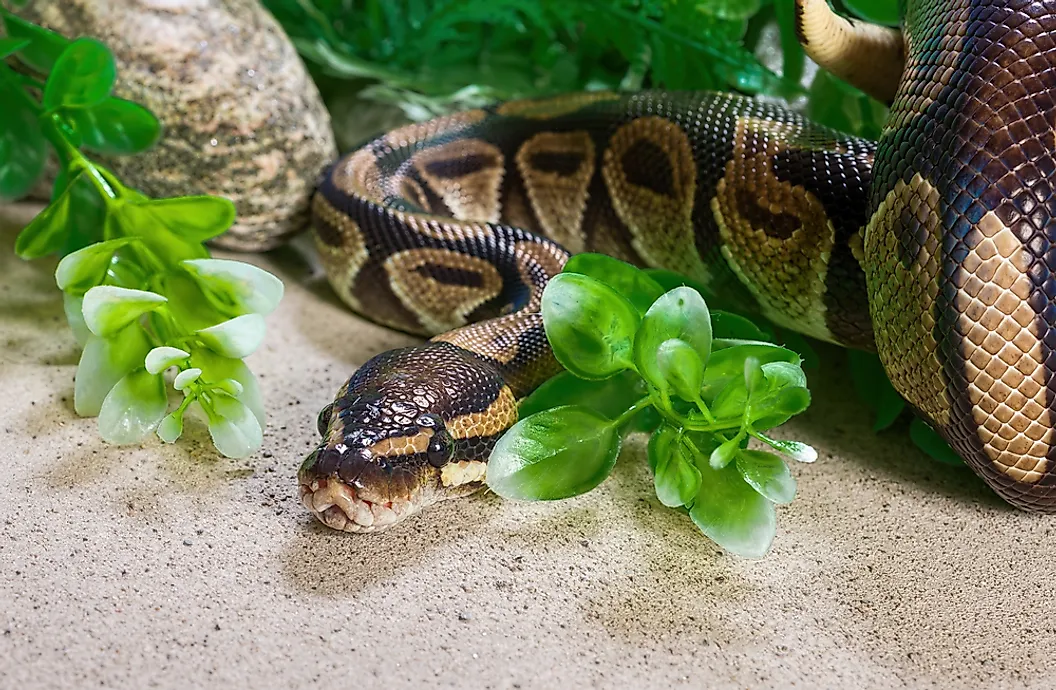
The ball python or royal python (Python regius) is the smallest African python, with a maximum length of 182 cm (about 6 feet) and adults typically reaching 3 to 5 feet. It is also the most heavily traded live snake on the international market, popular as a pet for its small size and docile temperament. The common name refers to the defensive behavior of curling into a tight ball with the head pulled inside the coil. The "royal" name is older and refers to a tradition of West African rulers wearing the snake as living jewelry. The oldest captive specimen on record lived more than 47 years. In 2021 the IUCN reassessed Python regius as Near Threatened, having previously classified it as Least Concern. The reassessment cited population declines driven by harvest for the pet trade, traditional medicine, leather, and meat, especially across Ghana, Togo, and Benin.
Blood Python

The blood python or Brongersma's short-tailed python (Python brongersmai) is endemic to the Malay Peninsula, Sumatra, and parts of southern Thailand and a few neighboring islands. Adults are heavy-bodied and relatively short, with males averaging 91 to 152 cm and females 120 to 180 cm. The common name refers to the deep red, orange, or rusty blotches on a tan or brown ground color. The species is crepuscular and tied to tropical swamps and marshes, where it feeds on small mammals and birds. The IUCN lists it as Least Concern, although it is heavily harvested for the skin trade and the pet market.
Borneo Python

The Borneo python or Borneo short-tailed python (Python breitensteini) is endemic to the island of Borneo, where it inhabits poorly drained swamp edges, peat forest, and floodplains at lower elevations. Adults reach about 7 feet and can weigh up to 13.6 kg. The body is heavily built and stocky, with tan ground color overlaid with brown blotching. P. breitensteini was formerly treated as a subspecies of P. curtus before being elevated to full species in 2001. The IUCN currently classifies it as Least Concern.
Burmese Python

The Burmese python (Python bivittatus) is one of the five largest snake species in the world. Native to South and Southeast Asia, adults average around 12 feet but can exceed 18 feet, with the largest verified specimens approaching 19 feet. The species was previously treated as a subspecies of the Indian python (P. molurus bivittatus) before being elevated to full species rank. Burmese pythons are semi-aquatic, climb well using prehensile tails, and feed on a wide range of mammals and birds. The IUCN lists wild populations as Vulnerable, with habitat loss, illegal hunting, and the skin trade driving declines across the native range. Outside the native range, escaped and released pets have established a large invasive population in the Florida Everglades, where the species is now a serious driver of native mammal decline.
Indian Python

The Indian python (Python molurus), also called the Asiatic rock python or black-tailed python, is native to the Indian subcontinent and parts of Southeast Asia. Adults typically reach about 9 to 10 feet, with some specimens longer, and are paler than the closely related Burmese python. The species occupies grasslands, swamps, rocky foothills, river valleys, and marshes. It feeds on a wide range of vertebrate prey, including reptiles, mammals, and birds. The IUCN currently lists P. molurus as Near Threatened, with the species protected under Schedule I of India's Wildlife Protection Act of 1972.
Myanmar Short-Tailed Python

The Myanmar short-tailed python (Python kyaiktiyo) is the most recently described species in the genus, named in 2011 by George R. Zug, Steve W. Gotte, and Jeremy F. Jacobs from a single adult female collected in 2002 in Kyaikhtiyo Wildlife Sanctuary, Mon State, Myanmar. The species is known only from the holotype area and a handful of additional records, all in the Tenasserim Hills of southern Myanmar. Adults reach roughly 6 feet, with a light brown base color overlaid with rusty stripes and blotches. Distinguishing morphological features include a high ventral scale count (180 or more) compared to its closest relatives in the Python curtus species group. The species has been listed as Vulnerable on the IUCN Red List since 2012, owing primarily to its restricted range and small sample of known specimens.
Sumatran Short-Tailed Python

The Sumatran short-tailed python (Python curtus), sometimes also marketed as a "blood python," is endemic to Sumatra. Adults are heavy-bodied and average 4.9 to 5.9 feet, with coloration that varies between beige and grayish-brown, overlaid with brick-red or blood-red blotches. The IUCN classifies it as Least Concern. The species was historically lumped together with P. brongersmai and P. breitensteini as subspecies of one variable species (P. curtus), but the three were split into separate species in 2001 based on morphology, geography, and reproductive isolation. The Sumatran short-tailed python and its two close relatives have been heavily exploited for the leather trade.
The Reticulated And Timor Pythons

Both species are commonly called pythons and were long classified in the genus Python, but a 2014 phylogenetic revision moved them to the genus Malayopython. The reticulated python (Malayopython reticulatus) is the longest snake species in the world, with verified specimens reaching 21.3 feet and reliable reports of individuals approaching 22.8 feet and 75 kg. The species ranges across South and Southeast Asia and is a strong swimmer that has colonized many small islands within its range. Reticulated pythons inhabit woodlands, grasslands, and forests and prey mainly on mammals and birds. Attacks on humans are rare but documented.

The Timor python (Malayopython timoriensis) is much smaller, reaching just over 7 feet, and is thinner-bodied than its close relatives. The species is native to the Lesser Sunda Islands of Indonesia, including Flores and (despite the name) probably not Timor itself; many older records attributed to Timor turned out to be from Flores. Timor pythons are fast-moving and defensive, with a diet of small mammals and birds. The IUCN lists both Malayopython species as Least Concern.
The Rest Of The Family
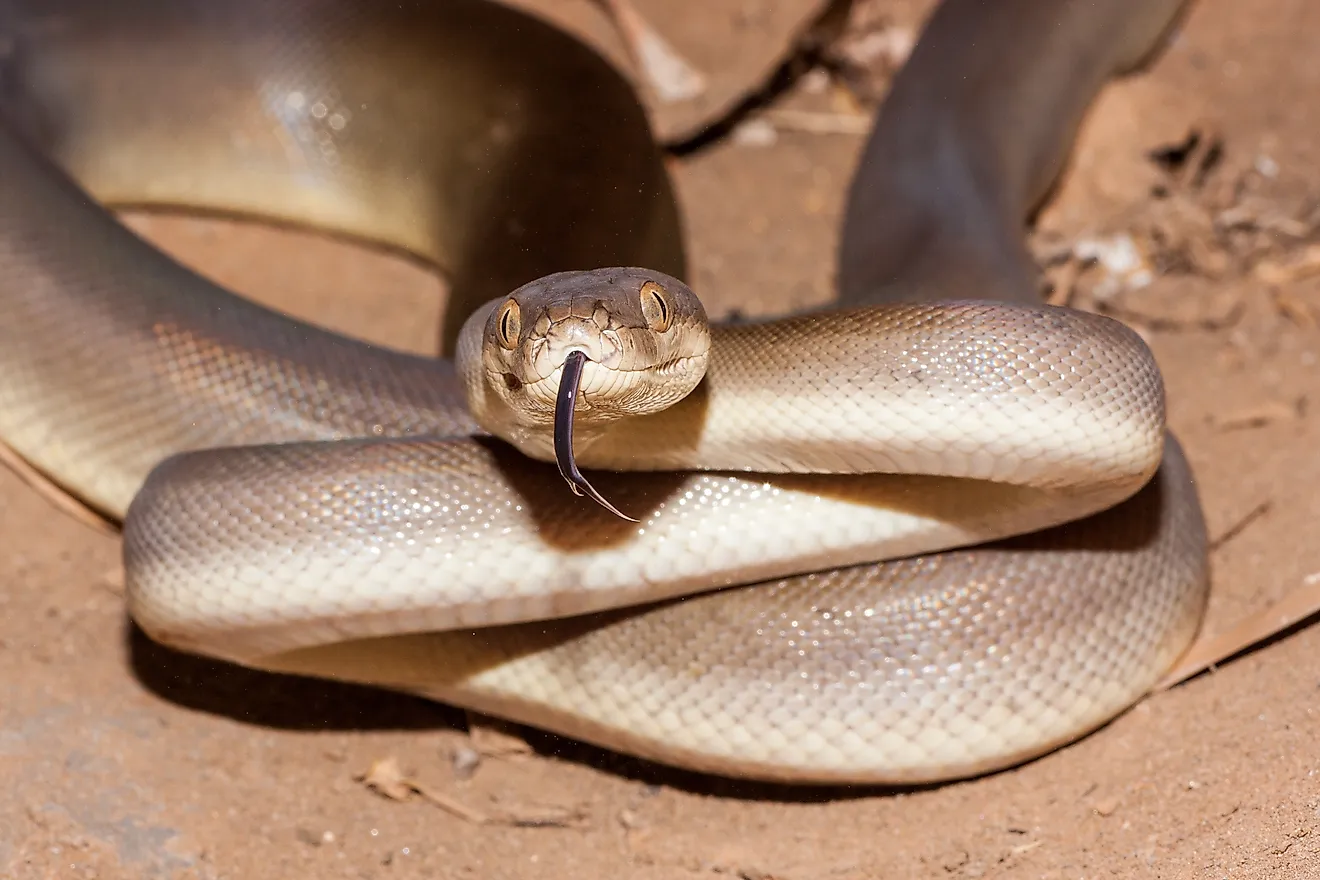
Beyond Python and Malayopython, the family Pythonidae includes nine more genera, almost all of them centered on Australia and New Guinea. The Children's pythons (Antaresia) are four small species rarely exceeding 4 feet. The pitless pythons (Aspidites) include the black-headed python (A. melanocephalus) and the woma python (A. ramsayi) of arid Australia, both of which lack the heat-sensing pits found in most other pythons. The water pythons (Liasis) are three semi-aquatic species of New Guinea and northern Australia, while the carpet pythons and tree pythons of the genera Morelia and Simalia include some of the most familiar pythons in the pet trade, including the green tree python and the amethystine python. Other genera include Apodora (the Papuan python), Bothrochilus (the Bismarck ringed python), Leiopython (white-lipped pythons), and the monotypic Nyctophilopython, which contains only the Oenpelli python of Arnhem Land in northern Australia.
Genus Python And Close Relatives At A Glance
The table below covers every species in genus Python along with the two former Python species now placed in Malayopython.
| Scientific Name | Common Name | Range | Max Length | IUCN Status |
|---|---|---|---|---|
| Python anchietae | Angolan python | Northern Namibia, southern Angola | ~6 ft | Least Concern |
| Python bivittatus | Burmese python | South and Southeast Asia (invasive in Florida) | ~18-19 ft | Vulnerable |
| Python breitensteini | Borneo python | Borneo | ~7 ft | Least Concern |
| Python brongersmai | Blood python | Malay Peninsula, Sumatra, southern Thailand | ~6 ft | Least Concern |
| Python curtus | Sumatran short-tailed python | Sumatra | ~5-6 ft | Least Concern |
| Python kyaiktiyo | Myanmar short-tailed python | Mon State, Myanmar | ~6 ft | Vulnerable |
| Python molurus | Indian python | Indian subcontinent, Southeast Asia | ~10 ft | Near Threatened |
| Python natalensis | Southern African rock python | Kenya south to Cape, South Africa | ~15-20 ft | Least Concern |
| Python regius | Ball python / royal python | West and Central Africa | ~6 ft | Near Threatened |
| Python sebae | Central African rock python | Sub-Saharan Africa, Senegal to Ethiopia | ~20 ft | Near Threatened |
| Malayopython reticulatus | Reticulated python (formerly Python reticulatus) | South and Southeast Asia | ~21+ ft | Least Concern |
| Malayopython timoriensis | Timor python (formerly Python timoriensis) | Lesser Sunda Islands, Indonesia | ~7 ft | Least Concern |