Death Adder
The common death adder (Acanthophis antarcticus) is among Australia's most specialized ambush predators. Rather than actively searching for prey, the death adder depends on patience, remaining motionless until an animal moves within striking distance. Its thick body, triangular head, and rapid venomous strike have helped make it one of the continent's best-known reptiles.
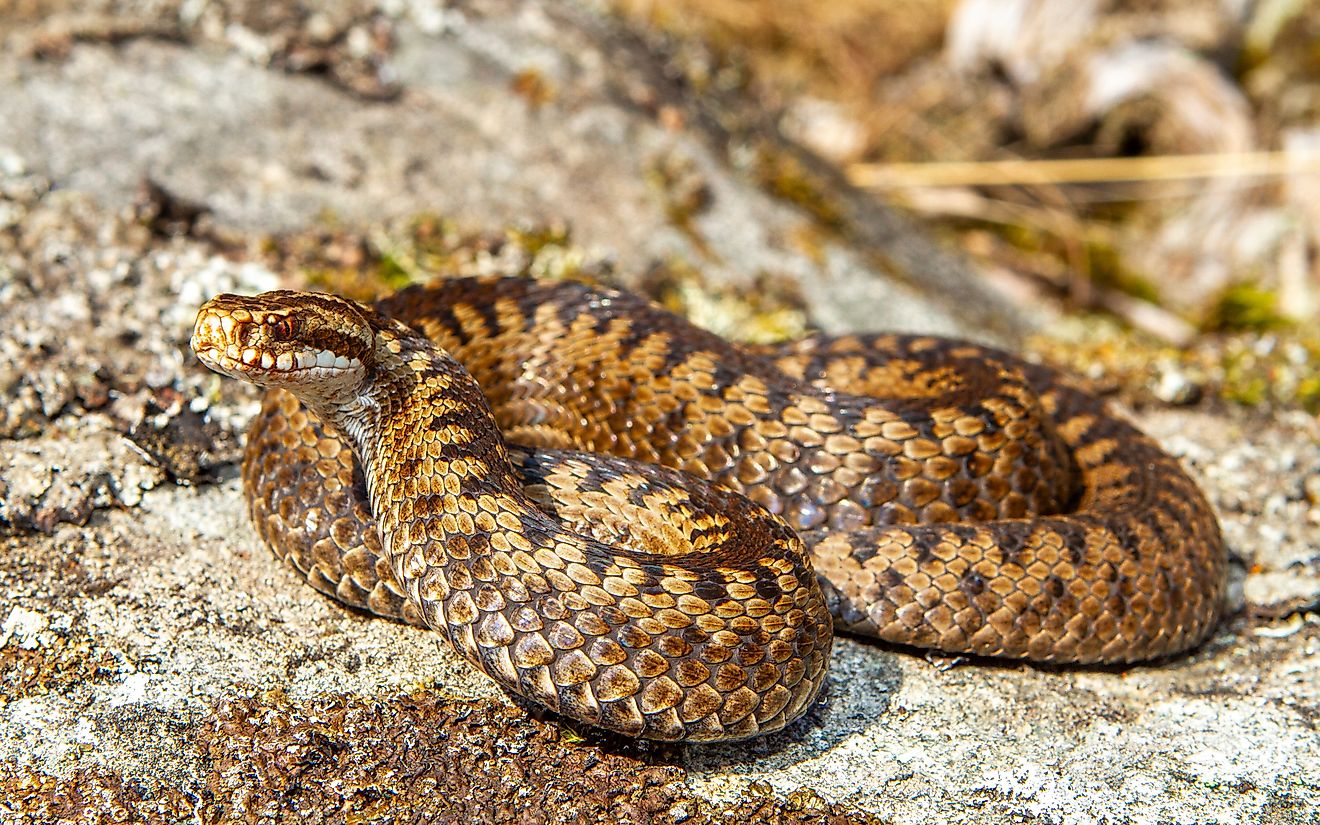
Death adders live across a wide range of environments throughout Australia, in forests, grasslands, heathlands, and arid desert regions. There, patterned scales allow them to blend into leaf litter, loose soil, and dry vegetation. This camouflage is a factor in both hunting and survival, helping the species avoid predators while also remaining hidden from prey. Although the death adder has a dangerous reputation because of its venom, the species rarely behaves aggressively toward humans. Instead of fleeing or confronting threats, it often relies on camouflage as its primary defense.
Taxonomic Classification

The death adder belongs to the family Elapidae, a group of venomous snakes that includes cobras, coral snakes, taipans, and mambas. Although it resembles vipers in body shape, it is not closely related to them. Instead, similar traits such as a thick, viper-like body, triangular head shape, and ambush-adapted form evolved independently through convergent evolution, as both groups adapted to ambush-based hunting strategies. Scientists classify the common death adder within a standard taxonomic hierarchy that reflects its evolutionary relationships. It belongs to Kingdom Animalia, Phylum Chordata, Class Reptilia, and Order Squamata, placing it among reptiles and scaled vertebrates. Within this order, it is assigned to the Family Elapidae.
The genus Acanthophis contains the death adders, a group of snakes native to Australia, Papua New Guinea and eastern Indonesia. The common death adder is classified as Acanthophis antarcticus, the most widely distributed species across eastern and southern Australia. Other death adder species include the desert death adder, northern death adder, and Barkly Tableland death adder. While these species vary in coloration and habitat preference, they share similar ambush-hunting behavior and venomous adaptations.
Range and Habitat

Death adders, as a genus, occur across much of mainland Australia, as well as in Papua New Guinea and eastern Indonesia. The common death adder is especially widespread in eastern and southern Australia, including Queensland, New South Wales, Victoria, South Australia, and Western Australia. Populations are less common in northern Australia, including sections of the Northern Territory and northern Queensland. Death adders inhabit forests, woodlands, grasslands, savannas, shrublands, and arid desert regions. Moist coastal forests offer dense vegetation and thick ground cover that provide ideal concealment.
Although death adders are broadly distributed across Australia, habitat loss is creating growing pressure in some areas. Land clearing for agriculture, expanding urban development, industrial activity, and changes to natural fire patterns have reduced suitable environments across parts of eastern and southern Australia. In heavily developed regions, such as the outskirts of Brisbane, Sydney, and Melbourne, habitat fragmentation can isolate populations and restrict movement between ideal patches of vegetation.
Physical Description

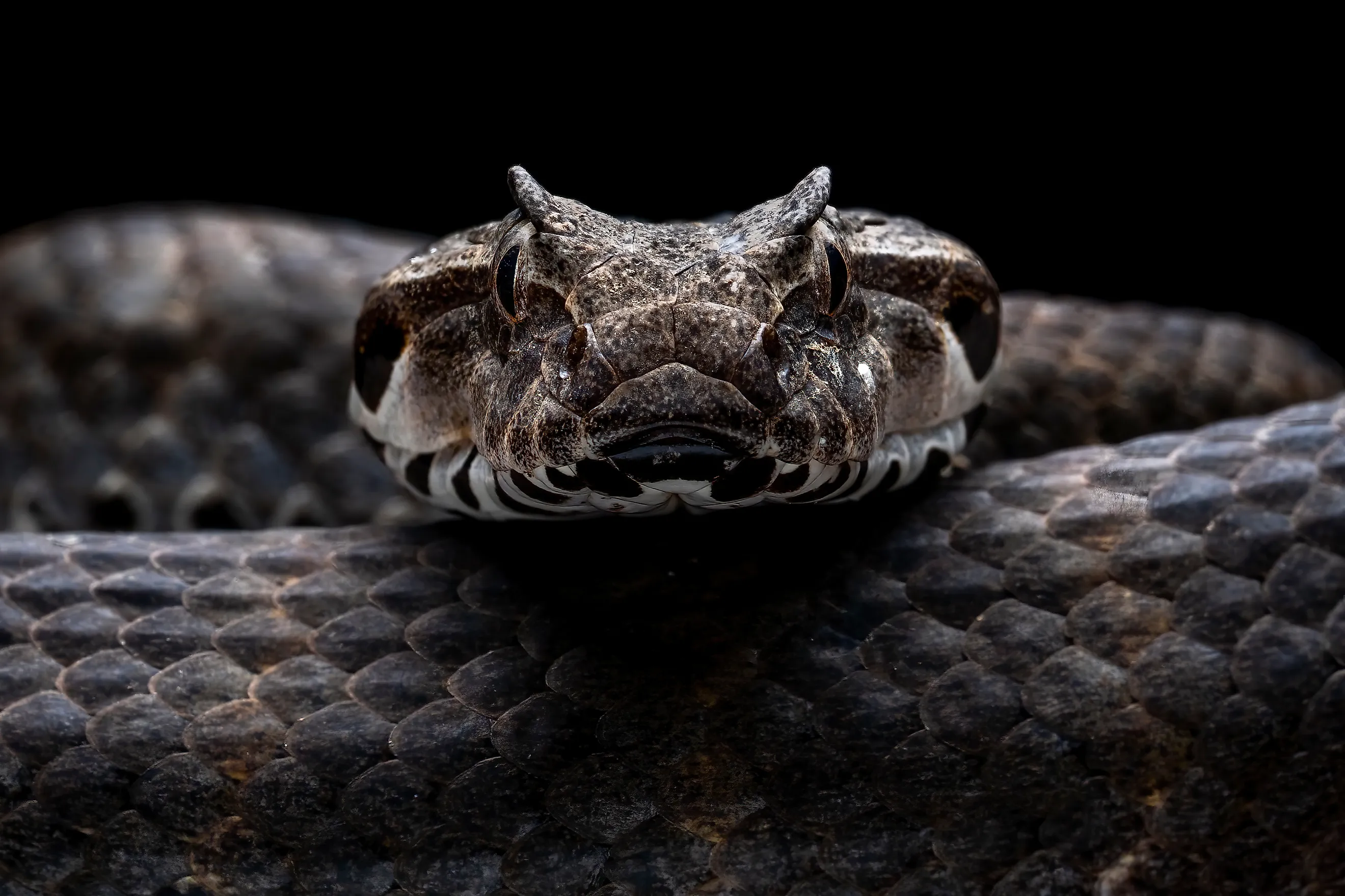
The death adder is highly recognizable. It has a thick, muscular body and a broad, triangular head, which distinguishes it from the more slender elapid species found across the continent. Adults typically measure between 65 and 100 centimeters (26 to 39 inches) in length and weigh around 700 grams (about 1.5 pounds), although size can vary depending on species and local environmental conditions. Coloration differs across populations and habitats. Individuals may appear reddish-brown, grey, tan, or yellow-banded with darker crossbands. These variations improve concealment in different environments, including the leaf litter in southeastern Australia’s eucalypt forests, grasslands, and arid scrublands of central Australia. The underside is usually lighter in color, ranging from cream to pale gray or pinkish tones.
A well-known feature of this species is the tail lure. The tail tapers into a thin, worm-like tip that may be yellow, white, or black depending on the species. By moving this tip in a wriggling motion, the snake mimics the appearance of small prey such as insects or grubs, drawing potential prey within striking range. The death adder also has exceptionally long fangs compared to other Australian snakes. Combined with a rapid strike, these fangs allow for precise venom delivery. The eyes are relatively small and feature vertical pupils, a trait that contributes to its ambush-hunting profile. Sexual dimorphism is present in the species. Females are generally larger and more robust, while males tend to have longer proportionate tails relative to body size.
Ecological Importance

Death adders play an important ecological role within Australian ecosystems as mid-level predators. By feeding on small vertebrates such as lizards, frogs, birds, and mammals, they help regulate prey populations and support overall food web stability. In turn, they also serve as prey for larger predators, furthering their importance within the ecological food web.
The sit-and-wait predation strategy, relying on camouflage and patience, allows death adders to capture fast-moving animals like frogs. This species also holds scientific importance due to its venom, which is predominantly neurotoxic and affects the nervous system by disrupting normal signaling pathways. This can lead to paralysis if left untreated. Ongoing research continues to examine the biochemical properties of death adder venom for potential clinical applications. Antivenom treatments developed specifically for death adder bites have significantly reduced fatalities, improving outcomes in cases of envenomation.
Food

Death adders are carnivorous ambush predators that consume a wide range of vertebrate prey. Their diet primarily includes lizards, frogs, birds, and small mammals. Research indicates that lizards make up a large share of their diet, followed by frogs and mammals. Larger members of this species tend to consume more mammals, while smaller snakes more frequently target reptiles and amphibians.
While waiting to strike, the snake uses a slow, worm-like movement of its tail to mimic prey and attract attention. In coastal heathlands of Western Australia or sandy grasslands in Queensland, curious animals may approach the movement, mistaking it for food. When prey enters striking distance, the death adder delivers a rapid attack. This strike ranks among the fastest of Australian venomous snakes. After injecting venom, the snake typically releases the prey and allows the toxins to take effect before consumption. This strategy reduces the risk of injury and conserves energy during hunting.
Behavior

Death adders are primarily nocturnal and solitary reptiles that rely on camouflage and stillness to avoid detection. They are most active during dusk and nighttime hours, when temperatures are cooler and hunting conditions improve. During the day, they often shelter beneath leaves, fallen logs, rocks, or loose soil, where their patterned skin blends into the surrounding environment. This reliance on concealment plays an important role in their survival strategy. When faced with potential threats, death adders typically remain motionless rather than fleeing. As a result, people or animals passing nearby may not notice them until they are accidentally disturbed, which increases the likelihood of close encounters.
Although their venom is highly potent, death adders are not considered naturally aggressive. Most defensive bites occur when the snake is unintentionally stepped on or handled. When they do strike, they rely on rapid, precise movement to deliver venom efficiently before retreating to a still position. For example, a death adder lying in dry leaf litter may resemble a fallen twig or clump of debris, allowing small animals or unsuspecting predators to pass within striking distance before it reacts.
Reproduction

Death adders are viviparous, meaning they give birth to live young rather than laying eggs. Mating typically occurs in spring. Females produce litters that usually range from 8 to more than 20 offspring, depending on the species and environmental conditions. In some cases, individuals have been documented giving birth to as many as 30 young. Newborn death adders are fully venomous at birth and begin hunting independently soon after they are born. This early level of development supports their survival in environments where concealment and ambush behavior are essential. Males generally reach sexual maturity faster than females. Males mature at around two years of age, while females typically take three to four years to reach reproductive maturity.
Threats and Conservation

The common death adder is currently classified as a species of Least Concern, although population trends show a substantial decline in certain areas. Habitat loss represents one of the most significant pressures on the species. Urban expansion, agricultural activity, industrial development, and land clearing continue to reduce available habitat across Australia. The introduction and spread of invasive cane toads also present a serious threat. Death adders often attempt to consume cane toads and are poisoned by their toxins. In addition, cane toads disrupt local ecosystems by reducing prey availability and competing with native wildlife species.
Altered fire regimes continue to affect death adder habitats across Australia. More frequent or higher-intensity fires can reduce ground cover and leaf litter, which the species relies on for ambush hunting and shelter. In some regions, grazing by livestock also contributes to habitat degradation by compacting soil and reducing vegetation density, which limits suitable cover for both prey and snakes. Some populations persist within protected areas, including national parks and conservation reserves, where land use restrictions reduce direct habitat loss. These protected landscapes help maintain more stable conditions, although habitat quality still varies due to surrounding land pressures and broader environmental change.
Future
The future of the death adder depends heavily on habitat protection and invasive species control. Conservation efforts that preserve forests, grasslands, and natural ground cover play an important role in maintaining stable populations. These environments support essential shelter and hunting conditions, particularly in areas where leaf litter and low vegetation remain intact. Managing invasive species also helps long-term species stability. Cane toads present a significant threat in some regions, as death adders may attempt to consume them and be affected by their toxins. Reducing cane toad populations in sensitive habitats can help lower mortality risks for native wildlife.
Research continues to inform conservation strategies for the species. Scientists study death adder behavior, venom composition, and ecological roles to better understand their place within Australian ecosystems. This ongoing work supports both conservation planning and broader knowledge of reptile biodiversity.