The Largest Lizards in the World
Lizards make up the suborder Lacertilia within the squamate reptiles, with more than 7,000 described species spread across about 40 families and every continent except Antarctica. Sizes range from the 16-millimeter Brookesia nana chameleon of Madagascar to the 3-meter Komodo dragon of Indonesia. The eight species covered in the body below are the largest by mass and length, with monitor lizards (family Varanidae) holding the first seven places and the iguanas, tegus, and beaded lizards filling out the rest of the top 20. The full ranking table follows at the end of the article.
Table of Contents
- Komodo Dragon
- Asian Water Monitor
- Crocodile Monitor
- Nile Monitor
- Perentie
- Black-throated Monitor
- Lace Monitor
- Argentine Black-and-White Tegu
- Why Monitor Lizards Dominate the Size Rankings
- Top 20 Largest Lizards by Mass
Komodo Dragon

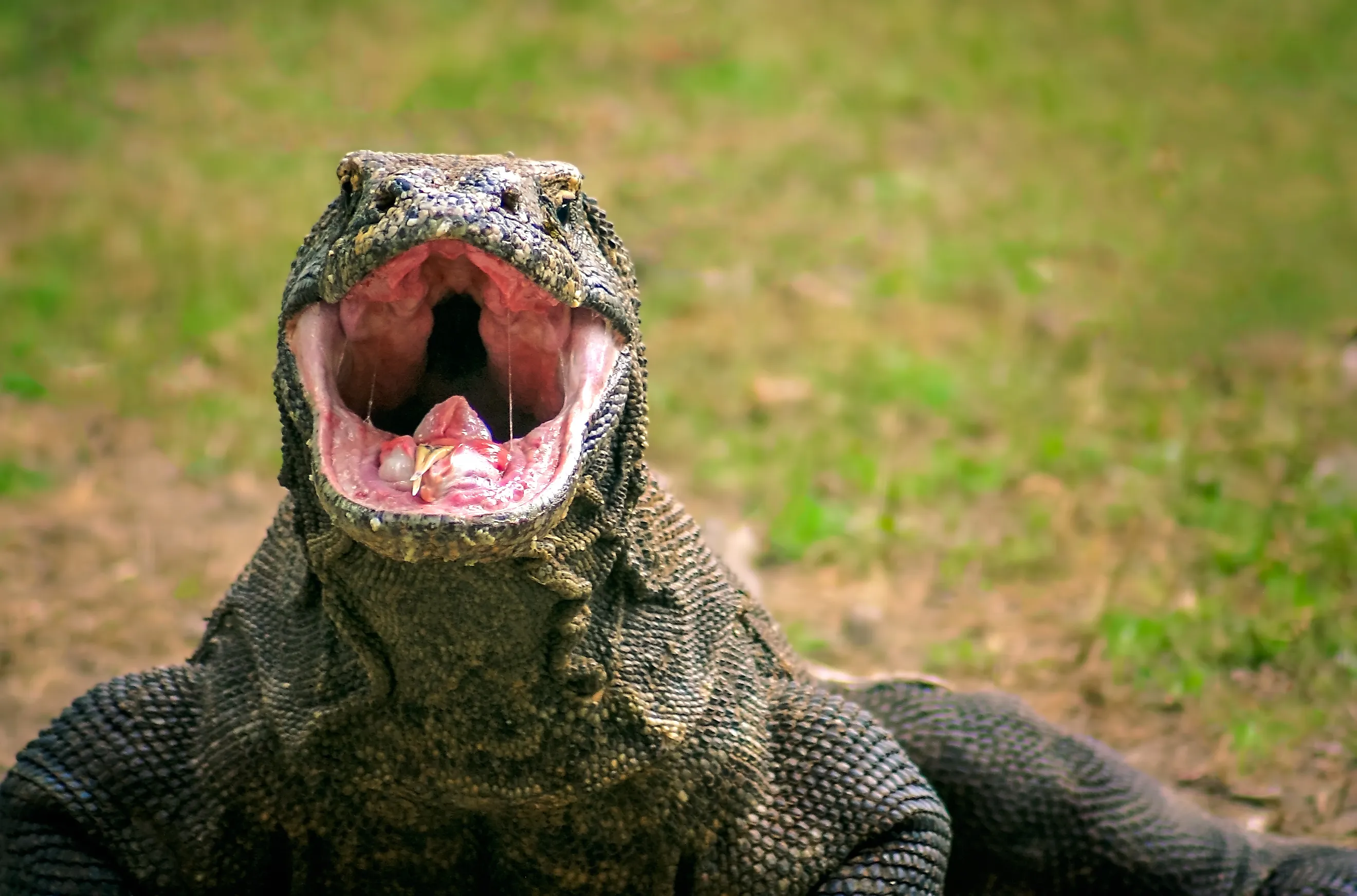
The Komodo dragon (Varanus komodoensis) is the largest living lizard species. Wild adult males average 70 kg (154 lb) and reach up to 80 kg (176 lb); the heaviest reliably measured wild specimen was 87.4 kg (193 lb), and a captive specimen at the Saint Louis Zoo in 1937 measured 3.13 m (10.27 ft) and 166 kg (366 lb), though much of the captive weight was likely undigested food (Komodo dragons can consume up to 60 percent of their body weight in a single meal).
The species is endemic to five Indonesian islands in the Lesser Sunda chain: Komodo, Rinca, Flores, Gili Motang, and Gili Dasami. The total wild population sits around 1,400 adults and 2,000 juveniles per the 2024 Komodo National Park census, with the IUCN classifying the species as Endangered. The Komodo dragon's bite was long thought to be lethal because of bacterial infection from saliva, but a 2009 study by Bryan Fry and colleagues at the University of Melbourne identified actual venom glands in the lower jaw that produce anticoagulant proteins, lowering blood pressure and preventing clotting in prey. Large prey (Timor deer, water buffalo, wild pigs) often escape the initial bite but die of shock or blood loss within hours to days, after which the Komodo dragon tracks the carcass by scent over distances up to several kilometers.
Asian Water Monitor

The Asian water monitor (Varanus salvator) is the second-largest lizard species by mass and the longest lizard species in the world. The largest reliably measured specimen, recorded in Sri Lanka, reached 3.21 m (10.53 ft) in total length. Wild specimens routinely weigh up to 25 kg (55 lb), with the largest individuals found in Malaysia (particularly around the Cameron Highlands) and Thailand. Average wild adults are considerably smaller, typically 1.5-2 m (5-7 ft) long and 3-7 kg (7-15 lb), with significant size variation by island population (specimens from Java average about 2.1 m, from Sumatra about 1.7 m, and from Flores under 1.5 m).
The species ranges across South and Southeast Asia, from northeast India and Bangladesh through the Malay Peninsula and across the Indonesian archipelago. Asian water monitors are semi-aquatic, with strong tails for swimming and powerful claws for climbing trees. They are generalist carnivores and scavengers, with an acute sense of smell that allows them to locate carcasses from significant distances. The species is hunted heavily for its skin (used in the international leather trade) and as food in many parts of its range, with about 1.5 million skins exported annually from Indonesia alone according to CITES trade records.
Crocodile Monitor

The crocodile monitor (Varanus salvadorii) is endemic to New Guinea and is sometimes considered the longest lizard species in the world by length, though the verified maximum length of 2.55 m (8.37 ft) on a specimen at Museum Koenig is exceeded by the longest Asian water monitor specimen at 3.21 m. Unverified accounts have reported crocodile monitors of 4.27 m (14 ft) and even 4.75 m (15.58 ft), but these have never been confirmed. The tail of the crocodile monitor is proportionally enormous, typically 2 to 2.7 times the snout-to-vent length, which inflates the total length figures while keeping body mass modest (most healthy wild adults weigh 2.5 to 6.4 kg, or 5.5 to 14.1 lb).
The species lives in lowland coastal rainforest and mangrove swamps in southern New Guinea, where it is largely arboreal (the long tail aids in climbing and balance). It hunts birds, smaller reptiles, small mammals, and eggs. The crocodile monitor's primary threats are deforestation from logging and the international pet trade. The species' IUCN status is currently listed as Least Concern based on a relatively wide range, though local populations have declined significantly.
Nile Monitor
The Nile monitor (Varanus niloticus) is the longest lizard native to Africa and the fourth-largest in the world by mass and length. The longest reliably measured Nile monitor reached 2.43 m (7.97 ft) and approximately 20 kg (44 lb). Wild specimens commonly reach 1.5-1.7 m (5-5.5 ft) and 5-10 kg (11-22 lb). The species ranges across nearly all of sub-Saharan Africa, with stable populations along major river systems including the Nile, Congo, Zambezi, and Limpopo.
Nile monitors are excellent swimmers and feed on fish, crocodile and bird eggs, and a wide range of vertebrates and invertebrates. The species has also become a significant invasive presence in southern Florida since the late 1990s, with the Florida Fish and Wildlife Conservation Commission documenting an established breeding population in Cape Coral, Lee County, and several other coastal sites. The invasive Florida population has expanded north of its original release area and threatens native wading bird and turtle eggs. Active removal programs have been in place since 2008 but have not yet successfully eliminated the population.
Perentie

The perentie (Varanus giganteus) is Australia's largest lizard and the world's fourth- or fifth-largest by mass, depending on the comparison metric. The longest verified specimen, measured by Stokes in 1846, reached 2.44 m (8 ft) in total length, though more recent surveys suggest most adults rarely exceed 1.5-2 m (5-7 ft). The heaviest reliably recorded perentie was a 17 kg (37 lb) specimen from Barrow Island measured by Butler in 1970. Males significantly outsize females, with females typically not exceeding 1.4 m (4.6 ft) in total length.
The species is endemic to the arid central interior of Australia, west of the Great Dividing Range, with strongholds in the deserts of Western Australia, South Australia, Queensland, and the Northern Territory. Perenties prefer rocky outcrops, gorges, and breakaway country where they can shelter in deep crevices. They hunt insects, smaller reptiles, rabbits, and (for the largest individuals) wombats and small kangaroos. The Anangu Aboriginal people of central Australia consider the perentie a significant traditional food source and ancestral being.
Black-throated Monitor

The black-throated monitor (Varanus albigularis microsticus) is a subspecies of the rock monitor (Varanus albigularis) and may be the heaviest lizard native to Africa, exceeding the Nile monitor in mass while running shorter in length. Reliable records put the black-throated subspecies at up to 2.1 m (6.89 ft) and 27 kg (60 lb), though most adults are considerably smaller. The species is endemic to Tanzania and parts of northern Mozambique.
The broader rock monitor species is found across southern, eastern, and central Africa in three accepted subspecies (microsticus, albigularis, and angolensis). Rock monitors are bulkier and more terrestrial than Nile monitors, preferring kopjes and rocky savanna rather than river systems. Diet consists primarily of large insects, snails, small reptiles, eggs, and ground-dwelling birds. The species is relatively reclusive compared to other large monitors, often climbing trees to escape threats rather than confronting them, though when cornered it will lash with its powerful tail and bite hard.
Lace Monitor
The lace monitor (Varanus varius) is the second-largest lizard in Australia after the perentie and the seventh-largest in the world. Reliably measured specimens reach up to 2.0 m (6.55 ft) in total length and 14 kg (31 lb) in mass, though exceptional individuals have been recorded slightly larger (a Healesville, Victoria specimen weighed 20.5 kg after eating four fox cubs, three rabbits, and three blue-tongued skinks, but the meal accounts for much of the recorded weight).
The species is found along the entire eastern coast of Australia from Cape York Peninsula in Queensland south through New South Wales and Victoria to southeastern South Australia. Lace monitors are arboreal and are commonly seen climbing eucalyptus trees in search of bird eggs and nestlings, though they also forage on the ground for small mammals, reptiles, and carrion. The species lays its eggs inside active termite mounds, where the constant termite-maintained temperature acts as a natural incubator (the female returns months later to excavate the hatchlings).
Argentine Black-and-White Tegu

The Argentine black-and-white tegu (Salvator merianae, formerly Tupinambis merianae) is the largest member of the family Teiidae and one of the largest non-monitor lizards in the world. Adults reach up to 1.5 m (4.91 ft) in total length and 7 kg (15 lb) in weight, with exceptional individuals slightly larger. The closely related red tegu (Salvator rufescens) is stockier and can be heavier despite being shorter, reaching up to 9 kg (20 lb).
The species ranges across central and northern Argentina, Uruguay, Paraguay, southern Brazil, and Bolivia, inhabiting semi-arid savanna, tropical rainforest, and gallery forest. Tegus are omnivorous and intelligent (some research suggests cognitive abilities comparable to those of small mammals), feeding on insects, fruit, eggs, small mammals, and reptiles. The species is unusual among reptiles in being partially endothermic during the breeding season, raising its body temperature 5-10 degrees Celsius above ambient air temperature through metabolic activity (research published by Tattersall et al. in 2016 in Science Advances). Argentine tegus have become a significant invasive presence in Florida and Georgia, with established populations in at least five Florida counties since 2012; the species is now subject to state-managed removal programs in both states.
Why Monitor Lizards Dominate the Size Rankings
The family Varanidae holds the first seven positions in the largest-lizards list and 11 of the top 20. The genus Varanus contains more than 80 species across 11 subgenera, with members ranging from 16-gram dwarf monitors of northern Australia to the 70-plus-kg Komodo dragon. This is the greatest size disparity within a single family of lizards on Earth. Monitor lizards' aerobic capacity (their cardiovascular and respiratory systems support sustained activity at levels closer to those of mammals than to most reptiles), powerful limb musculature, and intelligence (the family ranks among the most cognitively advanced reptiles, with several species demonstrated to count and to learn from one another) together explain their evolutionary success at large sizes.
Iguanas (family Iguanidae) hold five of the top 20 positions, including four species endemic to small islands: the blue iguana of Grand Cayman, the Galápagos land iguana and marine iguana, and the rhinoceros iguana of Hispaniola. Island endemism is the central driver here, where the absence of large mammalian predators has allowed iguanas to evolve to mass extremes that mainland populations cannot reach. The green iguana, the only widely mainland-distributed large iguana, reaches similar size only in regions where mammalian predator pressure is low.
The tegus (family Teiidae) and the beaded lizards plus Gila monster (family Helodermatidae) round out the top 20. The Gila monster itself (Heloderma suspectum), often listed in popular articles about "large lizards" because of its dramatic venomous bite, actually maxes out at about 60 cm (24 inches) and 2 kg (4.4 lb), well below the 9-kg threshold that defines the formal top-15 list maintained at scientific reference databases. The Mexican beaded lizard (Heloderma horridum), Gila monster's larger cousin, does reach the top 20 at up to 91 cm and 4 kg.
Top 20 Largest Lizards by Mass
The following table ranks the 20 largest extant lizard species by maximum reliably recorded mass, with maximum reliably recorded length and native range included. Sources: the Wikipedia "List of largest extant lizards" entry and the underlying scientific literature (Auliya et al., Faust, King & Green, the Reptile Database).
| Rank | Common Name | Scientific Name | Family | Max Mass | Max Length | Native Range |
|---|---|---|---|---|---|---|
| 1 | Komodo Dragon | Varanus komodoensis | Varanidae | 81.5 kg (180 lb) | 3.04 m (10.0 ft) | Indonesia (Lesser Sundas) |
| 2 | Asian Water Monitor | Varanus salvator | Varanidae | 25 kg (55 lb) | 3.21 m (10.5 ft) | South and Southeast Asia |
| 3 | Crocodile Monitor | Varanus salvadorii | Varanidae | 20 kg (44 lb) | 2.55 m (8.4 ft) | New Guinea |
| 4 | Nile Monitor | Varanus niloticus | Varanidae | 20 kg (44 lb) | 2.43 m (8.0 ft) | Sub-Saharan Africa |
| 5 | Perentie | Varanus giganteus | Varanidae | 20 kg (44 lb) | 2.44 m (8.0 ft) | Central Australia |
| 6 | Black-throated Monitor | Varanus albigularis microsticus | Varanidae | 27 kg (60 lb) | 2.1 m (6.9 ft) | Tanzania, northern Mozambique |
| 7 | Lace Monitor | Varanus varius | Varanidae | 14 kg (31 lb) | 2.0 m (6.6 ft) | Eastern Australia |
| 8 | Blue Iguana | Cyclura lewisi | Iguanidae | 14 kg (31 lb) | 1.5 m (4.9 ft) | Grand Cayman |
| 9 | Galápagos Land Iguana | Conolophus subcristatus | Iguanidae | 13 kg (29 lb) | 1.5 m (4.9 ft) | Galápagos Islands |
| 10 | Marine Iguana | Amblyrhynchus cristatus | Iguanidae | 12 kg (26 lb) | 1.4 m (4.6 ft) | Galápagos Islands |
| 11 | Rhinoceros Iguana | Cyclura cornuta | Iguanidae | 10 kg (22 lb) | 1.36 m (4.5 ft) | Hispaniola |
| 12 | Green Iguana | Iguana iguana | Iguanidae | 9.1 kg (20 lb) | 2.0 m (6.6 ft) | Mexico to Brazil/Paraguay |
| 13 | N. Sierra Madre Forest Monitor | Varanus bitatawa | Varanidae | 9 kg (20 lb) | 1.8 m (5.9 ft) | Northern Luzon, Philippines |
| 14 | Red Tegu | Salvator rufescens | Teiidae | 9 kg (20 lb) | 1.4 m (4.6 ft) | W. Argentina, Bolivia, Paraguay |
| 15 | Gray's Monitor | Varanus olivaceus | Varanidae | 8.9 kg (20 lb) | 1.88 m (6.2 ft) | Southern Luzon, Philippines |
| 16 | Cuban Iguana | Cyclura nubila | Iguanidae | 8 kg (18 lb) | 1.6 m (5.2 ft) | Cuba, Cayman Brac |
| 17 | Argentine Black-and-White Tegu | Salvator merianae | Teiidae | 7 kg (15 lb) | 1.5 m (4.9 ft) | Central South America |
| 18 | Bengal Monitor | Varanus bengalensis | Varanidae | 7.2 kg (16 lb) | 1.75 m (5.7 ft) | South Asia, mainland SE Asia |
| 19 | Anegada Rock Iguana | Cyclura pinguis | Iguanidae | 7.75 kg (17 lb) | 1.5 m (4.9 ft) | Anegada, British Virgin Islands |
| 20 | Mexican Beaded Lizard | Heloderma horridum | Helodermatidae | 4 kg (8.8 lb) | 0.91 m (3.0 ft) | Western Mexico, Guatemala |