Why the Bronze Age Suddenly Collapsed
The Bronze Age collapse is one of the most widely covered historical events. Occurring in the 13th and 12th centuries BCE, it led to the end of numerous empires and civilizations. What actually caused it, and how quickly it took hold, remain unsettled questions. Several factors, including climate change, famine, war, and invasions from "Sea Peoples," contributed to the collapse. It also took decades. While not a long period in the context of history, this suggests that the Bronze Age may not have fallen as suddenly as is often believed.
The Late Bronze Age

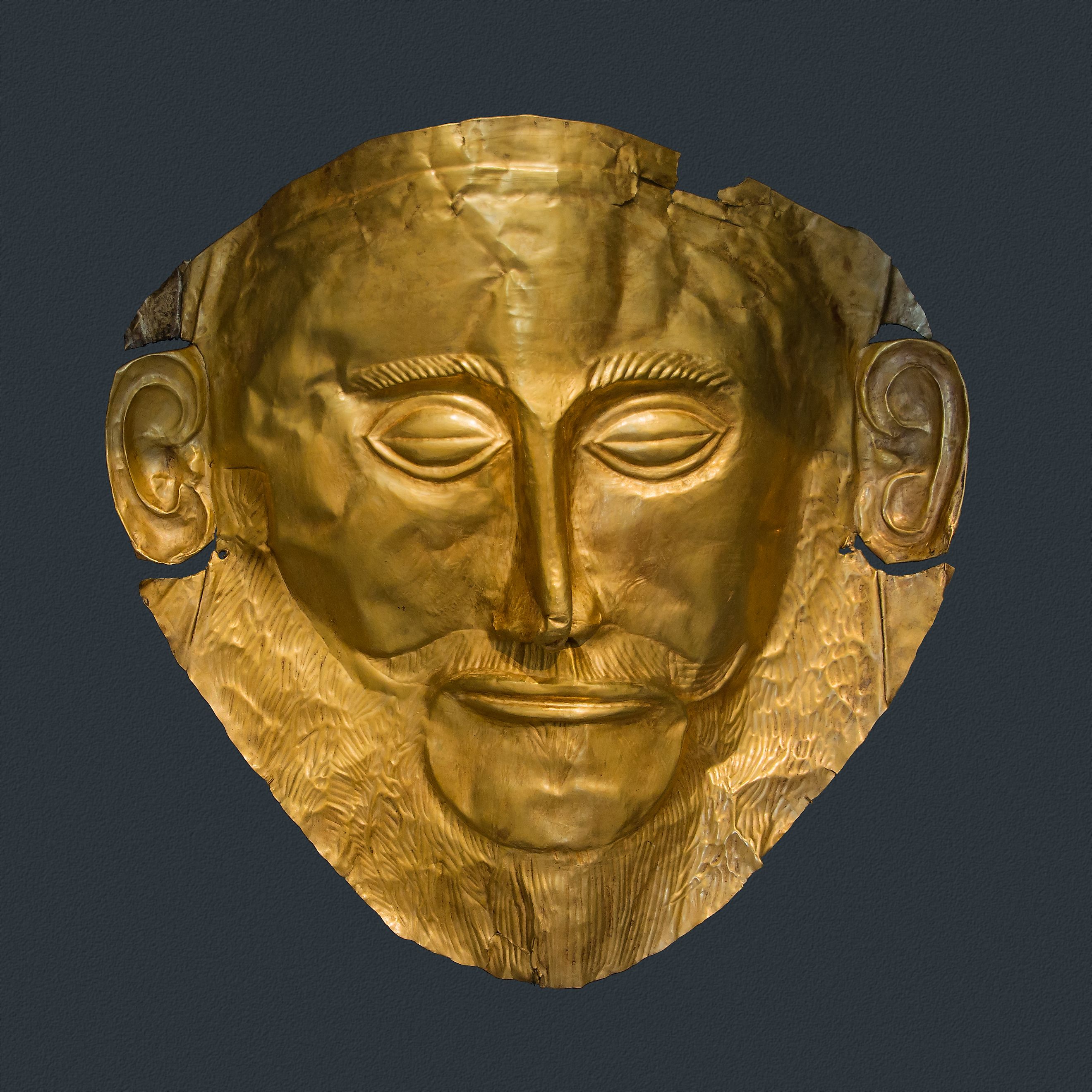
In 1250 BCE, the Mediterranean was dominated by several wealthy and interconnected states. Egypt was in its New Kingdom period and ruled by Ramses II, often considered the most powerful pharaoh of all time. In Anatolia, the Hittite Empire was thriving. The islands were wealthy too, though in different ways. Cyprus supplied much of the region's copper and was known to its trading partners as Alashiya. Crete had been under Mycenaean administration for roughly two centuries by this point, with its palace records kept in the Greek script known as Linear B. Finally, the Mycenaeans ruled Greece.
Bronze made all these states possible. A crucial component of the tools instrumental in this period's advancement, bronze required copper and tin. Since these materials came from different regions across the Mediterranean, this naturally encouraged trade, which in turn fostered economic growth. With more wealth and prosperity, people could turn their attention to high-minded pursuits, like writing, art, and religion. In short, interconnection and trade made the Bronze Age possible. While this had clear benefits, it also created a major vulnerability since, if one part of the system failed, problems could quickly spread elsewhere.
Climate Change

Historians still debate the exact reasons why the Bronze Age collapsed. One possible explanation is climate change. Tree-ring and pollen data from 1200 to 1150 BCE indicate a particularly dry period. Most states at the time relied on stable crop yields, which they then taxed to fund infrastructure projects and the army. With lower yields due to drought, prices and taxes rose. When people moved in search of better opportunities, this forced the government to raise taxes even more. Eventually, governmental authority weakened, and the civilizations that characterized the Bronze Age disappeared.
Famine

Climate change had an even more immediate negative impact: famine. With unstable crop yields, many people simply didn't have enough food to survive. Ugaritic texts, clay tablets discovered in modern-day Syria, shed light on what this might have been like. One Hittite official, writing to a merchant at Ugarit, begged him to "send even the remainders of the [grain] staples I requested and thus save me." In the late 1200s and early 1100s BCE, many Bronze Age states were struggling to feed themselves. This likely made them more vulnerable to things like military and economic shocks.
War And The Breakdown Of Trade

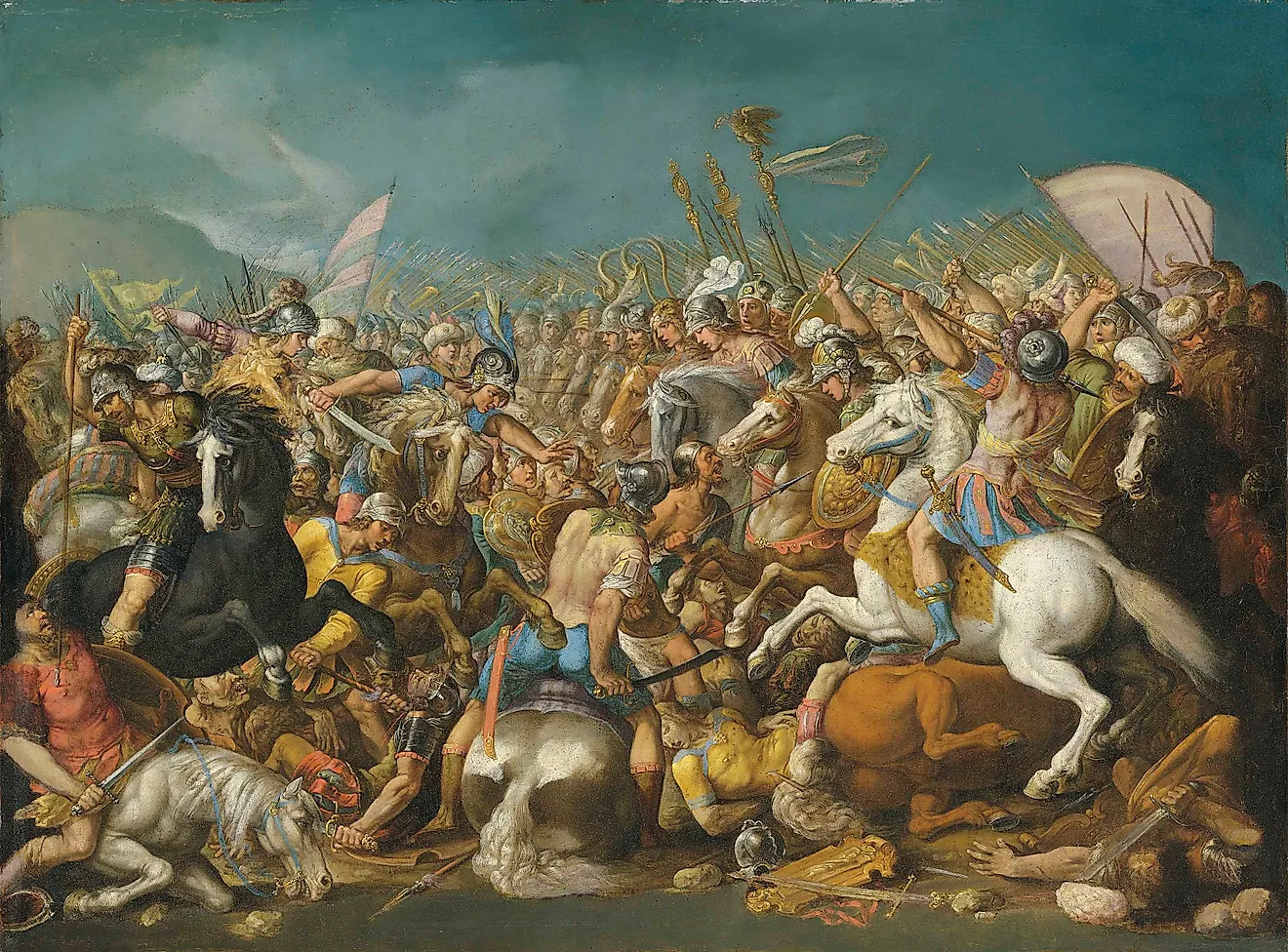
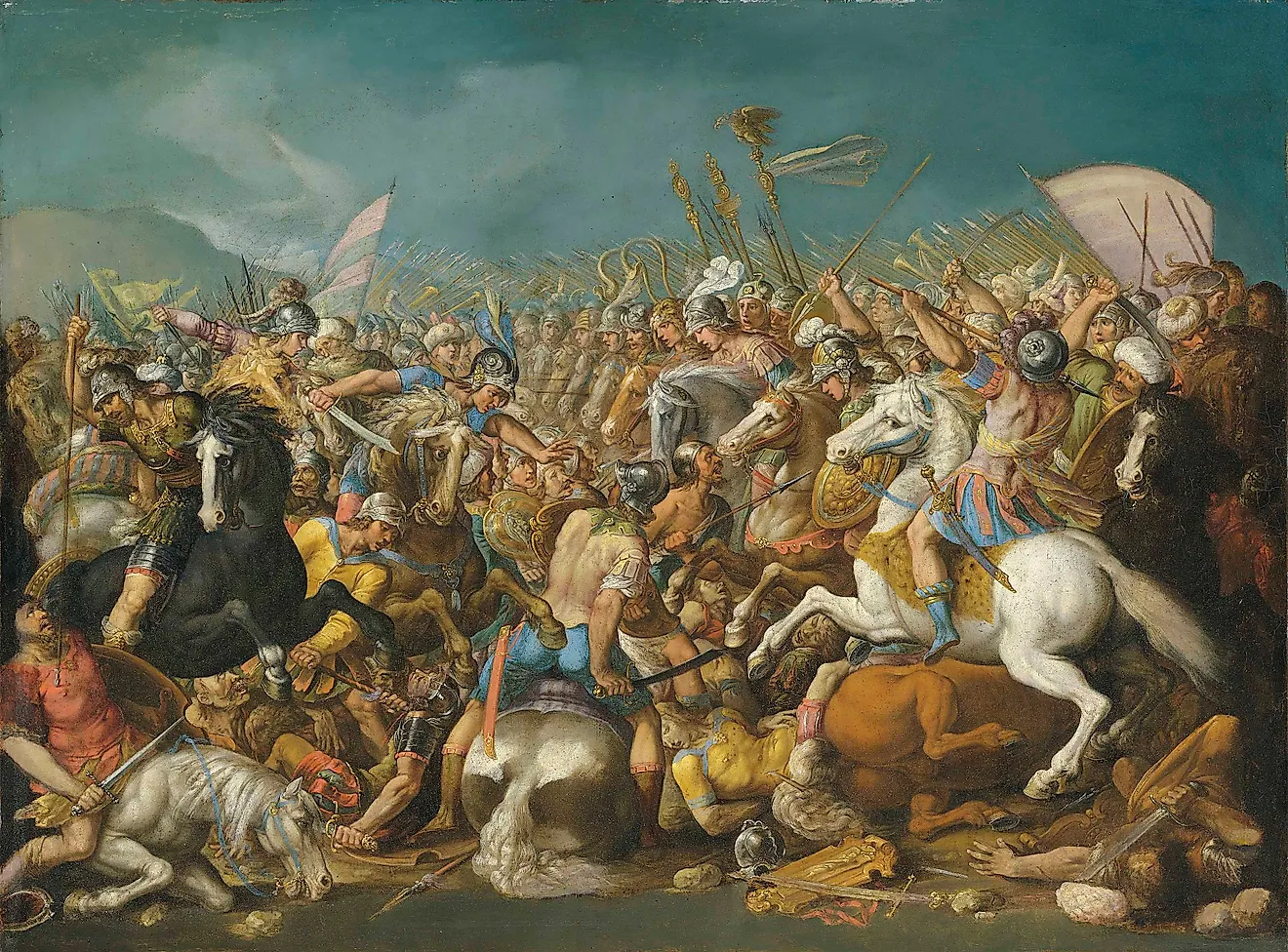
Several catastrophic wars likely occurred during the late Bronze Age. The most famous was the Trojan War, as depicted in Homer's Iliad and later ancient texts such as the Aeneid. Almost every detail described in these works is fictional. The characters of Achilles, Hector, Helen of Troy, Agamemnon, and Odysseus likely didn't exist, nor did the Trojan Horse. Regardless, archaeological evidence indicates that some form of conflict occurred at Troy in the 1180s BCE. That is close to the date Homer's account gives for the war, though the poem itself was composed some four centuries later. More importantly, such conflicts indicate a breakdown in trade, arguably the most important component of the Bronze Age. Without trade, states couldn't make the same sorts of tools, and economic activity declined.
The Sea Peoples

The Sea Peoples are perhaps the best-known, but also most controversial component of the Bronze Age collapse. Crucially, we don't really know who they were. Pharaoh Ramses III described them as devastating Eastern Mediterranean civilization before then attacking Egypt. Inscriptions from the same time also indicate that there were several groups, including the Peleset, Denyen, Weshesh, Tjekker, and Shekelesh. This suggests that they likely weren't a unified civilization. We also don't know if they were a cause or a consequence of the Bronze Age collapse. They may have been migrants, pirates, or refugees. Finally, the name "Sea Peoples" is a bit of a misnomer, since Ramses III describes fighting them on land as well. In short, our lack of definitive knowledge about the Sea Peoples makes their role in the Bronze Age collapse ambiguous.
Was The Collapse Sudden?

Now that we know the possible reasons for the Bronze Age collapse, it's worth considering the timeline of the event itself. Between 1250 and 1200 BCE, there were early signs of economic and administrative instability. However, the most dramatic phase of civilizational decline occurred between 1200 and 1150 BCE. This saw the aforementioned war at Troy, the fall of Mycenaean Greece, and the Hittite Empire. Ancient Egypt survived, but in a much weakened state. For this reason, it's not inaccurate to say that the Bronze Age collapsed suddenly, since it took only fifty years.
At the same time, it's worth putting things into context. It's easy to have a sense of temporal distortion when assessing ancient history. Consider a more modern empire like the Soviet Union. In 1949, it successfully tested its first atomic bomb, becoming one of the world's two superpowers (along with the United States). Forty-two years later, in 1991, the Soviet Union ceased to exist. We rarely view this period as instantaneous or a historical blip, so it may be wise to avoid doing so for the Bronze Age collapse, since it took place over a similar time span.
What The Collapse Left Behind

The states that failed did not reassemble. Greece stopped using Linear B, and no writing system was in use there again for roughly four centuries. The Hittite Empire never re-formed, though smaller successor kingdoms in northern Syria and southeastern Anatolia carried its traditions forward for generations. Egypt held on, but its New Kingdom ended in 1077 BCE with the death of Ramses XI, and its holdings in the Levant were long gone by then. What replaced the old order proved more durable in some respects. Iron working spread in part because iron ore could be found locally and required none of the long-distance tin that bronze depended on, and Phoenician ports such as Tire and Byblos took over the trade routes, carrying an alphabetic script across the Mediterranean as they went.